Buying Guide · 11 min read
Subaru Outback Years to Avoid: Worst Years by Generation
We rank every Subaru Outback generation by reliability and compare NHTSA and Consumer Reports data to show which years to avoid and which to buy.
By Elena Marsh · · Updated
There is no single agreed list of Subaru Outback years to avoid, and any article that gives you one without saying so is oversimplifying. The most commonly flagged years are 2010 to 2014 and 2017 to 2020, per AGT Auto's NHTSA analysis — but CarBuzz calls the 2013 the worst of all, while CarLifeSpanCheck calls 2013 and 2014 among the best years to buy. Consumer Reports instead rates 2014, 2016, 2017 and 2021 and newer as the most reliable, and flags 2005 to 2007 and 2019 to 2020. This guide lays out what each source says, so you can judge the car in front of you rather than trusting one list.
Subaru Outback Years to Avoid at a Glance
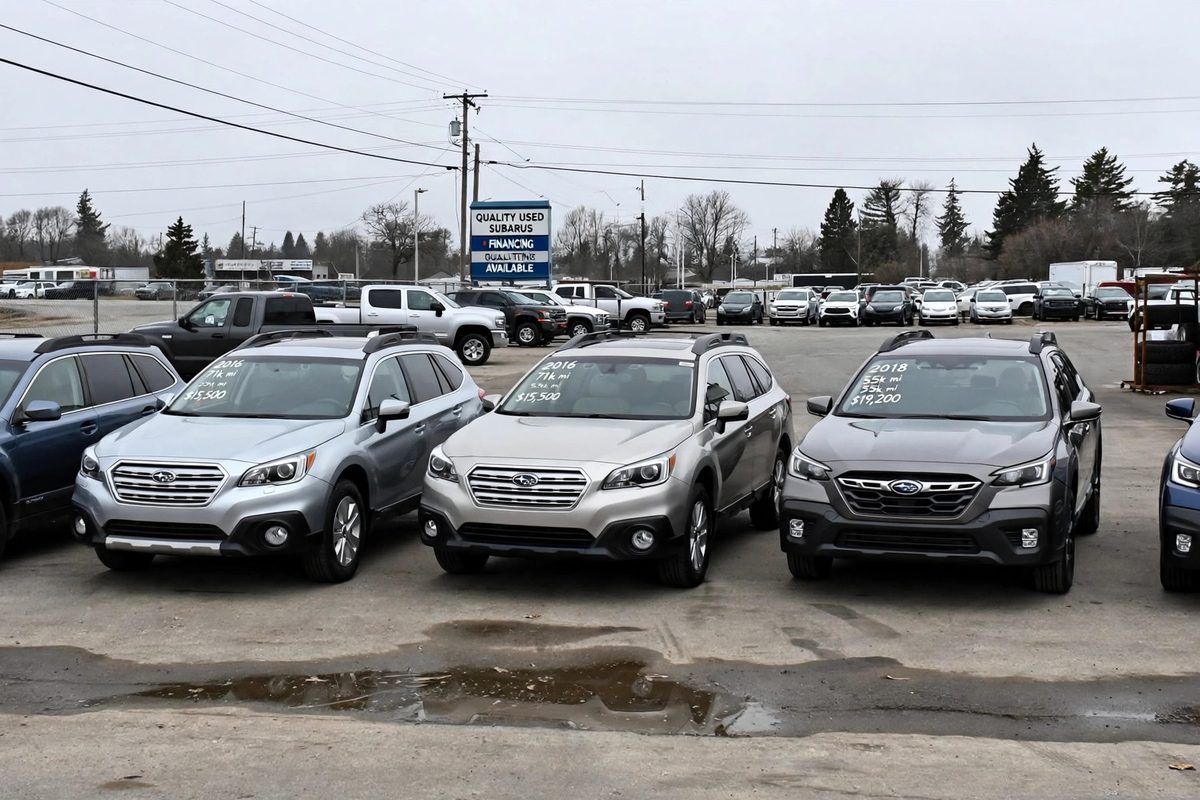
| Years | Main problem | NHTSA complaints / recalls* | Where sources disagree |
|---|---|---|---|
| 2010–2012 | Early CVT shudder, Takata airbags | 2010: ~355 complaints, 18 recalls | CarBuzz: avoid all of 2010–2014; MotorTrend prefers the 2012 |
| 2013–2014 | FB25 oil use, piston rings | 2013: 289 complaints, 12 recalls | CarBuzz: 2013 worst; CarLifeSpanCheck: 2013–2014 best buys |
| 2015–2016 | Oil use, early CVT | 2015: ~477 complaints | CarLifeSpanCheck: worst; Consumer Reports kinder to 2016 |
| 2017–2019 | Battery drain, steering, glass | 2017: 893 / 4 recalls; 2019: 1,002 / 3 recalls | Consumer Reports rates 2017 most reliable |
| 2020 | First-year electronics, battery | 873 complaints, 5 recalls | MotorTrend, AGT Auto flag 2020; 2021+ preferred |
| 2005–2007 | Head gasket failures | Older cars, few complaints on file | Consumer Reports flags these; complaint lists skip them |
*Figures from AGT Auto's NHTSA data pull, checked November 2026. Other sources report slightly different counts — 2019 ranges from 985 to 1,035 complaints by pull date — because owners keep filing new reports. Treat the numbers as a guide to what to inspect, not a reliability score.
Why the Experts Disagree on the Worst Years
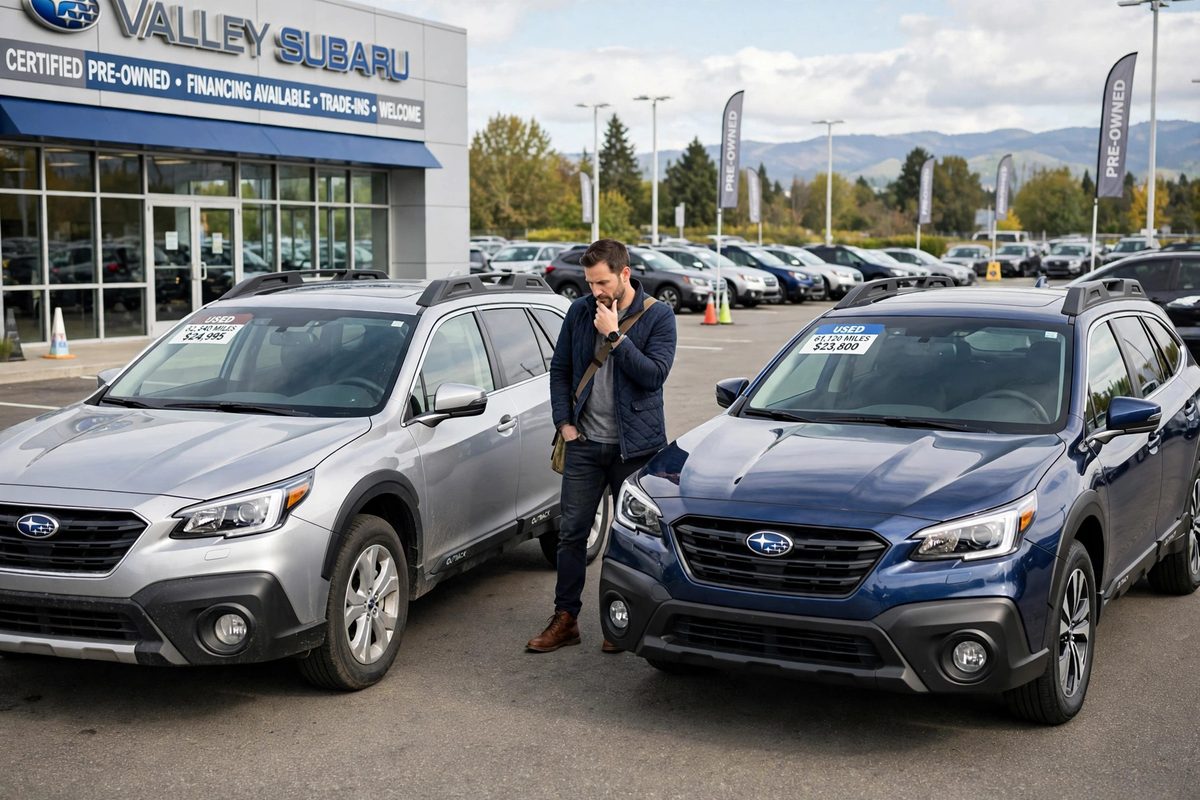
The disagreement comes from different data. AGT Auto, Intersection Magazine, CarBuzz and 247VehicleCheck rank years by NHTSA complaint and recall counts. Consumer Reports and J.D. Power, quoted in CarGurus' buying guide, use owner reliability surveys and rate nearly every Outback average or better, with the most concern for 2005 to 2007 and 2019 to 2020. CarComplaints finds 2013, 2015 and 2018 have the most issues. None of these measures is wrong; a year can look bad on one and fine on another.
Complaint counts need context. A year that sold in big numbers collects more complaints, and older cars have had more time to accumulate reports. ForCar's analysis, which divides complaints by production run, shows the gap: the 2019 draws 9.2 complaints per run, the 2014 only 1.7. A recall is not proof a car is unreliable — the 2010's 18 recalls are mostly industry-wide Takata airbag campaigns. Use the lists as a map of what to inspect, not a verdict on every car of that year.
Generations Ranked by Reliability: The Big Picture
Year-by-year lists disagree because they measure different things. Step back to whole generations and the picture sharpens. CarBuzz ranked all six Outback generations from least to most reliable in June 2025, weighing complaint and recall severity alongside J.D. Power's initial-quality scores — and the result upends the usual assumption that newer is always better: the fifth generation (2015–2019) ranks least reliable, while the first generation (1995–1999) ranks most reliable, with the fewest complaints and recalls of any generation.
J.D. Power's scores measure initial quality over the first 90 days of ownership, not long-term reliability, which is why the sixth generation's low 75.8 average sits next to a mid-pack ranking: its early cars carry around a thousand complaints each, while its 2023–2025 cars score 80 out of 100. The table follows CarBuzz's ranking, least reliable first.
| Generation | Years | CarBuzz rank | J.D. Power quality & reliability | Main trouble |
|---|---|---|---|---|
| 5th (least reliable) | 2015–2019 | 6 of 6 | 79/100 average; 81 best (2018) | Oil consumption, CVT shudder, battery drain |
| 4th | 2010–2014 | 5 of 6 | 81.6/100 average; 82 best (2011, 2012, 2014) | Takata airbags, head gaskets, stalling |
| 6th | 2020–2025 | 4 of 6 | 75.8/100 average; 80 best (2023–2025) | Battery drain, windshields, thermo control valve |
| 3rd | 2005–2009 | 3 of 6 | 81/100 best (2008–2009 only) | Head gaskets, stalling, power loss |
| 2nd | 2000–2004 | 2 of 6 | Not rated | Rear-subframe rust, transmission |
| 1st (most reliable) | 1995–1999 | 1 of 6 | Not rated | Coil-spring rust, head gaskets |
The sixth generation also produced more class-action lawsuits in five years than the fifth did in its entire run, according to used-car guide UseCarScout: windshields, infotainment, EyeSight and the thermo control valve all drew legal action. The valve is the one to check on a used 2020 or early-2021 2.5-liter car: a faulty thermo control valve triggers codes P2682 and P26A and can overheat the engine, and Subaru extended warranty coverage for it to 15 years or 150,000 miles in May 2024 under service bulletin 09-119-24. If the car has not had the valve inspected or replaced, the repair is free at a Subaru dealer. The generation's CVT chain-slip recall, NHTSA 22V485000, covered roughly 200,000 Outback, Legacy and Ascent vehicles.
Rust is the other 2026 development, and it hits the years this guide already flags. Fresh NHTSA complaints filed in 2026 report front subframes rusted through on cars from 2013 to 2018: a 2017 failed inspection at 150,000 miles with a $3,200 repair bill, a 2013 needed about $8,000 of subframe work, and a 2018 failed its New York inspection with a $2,900 dealer estimate. Owners blame air-conditioning condensate dripping onto the frame, plus road salt — and in September 2026 a class action was filed alleging a corrosion defect on 2010–2017 Subarus, with repair costs estimated at $1,400 to more than $6,000. The case is at an early stage, with no settlement and no certified class, but the message for buyers is practical: on any 2010–2017 Outback from a salt state, get underneath the car and look at the front subframe before you pay.
2010–2012: Early CVT Shudder and Airbag Recalls
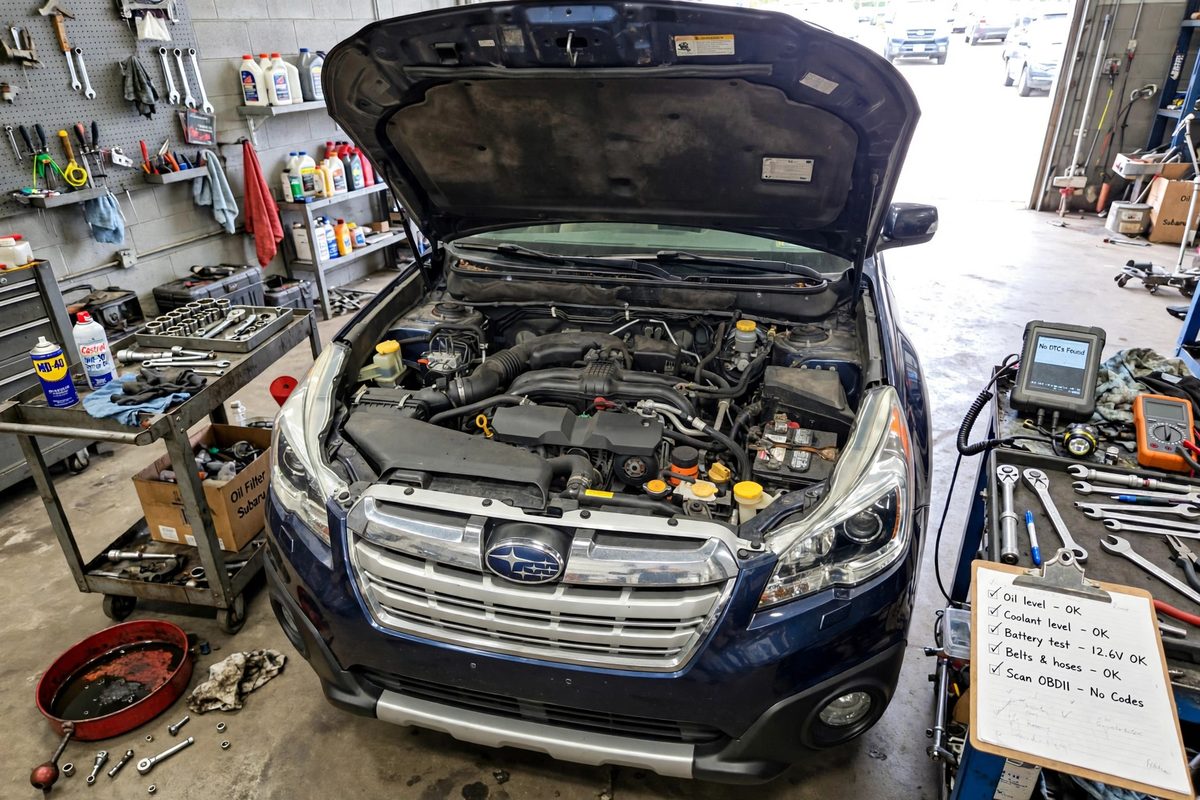
The fourth-generation Outback launched for 2010 with Subaru's Lineartronic CVT, and the early transmission is the defining problem of these years. ProTech Service's count of the NHTSA file shows 2010 to 2012 draw more powertrain complaints than any Outback year since: of the 216 powertrain complaints on the 2011, 101 mention the torque converter and 41 mention a shudder. AGT Auto puts the 2010 at about 355 complaints with 18 recalls.
The other issue is airbags. The 2010 to 2014 cars fall in the Takata inflator recall era, and the 2010's 18 campaigns include 10 airbag recalls, per AGT Auto. Most are a decade old and should be closed — run the VIN through NHTSA's recall lookup and walk away from open airbag recalls. One bright spot: MotorTrend and KnowledgeMentors single out the 2012 with the 3.6-liter six and five-speed automatic as a solid buy, because it avoids the early CVT entirely.
2013–2014: Oil Consumption and the Piston-Ring Settlement
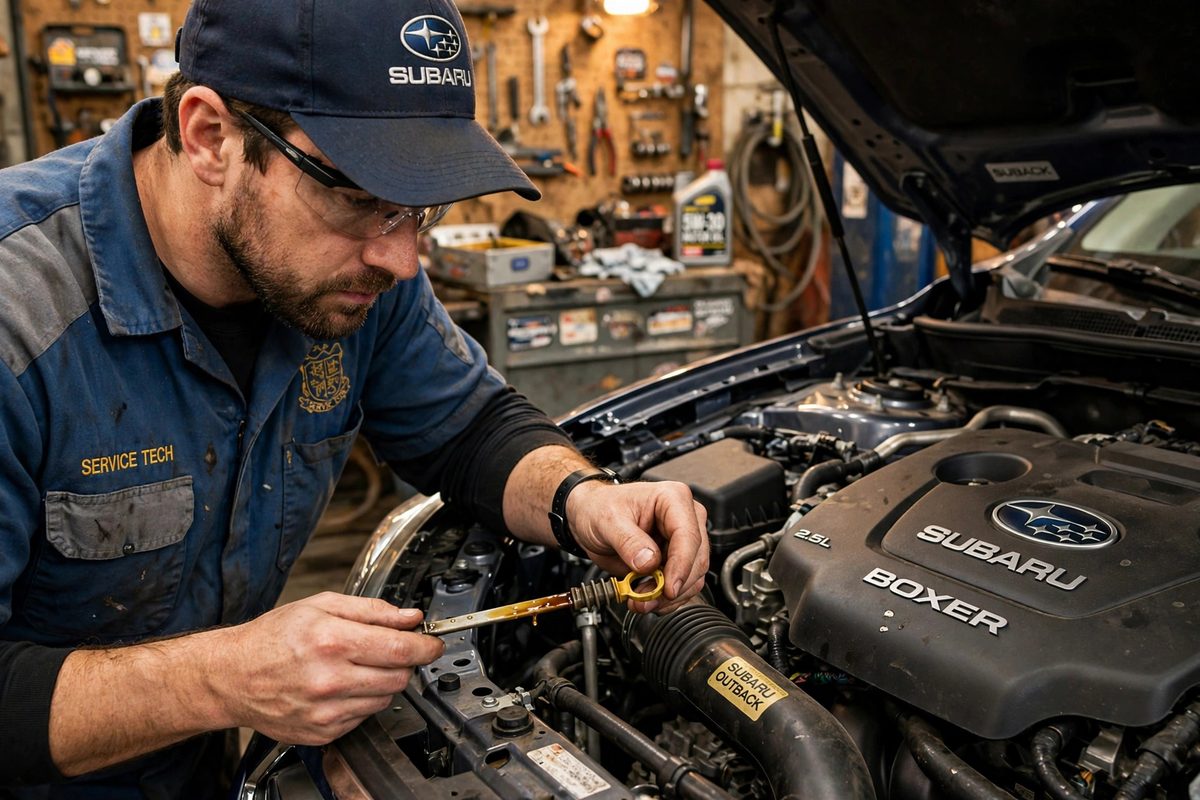
The 2013 and 2014 Outbacks are the most argued-over years in the lineup. They introduced the FB25B 2.5-liter engine, whose low-tension piston rings let oil slip into the combustion chamber. Owners reported adding a quart every 1,000 miles in the worst cases, and Subaru settled a class-action lawsuit in 2016, extending powertrain warranty coverage to eight years or 100,000 miles. CarBuzz ranks the 2013 as the worst Outback year of all; AGT Auto records 289 complaints and 12 recalls for it — the most recalls of any year.
Here is where the lists collide. CarLifeSpanCheck calls 2013 and 2014 the best years to buy used, and ForCar's per-run figures support part of that view: the 2013 draws 1.8 complaints per run and the 2014 only 1.7, among the lowest of any year. The resolution is in the engine: the 3.6-liter 3.6R uses a different engine without the piston-ring problem, and a 2.5-liter car with a documented short-block replacement is a different purchase from one with no history. The settlement warranty has expired, so repairs are now out of pocket.
Before you buy a 2013 or 2014 Outback, check these items
- ✓Check the oil level before and after a test drive, and ask how often the seller tops up.
- ✓Ask for records of a short-block replacement or piston-ring work under the 2016 settlement.
- ✓Choose the 3.6R six-cylinder to avoid the FB25 oil issue entirely.
- ✓Run the VIN through NHTSA's recall lookup; confirm all 12 campaigns are closed.
- ✓Watch for blue smoke on startup and CVT shudder pulling away.
- ✓Budget for an oil-consumption test at a Subaru specialist if the history is unclear.
2015–2020: Battery Drain, Windshields and First-Year Electronics
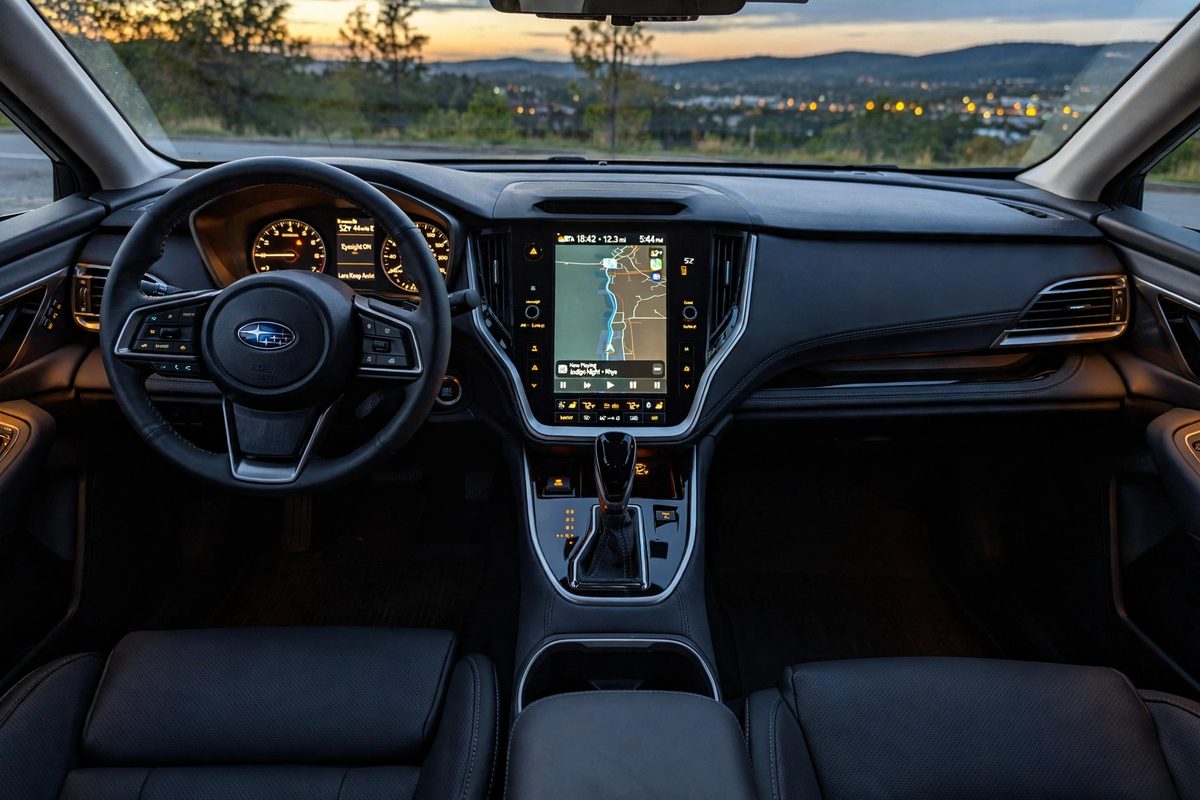
The fifth generation's problems are electrical. The Starlink Data Communication Module can fail to enter sleep mode and drain the battery overnight; ProTech Service found that of the 391 electrical complaints on the 2017 Outback, 331 mention the battery. AGT Auto puts the 2017 at 893 complaints and 4 recalls, including a steering-column recall that drew a NHTSA do-not-drive warning. The 2018 and 2019 add fragile windshields and a troublesome infotainment unit: AGT Auto records 767 complaints for the 2018 and 1,002 for the 2019, the highest total of any year.
The 2020, the first year of the sixth generation, concentrates the same problems in a new body. MotorTrend flags 2020 for battery drain, an infotainment screen that lags, freezes or goes blank, unresponsive climate controls, camera issues, windshield cracking and rough CVT behavior; AGT Auto records 873 complaints and 5 recalls. The 2020 also faced a class-action lawsuit over windshield cracks. The fix the sources agree on: MotorTrend prefers 2021 to 2025, and CarsCounsel calls 2018 and 2019 the best fifth-generation choice once battery and glass are checked.
2005–2009: Head Gaskets and the Older Years
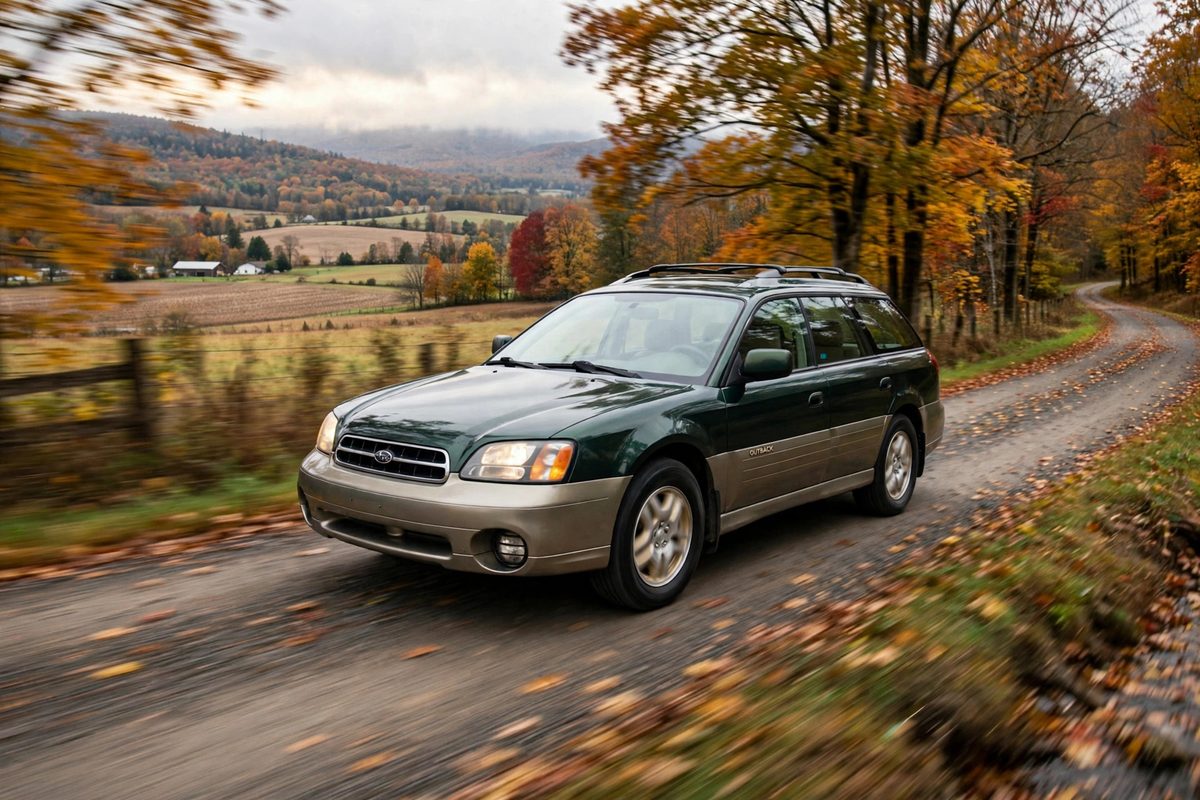
The oldest years on the avoid lists got there for a different reason: head gaskets. The 2.5-liter EJ25 in the third-generation cars leaks externally, weeping oil and coolant from the cylinder heads, typically between 80,000 and 120,000 miles. Consumer Reports rates the 2005 to 2007 cars below average, and CarLifeSpanCheck calls the 2005 the worst model year in Outback history. The 2008 and 2009 cars are the acceptable end of the generation, provided the head gaskets are done.
These years rarely top complaint-count lists, because NHTSA complaints understate problems on cars this old — most were filed years ago, and many of these cars have already been repaired or scrapped. That is why survey-based sources like Consumer Reports still flag 2005 to 2007 even though their NHTSA files look quiet. At this age, check for proof of head gasket replacement, timing belt service every 105,000 miles, and subframe rust underneath.
The Best Years to Buy Instead
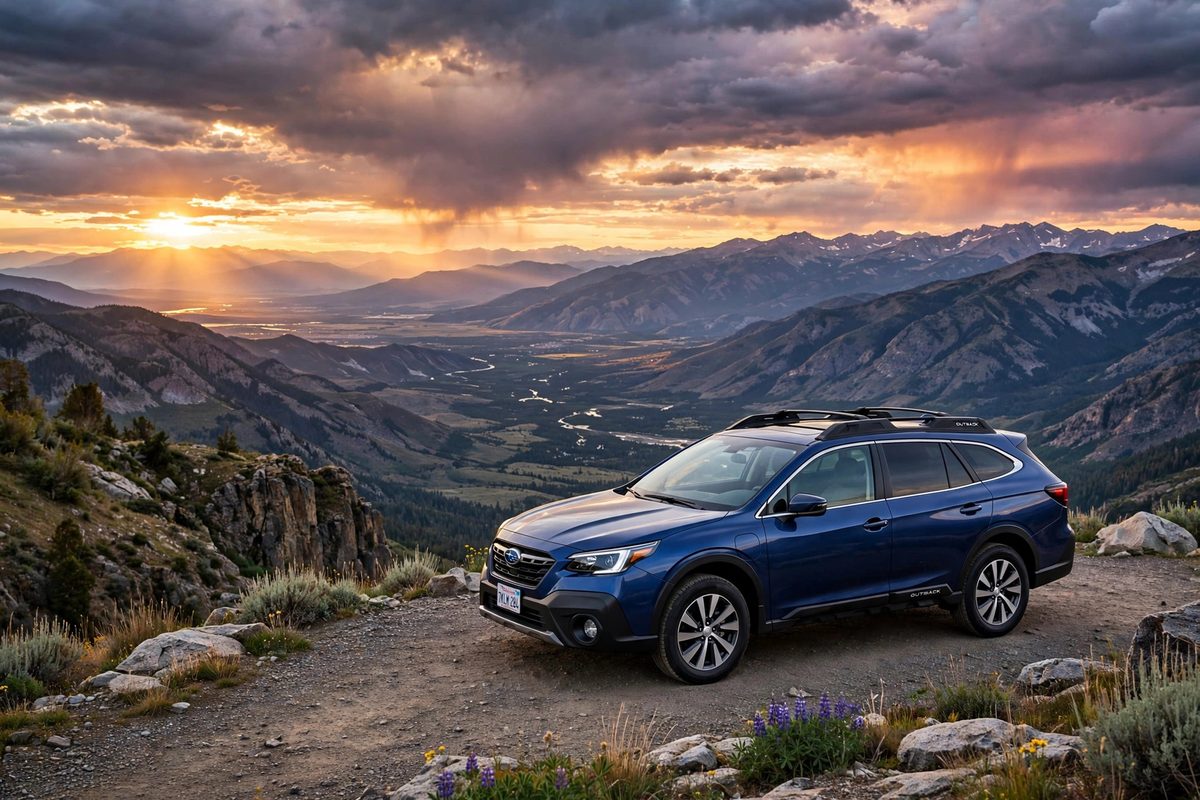
The sources agree more about the good years than the bad ones. Consumer Reports names 2014, 2016, 2017 and 2021 and newer as the Outbacks with the fewest issues. CarsCounsel picks 2018 and 2019 as the best choice, calling them a mature platform with sorted electronics. MotorTrend prefers the 2016 and 2017 cars within the fifth generation and 2021 to 2025 over the first-year 2020, and singles out the 2012 with the 3.6-liter six as the pick of the fourth generation. The pattern is consistent: buy the later years of a generation, and get a pre-purchase inspection anyway.
Pros
- Later years of each generation — 2016–2017, 2018–2019, 2021 and newer — are rated most reliable by several sources at once.
- The 3.6-liter six avoids the four-cylinder head gasket and oil-consumption problems in every generation.
- A 2012 3.6R with the five-speed automatic sidesteps the early CVT shudder entirely.
- Every flagged problem has a cheap inspection — oil level, battery test, VIN recall check — that rules it out.
Cons
- The most reliable years cost more, and the price gap can exceed the repair you are avoiding.
- Even the best years need inspection: battery drain and windshield cracks affect 2017 to 2019 too.
- The 2013–2014 settlement warranty has expired, so a bad 2.5-liter car is now fully your expense.
- A high-mileage good year can be a worse buy than a low-mileage flagged year with full history.
Frequently Asked Questions

What is the single worst Subaru Outback year to avoid?▾
There is no consensus. CarBuzz ranks the 2013 as the worst, followed by 2014 and 2011, while Engineerine calls the 2011 the worst by its own rating. By raw NHTSA complaints the 2019 is heaviest at about 1,002, and by recalls the 2010 leads with 18 campaigns. CarLifeSpanCheck even calls 2013 and 2014 best buys.
Is a 2013 or 2014 Outback always a bad buy?▾
No. The oil problem affects the 2.5-liter FB25 engine, not the 3.6-liter 3.6R, which uses a different engine. A 2.5-liter car with a documented short-block replacement, a clean oil-consumption test and all 12 recalls closed can be a sound buy. But the 2016 settlement warranty has expired, so get the inspection before you pay.
Are the 2017 to 2019 Outbacks unreliable?▾
It depends on the measure. Consumer Reports rates the 2017 among the most reliable Outbacks, yet the 2017 has about 893 NHTSA complaints, mostly about battery drain, and the 2019 about 1,002, mostly batteries, infotainment and windshields. The pattern is electrical, not mechanical: test the battery, check the windshield, and try every screen function.
Which Subaru Outback years are the safest buys?▾
Consumer Reports names 2014, 2016, 2017 and 2021 and newer as the most reliable. CarsCounsel picks 2018 and 2019, MotorTrend prefers 2016–2017 and 2021–2025, and CarLifeSpanCheck agrees on 2018–2019 and 2022–2024. The safest bets are the later years of each generation — inspection still essential.
Should I avoid the 2020 Outback?▾
Approach it with extra care rather than ruling it out. The 2020 was the first year of the sixth generation and carries battery drain, infotainment faults and windshield cracking, with 873 complaints and 5 recalls. MotorTrend prefers 2021 to 2025. If you buy a 2020, check the battery, test the screen and climate controls, inspect the windshield and confirm recalls are closed.
Which Subaru Outback generation is the least reliable?▾
CarBuzz ranks the fifth generation, 2015–2019, as the least reliable Outback generation, with a J.D. Power average of 79 out of 100 for initial quality and reliability. The most reliable is the first generation, 1995–1999, which has the fewest owner complaints and recalls. The sixth generation, 2020–2025, sits in the middle: its 2020 cars are the weakest, while its 2023–2025 cars score 80 out of 100.
Is subframe rust a problem on older Outbacks?▾
Yes, and it is showing up in 2026 complaints. Owners of 2013 to 2018 Outbacks have reported front subframes rusted through, with repair bills of $2,900 to about $8,000 — a 2017 failed inspection at 150,000 miles with a $3,200 estimate. Air-conditioning condensate dripping onto the frame plus road salt gets the blame, and a September 2026 class action alleges a corrosion defect on 2010–2017 models. Inspect the front subframe underneath before buying any Outback of those years, especially from a salt state.
Complaint and recall figures come from NHTSA data as reported by AGT Auto, Intersection Magazine, CarBuzz, ProTech Service, 247VehicleCheck, ForCar, UseCarScout and CarProblemZoo, checked in November 2026; counts change as owners file new reports. Reliability ratings are from Consumer Reports and J.D. Power as summarized by CarGurus, and the generation ranking is CarBuzz's, published June 2025. Always check a car by VIN at NHTSA's recall lookup and get an independent inspection before buying.
Keep researching your Outback
- Subaru Outback Common Problems by Year & Repair Costs
- Subaru Outback Buying Guide: Trims, Prices & Tips
- Subaru Outback Model Years: Every Generation Compared
- Buying a Used Subaru Outback: Best Years, Prices & Checks
- 2013 Subaru Outback: New FB Engine, 30 MPG
- 2016 Subaru Outback: Gen-5 Sweet Spot Year
- 2017 Subaru Outback: Prices, MPG, Recalls & Buying Guide
- 2020 Subaru Outback: Sixth-Gen Debut, New Turbo
Sources
- AGT Auto: 9 Subaru Outback Years To Avoid & Reliability Problems
- CarBuzz: Subaru Outback Years To Buy, And Years To Avoid
- CarLifeSpanCheck: Subaru Outback Reliability by Year
- RetroTreat: Subaru Outback Years an Automotive Technician Says to Avoid (MotorTrend analysis)
- CarGurus: Subaru Outback Buying Guide — Cost, Reliability, and the Best Years to Buy
- ProTech Service: The Subaru Outback Years to Avoid, and What to Inspect Before You Sign
- CarsCounsel: Best and Worst Subaru Outback Years
- Intersection Magazine: 8 Subaru Outback Years To Avoid & Common Problems
- 247VehicleCheck: Subaru Outback Problems, Recalls & MPG by Year
- ForCar: Subaru Outback VIN Check — Complaints per Production Run
- UseCarScout: Used Subaru Outback 6th Gen (2020-2025) — Best & Worst Years
- ClaimDepot: Subaru Class Action Alleges Corrosion Defect in 2010–2017 Models
- CarProblemZoo: Subaru Outback Body Problems
A note on prices
Prices, trims, MPG figures and safety ratings change over time. Treat the figures here as a starting point and confirm the details with a dealer or the manufacturer's site before you buy.
Continue reading