Comparison · 9 min read
Subaru Outback vs Rivals: RAV4, CR-V, Forester & More
RAV4, CR-V, Forester, CX-50 or Grand Cherokee — how the Outback compares on price, MPG, cargo, clearance and towing.
By Jordan Peel · · Updated
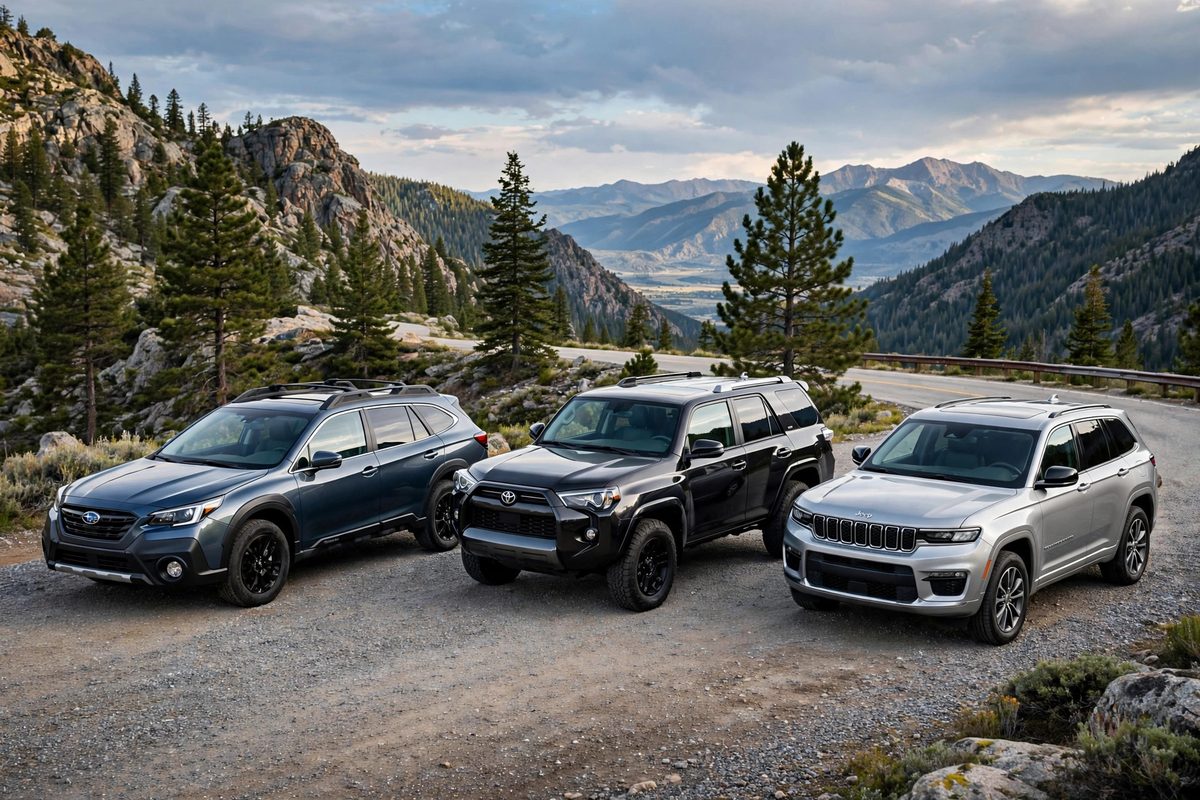
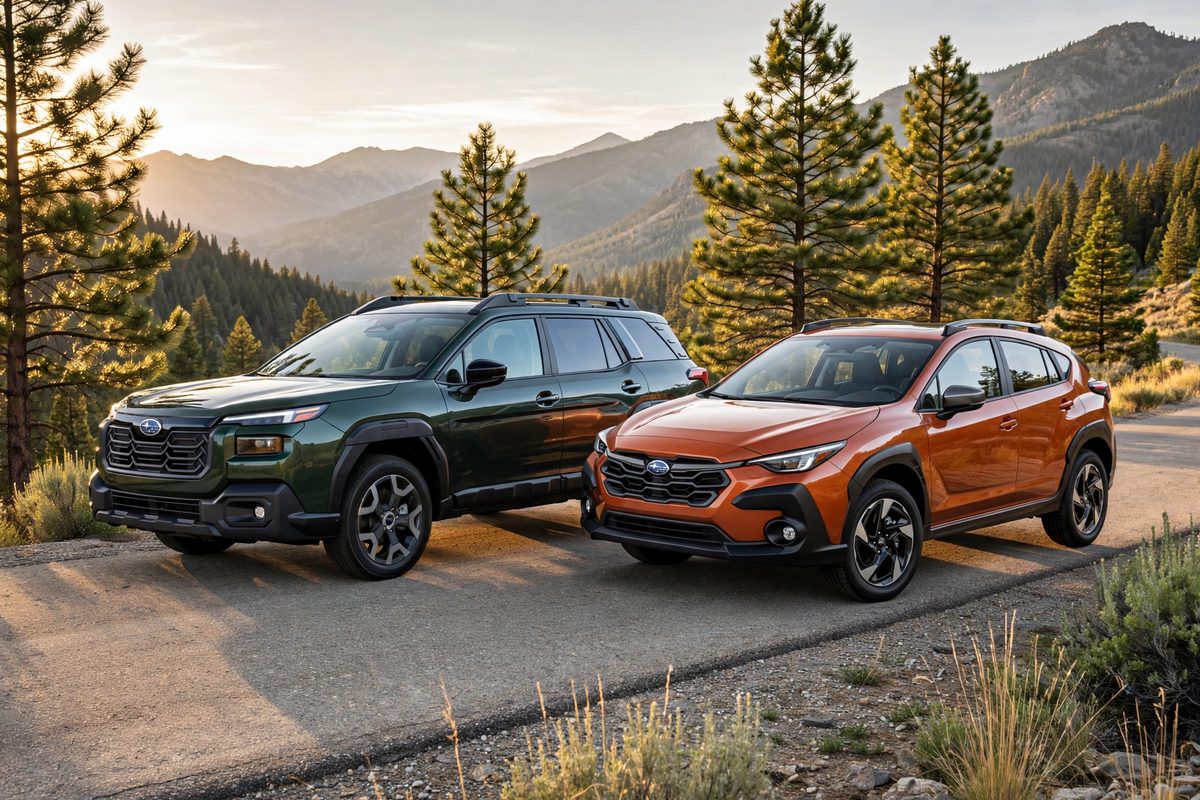
The short answer: the Outback wins on standard all-wheel drive, ground clearance and wagon practicality, and it loses on fuel economy to the hybrid RAV4 and on interior space to the CR-V. The RAV4 is the efficiency pick, the CR-V is the space pick, the Forester is the cheaper Subaru, the CX-50 is the driver's pick, and the Grand Cherokee is the towing pick. The Outback is the one that does all of it well enough that most buyers never need to look further — and this guide compares all five rivals on the same numbers so you can see exactly where that line falls.
How We Compare
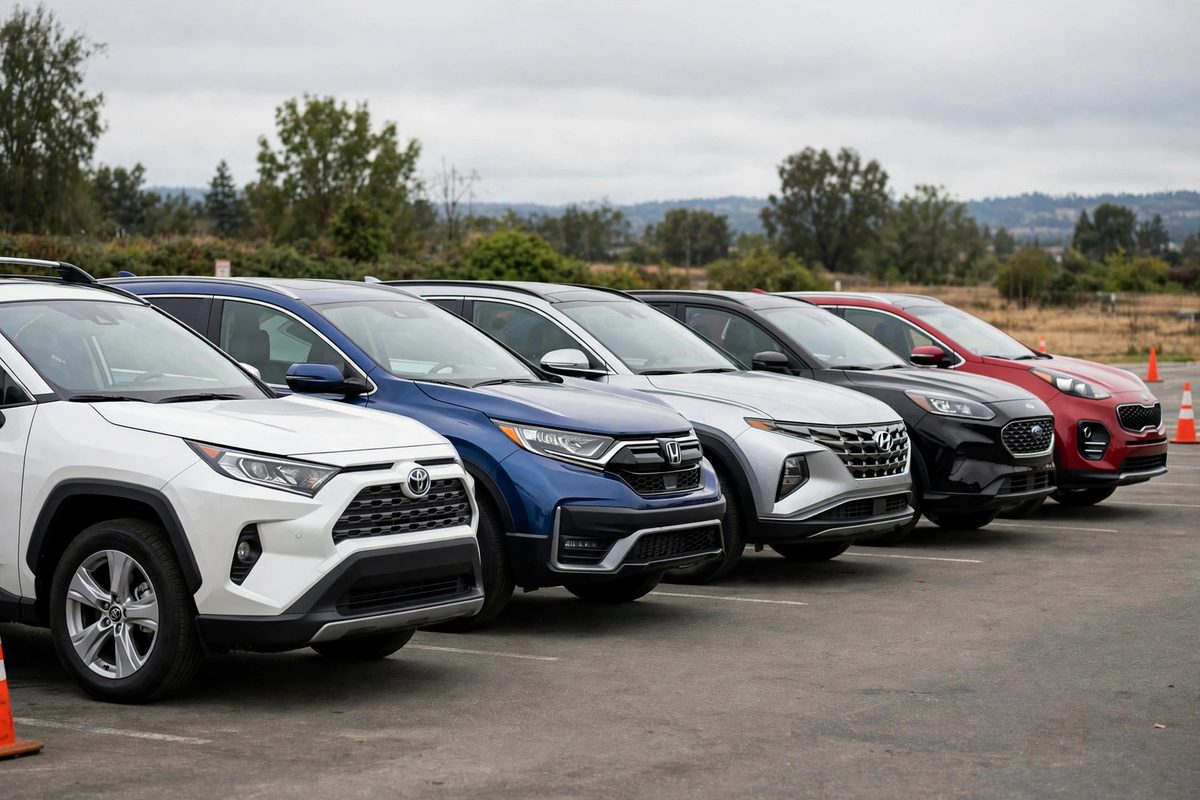
Every comparison below uses the same criteria: starting price, fuel economy, cargo space, ground clearance, whether all-wheel drive is standard, and towing. Prices are 2026 starting MSRPs before destination, and fuel economy figures are the EPA combined ratings. The Outback in these comparisons is the 2.5-liter car unless the turbo or Wilderness is named — those two change the numbers, and the sections below say so where it matters.
| Car | From | MPG combined | Max cargo |
|---|---|---|---|
| Subaru Outback 2.5L | $34,995 | 27 mpg | 80.5 cu ft |
| Toyota RAV4 (hybrid) | $31,900 | 44 mpg | 70.4 cu ft |
| Honda CR-V | $30,920 | 30 mpg | 76.5 cu ft |
| Subaru Forester | $29,995 | 29 mpg | 74.4 cu ft |
| Mazda CX-50 | $31,400 | 27 mpg | 59.6 cu ft |
| Jeep Grand Cherokee | High $30,000s | — | 70.8 cu ft |
Outback vs Toyota RAV4
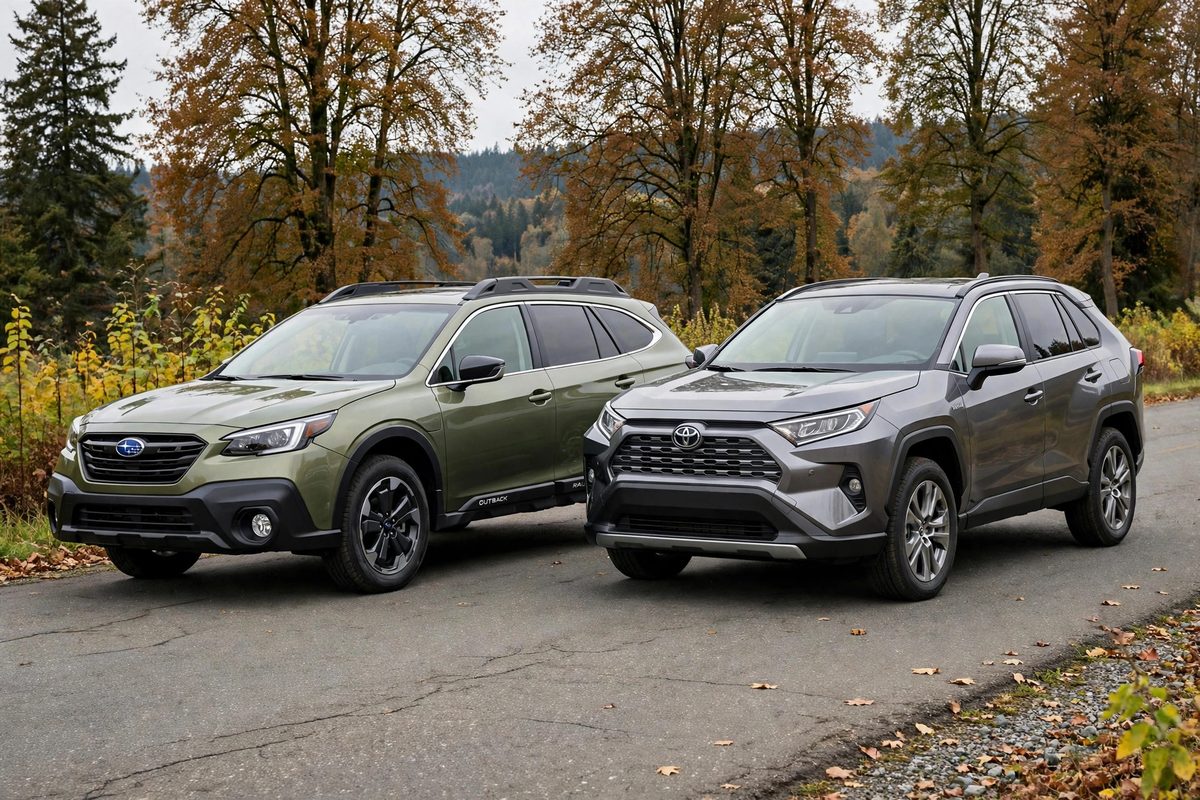
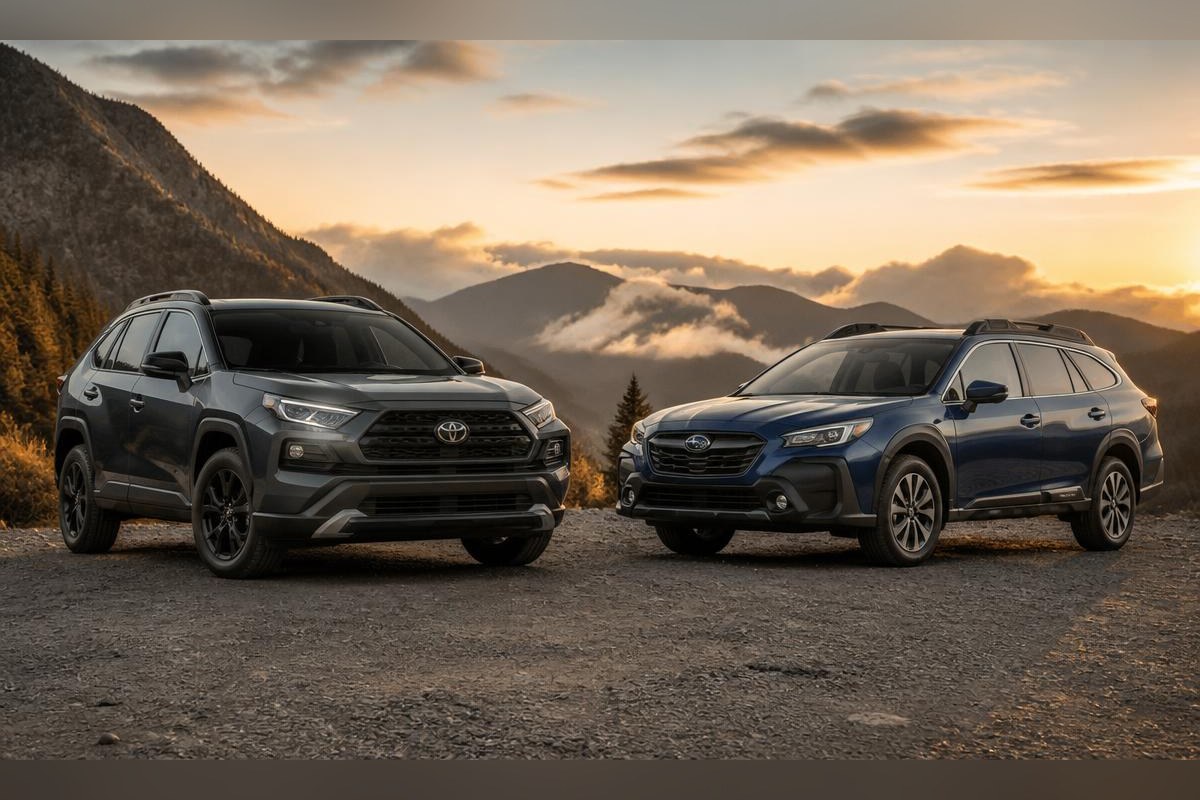
The RAV4 is the Outback's most serious rival, and the comparison turns on one number: 44 mpg combined. The 2026 RAV4 is hybrid-only, and its fuel economy is so far ahead of the Outback's 27 mpg that no other difference closes the gap on running costs. At 15,000 miles a year and $3.50 a gallon, the RAV4 costs roughly $1,190 a year in fuel against the Outback 2.5L's $1,940 — a difference of about $750 a year, every year.
What the Outback gives back is space and capability. Its maximum cargo is 80.5 cubic feet against the RAV4's 70.4, its ground clearance is 8.7 inches against 8.4, and its roofline is lower and longer — a wagon shape that loads more easily and swallows longer items. The RAV4 starts cheaper at $31,900 against the Outback's $34,995, and its hybrid system is proven. Buy the RAV4 if fuel cost is the deciding factor. Buy the Outback if you carry more than you commute, or if you want the car that handles a dirt road without thinking about it.
Outback vs Honda CR-V
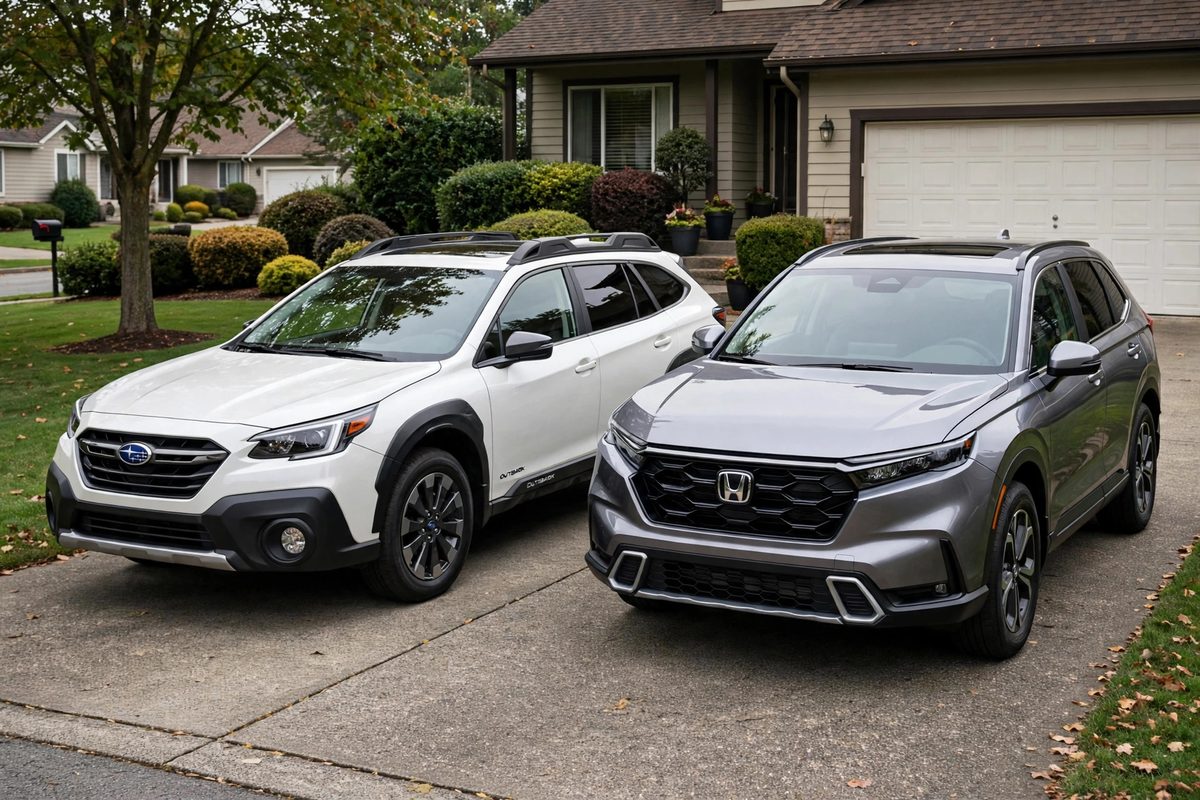
The CR-V is the family pick of this group, and it starts at $30,920 — about $4,000 less than the Outback. Its 1.5-liter turbo makes 190 horsepower and returns 30 mpg combined, and its cabin is the roomiest here: 39.3 cubic feet of cargo behind the rear seats against the Outback's 34.6, and more rear legroom. If the car is mostly a family shuttle, the CR-V is hard to argue against.
The Outback's answers are clearance and all-wheel drive. At 8.7 inches the Outback sits nearly an inch higher than the CR-V's 7.8, and all-wheel drive is standard on every Outback while it is an option on the base CR-V trims. The Outback's maximum cargo is also bigger — 80.5 cubic feet against 76.5 — because the wagon body is longer. The CR-V is the better pure family car; the Outback is the better car for the family that also leaves the pavement.
Outback vs Subaru Forester
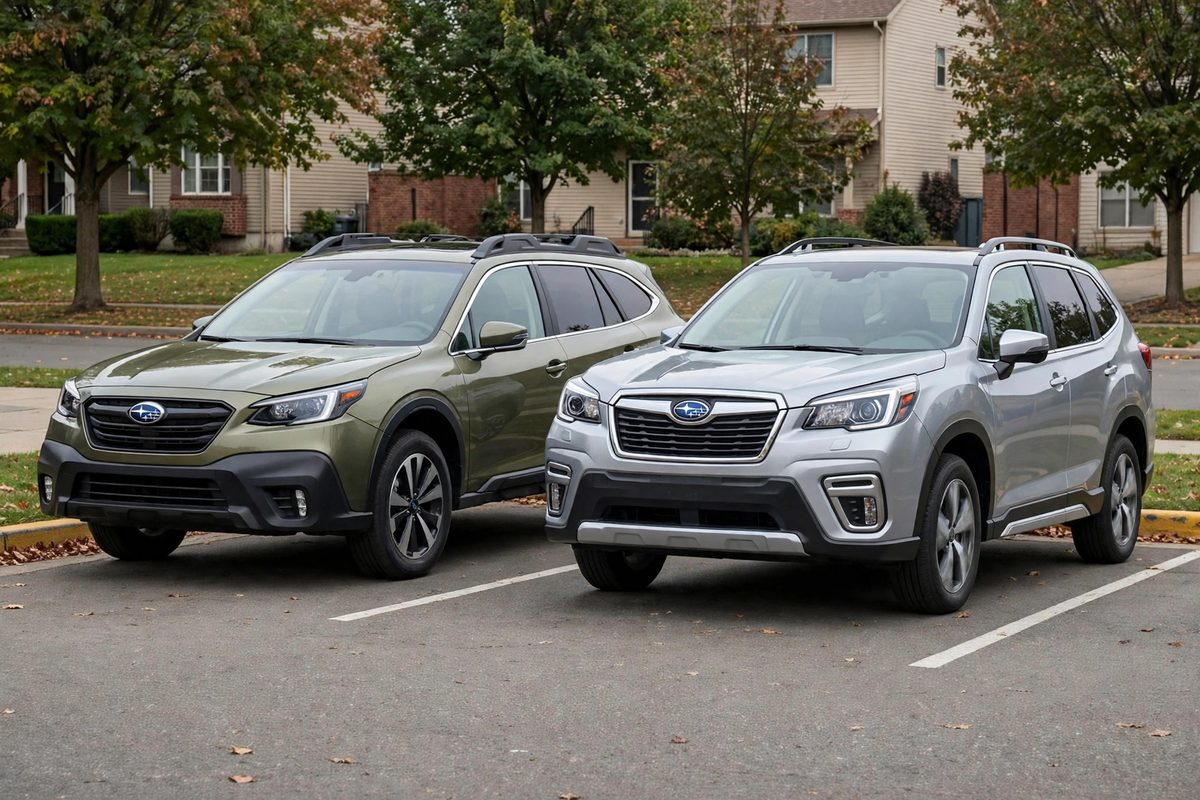
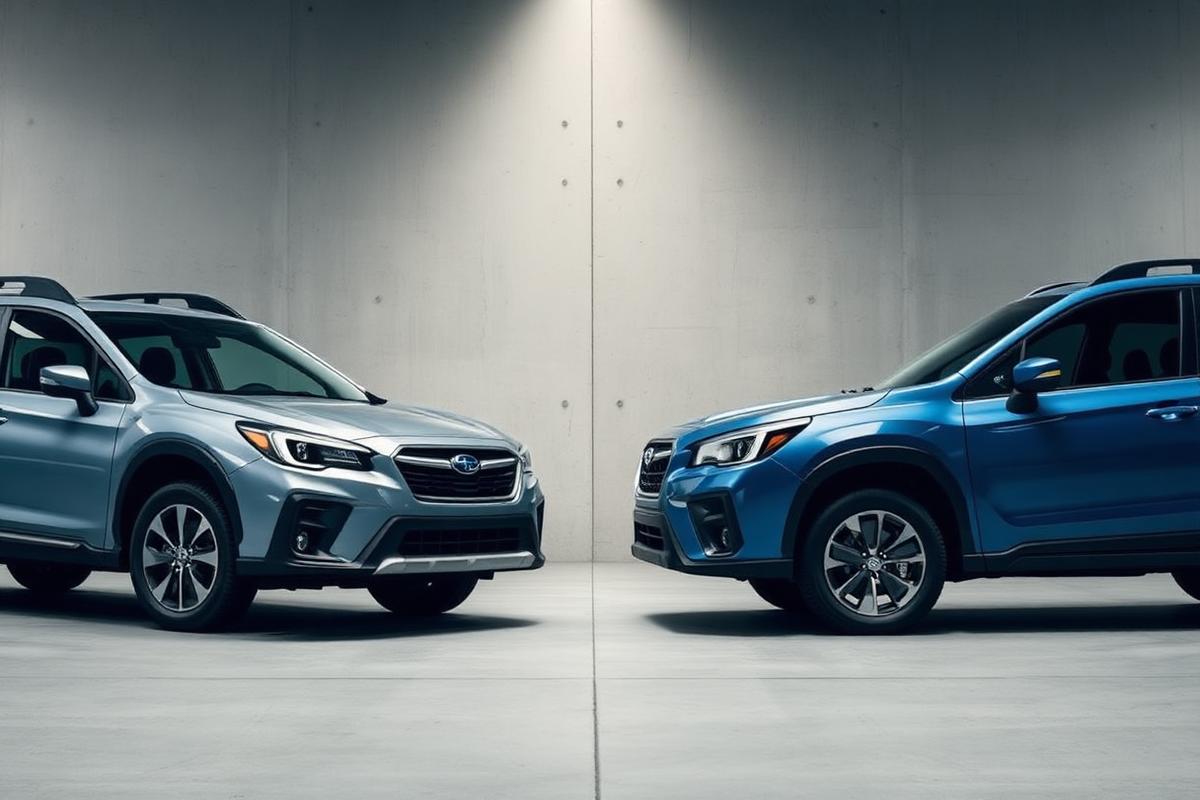
The hardest comparison is the one inside Subaru's own showroom. The Forester starts at $29,995 — $5,000 less than the Outback — with the same 2.5-liter engine making 180 horsepower and the same standard all-wheel drive. It is taller and boxier, with 39.4 inches of rear legroom and a more upright driving position, and its base and Premium trims return 26 mpg city and 33 highway. The Forester Wilderness, at $38,385, undercuts the Outback Wilderness by more than $6,000.
The Outback earns its premium in size and refinement. It is longer — 191.7 inches against the Forester's shorter body — with more cargo space (34.6 cubic feet behind the seats and 80.5 maximum, against 29.6 and 74.4 for the base Forester), a quieter cabin, and a more car-like ride. The Forester is the better value and the easier car to see out of; the Outback is the better long-distance car and the better load carrier. Buy the Forester if the budget is tight or the driving is mostly around town. Buy the Outback if the car will carry a family and their gear for hours at a time.
Outback vs Mazda CX-50
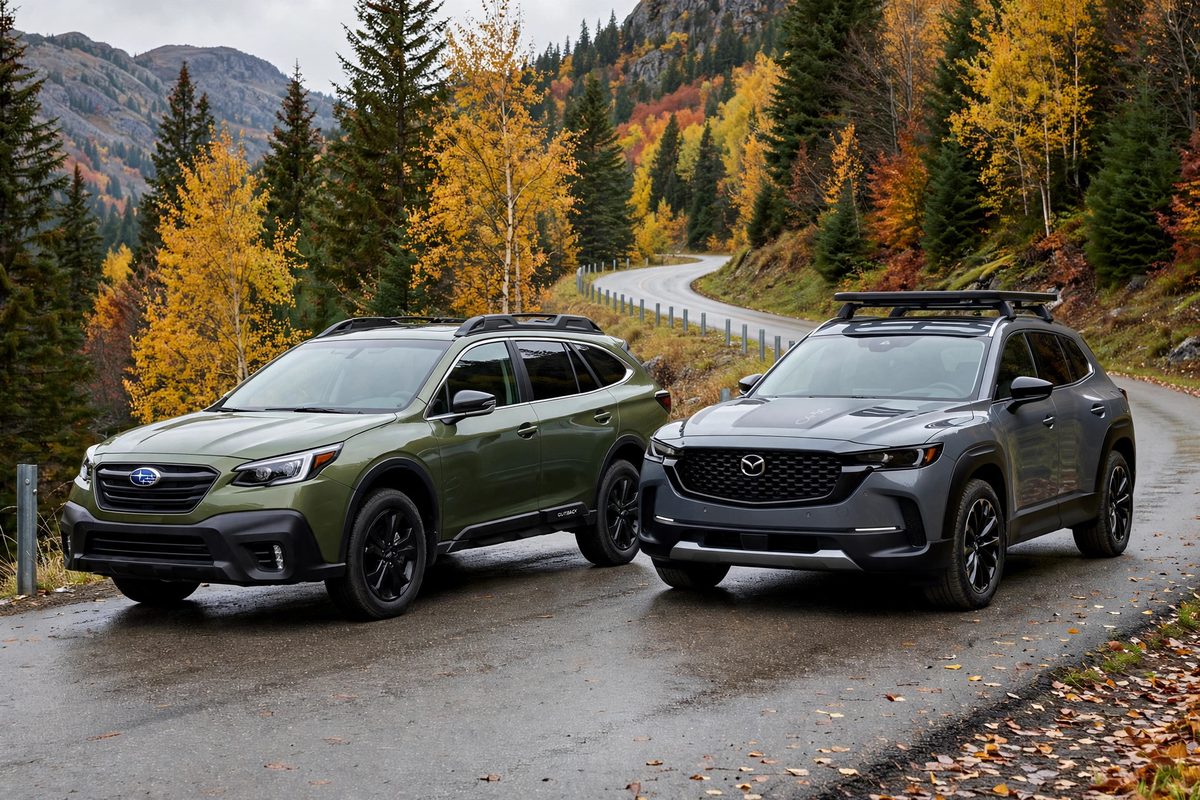
The CX-50 starts at $31,400 with a 2.5-liter engine making 187 horsepower and returning 27 mpg combined — the same combined figure as the Outback 2.5L. It is the best car to drive in this group, with sharper steering and a more premium-feeling cabin than its price suggests, and it looks the part too. For buyers who care about how a car feels on a good road, the CX-50 is the one to test first.
The Outback's case is practical: 80.5 cubic feet of maximum cargo against the CX-50's 59.6, 8.7 inches of clearance against 7.5, and a rear seat that fits adults properly. The CX-50's cargo area is the smallest here by a wide margin, and its rear seat is tighter. The Mazda is the enthusiast's pick and the style pick; the Outback is the pick for buyers who need the space the Mazda does not have.
Outback vs Jeep Grand Cherokee
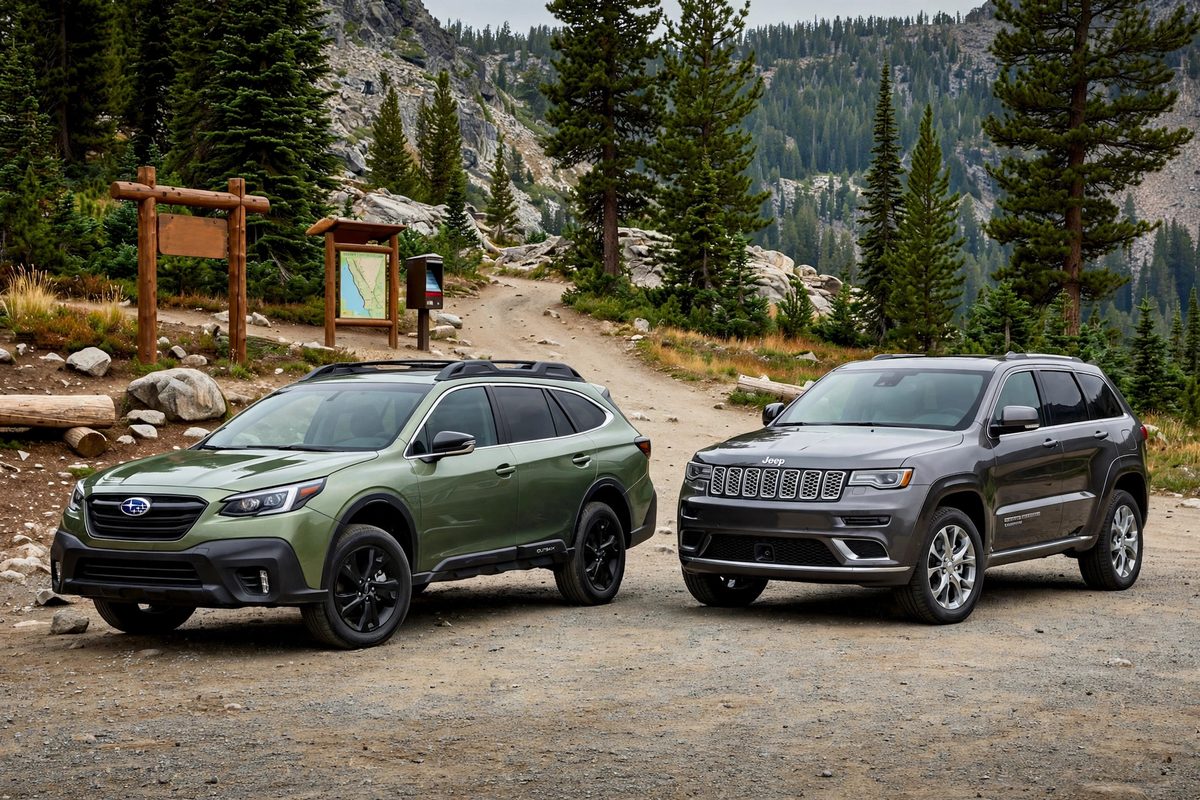
The Grand Cherokee is the only rival here that out-muscles the Outback outright. Its V6 makes 293 horsepower and tows up to 6,200 lb — nearly double the turbo Outback's 3,500 lb — and it starts in the high $30,000s, within reach of the Outback's upper trims. For buyers who tow a boat or a large trailer, the Jeep is the answer and the Outback is not.
For everyone else, the Outback is the cheaper car to own. The Grand Cherokee's V6 drinks more fuel, its maximum cargo of 70.8 cubic feet is smaller than the Outback's 80.5, and its reliability and running costs are a step behind Subaru's. The Jeep is the towing pick and the power pick; the Outback is the pick for buyers who want most of the capability at a much lower cost of ownership.
The Turbo Question: Does Any Rival Match It?
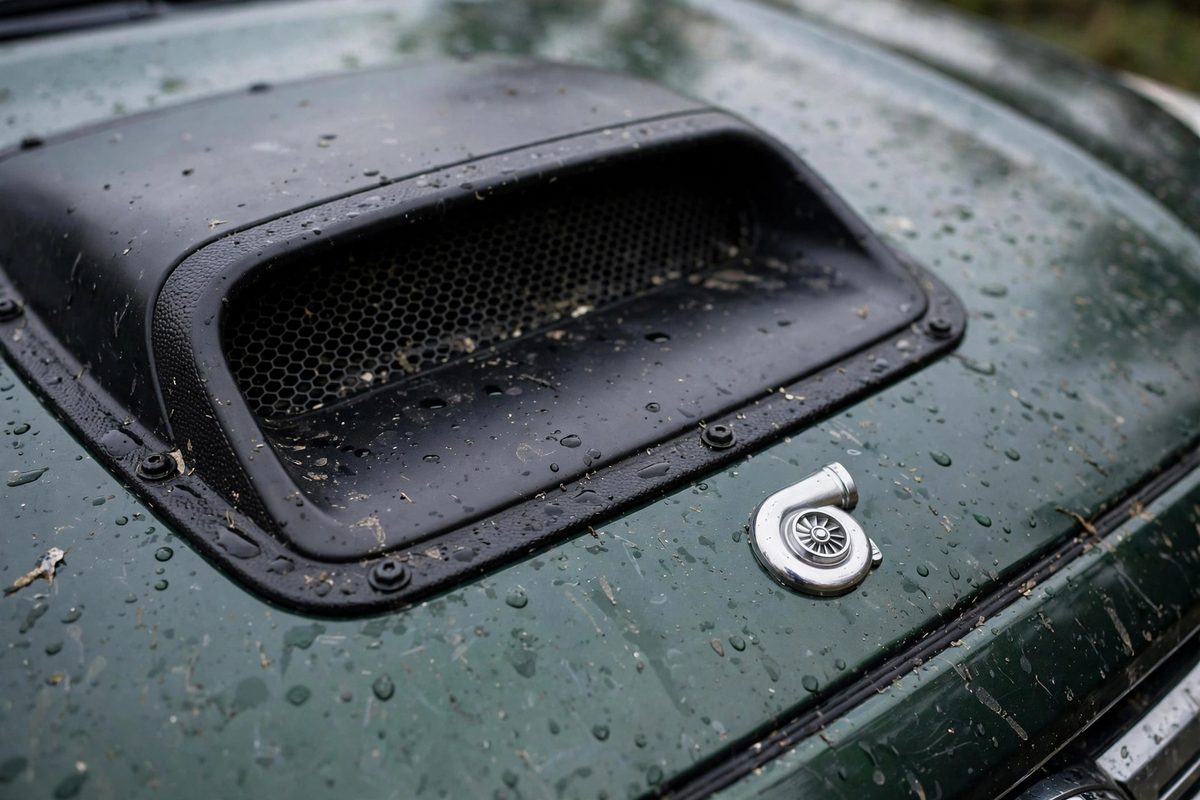
The Outback's 2.4-liter turbo makes 260 horsepower and 277 lb-ft of torque, tows 3,500 lb, and costs about 3 mpg against the 2.5L — 24 combined in the XT trims, 23 in the Wilderness. Against the rivals, it sits in the middle: more powerful than the RAV4 hybrid and the CR-V's 190-horsepower turbo, less powerful than the Grand Cherokee's 293-horsepower V6, and about even with the CX-50's available turbo. No rival matches it on the combination of power, towing and wagon practicality at the price — the XT trims start at $44,365.
Whether the turbo is worth it depends on the driving. It costs roughly $250 more a year in fuel than the 2.5L at 15,000 miles, and the XT trims cost about $9,000 more than a Premium before options. That buys 80 horsepower and 800 lb of towing. If you tow, climb, or drive fully loaded, it is money well spent. If you do not, the 2.5L is the smarter buy, and the money is better spent on the trim you actually want.
Which Rival Fits Which Buyer
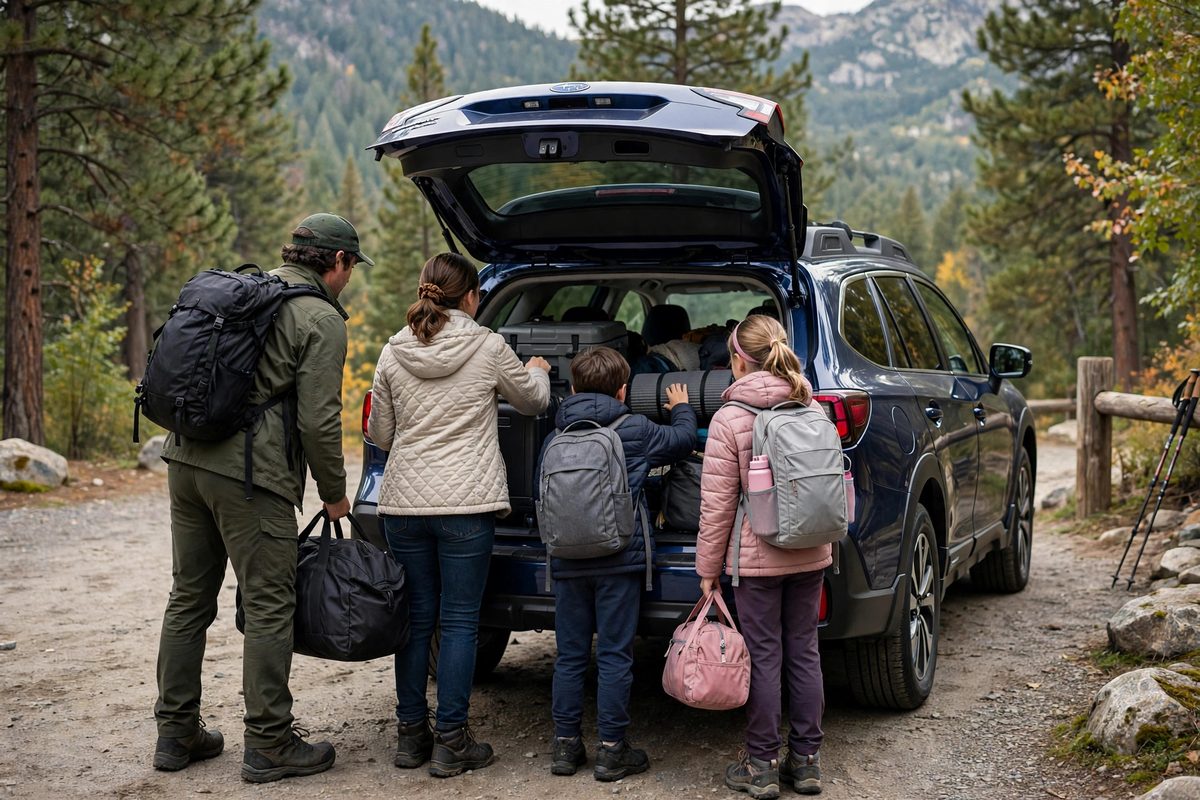
Fuel cost above all else: the RAV4, at 44 mpg combined, is in a class of its own. Family space above all else: the CR-V, with the roomiest cabin and the lowest price. Budget above all else: the Forester, $5,000 cheaper than the Outback with the same engine and all-wheel drive. Driving enjoyment above all else: the CX-50. Towing above all else: the Grand Cherokee, and nothing else here comes close.
And the Outback? It is the pick for the buyer who wants all of those things at once, without the best-in-class anything. Standard all-wheel drive, 8.7 inches of clearance, 80.5 cubic feet of cargo, 27 mpg from the base engine, and a turbo option that tows 3,500 lb. No rival beats it on the combination — and that is why it is the default answer in this class, even when a rival wins any single category.
The Bottom Line
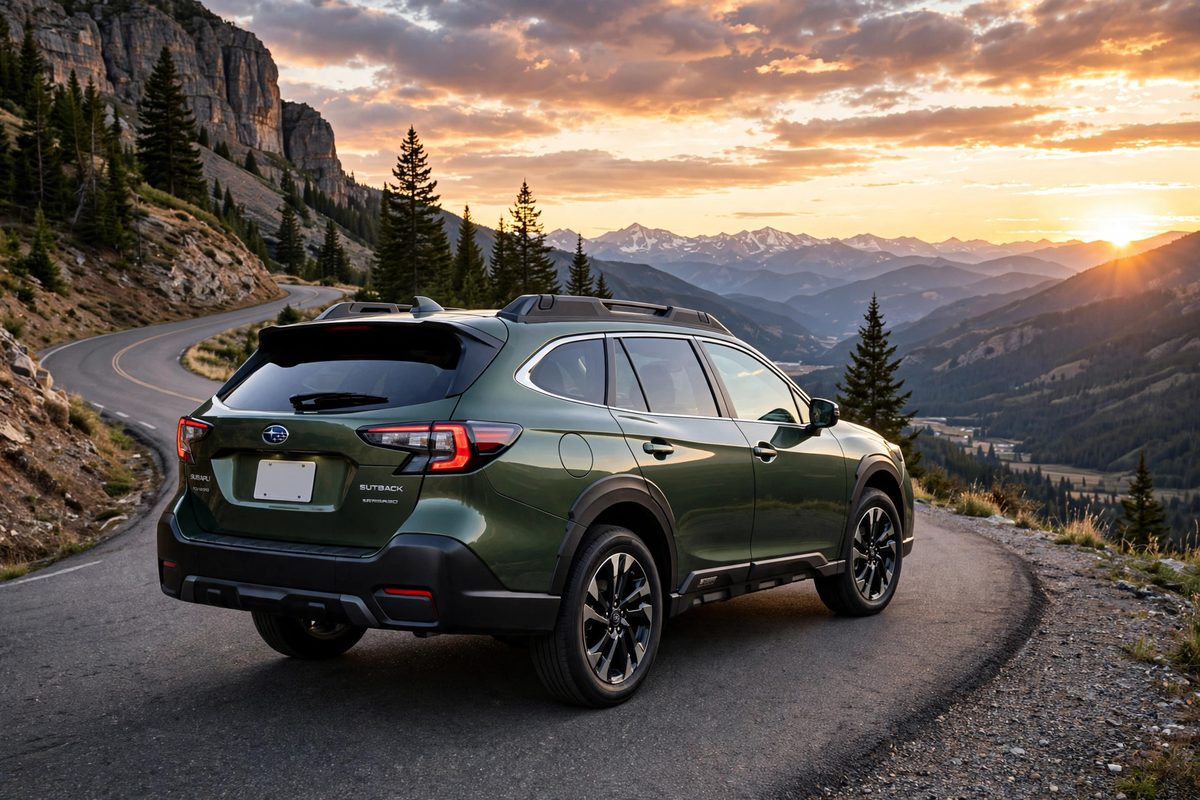
The RAV4 wins on fuel economy, the CR-V wins on space, the Forester wins on price, the CX-50 wins on driving feel, and the Grand Cherokee wins on towing. The Outback wins on the combination — standard all-wheel drive, real ground clearance, wagon cargo space, and a turbo option — at a price the rivals have to work hard to match. Test the rival that wins your category first. Then test the Outback, and see whether the combination changes your mind. For most buyers, it does.
Is the Subaru Outback better than the Toyota RAV4?▾
It depends on the priority. The RAV4 is far better on fuel economy — 44 mpg combined against the Outback's 27 — and cheaper to buy. The Outback has more maximum cargo (80.5 vs 70.4 cubic feet), more ground clearance, and a wagon shape that loads more easily. Buy the RAV4 for efficiency, the Outback for space and capability.
Is the Outback bigger than the CR-V?▾
Longer, yes, with more maximum cargo — 80.5 cubic feet against the CR-V's 76.5. But the CR-V has more cargo space behind the rear seats (39.3 vs 34.6 cubic feet) and a roomier cabin, so it feels bigger as a family car. The Outback is the bigger load carrier; the CR-V is the roomier passenger car.
Should I buy an Outback or a Forester?▾
The Forester is $5,000 cheaper with the same engine and all-wheel drive, and it is taller with better rear legroom. The Outback is longer, quieter, and carries more — 80.5 cubic feet maximum against 74.4 — and rides better on long trips. Budget and town driving favor the Forester; long trips and heavy loads favor the Outback.
Does any rival tow more than the Outback?▾
Yes — the Jeep Grand Cherokee's V6 tows up to 6,200 lb, against the turbo Outback's 3,500 lb and the 2.5L's 2,700 lb. If towing over 3,500 lb is a requirement, the Grand Cherokee is the only rival here that does it. For anything up to 3,500 lb, the turbo Outback covers it.
Which Outback rival gets the best MPG?▾
The Toyota RAV4, by a wide margin — 44 mpg combined from its hybrid-only lineup. The CR-V manages 30 mpg, the Outback 2.5L and the CX-50 both manage 27 mpg, and the Forester manages 29 mpg combined on most trims.
Keep researching your Outback
- Toyota RAV4 vs Subaru Outback: Which One Is Better?
- 2026 Subaru Outback vs Forester: Which Subaru SUV Wins?
- 2026 Subaru Outback Review: Is the Redesigned SUV Worth It?
- Subaru Outback Buying Guide: Trims, Prices & Tips
- Subaru Outback Model Years: Every Generation Compared
- Cost of Subaru Outback: 2026 Prices, Trims & Ownership Costs
- Subaru Outback MPG Calculator: Work Out Your Fuel Cost
- Toyota RAV4 — official page at Toyota
- Honda CR-V — official page at Honda
- Fuel economy ratings — fueleconomy.gov (EPA)
Sources
- Subaru Outback vs Toyota RAV4 — Kelley Blue Book
- Subaru Outback vs Honda CR-V — Kelley Blue Book
- Subaru Outback vs Toyota RAV4 — Edmunds
- Subaru Outback vs Forester Hybrid — Edmunds
- 2026 Subaru Forester vs Subaru Outback — RoadEthos
- 2026 Outback Wilderness vs Toyota RAV4 Woodland — RoadEthos
- Outback vs Forester — Subaru Australia
- Fuel economy ratings — fueleconomy.gov (EPA)
Continue reading