Buying Guide · 10 min read
2013 Subaru Outback: New FB Engine, 30 MPG
New FB25 engine lifts highway economy to 30 mpg, and the car earned IIHS Top Safety Pick+ — but the FB's early years are the ones guides flag most.
By Elena Marsh · · Updated
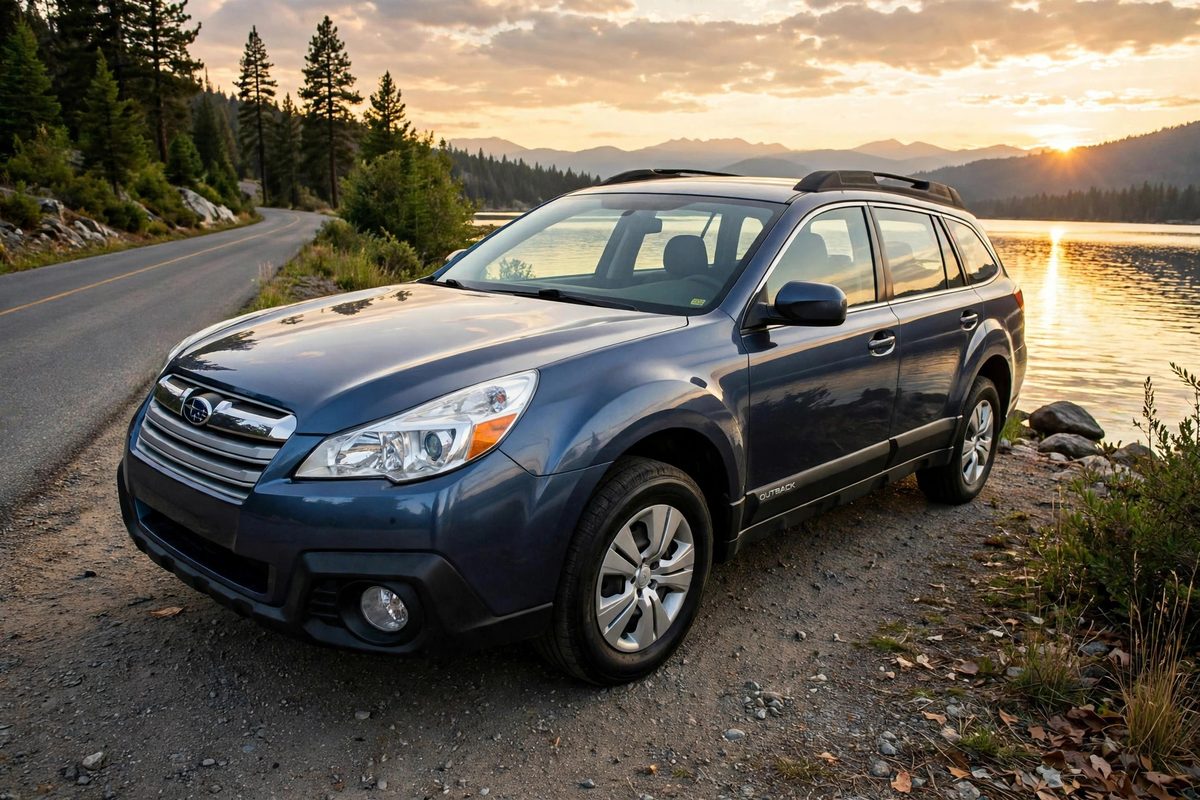
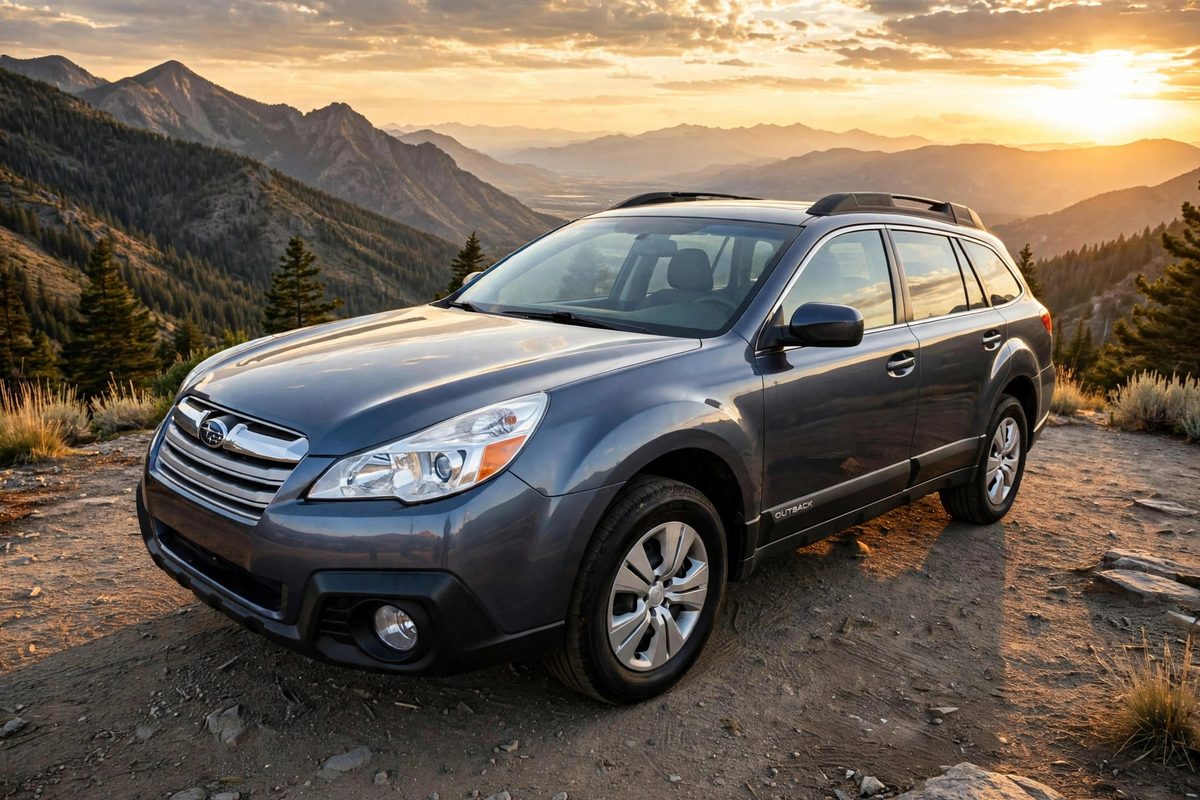
The 2013 Subaru Outback is the year the fourth-generation wagon got its most important upgrade: a new 2.5-liter FB25 four-cylinder engine that lifted highway fuel economy to 30 mpg with the CVT while keeping standard Symmetrical All-Wheel Drive, seating for five, and 8.7 inches of ground clearance. Kelley Blue Book's current dealer Fair Purchase Prices start at about $7,500, and the wagon earned the IIHS Top Safety Pick+ award. The catch is that the new engine brought a new problem with it: owner reports and reliability guides link the 2013 and 2014 cars to excessive oil consumption, and the early CVT needs a careful test drive. Buy one that passes those checks, and the 2013 is a practical, cheap-to-run wagon.
2013 Subaru Outback at a Glance
| What to know | 2013 Outback |
|---|---|
| Starting price when new | $23,495 for the base 2.5i (Edmunds) |
| Current used starting price | About $7,500 (Kelley Blue Book) |
| Engines | 2.5-liter flat-four, 173 hp; 3.6-liter flat-six, 256 hp |
| Fuel economy | 24 city / 30 highway mpg (2.5-liter, CVT); 18 / 25 mpg (3.6-liter) |
| Drivetrain | Standard Symmetrical All-Wheel Drive |
| Cargo | 34.3 cubic feet behind rear seats; 71.3 folded |
| Ground clearance | 8.7 inches |
| Safety | IIHS Top Safety Pick+; 5-star overall NHTSA rating |
Why the 2013 Model Year Matters
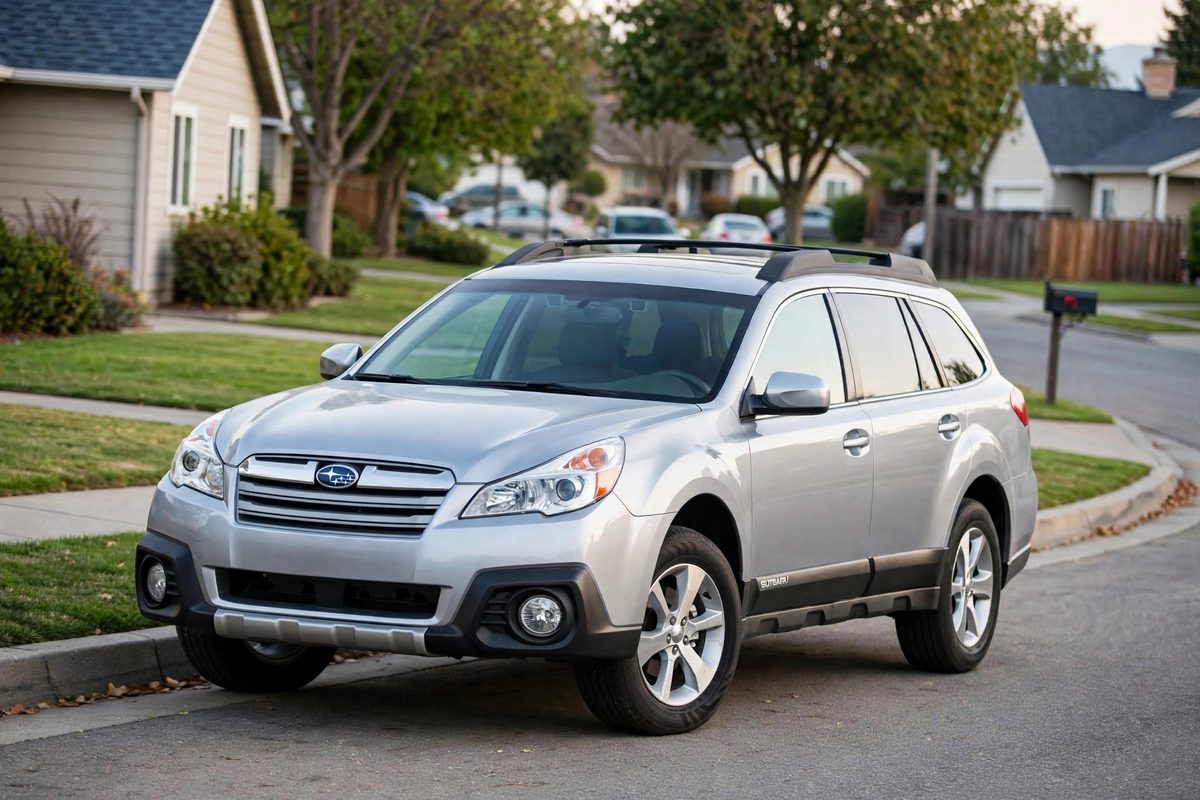
The 2013 Outback is the fourth year of the fourth generation, which arrived for 2010 with a taller body, a longer wheelbase, and far more rear-seat room than the wagon it replaced. For 2013, Subaru replaced the old EJ-series 2.5-liter with the new FB25 engine: the CVT car is rated at 24 mpg in the city and 30 on the highway, against 22 and 29 for the previous engine, with a smoother, quieter character at cruising speed. With an 18-gallon tank, the CVT car can cruise well over 500 miles between fill-ups.
The 2013 also arrived with a strong safety story. Subaru announced in December 2012 that the 2013 Outback had earned the IIHS Top Safety Pick+ award, the institute's top honour at the time, for cars built after August 2012, with Good ratings in the institute's crash tests. That combination is why the 2013 still draws buyers — but read the reliability section before you pay: the FB25's early years are the ones guides flag most often.
Prices and Trims: What Each Version Cost
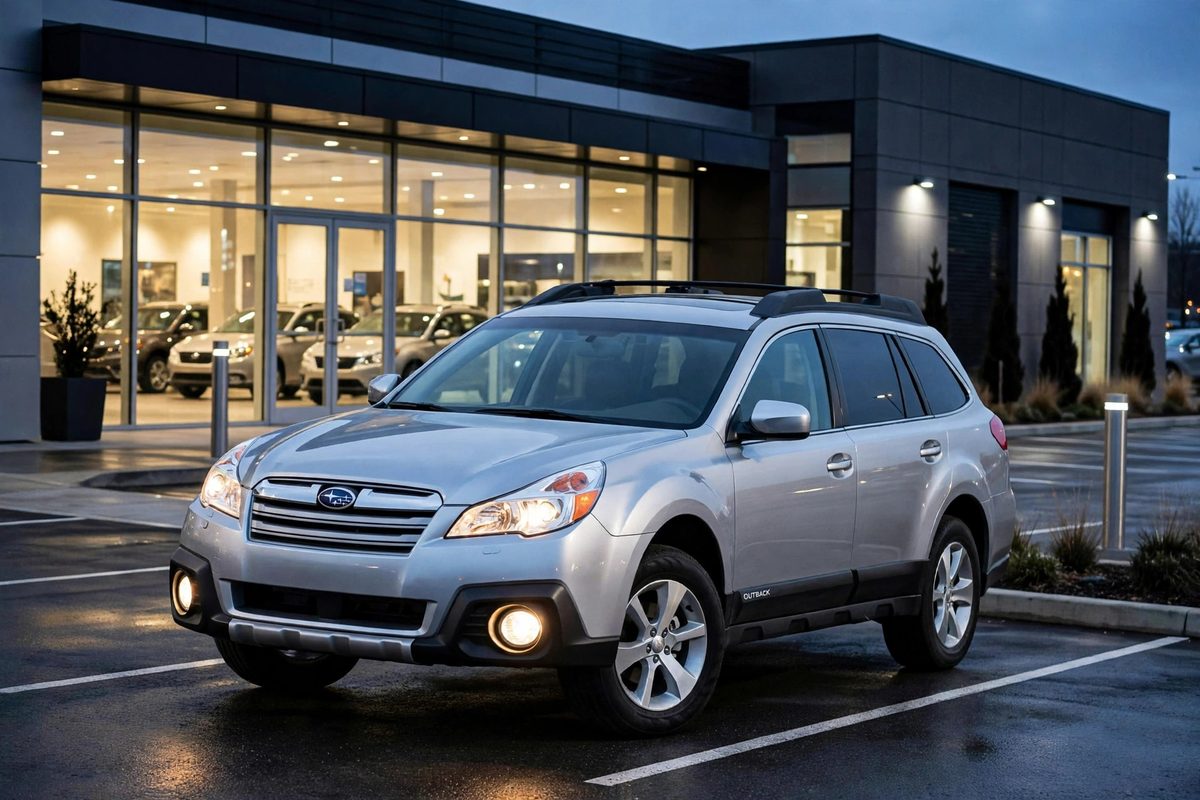
The 2013 Outback came in five trims, all with all-wheel drive. The table below pairs each trim's original price with Kelley Blue Book's current Fair Purchase Price, which reflects typical-condition dealer sales and is updated weekly. Individual cars vary widely with mileage, condition, and location, so treat these as starting points, not quotes for a specific car.
| Trim | Original MSRP | Current used starting price |
|---|---|---|
| 2.5i | $26,051 | $7,500 |
| 2.5i Premium | $27,551 | $7,600 |
| 2.5i Limited | $32,935 | $7,800 |
| 3.6R | $29,290 | $8,275 |
| 3.6R Limited | $32,890 | $9,025 |
Two things stand out. First, the cheapest car is the base 2.5i, but the Premium costs only about $100 more in Kelley Blue Book's current figures while adding alloy wheels, fog lights, and a power driver seat, so it is the better buy in most cases. Second, the six-cylinder cars carry only a modest premium used: the 3.6R starts at about $8,275 against $7,500 for the base four-cylinder. As a cross-check, CarGurus lists the average 2013 Outback at roughly $8,000.
Engines, Performance and Real-World Driving
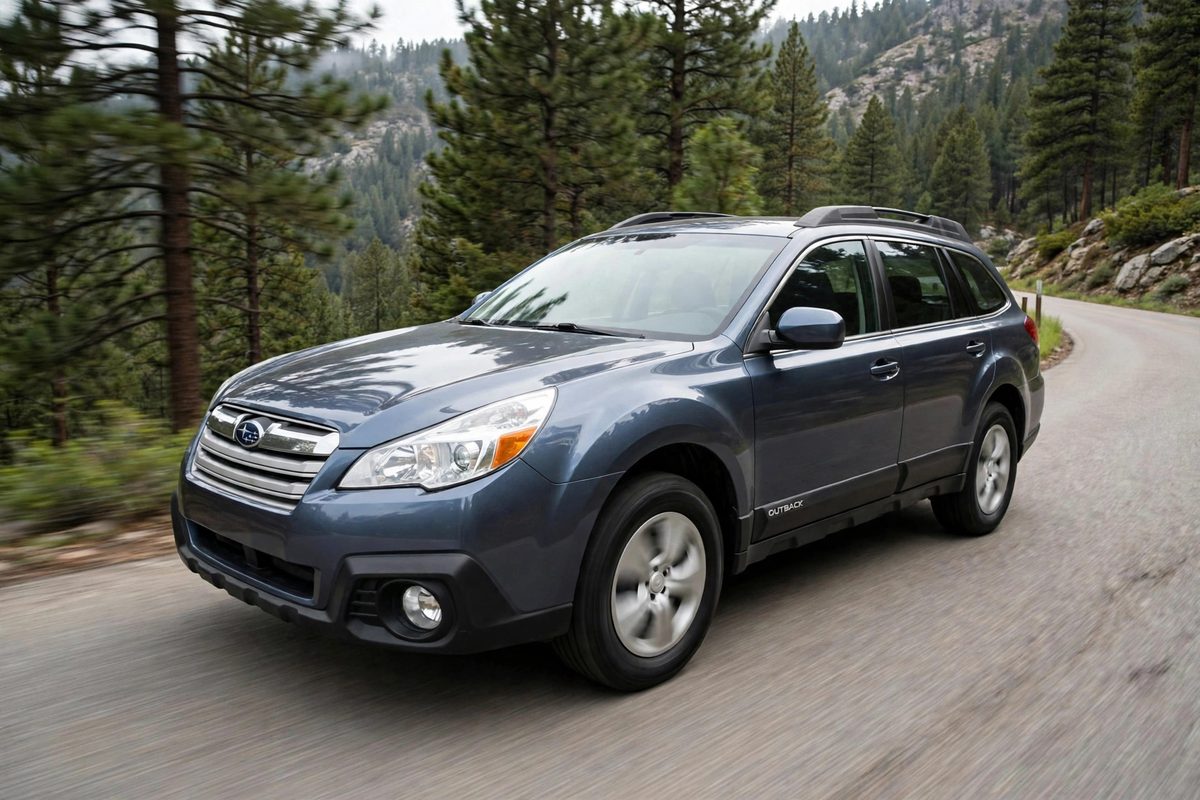
The base 2.5-liter flat-four makes 173 horsepower and 174 lb-ft of torque, paired with either a six-speed manual on base and Premium trims or Subaru's second-generation Lineartronic CVT. The CVT is the economy choice: 24 mpg in the city and 30 on the highway, or 26 combined, against 21 and 28 for the manual. Edmunds notes the four-cylinder has to work when loaded or climbing, but at cruising speed the CVT holds peak torque and keeps the car moving calmly.
The 3.6-liter flat-six makes 256 horsepower and 247 lb-ft of torque and comes only with a five-speed automatic with shift paddles. In Edmunds performance testing it reached 60 mph in 7.3 seconds, a strong time for a wagon of this size, and it is the smoother, quieter choice for passing and hill climbs. The trade-off is fuel economy: 18 mpg in the city and 25 on the highway, or 20 combined. On the road, all-wheel drive and 8.7 inches of clearance handle snow, gravel, and rutted tracks that stop most family wagons.
Interior, Cargo and Everyday Practicality
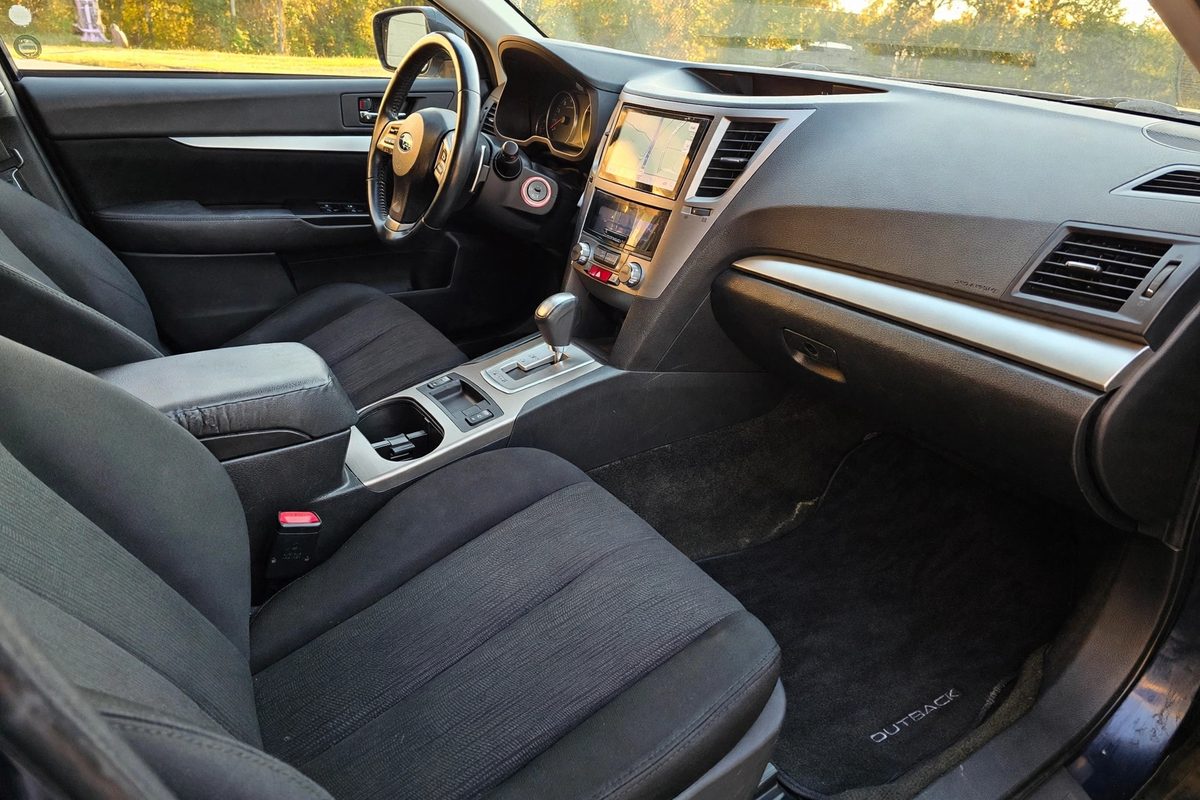
Inside, the 2013 Outback is roomy for five adults, with generous headroom, reclining rear seatbacks, and a wide, flat cargo floor. You get 34.3 cubic feet behind the rear seats and 71.3 cubic feet folded, plus dual hidden storage trays under the cargo floor. The adjustable roof rails swing inward to double as crossbars. Base and Premium trims use cloth; Limited trims use leather with heated front seats and dual-zone climate control. Technology is basic by today's standards: no CarPlay, Android Auto, or EyeSight on most 2013 trims.
Safety and Driver Assistance
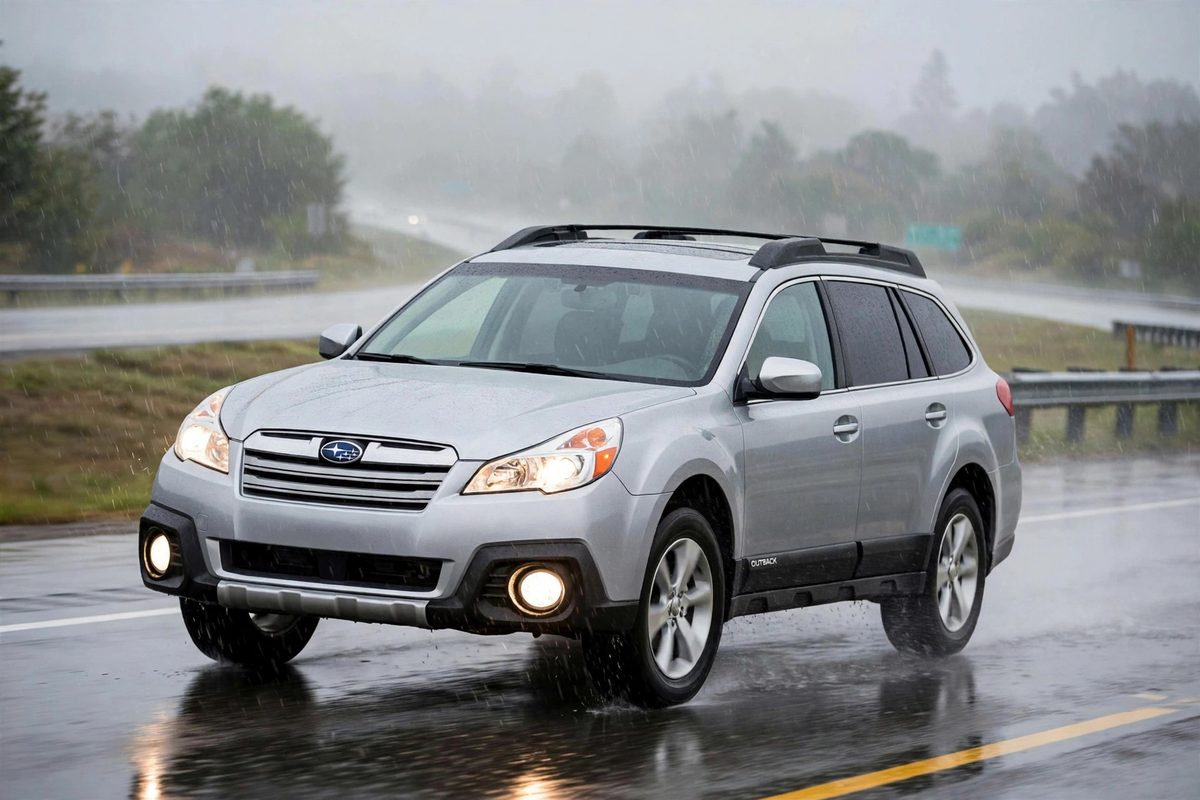
The 2013 Outback earned the IIHS Top Safety Pick+ award for cars built after August 2012, with Good ratings in the institute's frontal-offset, side, and roof strength tests, and it carries a 5-star overall rating from NHTSA. Standard equipment includes antilock disc brakes, stability and traction control, front side airbags, and side curtain airbags. What it lacks is modern active safety tech: automatic emergency braking, lane keeping, and blind-spot monitoring were not available on the 2013 Outback.
Ownership Costs and Reliability: The Oil Consumption Warning
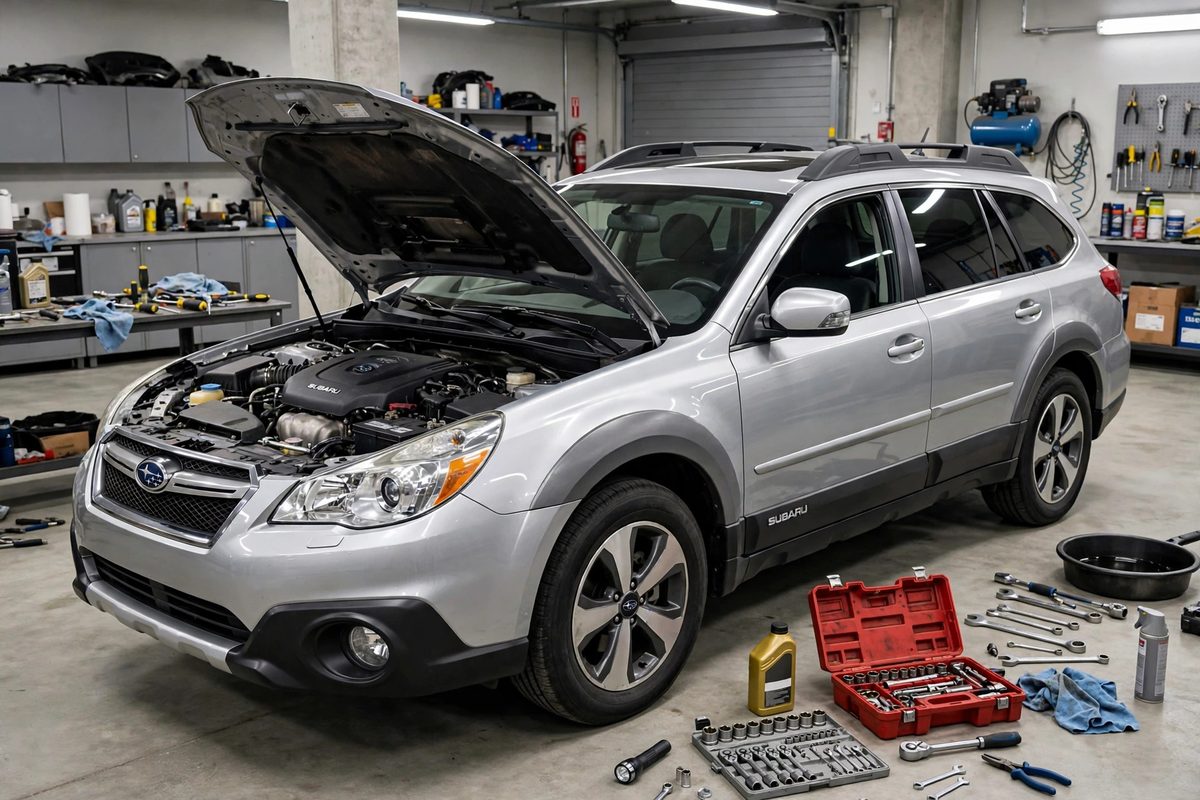
This is the section that decides whether a 2013 Outback is a bargain or a bill. Reliability guides and owner reports link the FB25 engine in the 2013 and 2014 Outbacks to excessive oil consumption, traced to the engine's piston rings, with some owners reporting a quart consumed every 1,000 to 2,000 miles. The problem was serious enough that a class-action settlement extended warranty coverage for qualifying vehicles to eight years or 100,000 miles, but that extension has now expired for a 2013, so any engine work today comes out of your pocket. These are reported patterns, not certainties — but the specific car's oil history matters more than the badge. The recall list in the section below is part of the same check.
Two other checks belong on every 2013 shopping list. First, the early Lineartronic CVT: owner reports describe shuddering and hesitation, and reliability guides note inadequate CVT cooling under demanding conditions such as sustained climbs or towing, so a long test drive from a cold start is essential. Second, a smaller annoyance that reliability guides flag for this generation: headlight bulbs that fail often and are awkward to replace, since access is through the wheel well.
Recalls and Owner Complaints: The Paper Trail
The 2013 Outback has one of the longer recall lists of any Outback year: NHTSA lists 14 safety recalls for it, though most of that count comes from the Takata passenger-airbag inflator being recalled in waves across different climate zones and model years. Strip out the Takata repeats and six distinct defects remain, and three of them matter when you are standing in front of a car with cash in your pocket. Every recall repair is free at a Subaru dealer, but only if it was actually done, so run the VIN before you buy.
| Recall | NHTSA campaign | What was wrong |
|---|---|---|
| Takata passenger airbag inflator | 16V-358, 18V-012, 19V-007/008/009, 20V-001/002/003 | Inflator can rupture and throw metal fragments; recalled in waves by climate zone, and replacement inflators were recalled again in 2020 |
| Wiper motor bottom cover | 16V-694 (Sep 2016, Subaru WTK-71) | Contamination can make the wiper motor overheat and the cover melt, so the wipers can fail or, in the worst case, catch fire; 592,647 Legacy and Outback cars across 2010-2014 |
| Electronic parking brake | 18V-626 (Sep 2018) | On manual-transmission cars the parking brake may not hold, so the car can roll away; 27,175 vehicles |
| Remote engine starter | 13V-061 (Feb 2013, Subaru WQF-42) | An accessory remote starter can fire the engine on its own for up to 15 minutes at a time, risking carbon monoxide build-up in an enclosed space; 47,419 vehicles |
| Steering column shafts | 13V-194 (May 2013, Subaru WQI-45) | The steering column shafts can disengage, leaving the driver unable to steer; 5,379 cars built February 15 to June 15, 2012 |
| Ignition switch | 19V-297 (Apr 2019, Subaru WUF-91) | The engine can switch off unexpectedly while driving, which can also stop the airbag deploying in a crash; 511 vehicles |
The recalls are only half the paper trail. NHTSA has 289 owner complaints on file for the 2013 Outback, and the dominant theme is the one this guide already flags: oil consumption in the FB25, with owners reporting a quart every 1,000 to 2,000 miles and low-oil lights well before the next scheduled change. The second theme is the early CVT shuddering covered in the ownership section above. What the 2013 does not have is a recall for the oil problem itself: that was handled by the class-action settlement, which extended coverage to eight years or 100,000 miles and has now expired, so a short-block replacement today runs roughly $4,000 to $6,000 out of pocket. The practical takeaway is the same one the checklist gives: a 2013 with a clean VIN check, a documented oil history and a cold-start test drive is a different car from one without them.
Before you buy a used 2013 Outback, check these items
- ✓Check the oil level yourself, ask when it was last topped up, and ask for any oil-consumption test or engine repair records.
- ✓Drive from a cold start and feel for CVT shuddering or hesitation at low speed, and ask for documented CVT fluid service.
- ✓Look for white exhaust smoke after warm-up, milky residue under the oil cap, or a dropping coolant level.
- ✓Confirm the build date: IIHS Top Safety Pick+ applies to cars built after August 2012.
- ✓Inspect the underbody and suspension for rust and worn wheel bearings.
- ✓Confirm all recalls are complete and favour cars with a full service history from a Subaru-experienced shop.
Pros
- Cheap entry point: about $7,500 to $9,025 to start by trim.
- New FB25 engine returns 24 city and 30 highway mpg with the CVT.
- Standard all-wheel drive with 8.7 inches of clearance for snow and gravel.
- Roomy cabin with 71.3 cubic feet of maximum cargo space.
- IIHS Top Safety Pick+ with a 5-star overall NHTSA rating.
Cons
- FB25 engine carries reported oil consumption risks, and the warranty extension has expired.
- Early CVT can shudder or hesitate, especially under hard use.
- Four-cylinder feels strained when fully loaded or at altitude.
- No EyeSight, CarPlay, or Android Auto on 2013 trims.
- Headlight bulbs fail often and are awkward to replace.
Frequently Asked Questions
How much does a used 2013 Subaru Outback cost?▾
Kelley Blue Book's current dealer Fair Purchase Prices run from about $7,500 for the 2.5i to about $9,025 for the 3.6R Limited, while CarGurus lists the average 2013 Outback at roughly $8,000 nationally.
What is the MPG of the 2013 Subaru Outback?▾
The 2.5-liter four-cylinder with the CVT is rated at 24 mpg in the city and 30 mpg on the highway, or 21 and 28 with the six-speed manual. The 3.6-liter flat-six is rated at 18 mpg city and 25 mpg highway.
Is the 2013 Subaru Outback reliable?▾
It can be, but it needs vetting: a well-maintained example can last well past 200,000 miles, yet owner reports link the FB25 to oil consumption and the early CVT to shuddering. Buy only with a clean inspection and steady oil levels.
Does the 2013 Outback have an oil consumption problem?▾
Some do: guides report excessive oil consumption in the FB25 engine in 2013 and 2014 Outbacks, linked to the piston rings, and a settlement extended coverage for qualifying vehicles to eight years or 100,000 miles. Check the oil level yourself before buying.
Is the 3.6R worth it over the 2.5i?▾
For many buyers, yes: it costs only a modest premium used, adds 83 horsepower, reaches 60 mph in 7.3 seconds in Edmunds testing, and avoids the FB25's oil consumption reports. The trade-off is 18 city and 25 highway mpg.
Does the 2013 Subaru Outback have any recalls?▾
Yes: NHTSA lists 14 safety recalls for the 2013 Outback, most of them repeat Takata passenger-airbag campaigns across climate zones. The distinct defects are the Takata inflator, the wiper motor cover (16V-694), the electronic parking brake on manual cars (18V-626), the accessory remote engine starter (13V-061), the steering column shafts (13V-194) and the ignition switch (19V-297). All recall repairs are free at a dealer, so check the VIN before you buy.
How do I check open recalls on a 2013 Outback by VIN?▾
Enter the 17-digit VIN at NHTSA's recall lookup (nhtsa.gov/recalls): it shows every open recall for that exact car and whether the remedy is complete. Ask the seller for the same check in writing, and favour cars whose Takata and wiper-motor recalls show as done.
The Bottom Line
Buy the 2013 Subaru Outback if you want a roomy, safe, all-weather wagon at a low price and you are willing to inspect before you pay. The 2.5i Premium is the value pick, while the 3.6R is the smart choice if you tow or climb hills regularly. Walk away from any car that drinks oil, shudders from a cold start, or has no records. If it passes those checks, the 2013 Outback is one of the best-value wagons under $10,000.
Prices and specifications reflect Kelley Blue Book, Edmunds, CARFAX, and CarGurus listings checked in November 2026, and recall and complaint data checked against NHTSA records on November 16, 2026; used prices change with mileage, condition, and location. Confirm a specific car's history and condition with an independent inspection before buying.
Continue researching the Outback
- The Honest Guide to Buying a Used Subaru Outback
- 2011 Subaru Outback: Prices, Trims, MPG and Used Buying Guide
- 2025 Subaru Outback: The Last Wagon-Shaped Year
- Cost of Subaru Outback: 2026 Prices, Trims and Ownership Costs
- 2014 Subaru Outback: Final Gen-4, Best Sorted
- Subaru Outback Years to Avoid: Worst Years & Best Bets
- Subaru Outback Common Problems by Year & Repair Costs
Sources
- Kelley Blue Book: 2013 Subaru Outback
- Edmunds: 2013 Subaru Outback Review
- Subaru: 2013 Outback Earns IIHS Top Safety Pick+
- CARFAX: 2013 Subaru Outback Research
- Samarins: Subaru Outback 2010-2014 Problems and Pros
- CarGurus: Used 2013 Subaru Outback Listings
- NHTSA: Check for recalls by VIN
- RecallsList: 2013 Subaru Outback Recalls
A note on prices
Prices, trims, MPG figures and safety ratings change over time. Treat the figures here as a starting point and confirm the details with a dealer or the manufacturer's site before you buy.
Continue reading