Buying Guide · 10 min read
Subaru Outback Buying Guide: Trims, Prices & Tips
Which Outback should you buy, and what should you pay? Trims, engines, new vs used, and the checks that save you money.
By Marcus Reid · · Updated
The short answer: most buyers should get the Premium with the 2.5-liter engine, pay the $1,450 destination fee without flinching, and skip the turbo unless they tow or live in the mountains. Buyers who actually go off-road should get the Wilderness. Buyers who want value should look at a used 2020 or newer. Everything below is the reasoning behind those three sentences — the trims, the engines, the new-versus-used math, the checks that catch expensive surprises, and the mistakes first-time buyers keep making.
Which Outback Trim Fits Your Budget
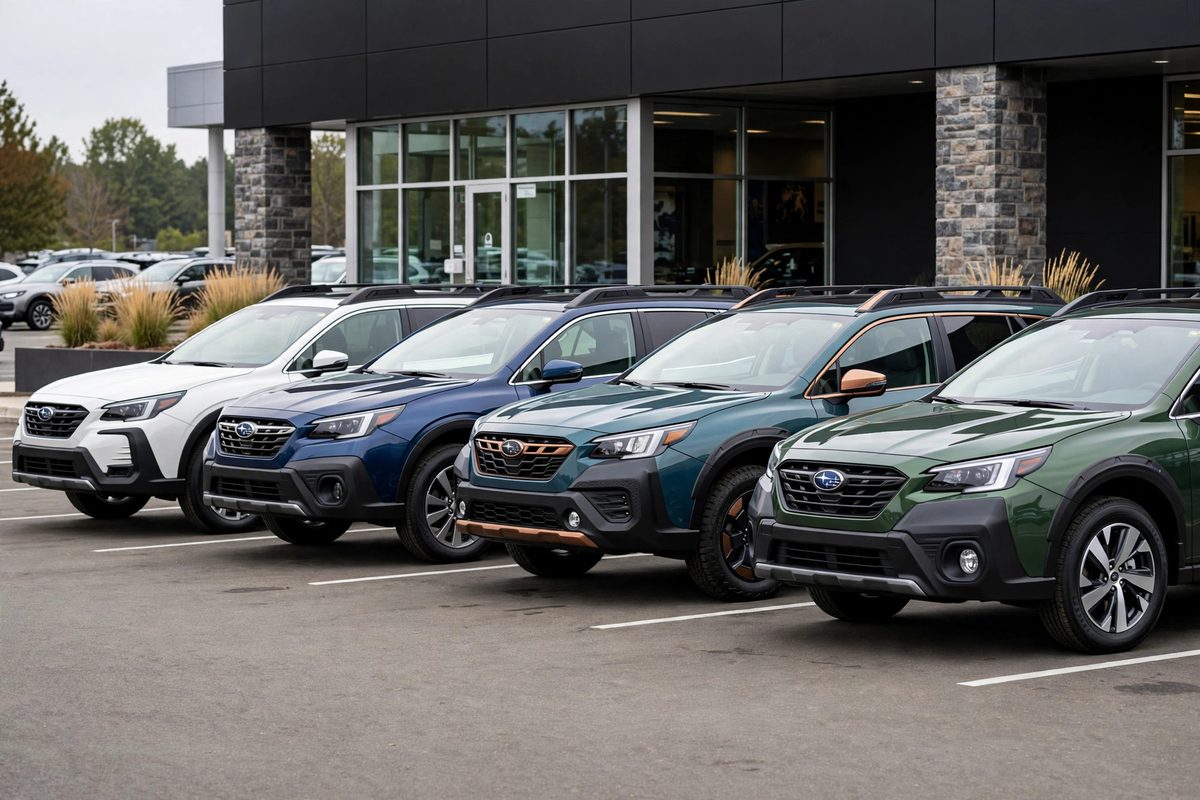
The 2026 lineup is six trims on two engines, and the spread from the cheapest to the most expensive is about $13,000 before destination. Every price below is the starting MSRP, and every one of them gains Subaru's $1,450 destination and delivery charge, so add that to anything you budget. The Premium is the value pick: standard all-wheel drive, EyeSight driver assistance, and the 12.1-inch touchscreen are all included, which means the base car is already well equipped.
| Trim | Engine | Starting MSRP |
|---|---|---|
| Premium | 2.5L | $34,995 |
| Limited | 2.5L | $41,715 |
| Touring | 2.5L | $45,395 |
| Limited XT | 2.4L turbo | $44,365 |
| Touring XT | 2.4L turbo | $47,995 |
| Wilderness | 2.4L turbo | $44,995 |
The Limited adds leather, more comfort features and a quieter cabin for about $6,700 over the Premium. The Touring is the luxury pick. The two XT trims are the power pick: same turbo engine as the Wilderness, but tuned for the road rather than the trail. The Wilderness sits in the middle of the price range but is the most capable car in the lineup — 9.5 inches of ground clearance, all-terrain tires, skid plates and dual-mode X-MODE. If you are choosing between the Limited XT at $44,365 and the Wilderness at $44,995, the $630 difference buys a different car, not a better one: leather and a quieter ride on one side, off-road hardware on the other.
New vs Used: Where the Value Is
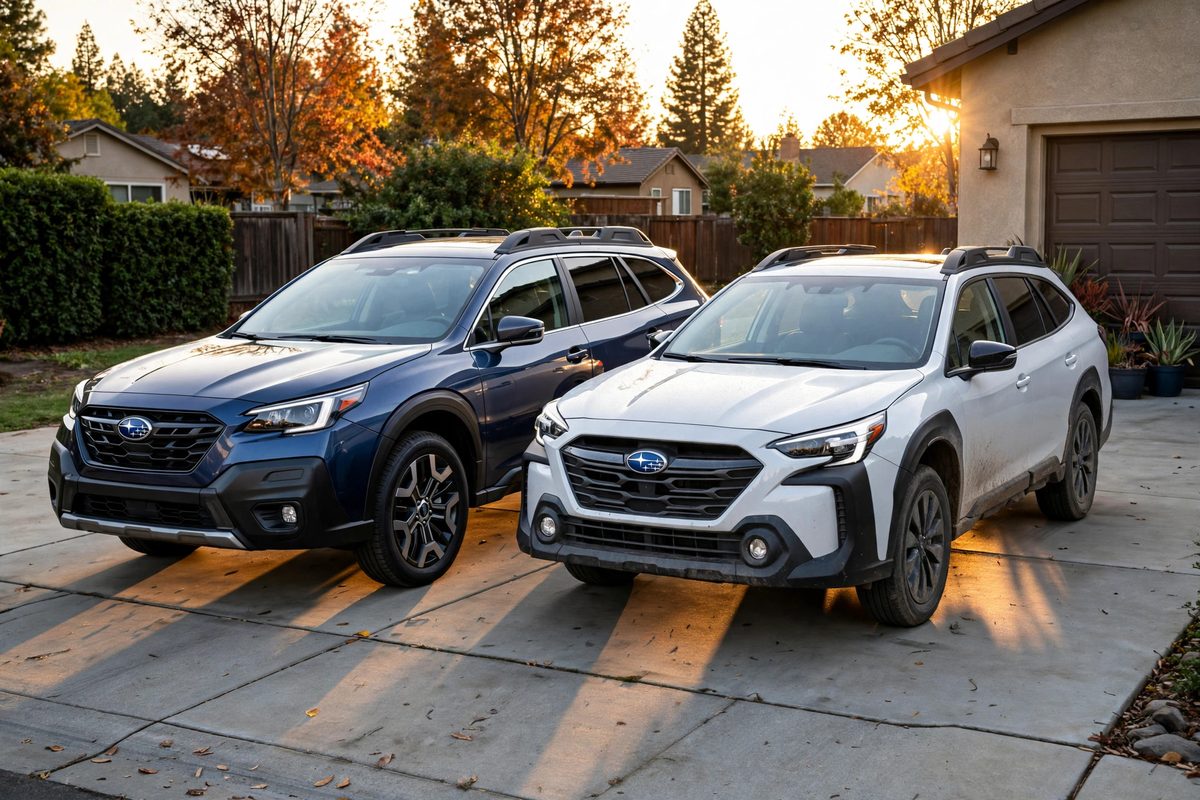
Buying new gets you the seventh-generation redesign, the full factory warranty, and the latest EyeSight system — and the highest price. Buying used gets you the same car for much less, but the year matters more than the mileage. A 2020 or newer Outback is the sweet spot: it rides on the current-generation platform, EyeSight is standard, and the worst of the depreciation is already paid by the previous owner. The 2015 to 2019 cars are the refined middle — solid value, modern enough to live with daily — but check for oil consumption, a known issue on some 2011 to 2017 engines. Anything earlier than 2010 is cheap for a reason, and the reason is usually head gaskets.
| Route | What you get | Watch for |
|---|---|---|
| New | Full warranty, latest tech, 7th-gen redesign | Highest price, steepest depreciation |
| Certified pre-owned | Dealer inspection, extended warranty | Costs $1,500–$3,000 over private party |
| Private used | Lowest price, widest choice | No warranty — inspection is essential |
Certified pre-owned through a Subaru dealer costs more than a private sale but includes a multi-point inspection and extended warranty coverage, which suits buyers who value peace of mind over saving every dollar. Private-party cars are the cheapest route, but there is no warranty and no return window — a professional pre-purchase inspection is not optional, it is the purchase. Whichever route you take, pull a vehicle history report using the VIN before money changes hands, and check for open recalls on the NHTSA website, which takes two minutes and costs nothing.
Those are the routes; here is what the market actually asks. The table below uses median asking prices from 2,219 real used-car listings (CarResaleValue, August 2026), each price adjusted to a standard 12,000 miles a year — so read them as what sellers ask, not what cars finally sell for. The pattern is steady: a 2019 car costs roughly half a new Premium, a 2021 roughly two-thirds, and the 2015 cars are now genuinely cheap.
| Model year | Median asking price | Depreciation from new | Listings |
|---|---|---|---|
| 2025 | $32,537 | 15.7% | 190 |
| 2024 | $29,004 | 20.0% | 194 |
| 2023 | $27,038 | 24.2% | 194 |
| 2022 | $24,901 | 28.7% | 195 |
| 2021 | $22,998 | 33.0% | 197 |
| 2020 | $21,601 | 37.9% | 196 |
| 2019 | $18,438 | 44.6% | 200 |
| 2018 | $16,853 | 51.7% | 188 |
| 2017 | $14,595 | 56.1% | 200 |
| 2016 | $13,123 | 58.9% | 200 |
| 2015 | $11,293 | 65.1% | 192 |
The value pocket in this table is the 2021 car. CarResaleValue calls it the best all-around pick: a Premium at a $22,998 median ask with about 73,310 miles, carrying the full sixth-generation package — the Subaru Global Platform, standard EyeSight and standard all-wheel drive — for roughly $1,400 more than a 2020 and about $4,000 less than a 2023. On a tighter budget, the 2017 Premium is the pick at a $14,595 median ask, though those listings average 111,116 miles, so buy the best-documented car rather than the cheapest one.
The Engines: 2.5L vs 2.4L Turbo
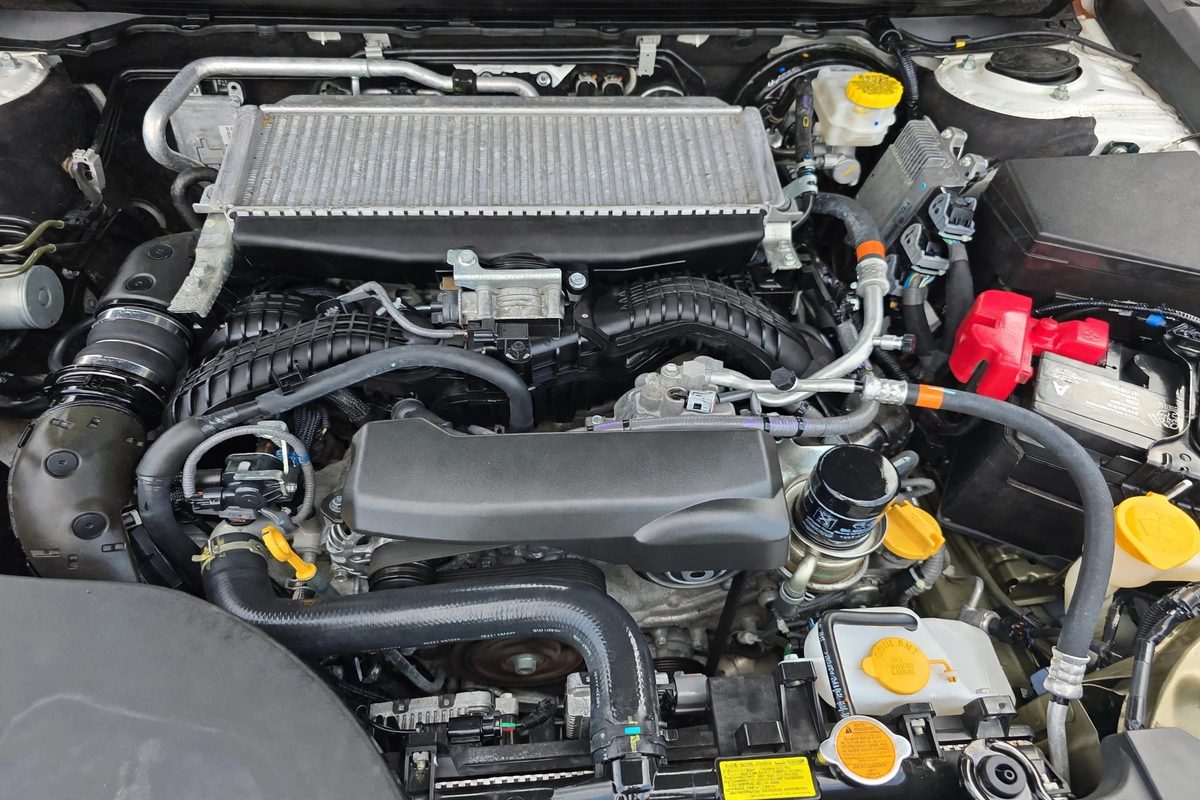
The 2.5-liter makes 180 horsepower and 178 lb-ft of torque, and it is enough for the car. It moves a full load without drama, cruises quietly, and returns 27 mpg combined — the best fuel economy in the lineup. The 2.4-liter turbo makes 260 horsepower and 277 lb-ft, tows 3,500 lb instead of 2,700 lb, and costs about 3 mpg combined: 24 in the XT trims, 23 in the Wilderness. Around town the difference is smaller than the numbers suggest; the turbo's advantage shows up when the car is loaded, climbing, or towing.
| Engine | Power | MPG combined | Towing |
|---|---|---|---|
| 2.5L | 180 hp | 27 mpg | 2,700 lb |
| 2.4L turbo (XT) | 260 hp | 24 mpg | 3,500 lb |
| 2.4L turbo (Wilderness) | 260 hp | 23 mpg | 3,500 lb |
The fuel math is worth doing before you decide. At 15,000 miles a year and $3.50 a gallon, the 2.5L costs about $1,940 a year in fuel, the XT about $2,190, and the Wilderness about $2,280 — roughly $250 a year for the turbo's extra power. That is real money, but it is not the reason to pick one engine over the other. Buy the turbo if you tow, climb mountains, or regularly carry a full car; buy the 2.5L if you do not, and spend the savings on the trim you actually want. And if fuel cost is the deciding factor, run your own numbers in our MPG calculator before you sign anything.
What to Check Before You Buy
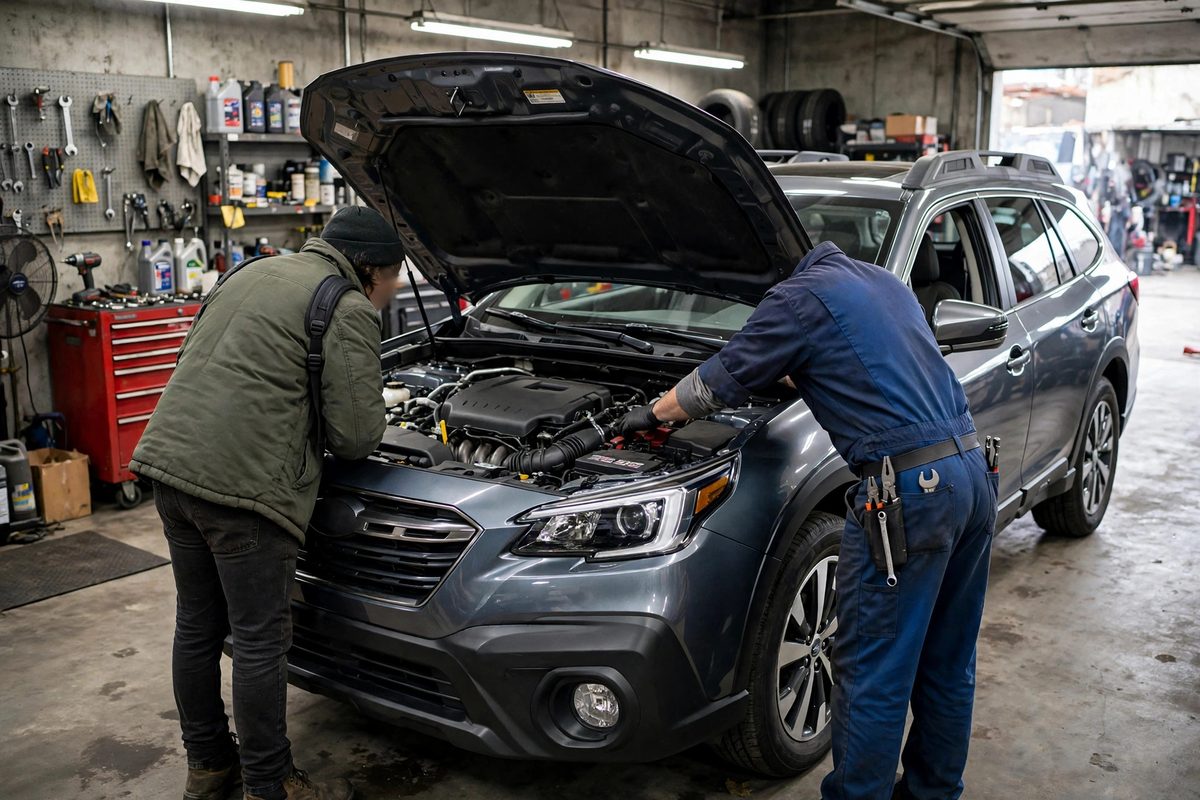
The Outback is a reliable car overall, but it has known weak spots that change by year, and fifteen minutes of checking catches most of them. Walk around the car with a flashlight, look underneath, and then pay a mechanic for a proper pre-purchase inspection — the $150 or so it costs is the cheapest money in the whole purchase. The list below is the one to work through, in order, before you negotiate.
Pre-purchase checks
- ✓Coolant residue or seepage near the head gaskets, especially on pre-2010 engines
- ✓CVT shudder or whine under load, and documented CVT fluid service history
- ✓Oil consumption between changes — a known issue on certain 2011–2017 engines
- ✓Open recalls and software updates, via the free NHTSA lookup by VIN
- ✓All four tires matching in brand, model and tread depth — AWD demands it
- ✓Underbody rust on older cars, especially in salt-belt states
- ✓Infotainment screen responsiveness and EyeSight calibration warnings
Two of these deserve emphasis. The tire rule is not a suggestion: Subaru's all-wheel-drive system is sensitive to mismatched tires, and a single odd tire can cause drivetrain wear that costs far more than a set of tires. And the NHTSA recall lookup is free, takes two minutes, and tells you whether the car has outstanding safety recalls — a dealer performs recall work free of charge, so find out before you buy, not after.
Ownership Costs After the Purchase
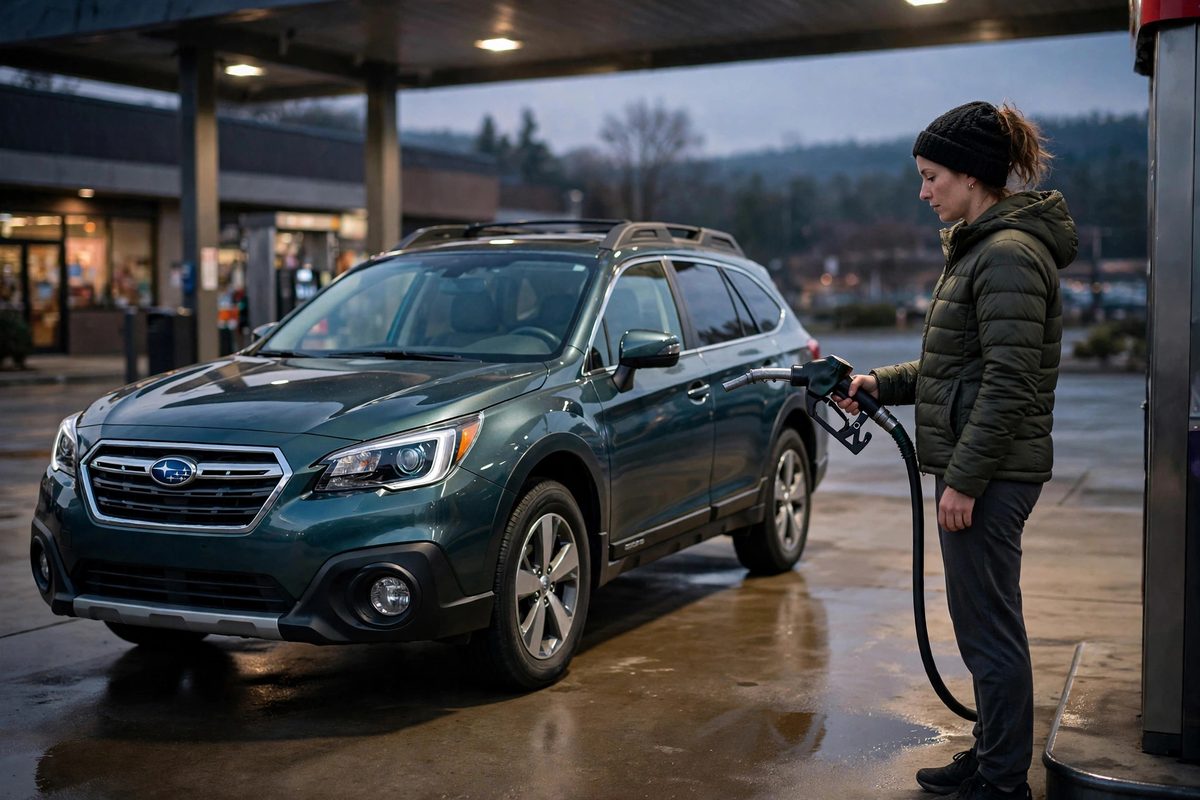
The purchase price is the biggest number, but it is not the whole cost. Fuel is the most predictable running cost, and the trim you pick sets it: about $1,940 a year for the 2.5L, $2,190 for an XT, and $2,280 for the Wilderness at 15,000 miles and $3.50 a gallon. Insurance and maintenance are ordinary for the class — the Outback is not a luxury car to insure or service — but tires deserve a line in the budget. The all-wheel-drive system means replacing all four at once when they wear, and the Wilderness's all-terrain tires cost about 1 mpg against the standard car and wear faster on pavement.
The option packages are the other place money quietly goes. The $2,045 package adds a moonroof, navigation and a surround-view monitor — the surround-view camera alone earns its keep in tight parking lots. The $4,090 package adds Nappa leather with copper stitching, ventilated front seats and a 12-way power driver's seat. A fully loaded Wilderness lands just over $50,500 with destination, which is roughly in line with the average new-car transaction price in 2026 — but only the first package is the one most buyers should choose. The second is for buyers who specifically want leather and ventilated seats.
Common Mistakes First-Time Buyers Make

Most bad Outback purchases follow the same few mistakes, and all of them are avoidable. The list is short, and every item on it has cost a real buyer real money.
- Skipping the pre-purchase inspection to save $150, then finding a $2,000 problem
- Shopping the monthly payment instead of the out-the-door price
- Forgetting the $1,450 destination fee until the paperwork stage
- Buying the turbo for the badge rather than for towing or mountain driving
- Replacing one tire instead of all four on an all-wheel-drive car
- Skipping the VIN history report and the free NHTSA recall check
- Choosing the Wilderness for the look while driving 95 percent on pavement
The pattern underneath all seven is the same: deciding on the monthly payment or the image, instead of on the out-the-door price and the driving you actually do. Negotiate the total price, get the inspection, match the trim to your real driving — and the Outback is a hard car to regret.
The Bottom Line
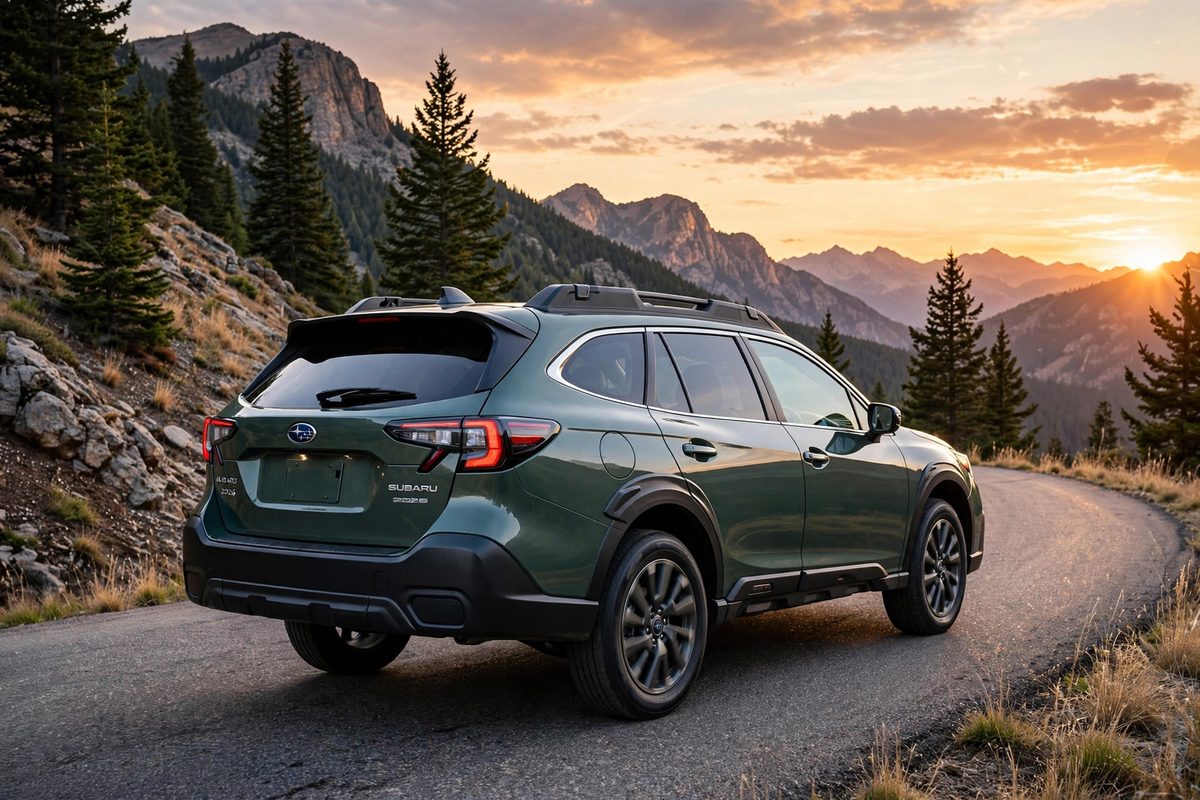
Buy the Premium with the 2.5-liter engine if you want the best value. Buy the Wilderness if you go off-road. Buy an XT if you tow or climb. Buy a used 2020 or newer if you want the most car for the money. Whichever you choose, get the inspection, check the VIN, and negotiate the out-the-door price — then enjoy the car. The Outback has spent thirty years being the sensible answer, and the 2026 car is the most complete version of that answer yet.
Which Subaru Outback trim is the best value?▾
The Premium with the 2.5-liter engine. It includes standard all-wheel drive, EyeSight and the 12.1-inch touchscreen for $34,995 before destination, and it is the cheapest way to get the car that most people actually need.
Is a used Subaru Outback a good buy?▾
Yes, if you pick the right year. A 2020 or newer Outback is the sweet spot — current platform, standard EyeSight, and most depreciation already paid. The 2015 to 2019 cars are good value too, but check for oil consumption on 2011 to 2017 engines, and get a pre-purchase inspection on any used car.
Should I get the 2.5L or the 2.4L turbo?▾
The 2.5L for most buyers: 180 horsepower, 27 mpg combined, and about $250 a year less in fuel. The turbo if you tow up to 3,500 lb, climb mountains, or regularly drive fully loaded — it makes 260 horsepower and is worth it for that use, not for the badge.
How much should I pay for a 2026 Outback?▾
Start from the MSRP — $34,995 for a Premium up to $47,995 for a Touring XT — and add the $1,450 destination fee. Negotiate the out-the-door price, not the monthly payment, and remember a fully loaded Wilderness lands just over $50,500 with destination.
What should I check before buying a used Outback?▾
Head-gasket seepage on pre-2010 cars, CVT shudder and fluid service history, oil consumption on 2011 to 2017 engines, open recalls via the free NHTSA VIN lookup, matching tires on all four corners, and underbody rust. A professional pre-purchase inspection covers all of it.
Keep researching your Outback
- 2026 Subaru Outback Review: Is the Redesigned SUV Worth It?
- 2026 Subaru Outback Wilderness Price: MSRP & Buying Guide
- Cost of Subaru Outback: 2026 Prices, Trims & Ownership Costs
- Subaru Outback MPG Calculator: Work Out Your Fuel Cost
- The Honest Guide to Buying a Used Subaru Outback
- 2017 Subaru Outback for Sale: Prices, Trims & Buying Guide
- Subaru Outback: Complete Wiki, Meaning, History & Buying Guide
- Subaru Outback — official page at Subaru of America
- Fuel economy ratings — fueleconomy.gov (EPA)
- Subaru Outback pricing and specs — Kelley Blue Book
- Subaru Outback depreciation and used prices by year — CarResaleValue
Sources
- Subaru Outback pricing and specs — Kelley Blue Book
- Subaru Outback buying guide — CarGurus
- Subaru Outback — official page at Subaru of America
- Check for recalls by VIN — NHTSA
- Subaru Outback — Consumer Reports
- Subaru Outback — iSeeCars
- Subaru Outback overview — TrueCar
- Certified pre-owned Outbacks — Subaru
A note on prices
Prices, trims, MPG figures and safety ratings change over time. Treat the figures here as a starting point and confirm the details with a dealer or the manufacturer's site before you buy.
Continue reading