Buying Guide · 9 min read
2001 Subaru Outback: Prices, MPG, Recalls & Buying Guide
A used 2001 Outback costs about $2,050–$2,875 by the book — the year the 212-hp H6 arrived. Buy the six if you can; check the 2.5 for head gaskets.
By Daniel Reyes ·
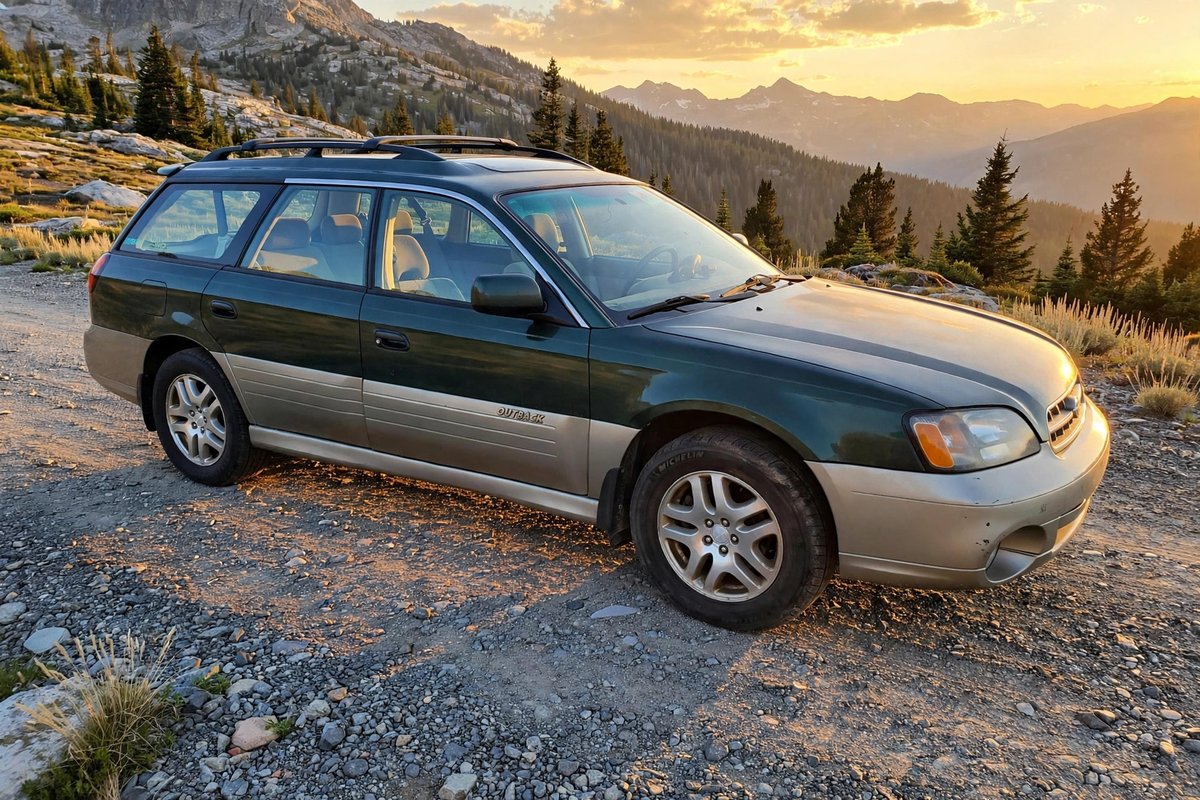
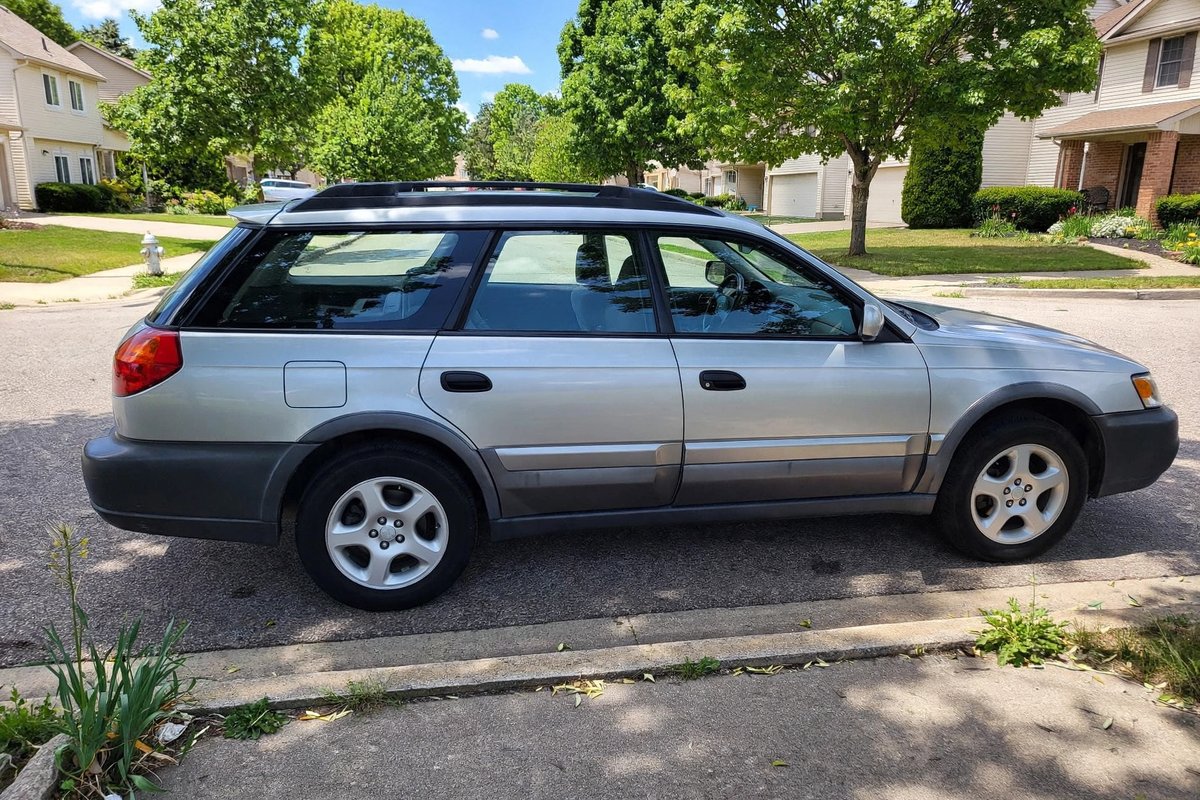
The 2001 Subaru Outback is the year the Outback grew up: the first with a six-cylinder engine, the 212-horsepower 3.0-litre flat-six in the new L.L.Bean Edition and VDC wagons, and it is now a used buy at about $2,050 to $2,875 by the book. It keeps the second generation's strengths — standard all-wheel drive, 7.3 inches of ground clearance and room for five — and fixes the 2000's biggest weakness, a lack of power. But like every early second-generation car, the 2.5-litre four can need a head-gasket job that costs as much as the car, so buy the best-documented car, not the cheapest one.
2001 Subaru Outback at a Glance
| What to know | 2001 Outback |
|---|---|
| Starting price when new | $24,190-$32,390 (KBB) |
| Current used price | KBB Fair Purchase $2,050-$2,875 |
| Engines | 2.5L flat-four, 165 hp; 3.0L H6, 212 hp |
| Fuel economy | 19/25/21 (2.5L); 17/24/20 (H6) |
| Drivetrain | Standard AWD |
| Towing | 2,000 lbs |
| Cargo | 34.3 / 68.6 cu ft, rear seats folded (SAE) |
| Ground clearance | 7.3 in |
| Safety | Side airbags on Limited only |
| Owner rating | 4.2/5 Edmunds; 4.5/5 CarGurus |
Why the 2001 Model Year Matters
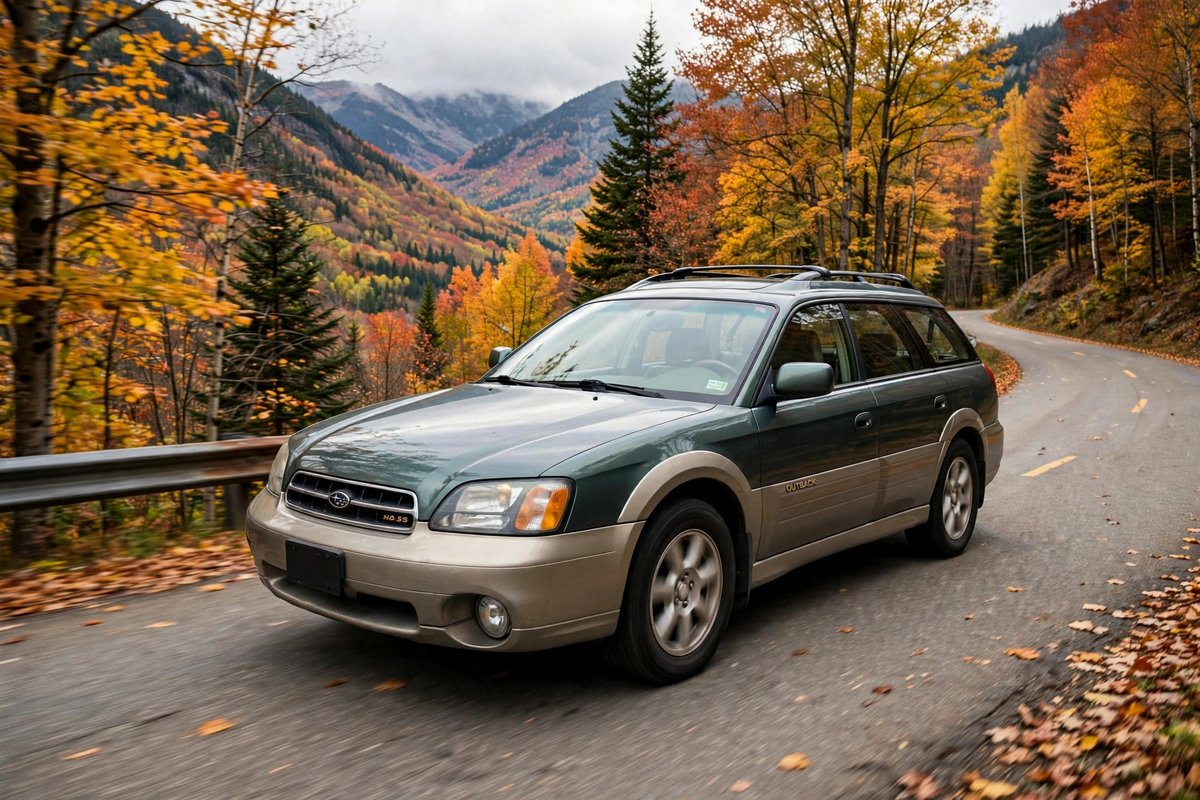
The 2001 is the second year of the second-generation Outback (BH, 2000–2004), and it is the year the range got its missing piece. The all-new 3.0-litre flat-six, making 212 horsepower and 210 lb-ft, arrived in two new wagon trims — the H6-3.0 L.L.Bean Edition and the H6-3.0 VDC — on sale from late October 2000. The VDC also introduced Vehicle Dynamics Control, Subaru's stability system, to the Outback. Until 2001, every Outback had the same 165-horsepower four; from here on, buyers had a real choice.
The six-cylinder cars are wagons only — there was no H6 sedan until the 2002 model year, so any 2001 sedan advertised with a six is mislabelled. Smaller changes include a standard viscous limited-slip rear differential, larger 11.4-inch front disc brakes and a new outside-temperature display.
Prices and Trims
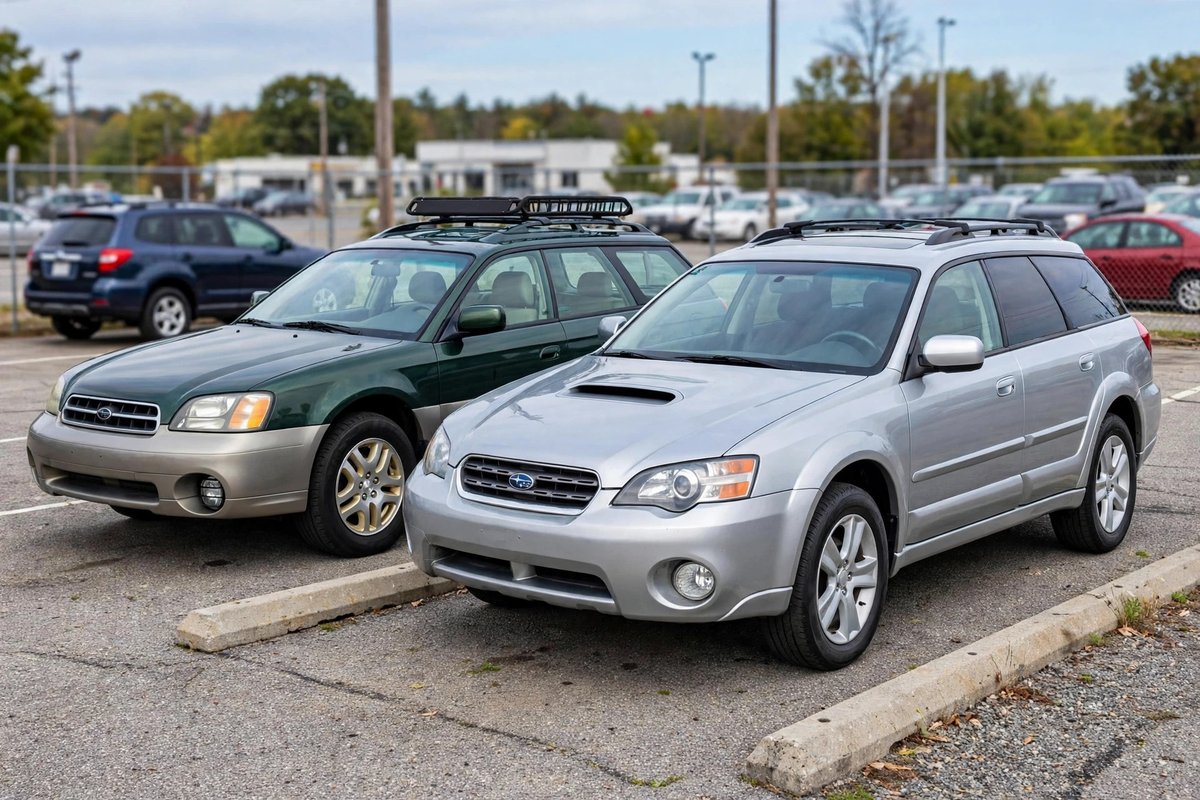
Subaru sold the 2001 Outback in five versions. The 2.5-litre cars are a base wagon and a Limited wagon or sedan, manual or automatic. The six-cylinder cars are the L.L.Bean Edition wagon and the VDC wagon, both automatic only. The Limited adds leather, heated seats, a CD player, a power moonroof and side-impact airbags. The H6 cars add wood and leather trim, a Momo steering wheel, an 8-way driver's seat and automatic climate control.
| Trim | MSRP when new | KBB Fair Purchase today |
|---|---|---|
| Base wagon (2.5L) | $22,895 | $2,050 |
| Limited sedan (2.5L) | $26,295 | $2,350 |
| Limited wagon (2.5L) | $26,295 | $2,375 |
| H6-3.0 L.L.Bean wagon | $29,495 | $2,650 |
| H6-3.0 VDC wagon | $31,895 | $2,875 |
MSRP figures are Edmunds prices including destination; KBB lists the range as $24,190 to $32,390 before destination. KBB trade-in runs $600 to $975 and private-party sales $1,725 to $2,525, in Good condition, valid through November 17, 2026. Sellers ask more than book value: live CarGurus listings run roughly $4,600 to $7,500, and the median 2026 asking price across 44 listings is $2,300. Pay book money for a rough car, and pay up only for one with records and a clean subframe.
Engines, Performance and Real-World MPG
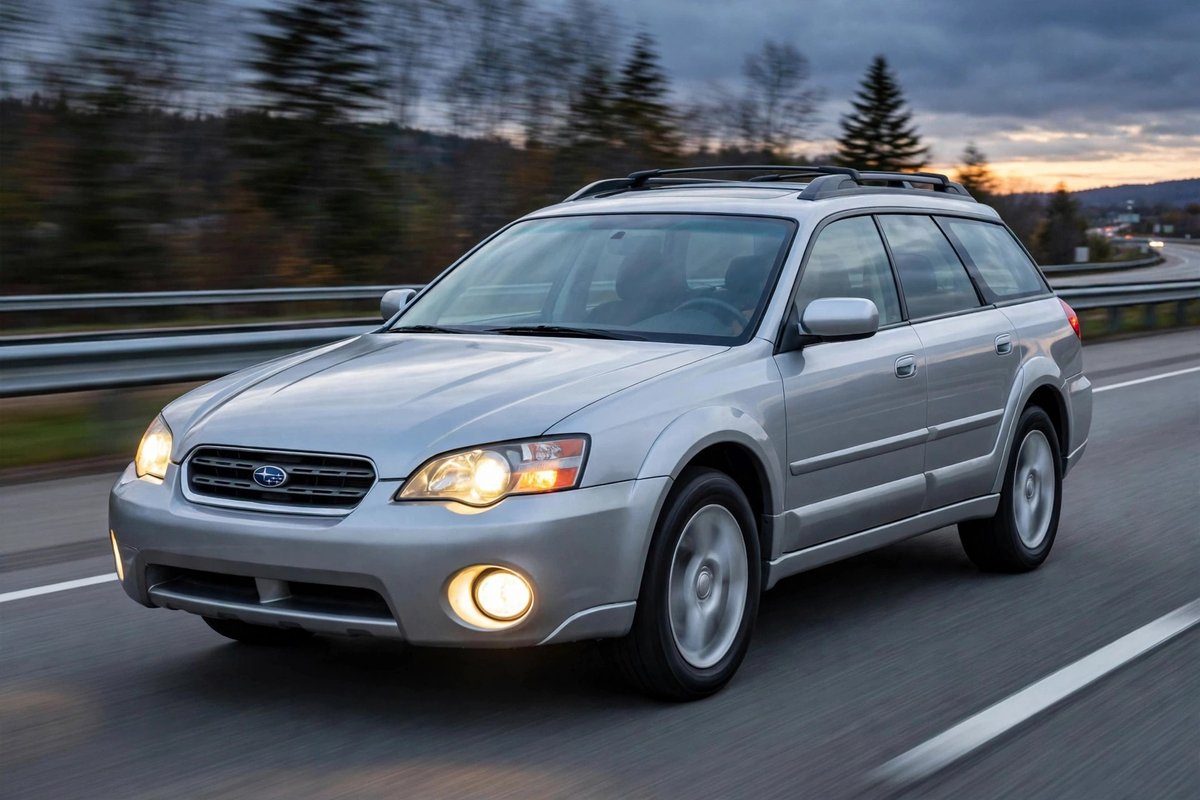
The Phase II 2.5-litre flat-four (EJ251) makes 165 horsepower and 166 lb-ft, with a 5-speed manual or a 4-speed automatic, on regular unleaded. It is adequate and nothing more, and its timing belt is due at 105,000 miles. The 3.0-litre flat-six (EZ30) makes 212 horsepower at 6,000 rpm and 210 lb-ft at 4,400 rpm, comes only with the 4-speed automatic, runs a timing chain instead of a belt, and asks for premium 91-octane fuel.
Fuel economy depends on which EPA figures you read. Period figures from when new are higher; revised current figures put the 2.5-litre at 19 city, 25 highway and 21 combined, and the H6 at 17 city, 24 highway and 20 combined. Owners report real-world figures close to the revised numbers: TrueDelta logs 23.6 mpg for the 2.5-litre manual, 21.0 for the automatic and 19.0 for the H6. The 16.9-gallon tank gives about 355 miles of range on the 2.5-litre and 338 on the H6; every trim tows 2,000 pounds.
| Engine | Period EPA (city/hwy) | Revised EPA (city/hwy/comb.) |
|---|---|---|
| 2.5L manual | 21/27 | 19/25/21 |
| 2.5L automatic | 22/27 | 19/25/21 |
| 3.0L H6 automatic | 20/27 | 17/24/20 |
Interior, Cargo and Everyday Practicality
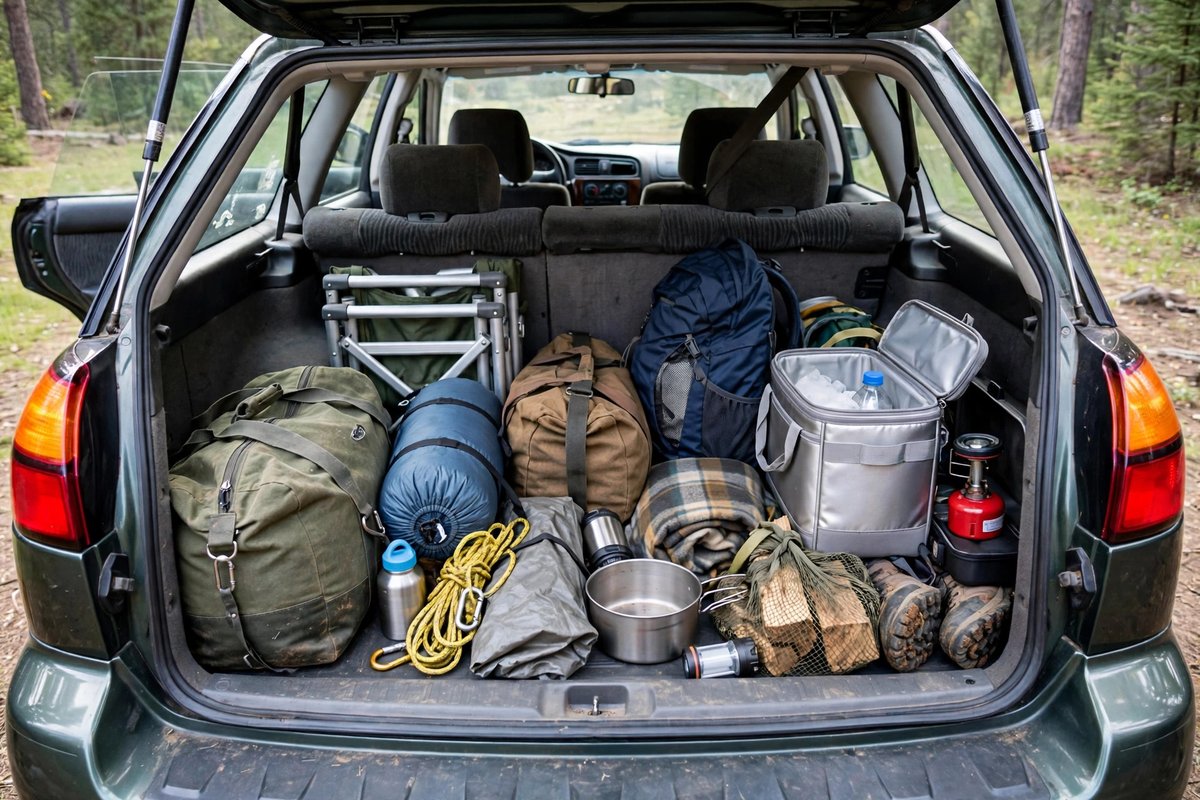
Inside, the 2001 is a comfortable, roomy wagon rather than a luxury car. KBB lists 95.9 cubic feet of total interior space, and it seats five. Cargo holds 34.3 cubic feet behind the rear seats and 68.6 with them folded (SAE), and roof rails are standard. The sedan has a 12.4-cubic-foot boot instead. The wagon is 187.4 inches long on a 104.3-inch wheelbase.
Equipment rises with trim. Every car gets four-wheel disc brakes, ABS, protective lower-body cladding and a heavy-duty independent suspension. The wagon adds a 60/40 split-folding rear seat, keyless entry, a 12-volt cargo-area outlet and a rear wiper. The Limited adds leather, heated seats, a CD player and a power moonroof.
Safety, Recalls and Reliability
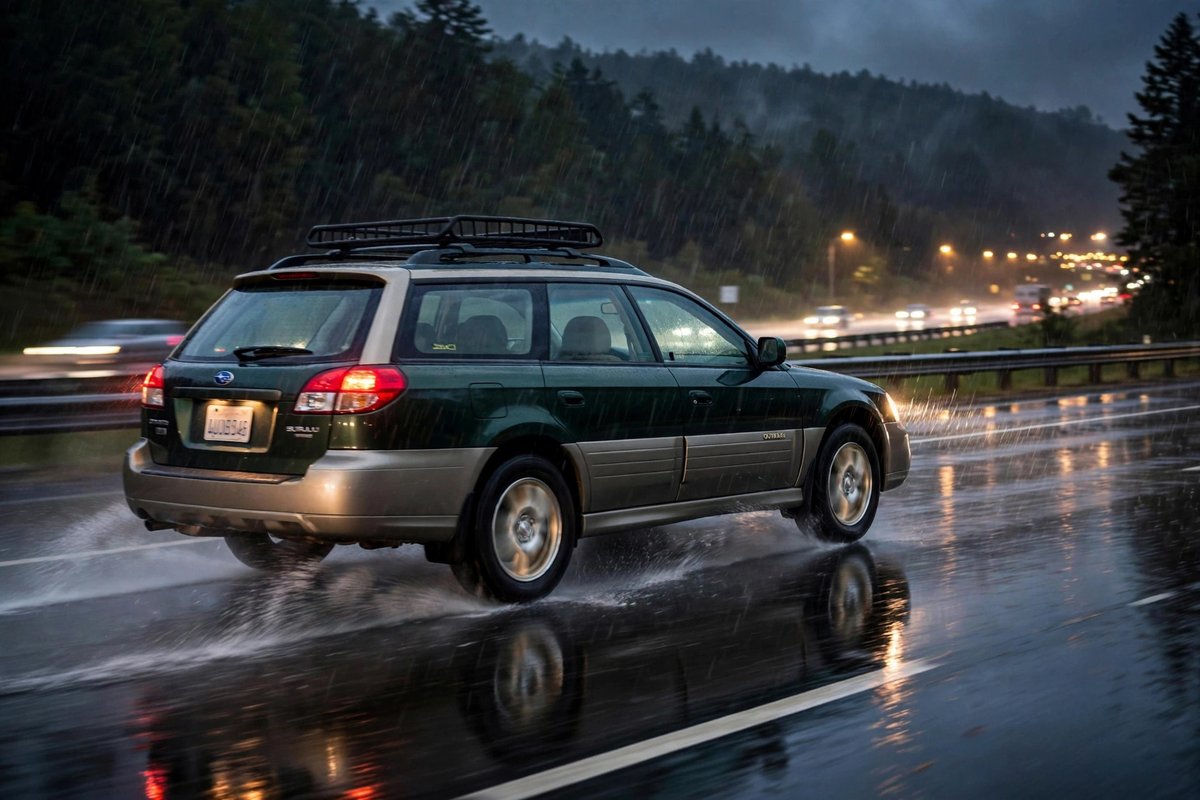
The 2001 has 171 owner complaints filed with NHTSA, against 210 for the 2000 — a mid-pack year for the generation. Fuel-system complaints lead with 32, followed by brakes with 27, suspension with 19 and engine with 16. Edmunds owners still rate the car 4.2 out of 5 across 113 reviews, and CarGurus owners give it 4.5 out of 5.
NHTSA lists four recalls for the 2001 Outback, and none is the Takata airbag campaign — that begins with the 2003 model year, so a 2001 was never in it. The two that matter most are the rear-subframe rust campaign, covering cars in 22 salt-belt states plus the District of Columbia, and the parking-rod recall, which can leave Park unengaged. One campaign is not a Subaru recall at all: the 2013 Airtex fuel-pump recall covers aftermarket pumps only. Check the VIN on NHTSA's site and confirm all four are closed before you pay.
| NHTSA campaign | Date | Issue | Vehicles |
|---|---|---|---|
| 02V282000 | Oct 2002 | Parking rod; Park may not engage | 172,564 |
| 03V153000 | Apr 2003 | Rear subframe can rust out in salt-belt states | 170,000 |
| 04V128000 | Mar 2004 | Cruise-control cable can lodge; throttle can stay open | 127,580 |
| 13E065000 | Nov 2013 | Aftermarket fuel pumps may leak (not a Subaru part) | 397 |
Common Problems and What to Check When Buying Used
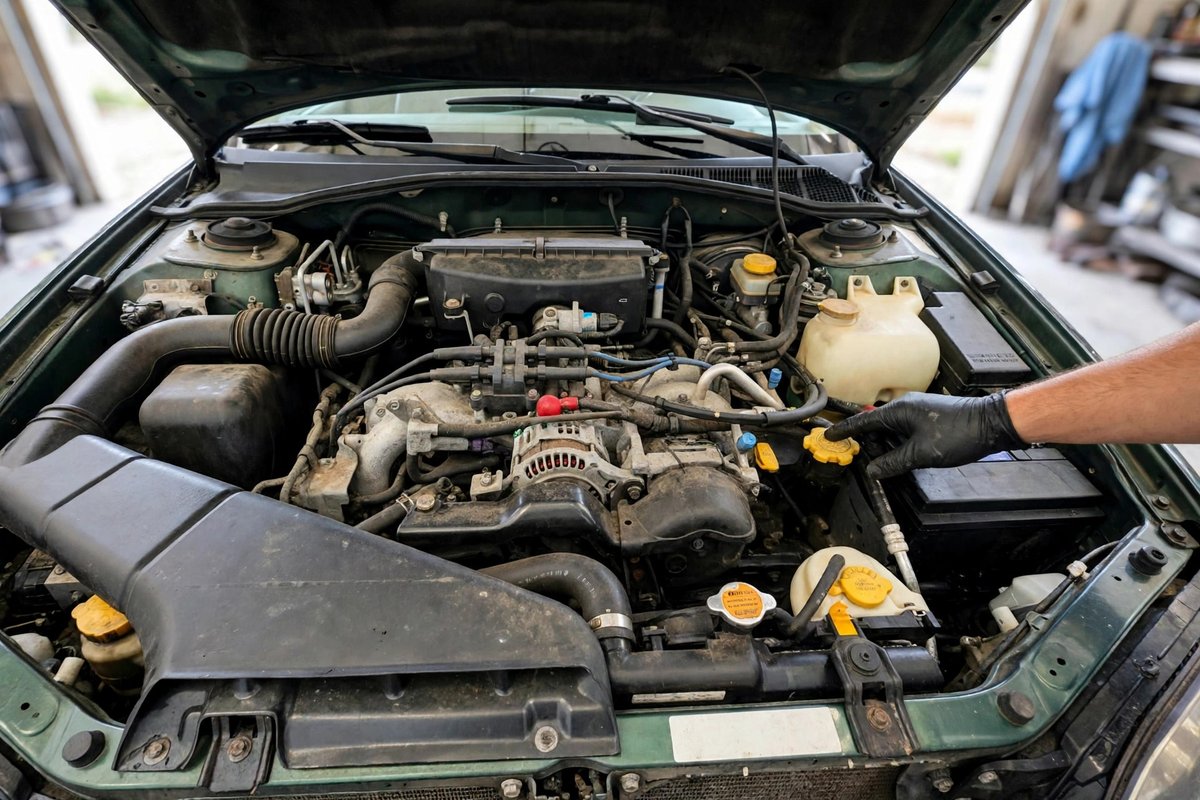
The defining issue is the 2.5-litre's head gaskets. The factory gaskets typically leak externally — oil or coolant weeping down the block — and failures are expected between 100,000 and 150,000 miles. An independent shop charges $1,500 to $2,500 for the job, against a book value of $2,050 to $2,875, so the fix can cost more than the car. The real fix is multi-layer steel gaskets. The H6 has no such problem, the strongest reason to buy it.
The second worry is a fuel smell in the cabin in cold weather. Rubber fuel hoses under the intake manifold contract below about 30 degrees Fahrenheit and leak, and dealers quote $300 to $370 to replace them. No Outback recall covers it, so smell the cabin on a cold start. Other checks: rear-subframe rust, where the recall remedy was rust-proofing rather than replacement, so inspect even a car stamped done; the 2.5-litre timing belt, due at 105,000 miles; automatic transmission slipping; manual clutch wear; and failed oxygen sensors.
Before you buy a used 2001 Outback, check these items
- ✓Look for oil or coolant weeping; ask for steel head-gasket receipts.
- ✓Check the 2.5-litre timing-belt record (105,000 miles); the H6 has a chain.
- ✓Inspect the rear subframe for rust; confirm recall 03V153000 was done.
- ✓Smell for fuel in the cabin on a cold start; check the fuel hoses.
- ✓Test the automatic for slipping; feel the clutch on a manual.
- ✓Check the VIN on NHTSA's site; confirm all four recalls are closed.
- ✓Get a pre-purchase inspection of compression, coolant and the underbody.
Frequently Asked Questions
How much does a used 2001 Subaru Outback cost?▾
KBB Fair Purchase (dealer, Good condition) runs $2,050 for the base wagon to $2,875 for the VDC wagon, valid through November 17, 2026. Trade-in is $600 to $975 and private-party sales run $1,725 to $2,525. Sellers list cars from about $4,600 to $7,500, and the median 2026 asking price is $2,300.
What is the MPG of the 2001 Subaru Outback?▾
On revised current EPA figures, the 2.5-litre gets 19 city, 25 highway and 21 combined, and the H6 gets 17 city, 24 highway and 20 combined. Period figures from when new were higher: 21/27 for the manual, 22/27 for the automatic and 20/27 for the H6. TrueDelta owners average 23.6 mpg (2.5 manual), 21.0 (2.5 auto) and 19.0 (H6).
Is the 2001 Subaru Outback reliable?▾
Mixed, and mid-pack for the generation: 171 NHTSA complaints, with fuel-system, brake and suspension problems leading, against 210 for the 2000. Yet owners rate it 4.2 out of 5 on Edmunds and 4.5 on CarGurus. The H6 cars are the safer bet — no head-gasket problem and a timing chain.
What are the most common problems with the 2001 Outback?▾
Head-gasket leaks on the 2.5-litre, typically at 100,000 to 150,000 miles and $1,500 to $2,500 to fix; a cold-weather fuel smell from hoses under the intake manifold; rear-subframe rust in salt-belt states; the 105,000-mile timing belt; automatic slipping; manual clutch wear; and failed oxygen sensors.
Did the 2001 Subaru Outback have a six-cylinder sedan?▾
No. The 212-hp 3.0-litre flat-six arrived for 2001 only in the L.L.Bean Edition and VDC wagons, both automatic only. The H6 did not reach the sedan until the 2002 model year.
Which 2001 Subaru Outback trim should I buy?▾
The H6 L.L.Bean or VDC wagon: no head-gasket problem, a timing chain, 212 horsepower and standard all-wheel drive, for about $2,650 to $2,875 by the book. Trade-offs are premium fuel, about 17/24 mpg and automatic only.
The Bottom Line
Buy the 2001 Outback if you want the cheapest second-generation car with a six-cylinder option: an H6 L.L.Bean or VDC wagon with records is a capable all-weather wagon with no head-gasket worry and a timing chain, for about $2,650 to $2,875 by the book. A 2.5-litre is a fair buy only with gasket receipts, a belt record and a clean subframe.
Avoid any 2.5-litre without gasket paperwork, any salt-belt car with subframe rust or open recall 03V153000, and any car with a cold-start fuel smell, whatever the price. A 2002 adds the H6 sedan, and a 2003 or 2004 is the newer buy in the same generation — but the Takata question starts there, so check the VIN too.
Prices and specifications reflect Kelley Blue Book, Edmunds, CarGurus, TrueDelta and NHTSA figures checked in November 2026; used prices vary with mileage, condition and location. Confirm history, recalls and condition with an independent inspection before buying.
Continue researching the Outback
- 2000 Subaru Outback: Prices, MPG, Recalls & Buying Guide
- 2002 Subaru Outback: Prices, MPG, Recalls & Buying Guide
- 2003 Subaru Outback: Prices, Trims, MPG and Buying Guide
- Buying a Used Subaru Outback: Best Years, Prices & Checks
- Subaru Outback Common Problems: What Goes Wrong?
- Subaru Outback Years to Avoid: Worst Years & Best Bets
Sources
- Kelley Blue Book: 2001 Subaru Outback Price, Value and Reviews
- Edmunds: 2001 Subaru Outback Review
- CarGurus: 2001 Subaru Outback Prices, Reviews and Pictures
- Center for Auto Safety: 2001 Subaru Outback Recalls and Complaints
- PulsCar: 2001 Subaru Outback Problems — 171 Complaints
- Cars101: 2001 Subaru Outback Options, Prices and Specifications
- TrueDelta: 2001 Subaru Outback Repairs and Problem Descriptions
- NHTSA: Vehicle Recalls (check by VIN)
A note on prices
Prices, trims, MPG figures and safety ratings change over time. Treat the figures here as a starting point and confirm the details with a dealer or the manufacturer's site before you buy.
Continue reading