Cost & Ownership · 11 min read
Subaru Outback Common Problems by Year & Repair Costs
Head gaskets, oil use, CVT shudder — the Outback's known problems by year, with NHTSA complaint counts, repair costs and pre-purchase checks.
By Marcus Reid · · Updated
The short answer: the Outback is a reliable car with a short list of well-known problems, and almost all of them cluster by model year. Head gaskets on pre-2010 cars. Oil consumption on some 2011 to 2017 engines. CVT shudder if the fluid was never serviced. Everything else is wear items and software. If you buy the right year and check the right things, most of this list never touches you — and this guide covers each problem, what it costs, and how to spot it before you sign anything.
NHTSA Complaints by Year: The Numbers
Complaint counts from the NHTSA owner-complaint file, compiled by AGT Auto from 2025 NHTSA data, show where the problems actually pile up — and it is not evenly spread. The 2019 model year leads the whole lineup with 1,002 complaints, followed by 2017 at 893 and 2020 at 873. The early 2010s look quieter on total counts but carry the most recalls, with the 2010 alone at 18.
| Model year | NHTSA complaints | Recalls | Top complaint area |
|---|---|---|---|
| 2010 | 357 | 18 | Airbags, stalling, head gaskets |
| 2011 | 644 | 16 | Powertrain, torque converter |
| 2012 | 287 | 16 | Lighting, transmission |
| 2013 | 289 | 12 | Oil consumption, CVT |
| 2014 | 203 | 10 | Oil consumption, head gaskets |
| 2017 | 893 | 4 | Battery drain, steering |
| 2018 | 767 | 3 | Windshield, infotainment |
| 2019 | 1,002 | 3 | Windshield, battery |
| 2020 | 873 | 5 | Battery drain, windshield |
Two patterns matter for buyers. First, complaint volume and recall count move in opposite directions: the 2010 to 2014 cars have the most recalls but fewer complaints than the 2017 to 2020 cars, because the later cars' problems — dead batteries, cracked windshields, glitching screens — are annoying and expensive rather than recall-worthy. Second, the single most-reported problem in any year is often not mechanical at all: on the 2017, 331 of the 391 electrical-system complaints mention the battery, and on the 2019, 310 of the 326 visibility complaints mention the windshield, according to a keyword count of the NHTSA files by ProTech Service. The 2011 is the worst of the early cars for the transmission: 216 powertrain complaints, 101 of them mentioning the torque converter and 41 a shudder.
Use the counts as an inspection list, not a blacklist. On a 2010 to 2012 car, pull away from a stop several times and feel for a shudder. On a 2013 or 2014, pull the dipstick before anything else. On a 2016 to 2019 car, test the battery and charging system no matter what the seller says. On any 2015 to 2022 car, inspect the windshield in daylight and run the VIN through NHTSA's recall lookup — the same checks a pre-purchase inspection runs.
Head Gasket Failures: The Pre-2010 Problem
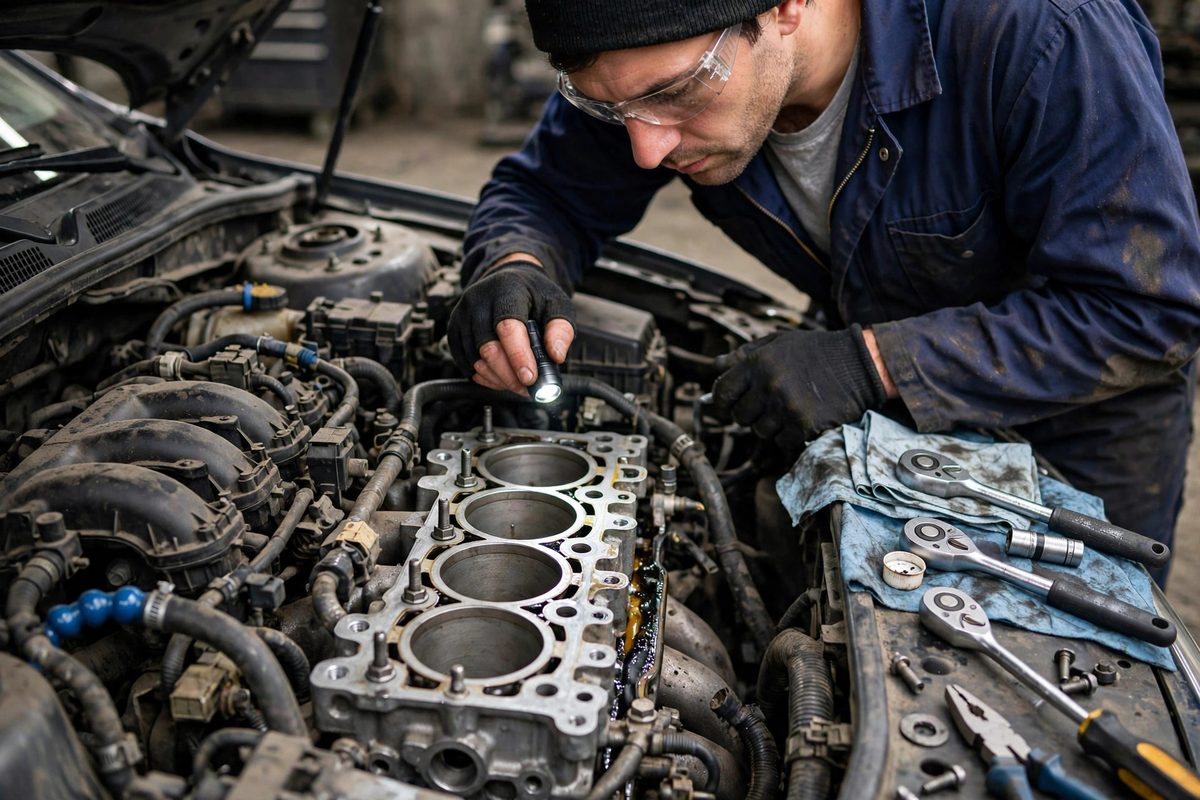
The head gasket is the Outback problem everyone has heard of, and it is real — but it belongs mostly to the past. The older EJ-series 2.5-liter engines, in cars built before 2010, can develop external coolant seepage at the head gaskets. The signs are visible if you look: coolant residue or staining around the gasket line, a slow coolant loss with no obvious leak, and in worse cases overheating or milky oil. A head gasket job is a four-figure repair, which is why pre-2010 Outbacks are priced the way they are.
Subaru replaced the old engine with the FB-series 2.5 for the 2013 model year, and the head gasket problem largely went with it. A 2013 or newer car is not immune to every engine issue, but the classic external head gasket leak is no longer the thing to worry about. If you are shopping a pre-2010 car, budget for the possibility, or better, have a mechanic look at the gasket line before you buy — it is a five-minute check that can save you thousands.
Oil Consumption: The 2011–2017 Warning
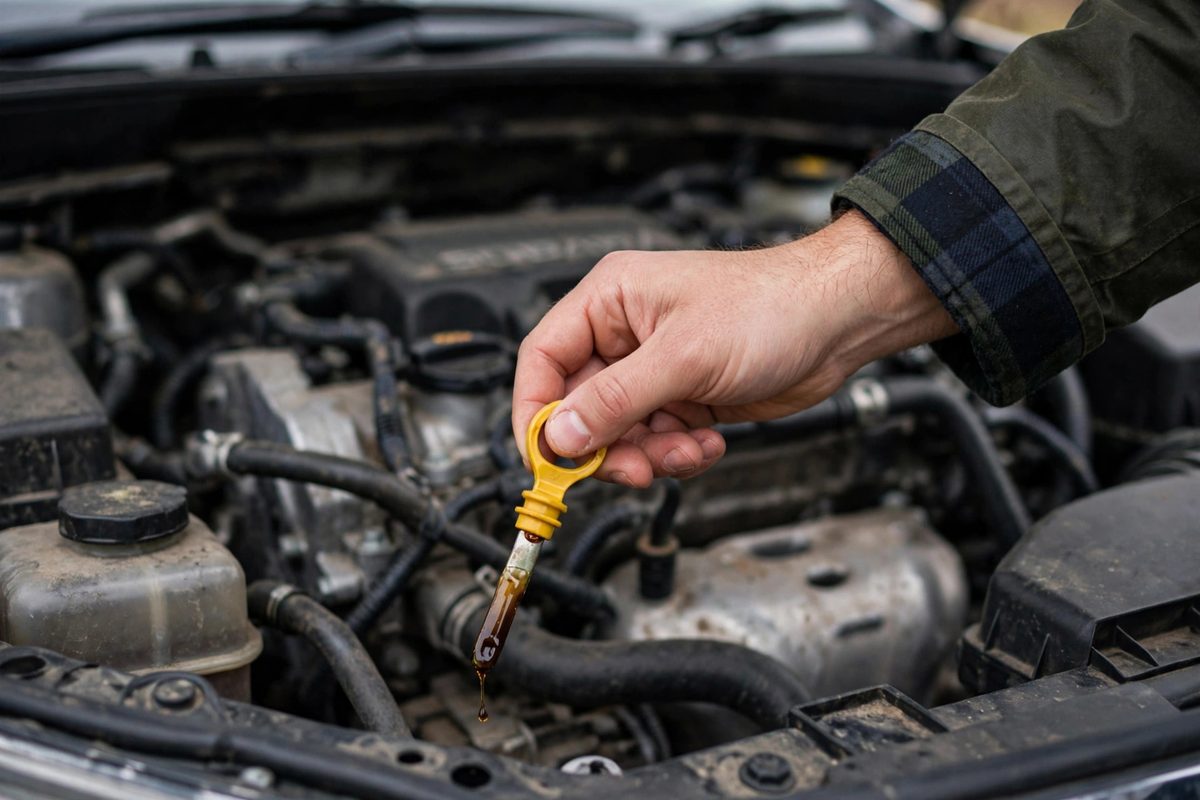
Some 2011 to 2017 Outbacks burn oil between changes — enough that the low-oil light becomes a regular visitor. The cause is piston-ring and oil-control issues in certain engines of that era, and Subaru resolved claims for affected owners under a class-action settlement. That settlement is history now, but the cars are still on the road, and the check is simple: pull the dipstick. If the oil is low on a car the seller claims was just serviced, or if the service records show frequent top-ups, walk away or negotiate hard.
Not every car from these years is affected, and many run to high mileage without drinking a drop. But the pattern is common enough that it belongs on every used-Outback checklist for these years. Ask the seller directly about oil consumption, check the service history for top-ups, and make the pre-purchase inspection include an oil-level check after a proper warm-up. A car that needs a quart every thousand miles is not a bargain at any price.
CVT Shudder and Transmission Troubles
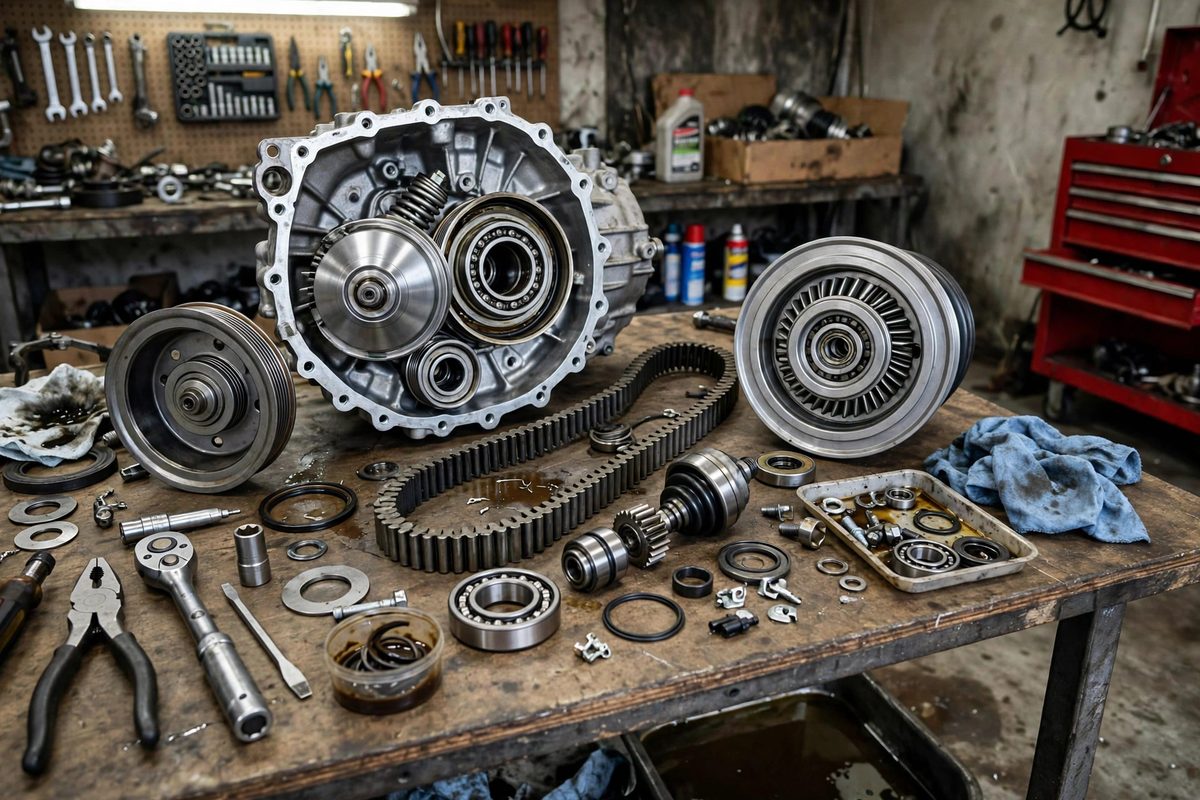
Every modern Outback uses a continuously variable transmission, and it is mostly a non-issue — smooth, quiet, and well matched to both engines. The trouble starts when the fluid has never been serviced. A CVT that shudders or whines under load, hesitates off the line, or surges at steady speed is usually telling you about its service history, not its design. Subaru calls the fluid lifetime in some documentation, but mechanics who work on these cars disagree, and a fluid service is vastly cheaper than a replacement transmission.
On a test drive, find a hill and a highway on-ramp. Accelerate firmly from a stop and listen for a shudder as the car picks up speed; cruise at highway speed and listen for a whine that rises with road speed. Ask for documented CVT fluid service history, and treat a car with no transmission service record at high mileage as a risk to price in, not a detail to ignore. Subaru extended CVT warranty coverage on some model years, so check whether the car you are looking at is covered before you assume the worst.
Infotainment and Electrical Faults
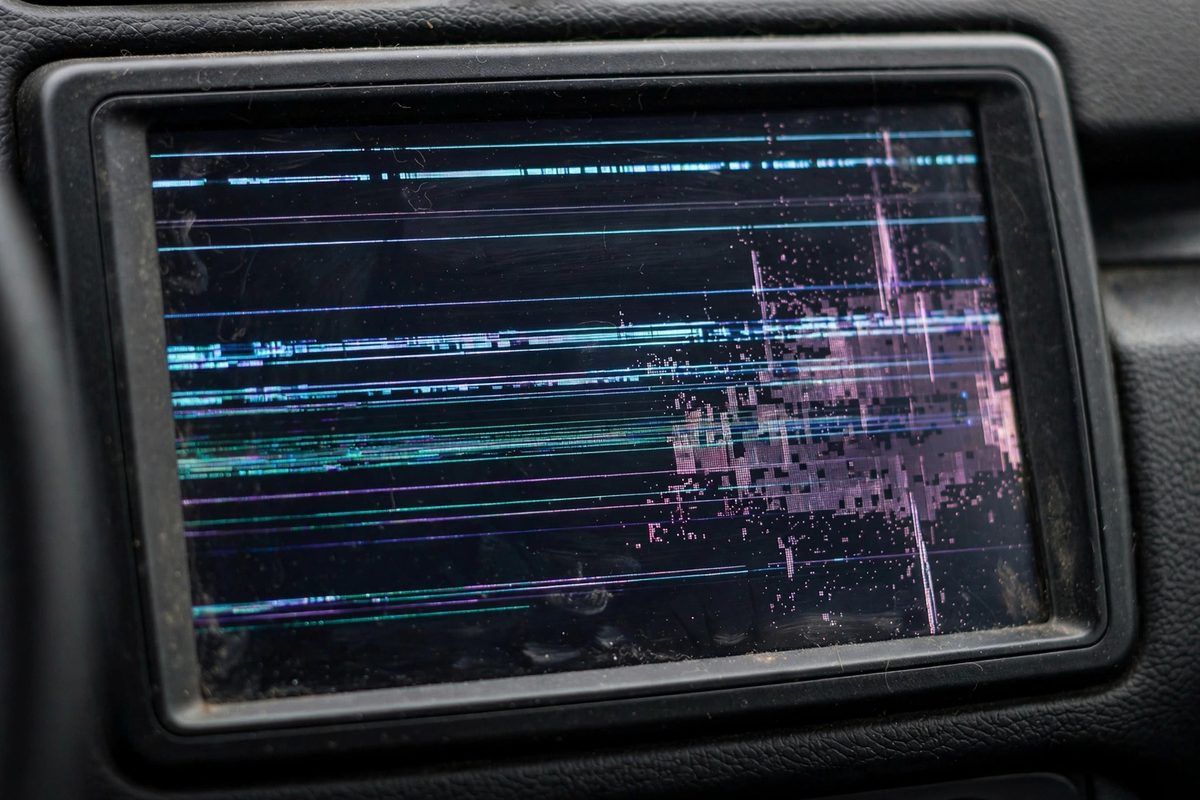
The 11.6-inch touchscreen in 2020 to 2025 Outbacks is the most complained-about part of the car — slow to respond, occasionally freezing, and in charge of functions that used to be buttons. The 2026 car fixes most of this with a faster screen and physical climate controls, but if you are buying used, test the screen properly: every menu, the rear camera, the phone connection, and the climate controls. Software updates from the dealer fix a surprising number of complaints, and they are often free — ask whether the car has had them.
Beyond the screen, the electrical complaints are the usual ones: weak batteries in cold climates, the occasional faulty sensor, and EyeSight warnings that turn out to be a dirty windshield. None of these are expensive on their own. The battery is worth a mention because the Outback's stop-start system and electronics are hard on a tired battery — if the car cranks slowly on a cold morning, budget for a battery rather than debating it.
Suspension, Brakes and Steering Wear
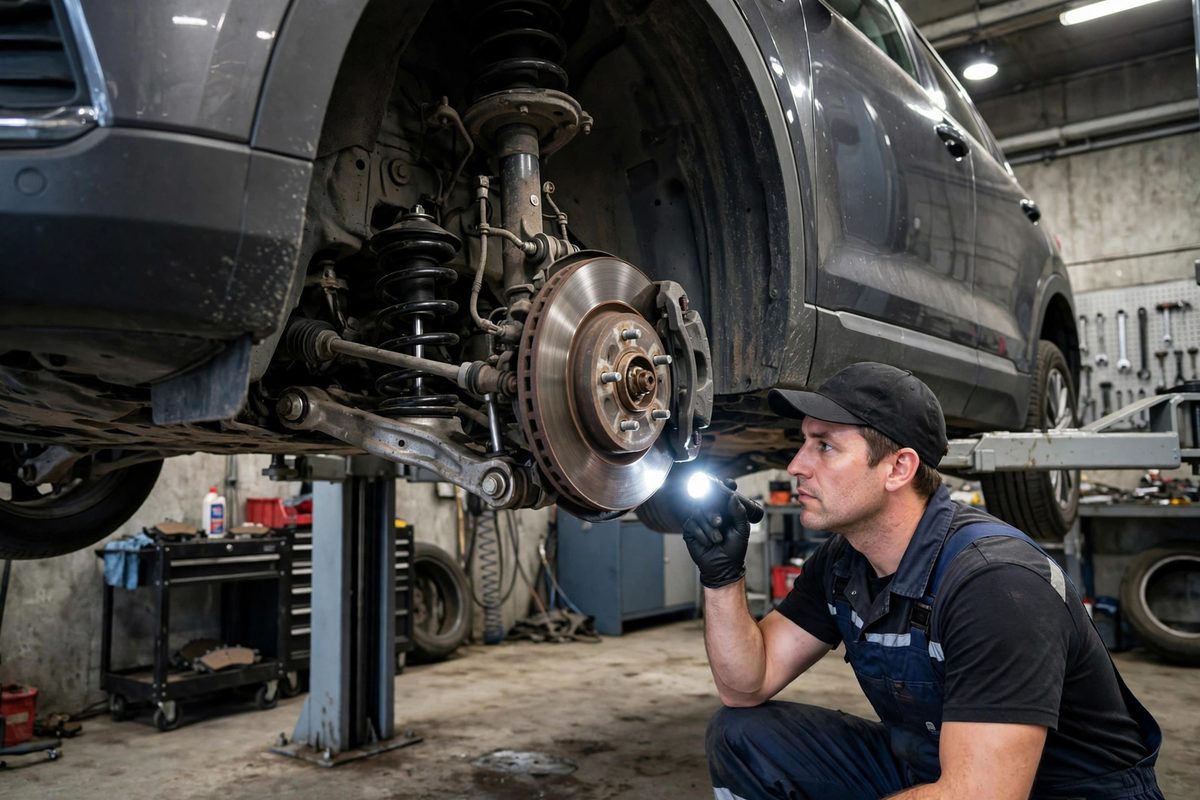
These are not defects — they are wear items, and they are the price of a car that gets used properly. Control-arm bushings, wheel bearings and brake components wear out on high-mileage Outbacks like they do on any car, and the all-wheel-drive system means there are more of them to wear. The signs are a clunk over bumps, a humming that changes with speed, or a steering wheel that pulls to one side. None of them is a reason to reject a car, but all of them are a reason to negotiate: get a quote before you buy, and use it.
The Wilderness trim adds its own wear pattern. The all-terrain tires wear faster on pavement than highway tires, and the raised suspension works harder on rough roads. Neither is a problem if you use the car the way it was built to be used — but if the previous owner drove a Wilderness like a highway commuter, the tires may be worn in ways that have nothing to do with mileage. Check tread depth across all four tires, and remember the all-wheel-drive rule: all four must match.
Rust and Underbody Corrosion
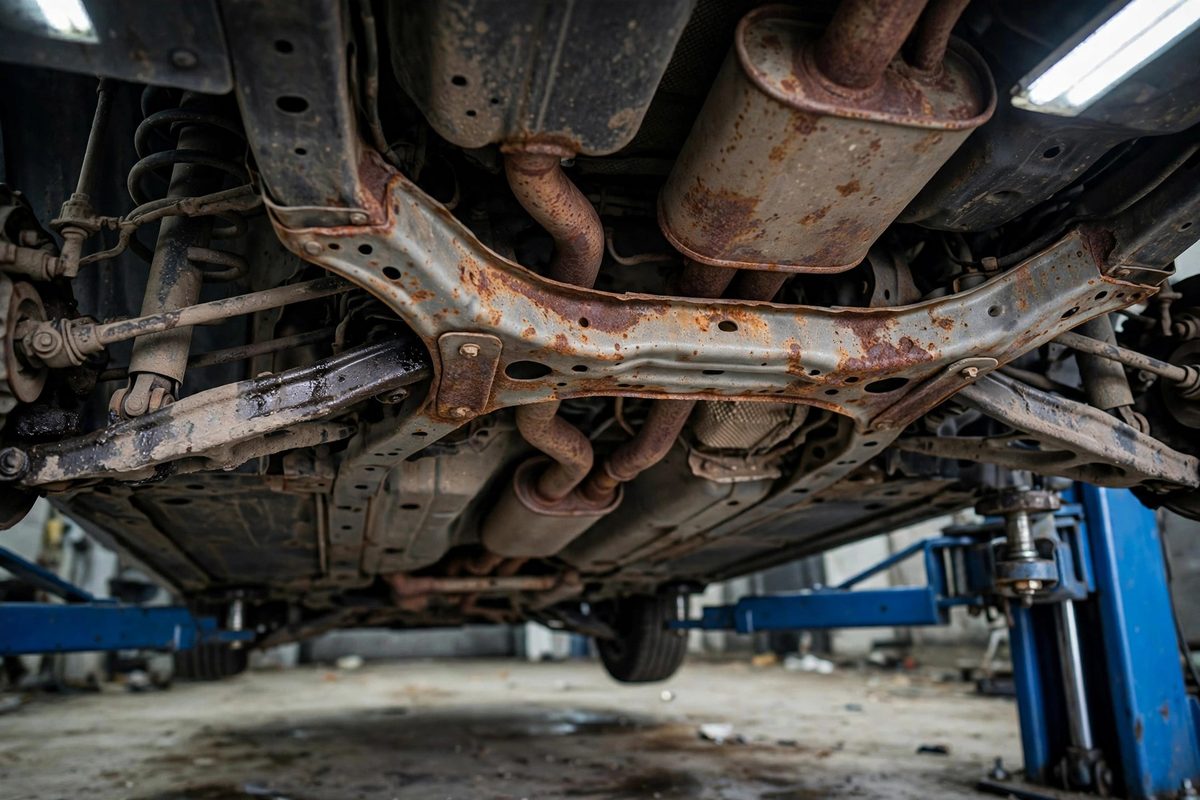
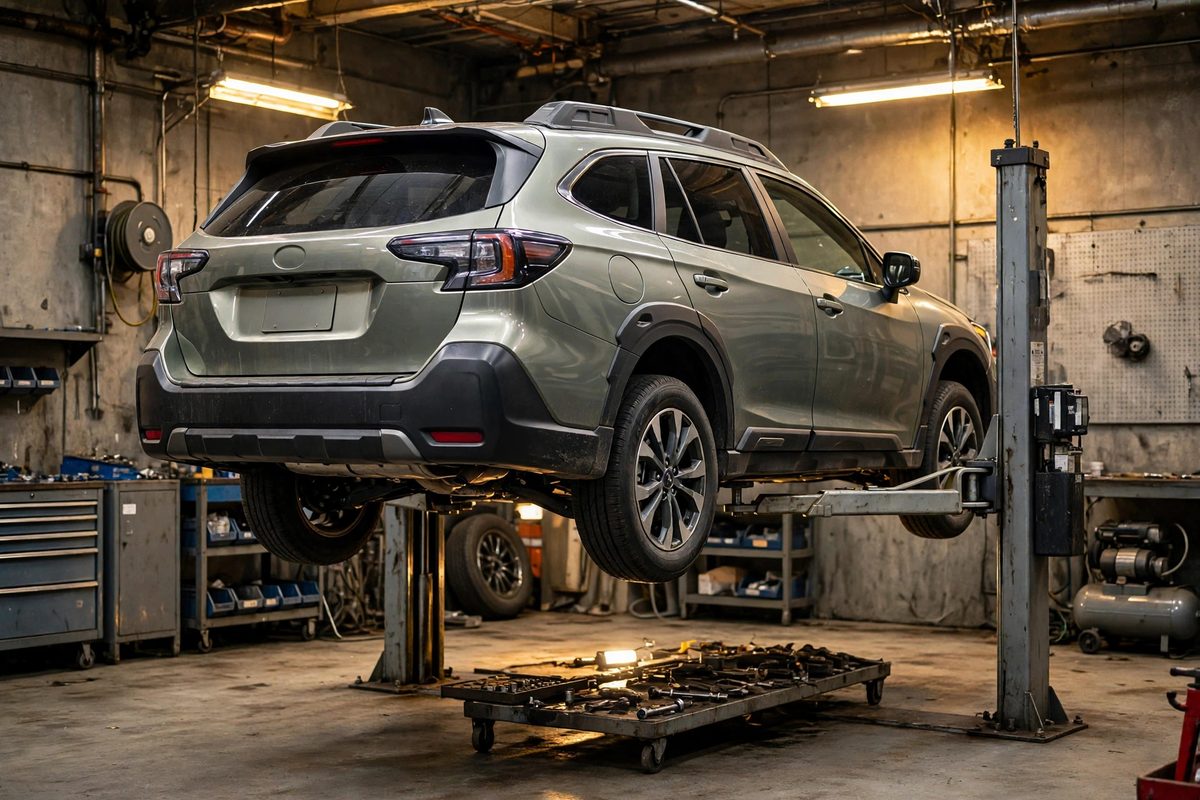
Outbacks live in places with winter, and winter means road salt. The body holds up well, but the underbody is where age shows: the rear subframe, brake lines and suspension mounting points. On a pre-purchase inspection, get the car on a lift and look underneath — surface rust is normal and cosmetic, but flaking metal, rusted-through brake lines or a corroded subframe are not. A car from a salt-belt state with no underbody protection and 150,000 miles deserves a closer look than the same car from a dry climate.
The fix is mostly prevention. If you buy an older Outback in a salt state, an annual underbody wash and a rust-proofing treatment are cheap insurance. Check the brake lines in particular: they are the safety item most likely to be hiding corrosion, and they are the one rust problem that can turn dangerous rather than merely expensive.
EyeSight and Driver-Assist Quirks
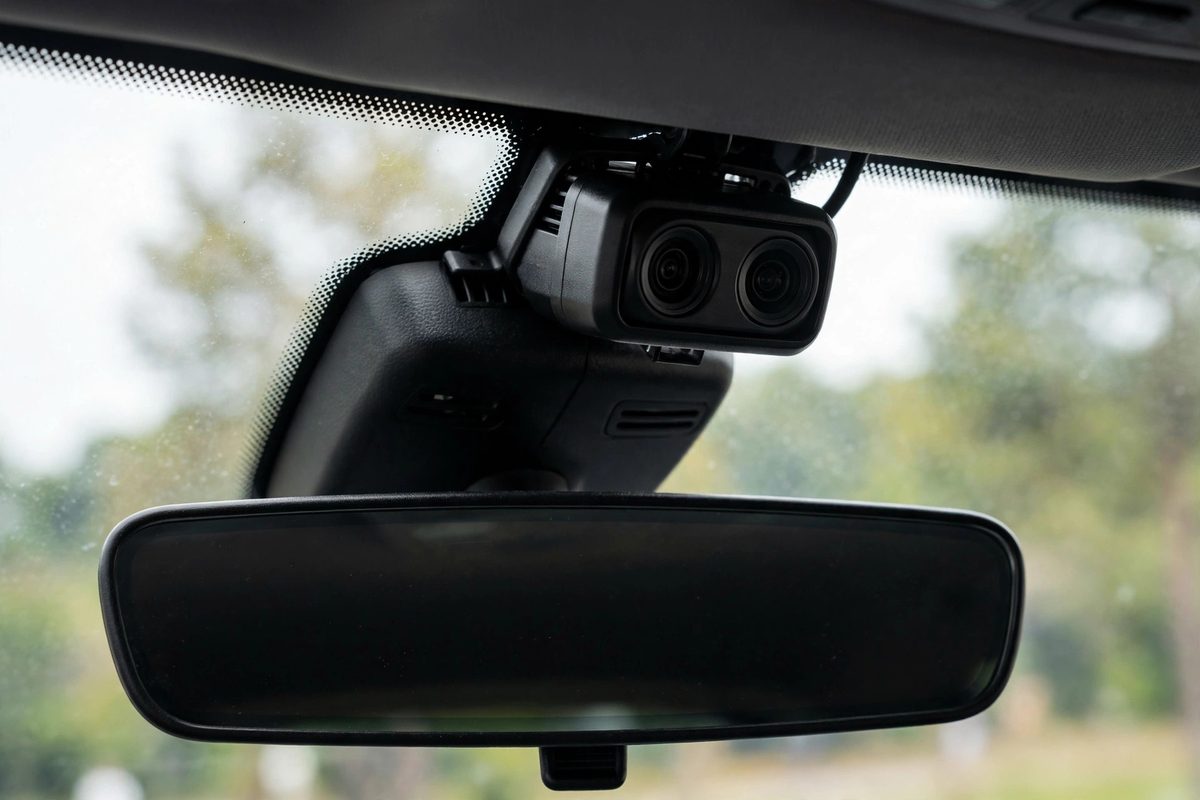
EyeSight — Subaru's camera-based driver assistance — is standard on 2020 and newer Outbacks and available on earlier cars, and it is one of the best systems in the class. It also has quirks. The cameras sit behind the windshield, so a dirty windshield, heavy rain or direct sun can trigger warnings or temporary deactivation. That is the system working as designed, not a fault — but it surprises owners who have not seen it before.
The expensive quirk is the windshield. Because the cameras look through it, a windshield replacement requires EyeSight recalibration, which adds cost to what would otherwise be a routine glass job. Ask whether the windshield has been replaced and whether the system was recalibrated afterwards. On a test drive, turn on adaptive cruise and lane centering and make sure both engage cleanly — a car that refuses to engage them is telling you something, and it is cheaper to hear it now than after the sale.
What to Check Before You Buy Used
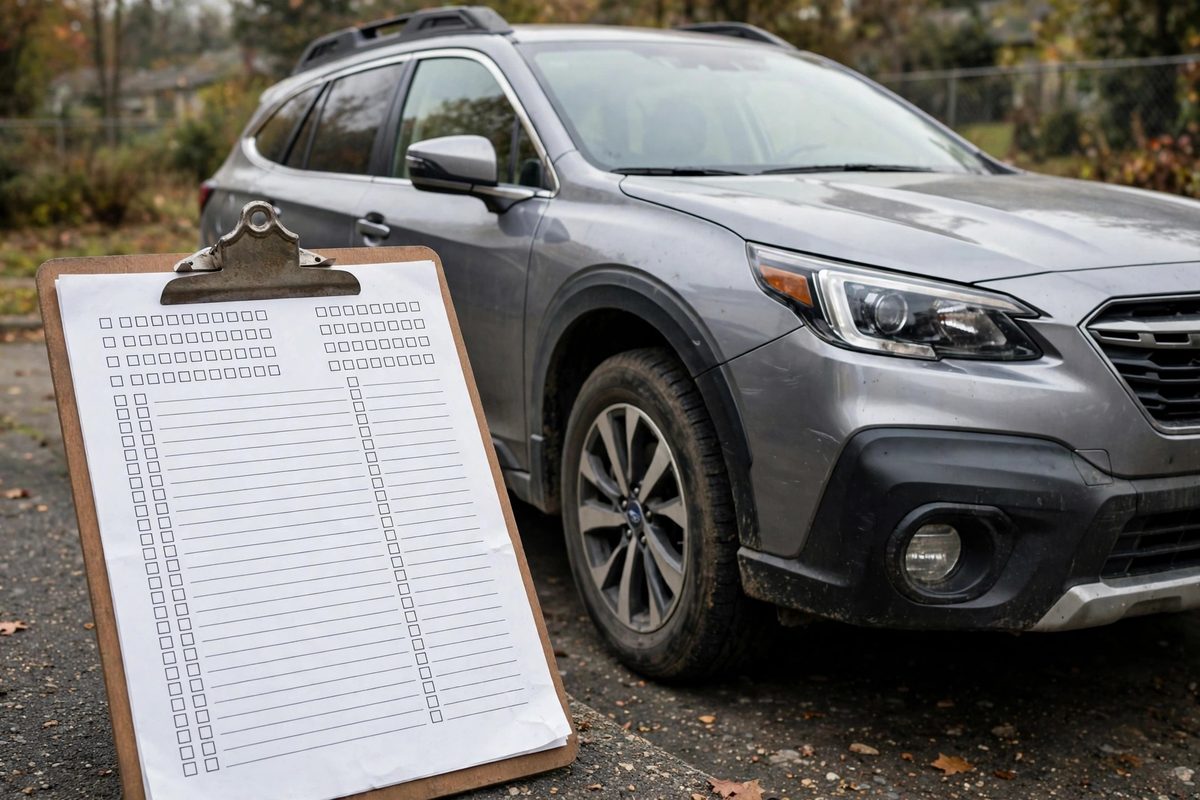
Every problem on this page is checkable before money changes hands, and that is the real point of the list. A professional pre-purchase inspection — about $150 at an independent mechanic — covers the head gaskets, the CVT, the suspension, the rust and the brakes in one visit. Add a vehicle history report by VIN and the free NHTSA recall lookup, and you have covered the car's past as well as its present.
| Problem | Years most affected | Check |
|---|---|---|
| Head gasket seepage | Pre-2010 | Coolant residue at the gasket line |
| Oil consumption | 2011–2017 | Dipstick level and service records |
| CVT shudder | Any, if unserviced | Shudder on acceleration, fluid history |
| Infotainment faults | 2020–2025 | Test every screen function |
| Rust | Older, salt-belt cars | Underbody on a lift |
| EyeSight quirks | Any with EyeSight | Windshield replacement and calibration |
If you are buying a 2020 or newer car, the list gets much shorter: the head gasket problem is gone, oil consumption is largely behind it, and the remaining checks are the CVT service history, the screen, and the underbody. That is a large part of why the 2020-and-newer cars are the sweet spot for used buyers — not just because they are newer, but because the known problems cluster in the years before them.
The Bottom Line
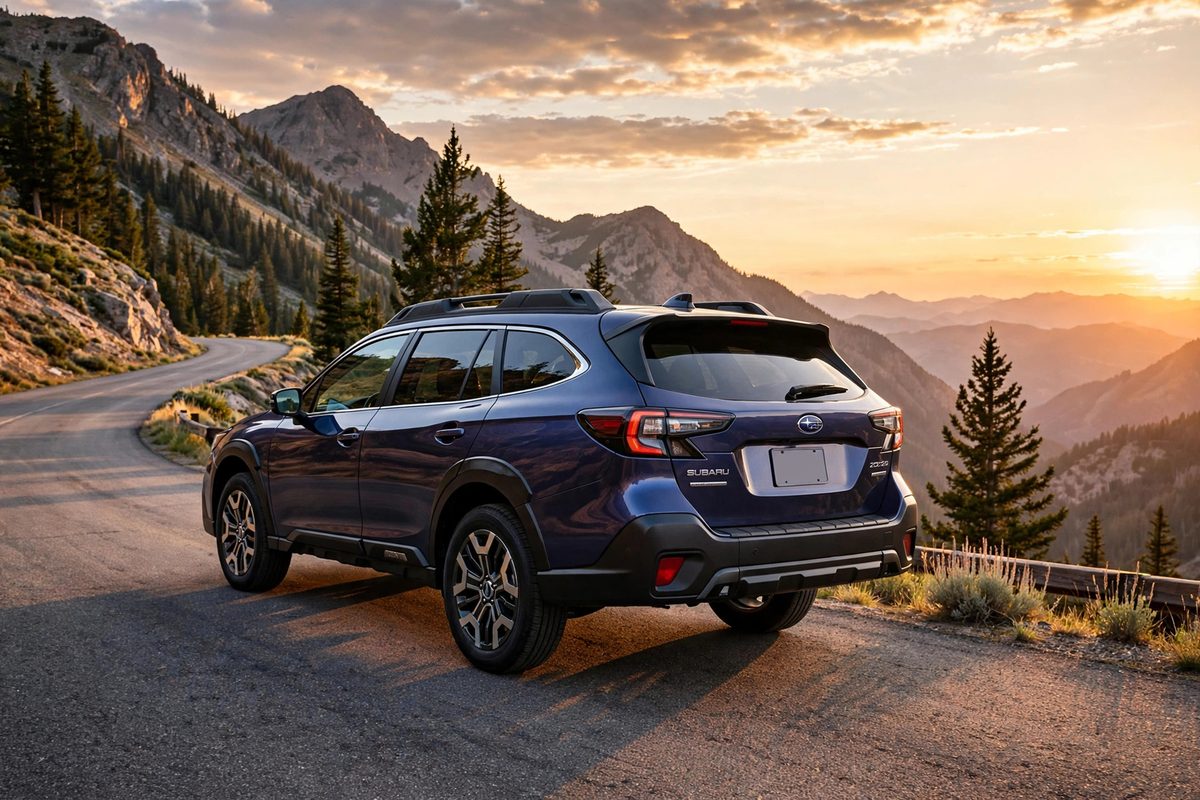
The Outback is a reliable car with a short, year-specific list of problems — and that is a good place to be. Head gaskets belong to the pre-2010 cars, oil consumption to some 2011 to 2017 engines, and everything else is wear items, software and the occasional battery. Buy a 2020 or newer car, get the inspection, check the VIN, and the list on this page becomes background reading instead of your repair bill.
Are Subaru Outbacks reliable?▾
Yes, overall. The Outback is one of the more reliable cars in its class, with most problems clustering in specific model years — head gaskets before 2010, oil consumption on some 2011 to 2017 engines — rather than across the whole lineup. A 2020 or newer car avoids most of the known issues.
What year Outback should I avoid?▾
No year is a definite avoid, but be most careful with pre-2010 cars (head gaskets) and check 2011 to 2017 cars for oil consumption. A thorough pre-purchase inspection matters more than the model year — a well-kept 2012 can be a better buy than a neglected 2020.
Do Outbacks still have head gasket problems?▾
Not on modern cars. The classic head gasket problem belongs to the older EJ-series engines in pre-2010 cars. Subaru replaced that engine with the FB-series 2.5 for 2013, and the external head gasket leak largely went away with it.
How long does the Outback CVT last?▾
A serviced CVT lasts the life of the car in most cases. The risk is a transmission whose fluid was never changed — listen for shudder or whine under load on a test drive, and ask for documented fluid service history. A fluid service is far cheaper than a replacement.
Is oil consumption still a problem on newer Outbacks?▾
No. The oil consumption issue affected certain 2011 to 2017 engines and was resolved under a class-action settlement for affected owners. It is not a known problem on 2020 and newer cars, but it is still worth checking the dipstick on any used car from those years.
Which Subaru Outback year has the most complaints?▾
The 2019 Outback, with 1,002 owner complaints filed with NHTSA (AGT Auto, NHTSA 2025 data) — mostly windshield cracks and battery and electrical problems. The 2017 is next at 893 complaints, and the 2020 at 873. By contrast the early-2010s cars have fewer complaints but far more recalls: the 2010 alone has 18.
What should I check on a used Outback before buying?▾
Check the problem that matches the car's year: feel for a shudder from a stop on 2010 to 2012 cars, pull the dipstick on 2013 to 2014 cars, test the battery and charging system on 2016 to 2019 cars, and inspect the windshield in daylight on any 2015 to 2022 car — then run the VIN through NHTSA's free recall lookup. A pre-purchase inspection should cover all of these.
Keep researching your Outback
- Subaru Outback Buying Guide: Trims, Prices & Tips
- Buying a Used Subaru Outback: Best Years, Prices & Checks
- 2017 Subaru Outback for Sale: Prices from $12,000
- 2025 Subaru Outback: The Last Wagon-Shaped Year
- 2020 Subaru Outback: Sixth-Gen Debut, New Turbo
- 2011 Subaru Outback: Last of the EJ Engine Era
- Subaru Outback Cost: 2026 Prices from $34,995
- Subaru Outback Years to Avoid: Worst Years & Best Bets
- 2017 Subaru Outback: Prices, MPG, Recalls & Buying Guide
- Check for recalls by VIN — NHTSA
- Subaru Outback — official page at Subaru of America
Sources
- Check for recalls by VIN — NHTSA
- Subaru Outback years to avoid and reliability problems — AGT Auto
- Subaru Outback reliability by year — Car Lifespan Check
- Subaru Outback: what breaks — What-Breaks.com
- Subaru Outback head-gasket guide — OrganizerTone
- Used Outback inspection checklist — ProTech Service
- Subaru windshield class-action settlement — OpenClassActions
- Subaru Outback years to avoid — CarsCounsel
Continue reading