Buying Guide · 10 min read
2011 Subaru Outback: Last of the EJ Engine Era
Second year of the fourth generation and the last with the EJ253 engine — cheap way into the bigger wagon, but history matters more than mileage.
By Elena Marsh · · Updated
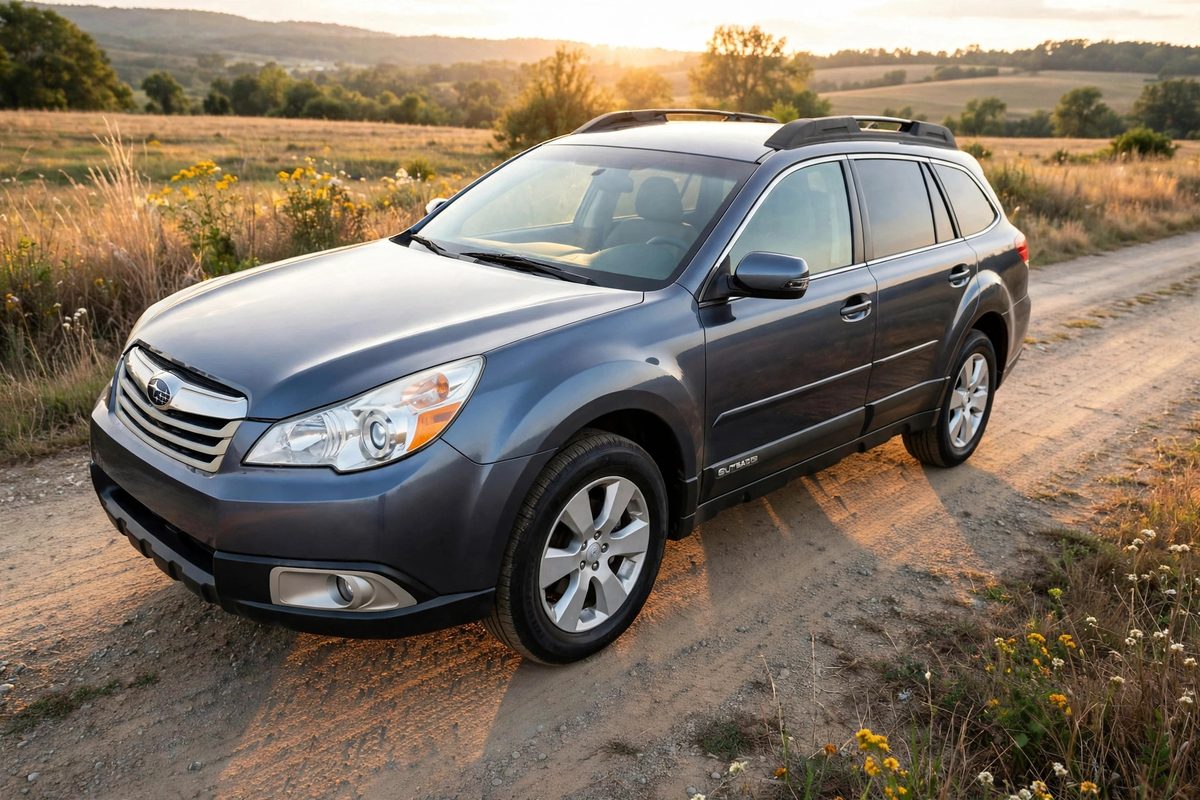
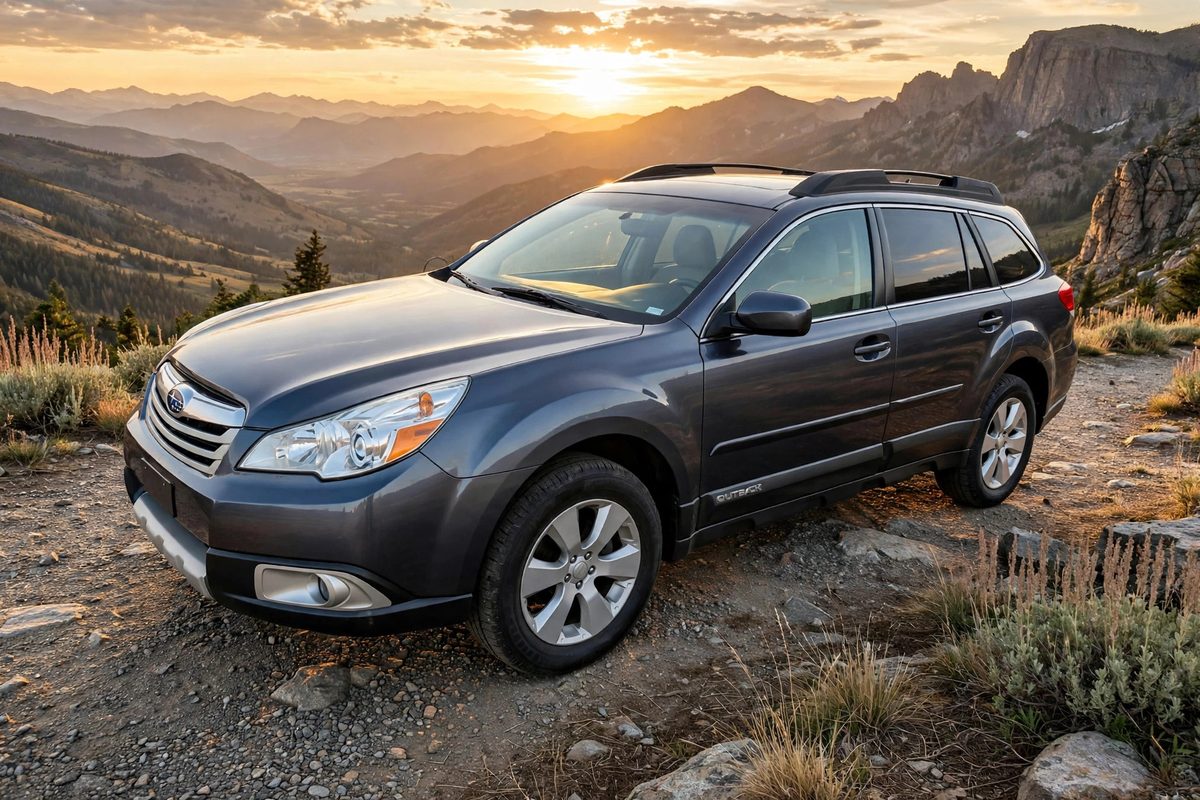
The 2011 Subaru Outback is one of the cheapest ways into a genuinely capable all-wheel-drive wagon. Every version has standard Symmetrical All-Wheel Drive, seating for five, 8.7 inches of ground clearance, and 71.3 cubic feet of cargo space with the rear seats folded. Kelley Blue Book's current dealer Fair Purchase Prices start at about $5,875, and four-cylinder models return up to 29 mpg on the highway with the CVT. The catch is that the 2011 is a transition-year car: it pairs the new fourth-generation body with the older EJ-series 2.5-liter engine, and owner reports link this era to oil consumption and early CVT troubles. Buy one that passes a careful inspection, and it is a bargain; skip the checks, and it can become one.
2011 Subaru Outback at a Glance
| What to know | 2011 Outback |
|---|---|
| Starting price when new | $23,195 for the 2.5i (Edmunds) |
| Current used starting price | About $5,875 (Kelley Blue Book) |
| Engines | 2.5-liter flat-four, 170 hp; 3.6-liter flat-six, 256 hp |
| Fuel economy | 22 city / 29 highway mpg (2.5-liter, CVT); 18 / 25 mpg (3.6-liter) |
| Drivetrain | Standard Symmetrical All-Wheel Drive |
| Towing | Up to 2,700 pounds (2.5-liter); 3,000 pounds (3.6-liter) |
| Cargo | 34.3 cubic feet behind rear seats; 71.3 folded |
| Ground clearance | 8.7 inches |
| Safety | IIHS Top Safety Pick; 4-star overall NHTSA rating |
Why the 2011 Model Year Matters
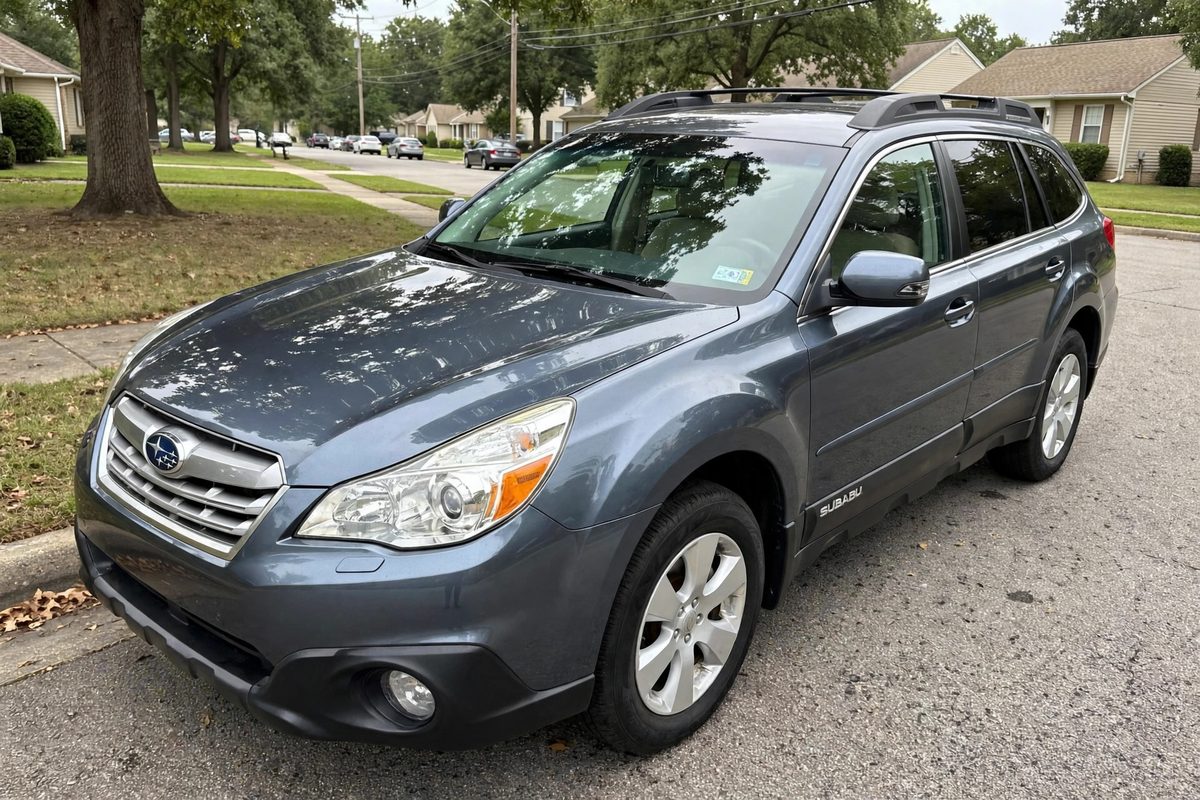
The 2011 Outback is the second year of the fourth generation, which arrived for 2010 with a larger body, a longer wheelbase, and far more rear-seat room than the car it replaced. Rear legroom grew by nearly four inches. For 2011, Subaru carried the redesign over almost unchanged, adding a rear vision camera with the Power Moonroof package on Premium and Limited trims and standard manually folding mirrors. If you want the bigger fourth-generation wagon at the lowest possible price, the 2011 is where the value sits.
But 2011 is also the last chapter of an older engine story, and that is the detail most listings gloss over. The 2.5-liter four-cylinder is still the EJ253 engine, the final version of a series with a well-documented head gasket history, while the CVT automatic was still new to Subaru, having debuted on the Outback only in 2010. Neither fact makes the 2011 a car to avoid outright, but both mean the specific car's history matters far more than the badge.
Prices and Trims: What Each Version Cost
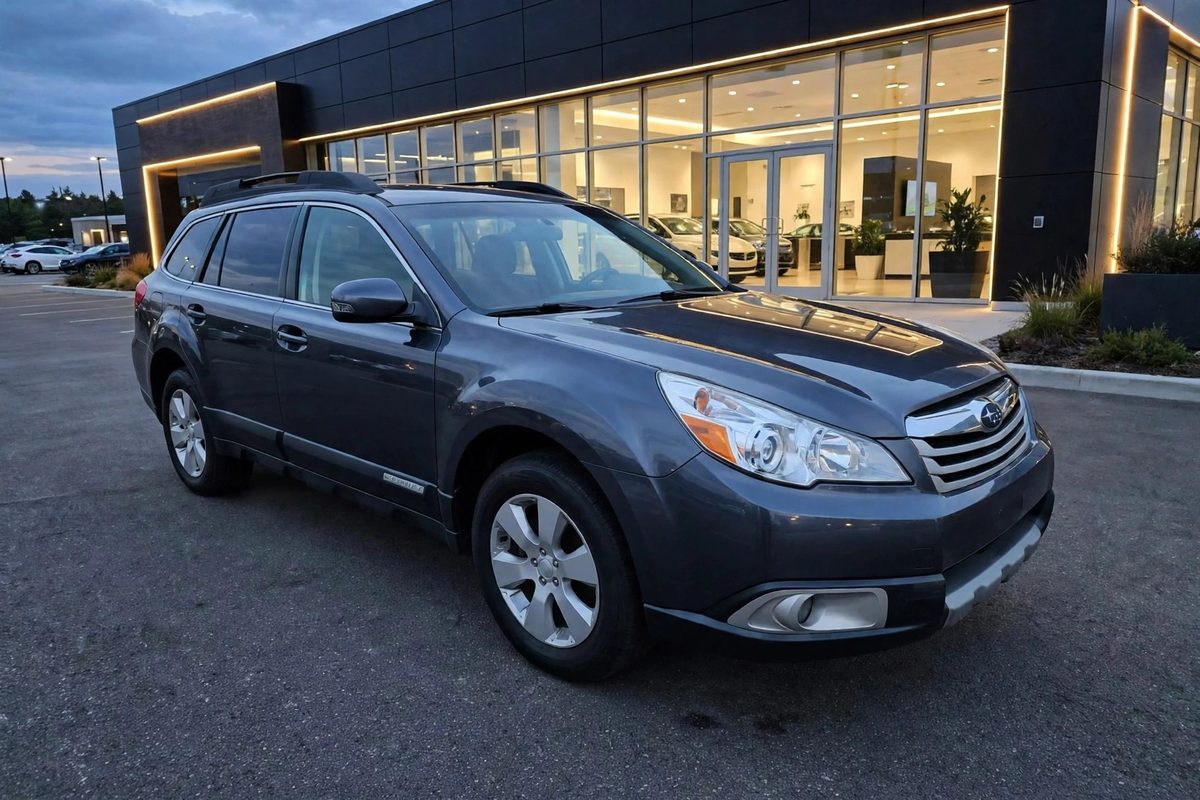
The 2011 Outback came in six trims, all with all-wheel drive. The table below pairs each trim's original price with Kelley Blue Book's current Fair Purchase Price, which reflects typical-condition dealer sales. Individual cars vary widely with mileage, condition, and location, so treat these as starting points, not quotes for a specific car.
| Trim | Original MSRP | Current used starting price |
|---|---|---|
| 2.5i | $25,681 | $5,925 |
| 2.5i Premium | $27,441 | $5,875 |
| 2.5i Limited | $30,965 | $6,900 |
| 3.6R | $29,380 | $6,475 |
| 3.6R Premium | $32,286 | $6,725 |
| 3.6R Limited | $32,220 | $6,025 |
Two things stand out. First, the price spread between trims has almost vanished: the range-topping 3.6R Limited starts lower than the 2.5i Limited in Kelley Blue Book's current figures, so the six-cylinder costs little extra used. Second, the cheapest car is not the base trim but the 2.5i Premium, which adds a power driver seat, fog lights, and alloy wheels. As a cross-check, CarGurus listings average around $6,700 to $6,900 nationally.
Engines, Performance and Real-World Driving
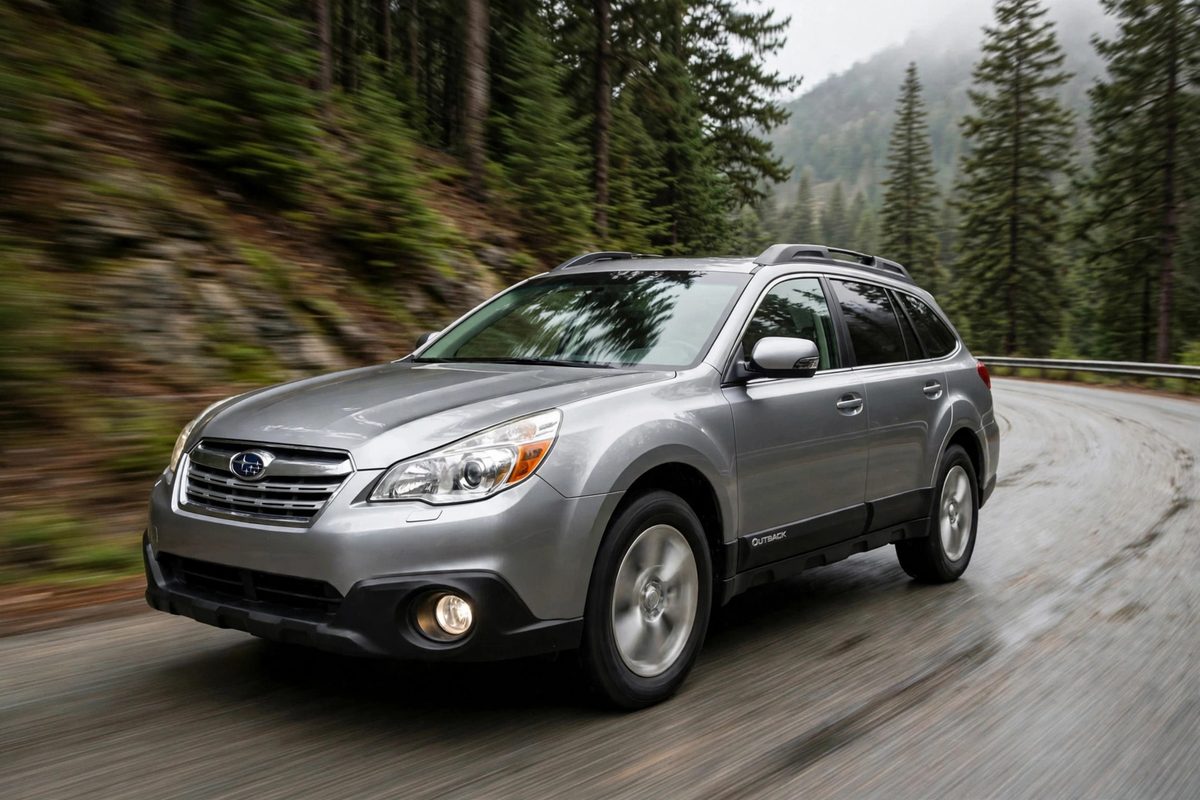
The base 2.5-liter flat-four makes 170 horsepower and 170 lb-ft of torque, paired with either a six-speed manual on base and Premium trims or Subaru's Lineartronic CVT, standard on the Limited and optional elsewhere. Edmunds recorded 0 to 60 mph in 9.4 seconds for the manual car, and the CVT returns 22 mpg in the city and 29 on the highway, against 19 and 27 for the manual. The four is adequate rather than quick, and reviewers note it gets noisy when pressed.
The 3.6-liter flat-six makes 256 horsepower and 247 lb-ft of torque and comes only with a five-speed automatic with paddle shifters. It is smoother, quieter, and far stronger for passing and hill climbs, at 18 mpg city and 25 highway. It also tows more: 3,000 pounds against 2,700 for the four-cylinder. On the road, the Outback's all-wheel-drive system and 8.7 inches of clearance handle snow, gravel, and rutted tracks that stop most family wagons, though Consumer Reports describes it as clumsy when pushed hard.
Interior, Cargo and Everyday Practicality
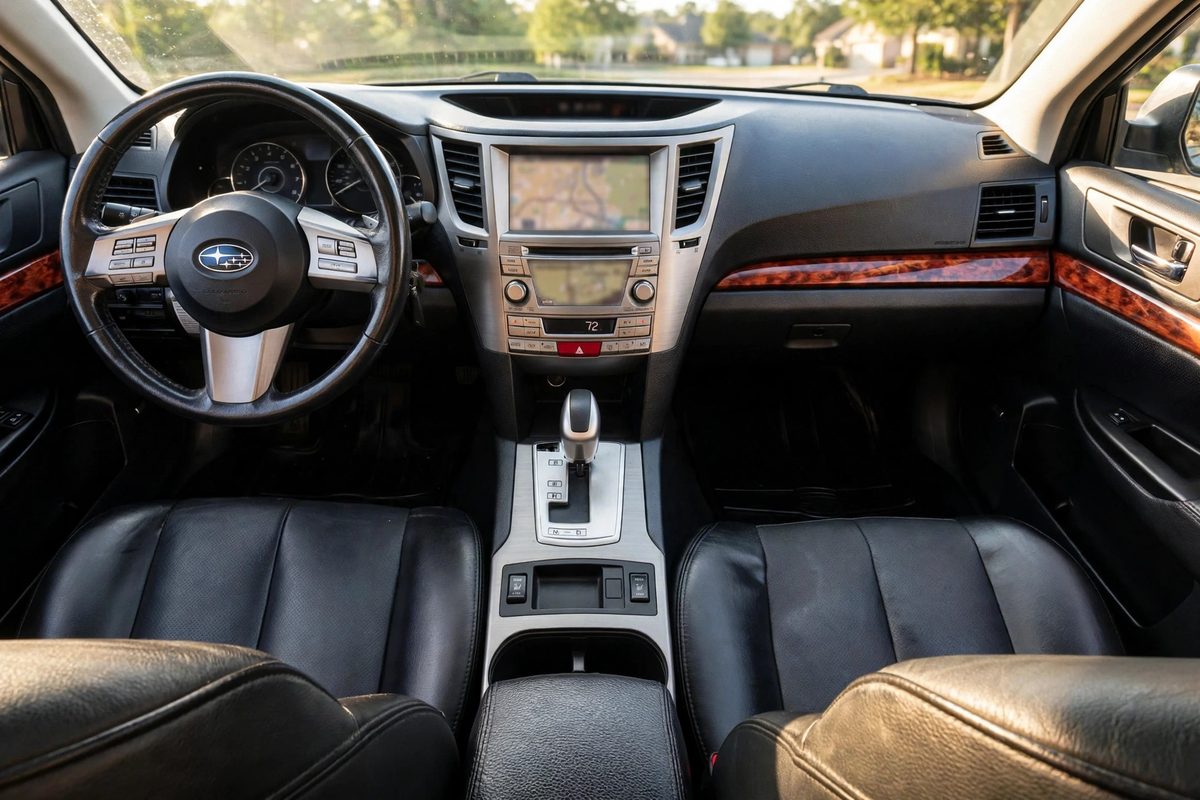
Inside, the 2011 Outback is roomy for five adults, with generous headroom, reclining rear seatbacks, and a wide, flat cargo floor. You get 34.3 cubic feet behind the rear seats and 71.3 cubic feet with the 60/40-split rear seats folded, more than many midsize SUVs of the era, and the adjustable roof rails swing inward to double as crossbars. Base and Premium trims use cloth, while Limited trims use leather with heated front seats and dual-zone climate control. Expect basic technology: no Apple CarPlay, no Android Auto, and no EyeSight suite, which arrived on the Outback in later model years.
Safety and Driver Assistance
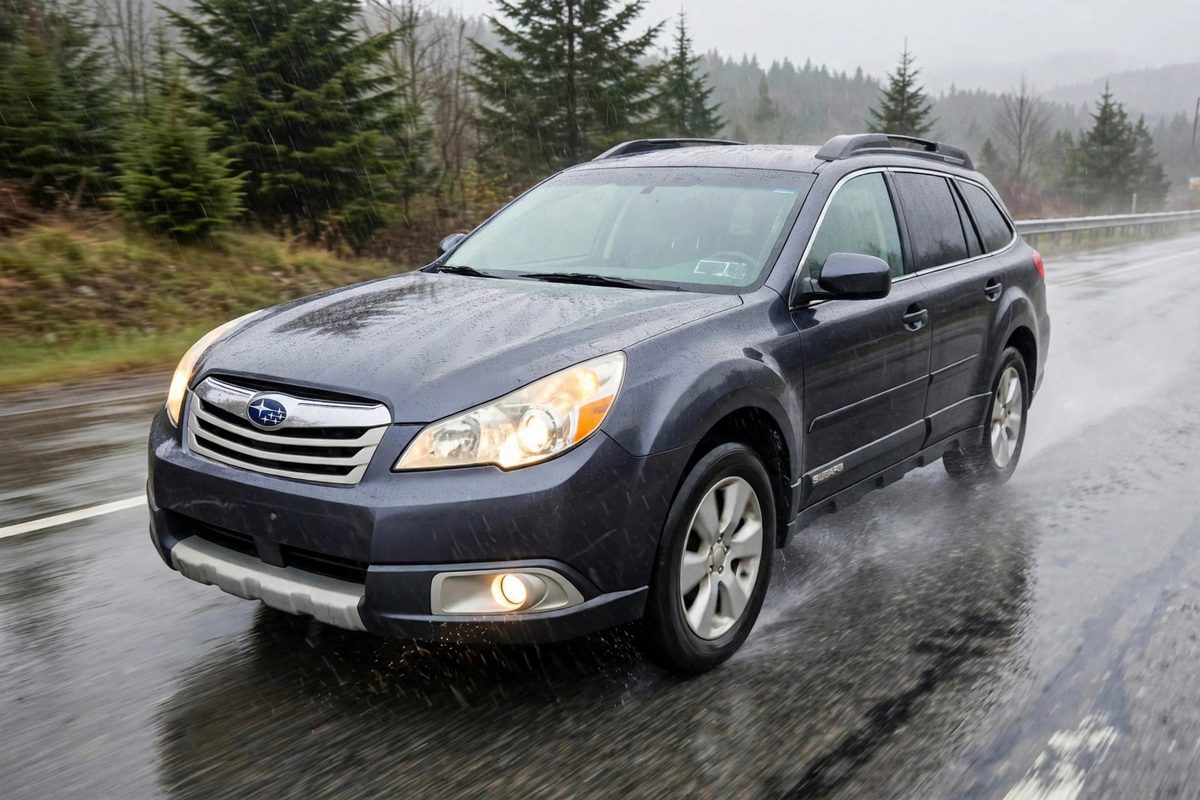
The 2011 Outback earned the Insurance Institute for Highway Safety's Top Safety Pick award, with Good ratings in the moderate overlap front, side, roof strength, and head restraint tests, plus standard electronic stability control. In the government's stricter 2011 crash-test programme, it earned four stars overall from NHTSA, with four stars for frontal and side protection. Standard equipment includes stability and traction control, antilock disc brakes, front side airbags, and side curtain airbags. What it lacks is modern active safety tech: no automatic emergency braking, lane keeping, or blind-spot monitoring on any 2011 trim.
Ownership Costs and Reliability
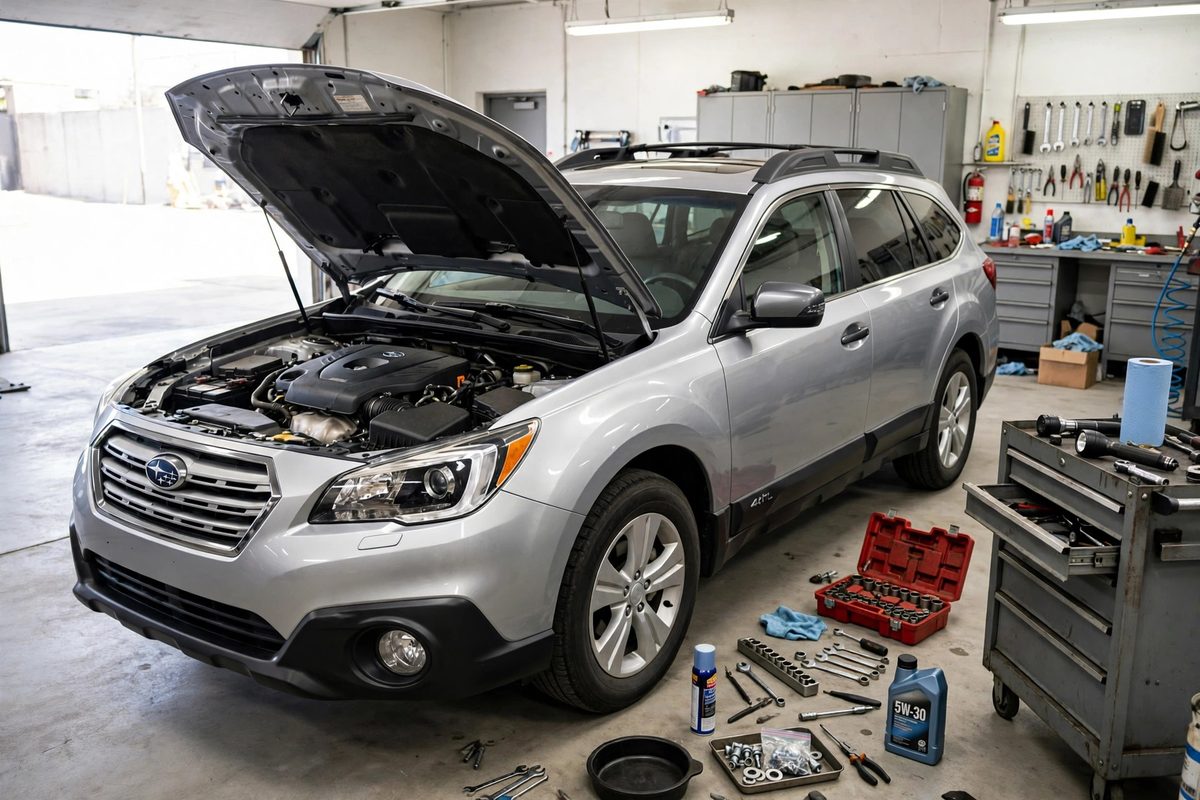
This is the section that decides whether a 2011 Outback is a bargain or a bill. Owner reports and reliability analysts link the 2010 to 2011 cars to three recurring issues: external head gasket leaks on the EJ-series 2.5-liter, excessive oil consumption, with some owners reporting a quart every 1,000 to 2,000 miles, and shuddering or hesitation from the early Lineartronic CVT. Subaru extended the CVT warranty on 2010 to 2018 models to 10 years or 100,000 miles, but that extension has now expired for a 2011, so any CVT repair today comes out of your pocket. These are reported patterns, not certainties for every car. The recall record tells a similar story — NHTSA lists 16 recall campaigns for the 2011 Outback, most of them repeat Takata airbag campaigns — and the full list is in the recalls section below.
Before you buy a used 2011 Outback, check these items
- ✓Check the oil level yourself, ask when it was last topped up, and look for oil residue along the head-to-block seam.
- ✓Drive from a cold start and feel for CVT shuddering or hesitation at low speed, and ask for documented CVT fluid service.
- ✓Look for white exhaust smoke after warm-up, milky residue under the oil cap, or a dropping coolant level.
- ✓Inspect the underbody and suspension for rust and worn wheel bearings.
- ✓Confirm all recalls are complete and favour cars with head gasket work already done and documented.
- ✓Get an independent pre-purchase inspection from a Subaru-experienced mechanic, and budget for tires and brakes.
Pros
- Very cheap entry point: about $5,900 to $6,900 to start by trim.
- Standard all-wheel drive with 8.7 inches of clearance for snow and gravel.
- Roomy fourth-generation cabin with 71.3 cubic feet of maximum cargo space.
- Six-cylinder costs little extra used and tows up to 3,000 pounds.
- IIHS Top Safety Pick with a 4-star overall NHTSA rating.
Cons
- EJ-series 2.5-liter carries reported head gasket and oil consumption risks.
- Early CVT can shudder or hesitate, and its warranty extension has expired.
- Four-cylinder feels slow and noisy when fully loaded or at altitude.
- No EyeSight, CarPlay, or Android Auto on any 2011 trim.
- Most examples have high mileage, so suspension and rust checks are essential.
Recalls and Owner Complaints: The Paper Trail
The recall record is the part of the 2011's story most listings skip, and it is worth reading before you pay. NHTSA lists 16 recall campaigns for the 2011 Outback, though some tallies reach 19 by counting each Takata airbag reissue separately. Owners have filed 653 complaints with NHTSA about the 2011 Outback — about 3.4 times the complaints of a typical Outback year at the same age — with transmission and drivetrain the most-reported category, followed by exterior lighting. The generation's reliability score for 2011 sits at 6.0 out of 10, on 288 powertrain complaints alone, and NHTSA's files hold no escalated investigation for this generation. In plain terms, the 2011 is not a car with one big defect, but a car whose early transmission and airbag history needs checking car by car.
| Recall | NHTSA campaign | What failed | Dealer fix |
|---|---|---|---|
| Takata passenger airbag inflator | 16V-358 (2016), follow-ups through 20V-001 (2020) | Inflator can rupture in a crash, sending metal fragments into the cabin | Replace the passenger airbag inflator, free of charge |
| Windshield wiper motor cover | 16V-694 (2016), supersedes 11V-469 | Cover can interfere with the wiper arm; the motor can overheat, melt or stop | Inspect the cover and replace it if it interferes |
| Moonroof glass may detach | 11V-467 (2011) | Moonroof glass can loosen and detach while driving (cars built Aug 3, 2010 – Jul 1, 2011) | Inspect and replace the moonroof glass |
| Puddle lights short circuit | 12V-602 (2012) | Moisture in the circuit board or connector can short the puddle lights, melting plastic | Replace the puddle light assemblies |
| Remote engine starter | 13V-061 (2013) | Engine may start on its own and run up to 15 minutes, a carbon monoxide risk in enclosed spaces | Replace the remote starter system |
| Electronic parking brake (manual) | 18V-626 (2018) | Brake may not hold the car, creating a rollaway risk on manual-transmission cars | Replace the parking brake actuator assembly |
Two smaller campaigns are worth a glance on the same VIN check: an ignition switch recall (19V-297, 2019) that can shut the engine off unexpectedly, and a manual-transmission lubrication recall (10V-326, 2010) covering a small number of early cars. None of these recalls is a reason to walk away on its own — every one of them is fixed free by a Subaru dealer, with no age or mileage limit on safety recalls — but an open Takata inflator or an unreplaced wiper motor cover on a car you are about to buy is a job you should not inherit. Run the 17-digit VIN through NHTSA's free recall lookup before you pay, and ask the seller for proof that each open campaign on that car shows as complete.
Frequently Asked Questions
How much does a used 2011 Subaru Outback cost?▾
Kelley Blue Book's current dealer Fair Purchase Prices run from about $5,875 for the 2.5i Premium to about $6,900 for the 2.5i Limited, while CarGurus listings average roughly $6,700 to $6,900 nationally.
What is the MPG of the 2011 Subaru Outback?▾
The 2.5-liter four-cylinder with the CVT is rated at 22 mpg in the city and 29 mpg on the highway, or 19 and 27 with the six-speed manual. The 3.6-liter flat-six is rated at 18 mpg city and 25 mpg highway.
Is the 2011 Subaru Outback reliable?▾
It can be, but it needs vetting. A well-maintained example can last well past 200,000 miles, yet owner reports link this era to head gasket leaks, oil consumption, and early CVT troubles. Buy only with a clean inspection, documented CVT service, and steady oil levels.
Does the 2011 Outback have a CVT problem?▾
Some early Lineartronic CVTs in 2010 to 2014 Outbacks were reported to shudder, hesitate, or fail, and Subaru extended the CVT warranty to 10 years or 100,000 miles. That extension has expired for 2011 models, so test the transmission carefully and confirm its fluid service history.
Is the 3.6R worth it over the 2.5i?▾
On the used market, yes for many buyers: the six-cylinder costs little extra, adds 86 horsepower, tows 3,000 pounds instead of 2,700, and uses a different engine without the EJ four's head gasket concerns. The trade-off is 18 city and 25 highway mpg.
What recalls does the 2011 Subaru Outback have?▾
NHTSA lists 16 recall campaigns for the 2011 Outback. Most are repeat Takata passenger airbag inflator campaigns issued between 2016 and 2020, plus a windshield wiper motor cover (16V-694), moonroof glass that can detach (11V-467), puddle lights that can short-circuit (12V-602), a remote engine starter that can start the car on its own (13V-061), and an electronic parking brake that may not hold on manual-transmission cars (18V-626). Run the VIN through NHTSA's recall lookup to see which apply to a specific car.
How do I check for open recalls on a 2011 Outback?▾
Enter the car's 17-digit VIN at nhtsa.gov/recalls — the check is free and shows every open safety recall for that exact car. Any open recall is fixed free by a Subaru dealer, with no age or mileage limit, so ask the seller for proof each campaign shows as complete before you buy.
The Bottom Line
Buy the 2011 Subaru Outback if you want the cheapest ticket into a roomy, all-weather wagon and you are willing to inspect before you pay. The 3.6R is the smart pick on today's used market, since it costs barely more than the four-cylinder while bringing stronger performance and a different, less troubled engine. Choose the 2.5i only with documented head gasket and CVT history, and walk away from any car that shudders, drinks oil, or has no records. If it passes those checks, the 2011 Outback is one of the best-value wagons under $7,000.
Prices and specifications in this guide reflect Kelley Blue Book, Edmunds, MotorTrend, Consumer Reports, and CarGurus listings checked in November 2026, with NHTSA recall and complaint data checked November 14, 2026, and used prices change with mileage, condition, and location. Confirm a specific car's history, recall status, and condition with an independent inspection before buying.
Continue researching the Outback
- The Honest Guide to Buying a Used Subaru Outback
- 2025 Subaru Outback: The Last Wagon-Shaped Year
- 2024 Subaru Outback: Prices, Trims, MPG and Used Buying Guide
- Cost of Subaru Outback: 2026 Prices, Trims and Ownership Costs
- 2013 Subaru Outback: New FB Engine, 30 MPG
- 2020 Subaru Outback: Sixth-Gen Debut, New Turbo
- Subaru Outback Years to Avoid: Worst Years & Best Bets
Sources
- Kelley Blue Book: 2011 Subaru Outback
- Edmunds: 2011 Subaru Outback Review
- MotorTrend: 2011 Subaru Outback
- CARFAX: 2011 Subaru Outback Research
- IIHS: 2011 Top Safety Picks
- CarGurus: Used 2011 Subaru Outback Listings
- Consumer Reports: 2011 Subaru Outback
- NHTSA: Recalls Lookup
- RecallsList: 2011 Subaru Outback Recalls
A note on prices
Prices, trims, MPG figures and safety ratings change over time. Treat the figures here as a starting point and confirm the details with a dealer or the manufacturer's site before you buy.
Continue reading