Buying Guide · 9 min read
2003 Subaru Outback: Prices, Trims, MPG and Buying Guide
A used 2003 Outback starts at about $2,550, with 18/25 mpg from the 2.5L and a 212-hp H6 - buy the H6, or a 2.5L with proof of a head-gasket repair.
By Daniel Reyes ·
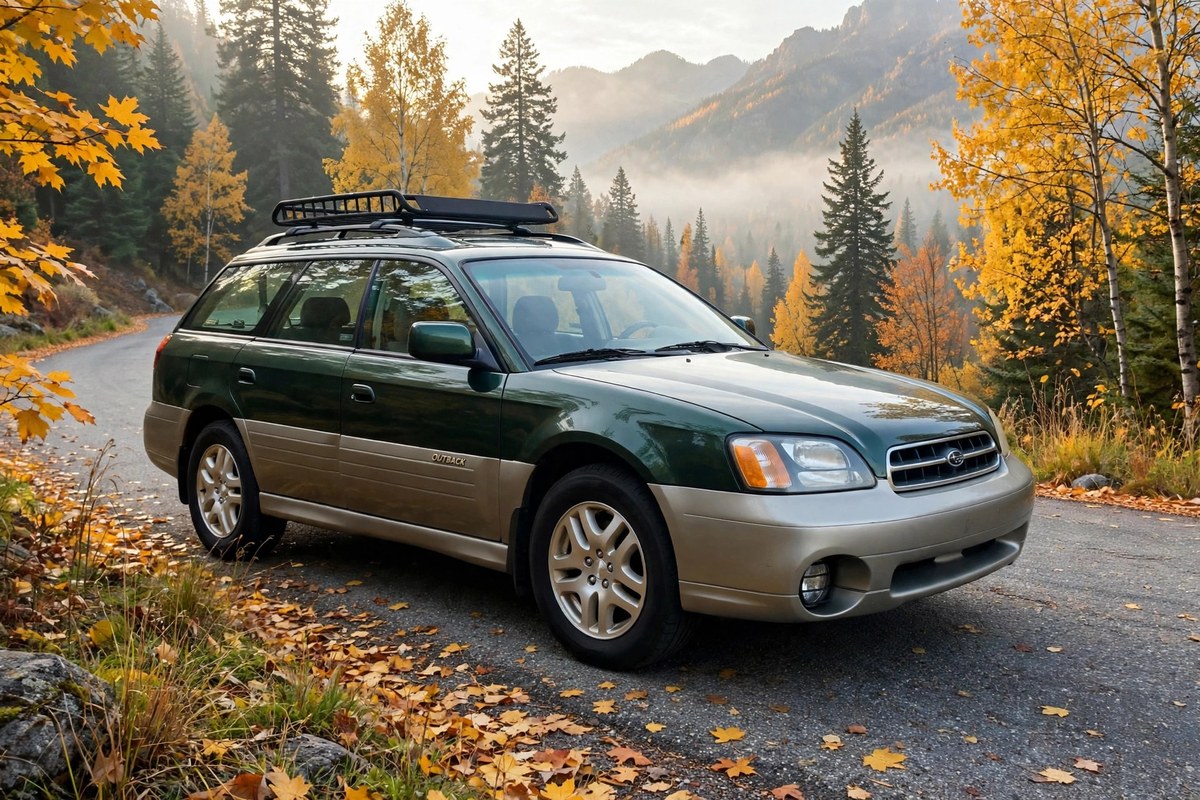
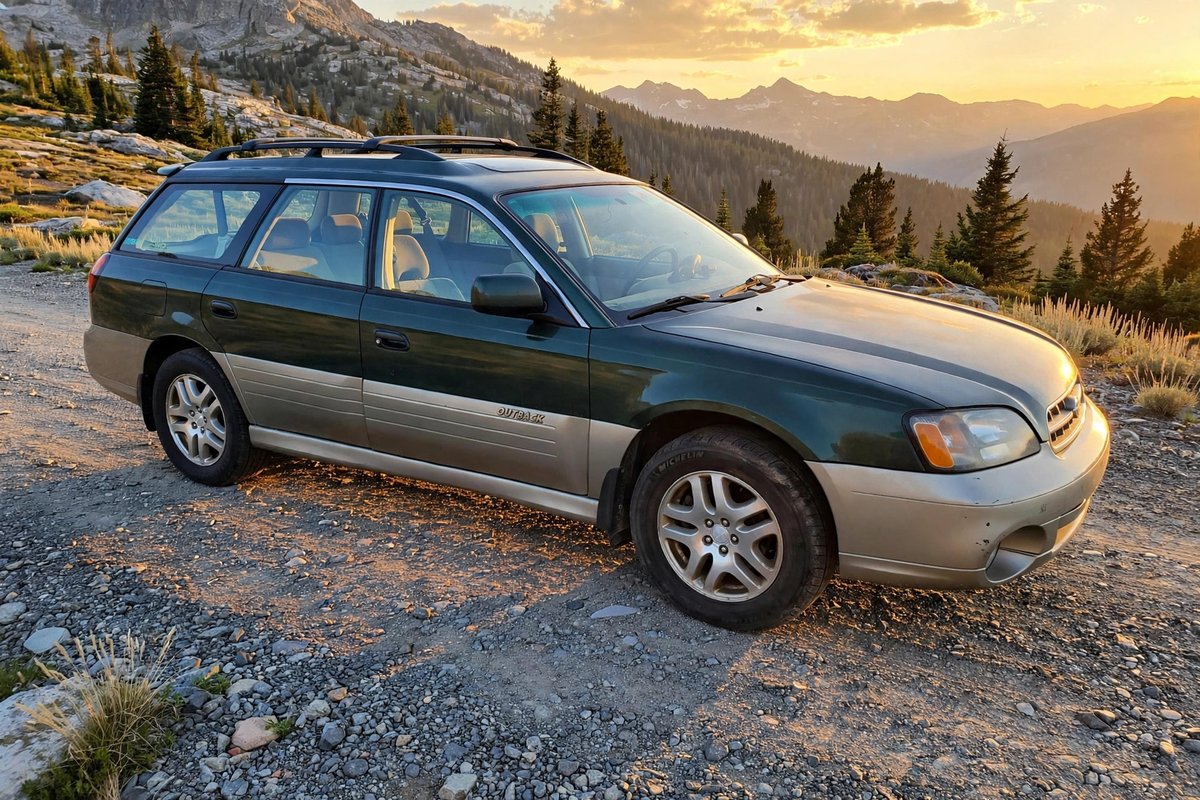
The 2003 Subaru Outback is the cheapest way into the second-generation wagon that made Subaru's name: standard all-wheel drive, a raised ride height and room for five, now selling for about $2,550 to $3,575 (KBB). Buy with your eyes open — the 2.5-litre's head gaskets are this generation's defining fault, so choose the 3.0-litre six or a four-cylinder with a documented steel-gasket replacement.
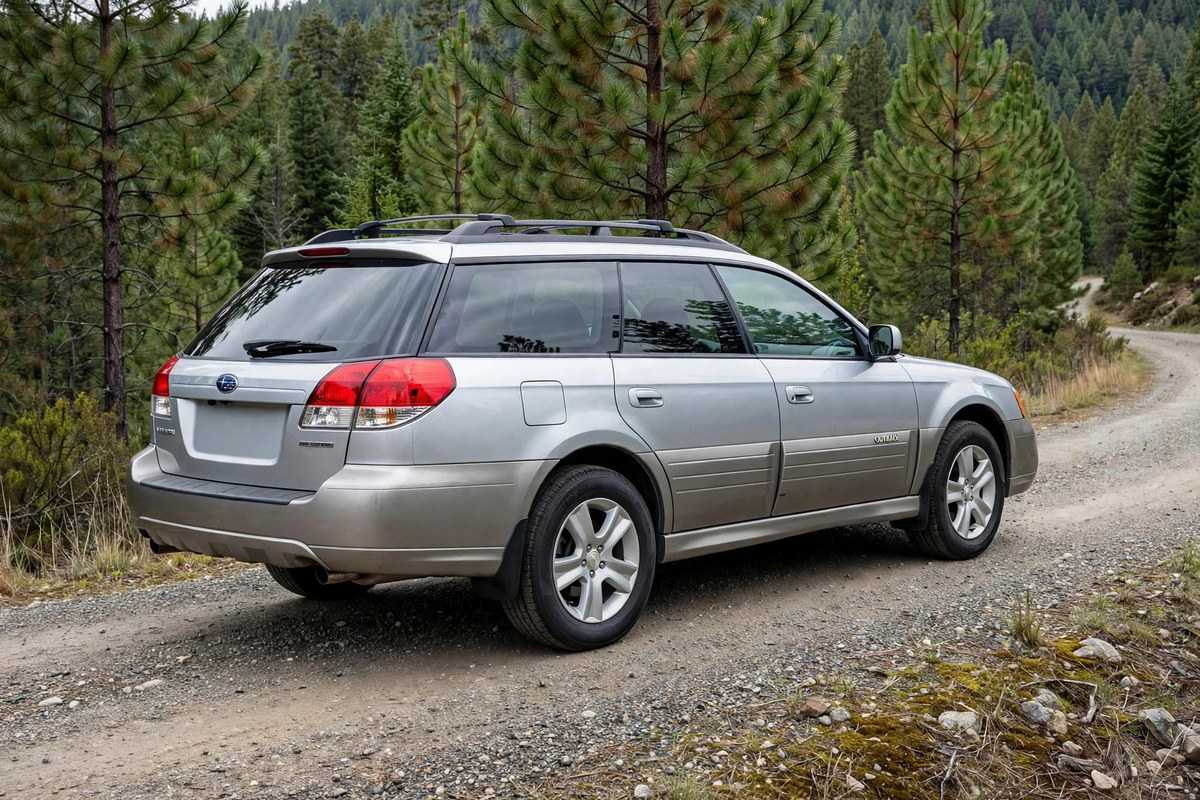
2003 Subaru Outback at a Glance
| What to know | 2003 Outback |
|---|---|
| Starting price when new | $24,370 (Wagon) to $32,920 (VDC) |
| Current used price | $2,550-$3,575 (KBB Fair Purchase Price) |
| Engines | 2.5L flat-four, 165 hp; 3.0L six, 212 hp |
| Fuel economy | 18/25 mpg (2.5L); 17/23 mpg (H6) |
| Drivetrain | Standard AWD; manual or automatic |
| Towing | 2,000 lbs (2.5L); 2,400 lbs (VDC) |
| Cargo | 68.6 cu ft, rear seats folded |
| Ground clearance | 7.3 in (7.9 on L.L.Bean, VDC) |
| Safety | No NHTSA overall rating |
| Owner rating | 4.3/5 (KBB); 86% recommend |
Why the 2003 Model Year Matters
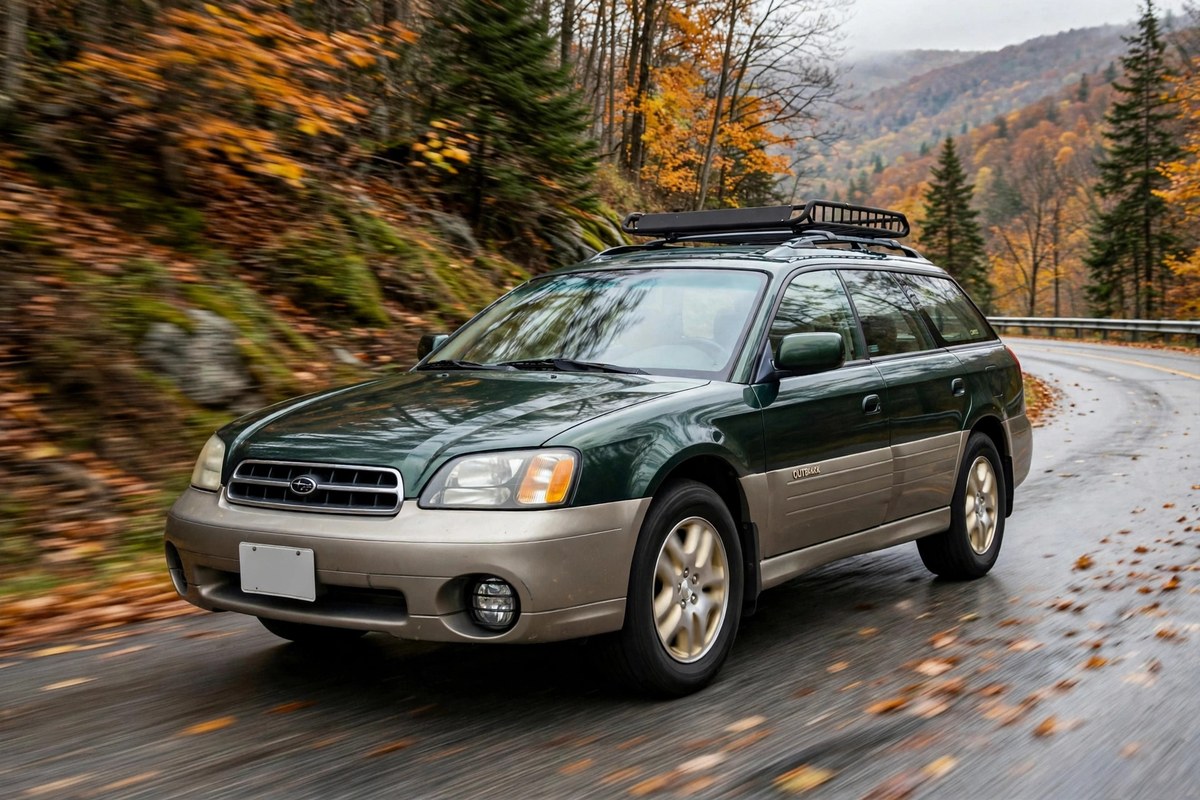
The 2003 is the fourth year of the second-generation Outback (BH, 2000-2004), and a year of small changes, not a redesign. CARFAX lists them: freshened front-end styling, revised front struts, and newly standard heated seats, heated mirrors, wiper de-icers and a CD player. Upper trims got upgraded audio with a CD changer, and six-cylinder cars got OnStar. Underneath it is the same car as 2000-2002: a Legacy-based wagon with standard all-wheel drive; a sedan was still sold too.
That sameness is the warning. The 2003 carries the generation's strengths, sure-footed all-wheel drive, 7.3 to 7.9 inches of clearance and a big cargo bay, and its weakness, the EJ251 head gaskets. The 2004 cars are mechanically identical, so buy the best-documented car.
Prices and Trims
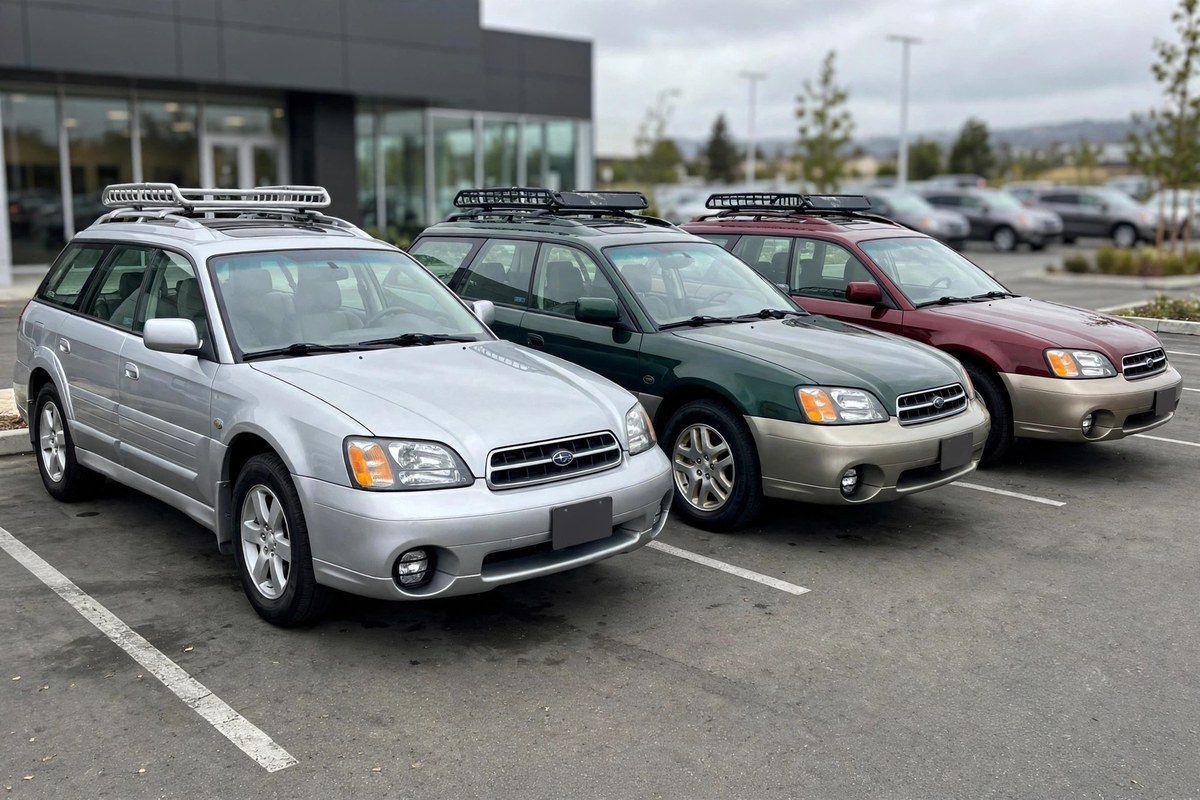
Subaru sold the 2003 Outback as a wagon in five trims, plus sedan versions of the Limited, H6 and VDC. The table shows Kelley Blue Book's current Fair Purchase Price for each wagon trim, with the starting MSRP when new where KBB confirms it. The H6 figure is KBB's specs-comparison Fair Market Price; the rest are per-trim Fair Purchase Prices.
| Trim | Engine | MSRP when new | KBB price today |
|---|---|---|---|
| Wagon | 2.5L flat-four, 165 hp | $24,370 | $2,550 |
| Limited Wagon | 2.5L flat-four, 165 hp | Not confirmed | $2,950 |
| H6 Wagon | 3.0L flat-six, 212 hp | Not confirmed | $3,500 |
| L.L.Bean Edition Wagon | 3.0L flat-six, 212 hp | Not confirmed | $3,325 |
| VDC Wagon | 3.0L flat-six, 212 hp | $32,920 | $3,575 |
The spread between cheapest and dearest is now barely $1,000, against more than $8,500 when new, so the six-cylinder cars are the value buys. Trade-in for the base Wagon is $950 to $1,375 (KBB), and CarMax's recent offers run $400 to $900. Pay for condition and history, not for a badge.
Engines, Performance and Real-World MPG
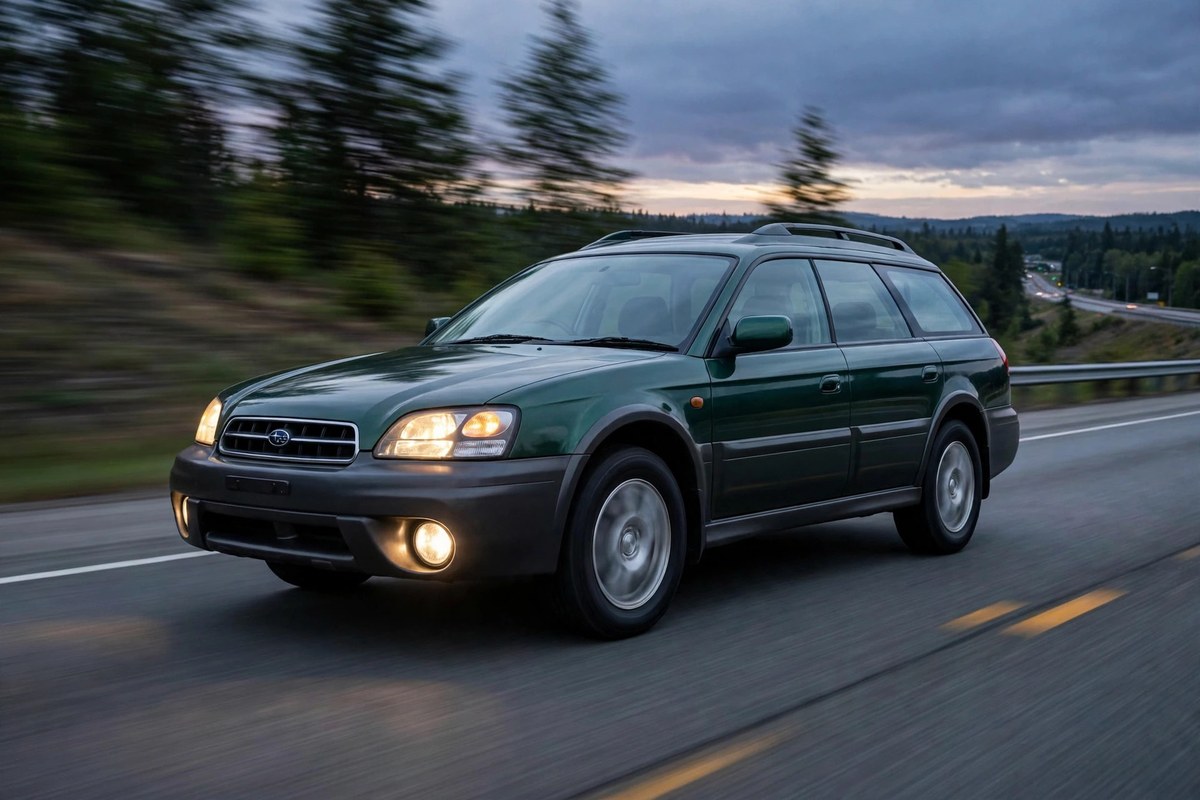
The base 2.5-litre flat-four (EJ251) makes 165 horsepower and 166 lb-ft, with a 5-speed manual or a 4-speed automatic. KBB rates it at 18 mpg city, 25 highway and 21 combined, and Consumer Reports measured 20 mpg overall from the automatic. It is adequate and nothing more, in Consumer Reports' words: acceleration is a bit poky. It is best unloaded around town. The 16.9-gallon tank gives roughly 355 miles of range.
The 3.0-litre flat-six (EZ30) makes 212 horsepower and transforms the car. Consumer Reports calls the six smoother and quicker, and Edmunds says buyers who haul people and cargo often will want it. It comes only with the 4-speed automatic, at 17 city, 23 highway and 19 combined, for about 320 miles per tank. Edmunds owners report around 20 mpg mixed, as low as 19 in town.
| 2.5L flat-four (EJ251) | 3.0L flat-six (EZ30) | |
|---|---|---|
| Power | 165 hp / 166 lb-ft | 212 hp |
| Transmission | 5-sp manual or 4-sp auto | 4-sp automatic only |
| EPA economy | 18 / 25 / 21 mpg | 17 / 23 / 19 mpg |
| Max towing | 2,000 lbs | 2,400 lbs (VDC) |
Interior, Cargo and Everyday Practicality
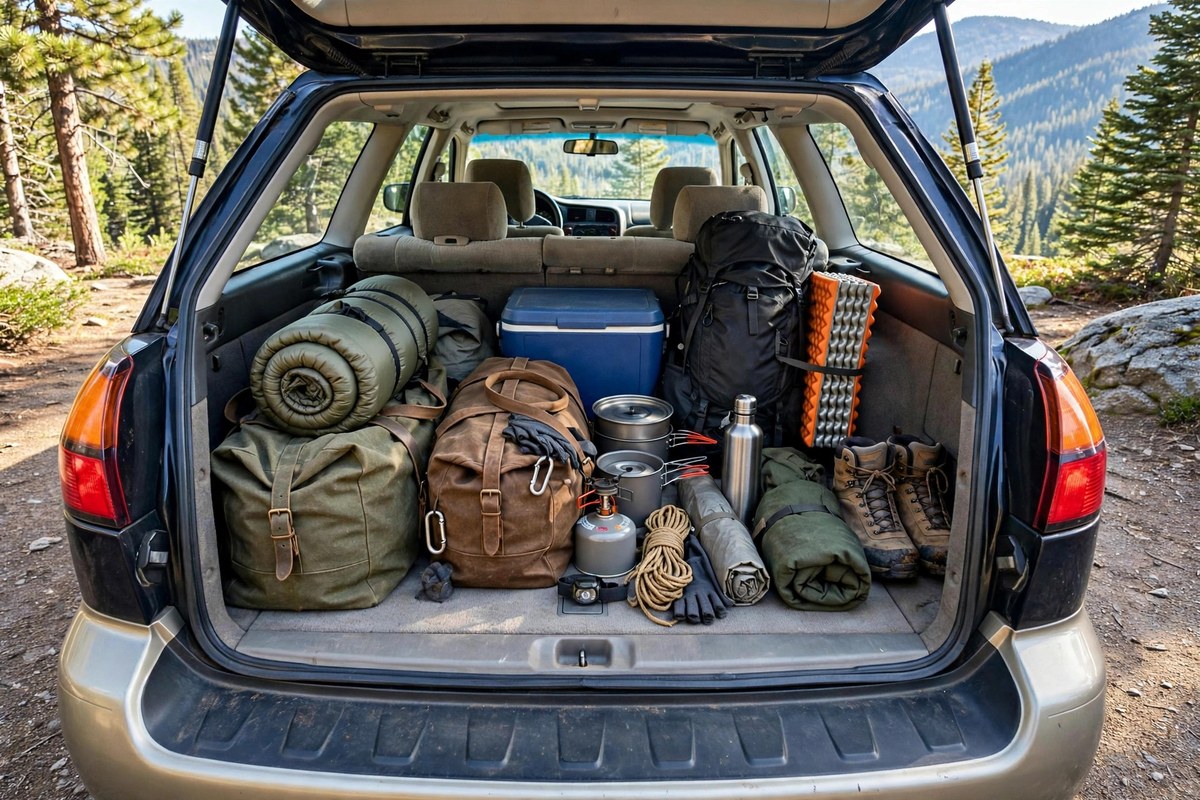
Inside, the 2003 is a comfortable, roomy wagon rather than a luxury car. Consumer Reports calls it well conceived and comfortable, and KBB lists 95.9 cubic feet of total interior space. It seats five, though three adults in the rear will find it very cramped, per Edmunds. Cargo holds 68.6 cubic feet with the rear seats folded, and roof rails are standard.
Equipment rises with trim. Heated seats, heated mirrors and wiper de-icers were newly standard on every 2003 car. The Limited adds leather and upgraded audio. The L.L.Bean adds leather trim and a three-year maintenance package, per Edmunds. The VDC tops the range with Vehicle Dynamics Control and OnStar. Check it all on a used car.
Safety, Recalls and Reliability
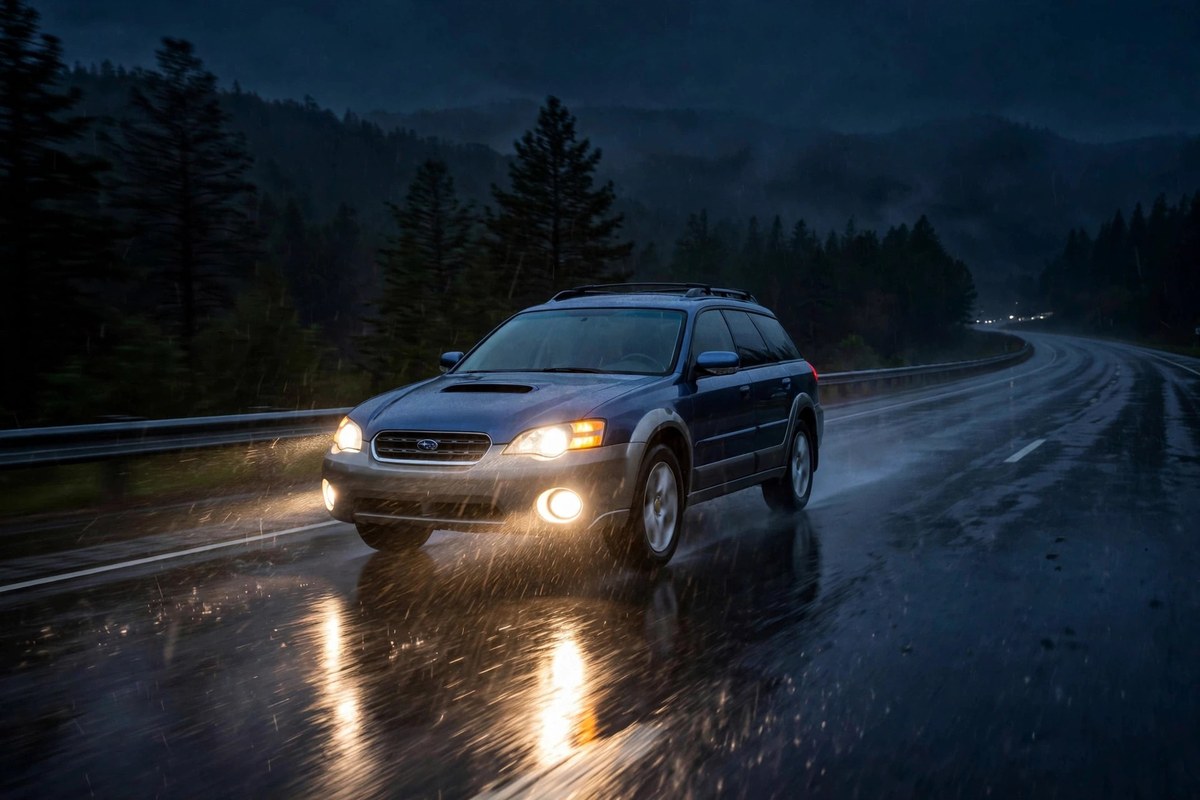
NHTSA never published an overall crash rating for the 2003 Outback, and the IIHS published no ratings for it either. KBB shows the 2002 car at 5 stars for side impact and 4 stars for rollover, with a note that the 2003 may differ. Stability control was standard only on the VDC; the rest have anti-lock brakes but no modern driver aids. Edmunds owners rate it 4.5 out of 5.
Recalls are the bigger safety story. NHTSA data for the 2003 Legacy/Outback family lists 62 complaints, and seven Subaru campaigns touch the 2003 Outback, including the Takata passenger-airbag recall covering 2003-2008 cars. Check the VIN on NHTSA's site and confirm every open recall is closed before you pay. The salt-belt rear-subframe recall covered about 170,000 vehicles, though only around 45 very early 2003 cars were in it.
| NHTSA campaign | Issue | What to check |
|---|---|---|
| 02V240000 (Sep 2002) | Water pump pulley (4-cyl) | Confirm water pump replaced |
| 02V235000 (Sep 2002) | H6 wheels, off-centre diameter | Check for vibration |
| 02V282000 (Oct 2002) | Transmission parking rod | Car must hold in Park |
| 03V153000 (Apr 2003) | Rear subframe rust (salt belt) | Inspect subframe for rust |
| 03V232000 (Jun 2003) | Front link rust (350 units) | Inspect the front links |
| 04V128000 (Mar 2004) | Cruise cable can stick | Test cruise control |
| 15V323000 (May 2015) | Takata passenger airbag | Confirm recall closed |
Common Problems and What to Check Used
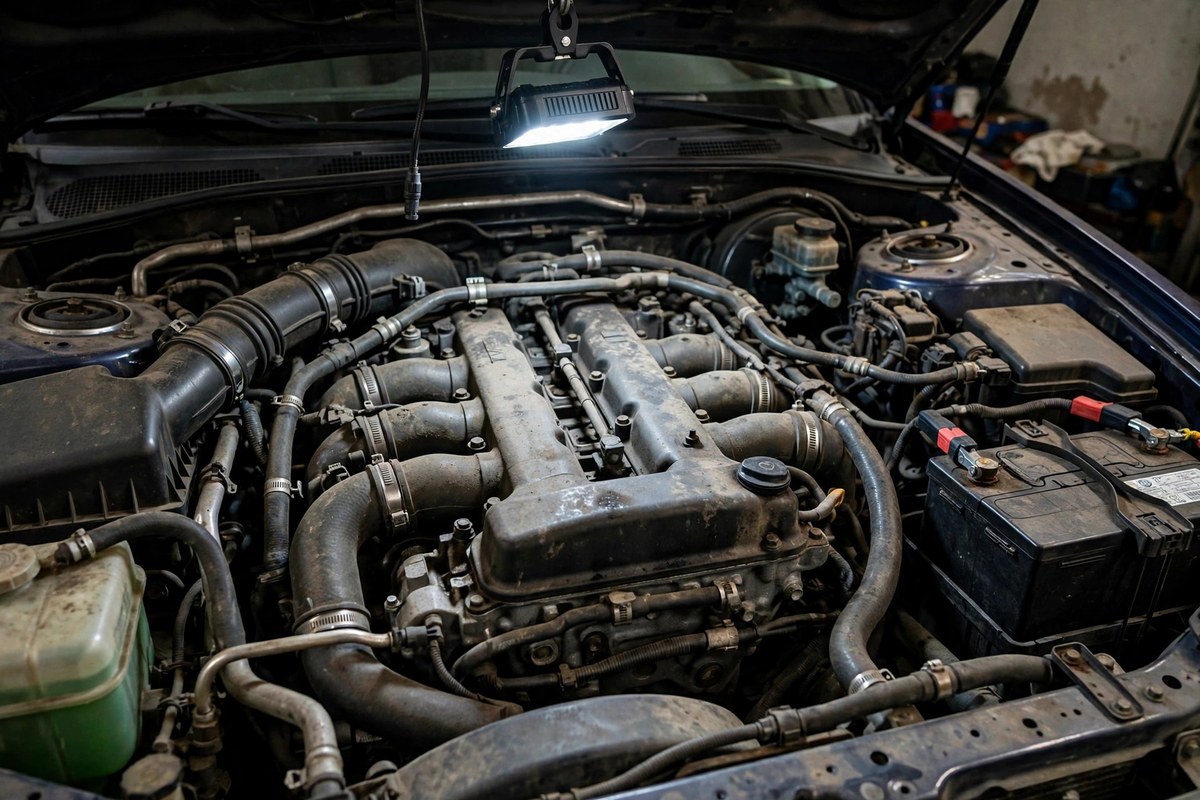
The defining issue is the base 2.5-litre's head gaskets. The factory composite gaskets typically leak externally, oil or coolant weeping down the block, at about 80,000-150,000 miles, and Edmunds owners report failures as early as 36,000 miles. The fix is multi-layer steel gaskets, and the best 2003 you can buy is one with that job documented. Specialists typically charge $1,500-$2,800, against $2,200-$3,500 at a dealer. The six-cylinder used steel gaskets from the factory.
The rest is age, not design. The 2.5-litre has a 105,000-mile timing-belt interval, so replace belt, water pump and tensioners together if there is no record. Owners also report torque-converter shudder, leaking camshaft and crankshaft seals, and worn wheel bearings and CV boots at this age. Look underneath for rust, especially salt-belt cars. Owners rate the 2000-2004 generation 4.3 out of 5 on KBB, but only a documented car earns that score.
Before you buy a used 2003 Outback, check these items
- ✓Look for oil or coolant weeping at the block; ask for steel head-gasket receipts.
- ✓Check the timing-belt record - the 105,000-mile interval is critical.
- ✓Check the VIN on NHTSA's site; confirm all 7 recalls are closed.
- ✓Park on a slope and check the car holds in Park.
- ✓Inspect the rear subframe and brake lines for rust, especially salt-belt cars.
- ✓Test the automatic for shuddering, and the H6 for smooth, quiet running.
- ✓Get a pre-purchase inspection of compression, coolant and the underbody.
Pros
- Cheapest way into a capable AWD wagon with real ground clearance.
- The H6 is the pick: 212 hp, smooth, no head-gasket worry.
- 68.6 cubic feet of cargo with the rear seats folded.
- Owners rate the generation 4.3/5 on KBB; 86% recommend it.
- Simple mechanicals: no CVT, no turbo, manual or 4-speed auto.
Cons
- 2.5-litre head gaskets typically leak by 80,000-150,000 miles.
- Timing belt due at 105,000 miles; a snapped belt wrecks the engine.
- Seven recalls to verify, including Takata airbag and salt-belt rust.
- Thirsty: 18/25 mpg at best, 17/23 for the six.
- No modern driver aids; stability control only on VDC.
Frequently Asked Questions
How much does a used 2003 Subaru Outback cost?▾
KBB lists Fair Purchase Prices from about $2,550 for the base Wagon to about $3,575 for the VDC, with the L.L.Bean at $3,325. CarMax's recent offers for high-mileage cars are $400 to $900.
What is the MPG of the 2003 Subaru Outback?▾
The 2.5-litre is rated 18/25/21 mpg city/highway/combined; the 3.0-litre six is rated 17/23/19. Consumer Reports measured 20 mpg overall from the 2.5-litre automatic, and Edmunds owners report around 20 mpg mixed.
Is the 2003 Subaru Outback reliable?▾
Mixed. Owners rate the 2000-2004 generation 4.3 out of 5 on KBB, 86% recommending it. But the base 2.5-litre's head gaskets typically leak by 80,000-150,000 miles. The six-cylinder is the reliability pick; any 2.5-litre with a documented steel-gasket replacement is far safer.
What are the most common problems with the 2003 Outback?▾
Head-gasket leaks on the base 2.5-litre, a 105,000-mile timing belt, torque-converter shudder, leaking camshaft and crankshaft seals, worn wheel bearings and CV boots, and salt-belt rust. Seven recalls apply, including the Takata airbag - check the VIN on NHTSA's site.
Which 2003 Subaru Outback trim should I buy?▾
The H6 L.L.Bean Edition is the value pick: the smooth 212-hp six with no head-gasket worry, for about $3,325. The VDC adds stability control. The 2.5-litre Wagon is the cheapest way in, but only with proof of a steel-gasket replacement and a fresh timing belt.
The Bottom Line
Buy the 2003 Outback if you want a capable all-wheel-drive wagon for very little money: the H6 L.L.Bean Edition is the pick, the VDC is the safest of the year, and a 2.5-litre only makes sense with proof of a steel-gasket replacement and a fresh timing belt. Avoid any 2.5-litre with no paperwork, whatever the price.
Prices and specifications reflect Kelley Blue Book, Edmunds, CARFAX, Consumer Reports and NHTSA figures checked in November 2026; used prices vary with mileage, condition and location. Confirm history, recalls and condition with an independent inspection before buying.
Continue researching the Outback
- The Honest Guide to Buying a Used Subaru Outback
- Subaru Outback Buying Guide
- Subaru Outback Common Problems
- Subaru Outback Model Years Explained
- 2005 Subaru Outback: Prices, Trims, MPG and Buying Guide
- Subaru Outback Years to Avoid
- 2004 Subaru Outback: Prices, MPG, Recalls & Buying Guide
- 2000 Subaru Outback: Prices, MPG, Recalls & Buying Guide
- 2002 Subaru Outback: Prices, MPG, Recalls & Buying Guide
Sources
- Kelley Blue Book: 2003 Subaru Outback Price, Value and Reviews
- Kelley Blue Book: 2003 Subaru Outback Specs and Feature Comparisons
- Edmunds: 2003 Subaru Outback Review
- CARFAX: 2003 Subaru Outback Review and Values
- Consumer Reports: 2003 Subaru Outback Ratings and Specs
- ClearVin: 2003 Subaru Outback Recalls List
- MotorTrend: Subaru Recalls 2000-2003 Legacy, Outback and Baja in Salt Belt States
- NHTSA: Vehicle Recalls (check by VIN)
- 2001 Subaru Outback: Prices, MPG, Recalls & Buying Guide
A note on prices
Prices, trims, MPG figures and safety ratings change over time. Treat the figures here as a starting point and confirm the details with a dealer or the manufacturer's site before you buy.
Continue reading