Buying Guide · 10 min read
2005 Subaru Outback: Third-Gen Redesign Debut
First year of the third-generation redesign — lighter, stiffer, with a new 250-hp turbo and flat-six. Cheapest way in, but check head gaskets first.
By Elena Marsh · · Updated
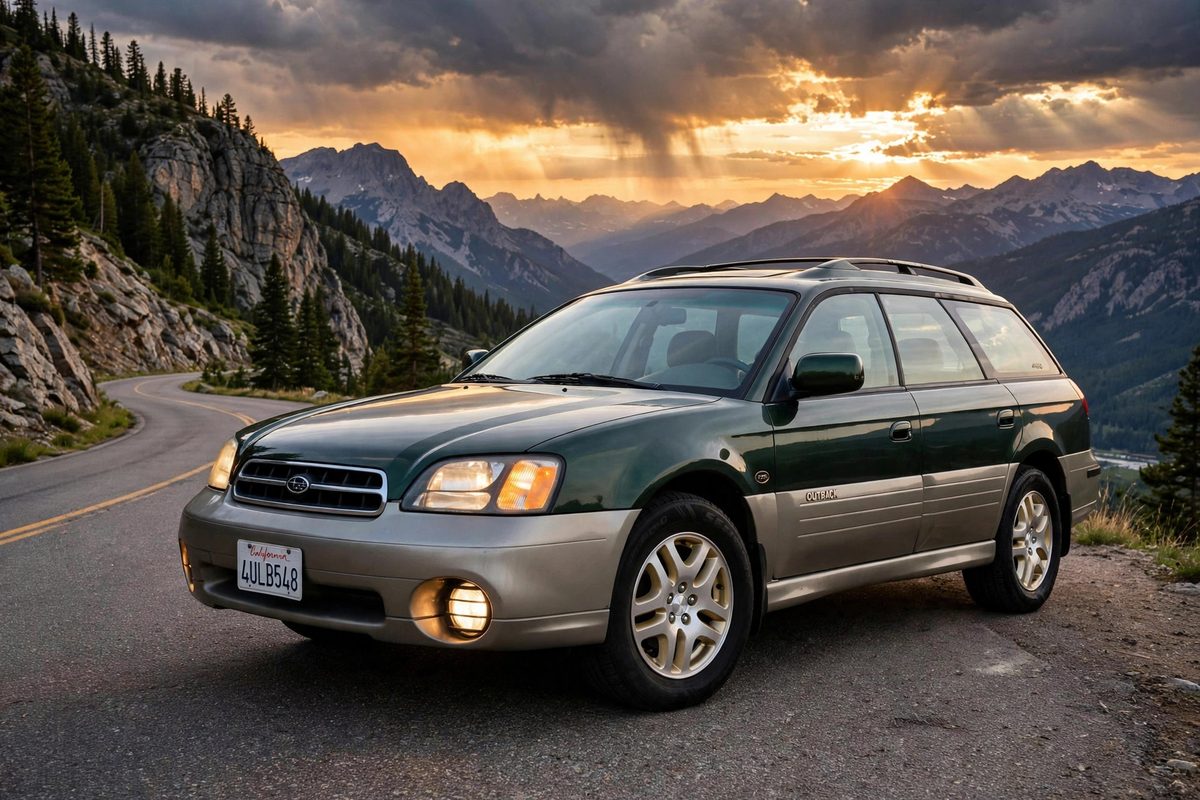
The 2005 Subaru Outback is the first year of the third-generation redesign, and the cheapest way into a genuinely capable all-wheel-drive wagon. Prices when new ran from $25,870 (2.5i) to $34,070 (3.0 R VDC Limited); today KBB lists dealer prices from about $3,300, while CARFAX puts the average asking price at $6,060. The base 2.5-liter returns 20/26 mpg city/highway, the turbo and six-cylinder manage 17/23, and every version earned five-star NHTSA frontal and side scores. The catch is documented: the base engine's head gaskets. Buy one with that repair done and it is a lot of wagon for the money.
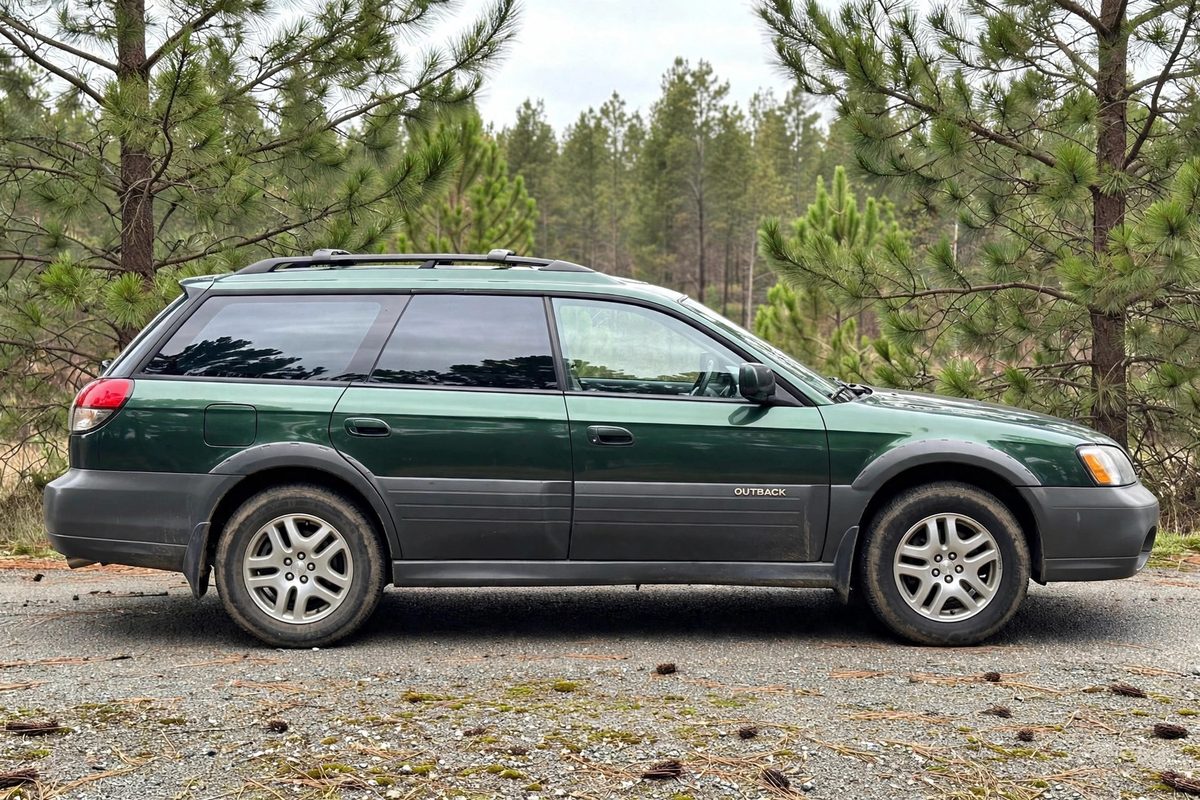
2005 Subaru Outback at a Glance
| What to know | 2005 Outback |
|---|---|
| Starting price when new | $25,870 (2.5i) to $34,070 (3.0 R VDC Limited) |
| Current used price | About $3,300–$5,175 (KBB); $6,060 avg asking (CARFAX) |
| Engines | 2.5L flat-four, 168 hp; 2.5L turbo, 250 hp; 3.0L flat-six, 250 hp |
| Fuel economy | 20/26 mpg (2.5L); 17/23 mpg (turbo and H6) |
| Drivetrain | Standard Symmetrical AWD; manual or automatic |
| Towing | 2,700 lbs |
| Cargo | 33.5 cu ft behind rear seats; 66.2 folded |
| Ground clearance | 8.4 inches (8.7 on XT) |
| Safety | NHTSA 5 stars frontal and side; 4 stars rollover |
| Owner rating | 4.3/5 (KBB, 2005–2009 generation); 82% recommend |
Why the 2005 Model Year Matters
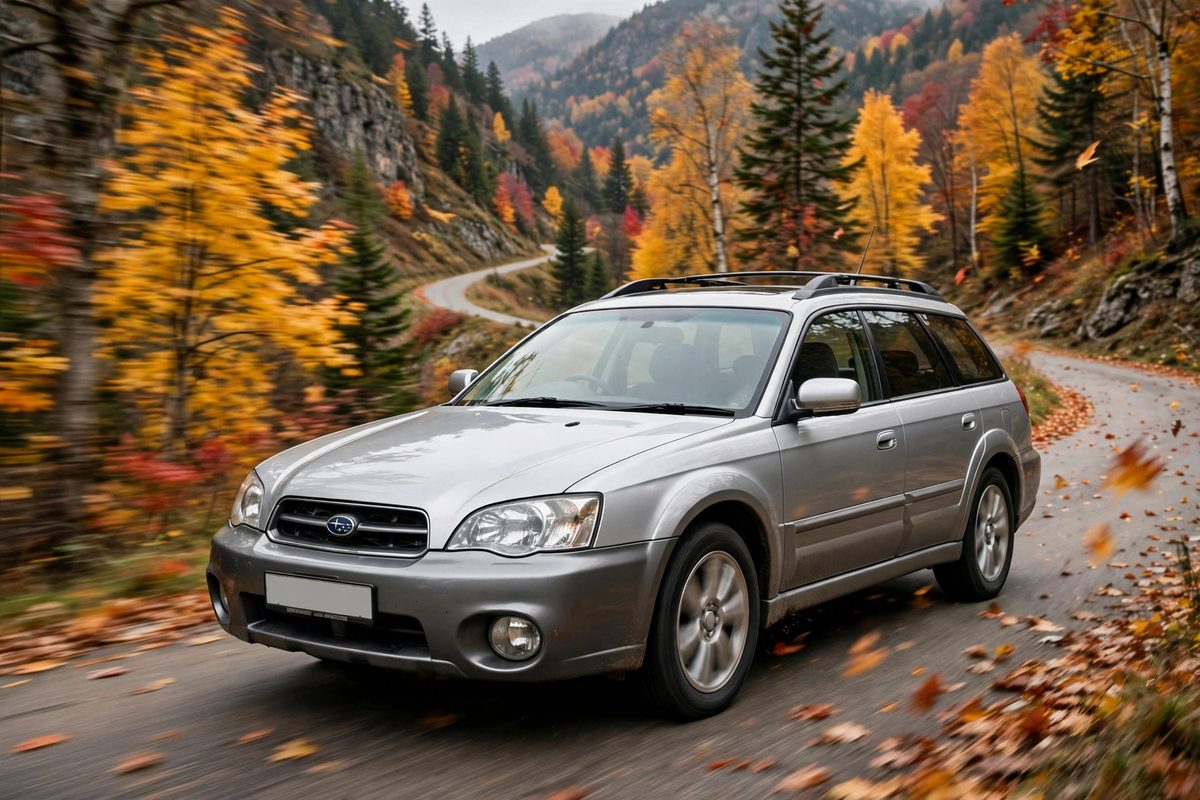
Subaru fully redesigned the Outback for 2005, launching the third generation on a new Legacy platform. The new car was lighter and stiffer — MotorTrend notes savings of up to 180 pounds — with a cleaner look, a better interior, and 8.4 to 8.7 inches of clearance. Two new engines arrived: a 250-horsepower turbocharged 2.5-liter and a redesigned 250-horsepower 3.0-liter flat-six, beside the 168-horsepower base four. MotorTrend called it one of the most fun-to-drive cars in its class.
That redesign is why the 2005 is both tempting and tricky. As a first-year car it carries first-year faults — Subaru recalled some early cars to check curtain airbag operation — and the base engine kept the previous generation's head-gasket weakness. A sedan was also sold in 2005, but dropped after 2007, so nearly every 2005 Outback today is the wagon. Later 2008 and 2009 cars are the safer bet; if your budget points at a 2005, buy on condition and paperwork, not price alone.
Prices and Trims
Subaru sold the 2005 Outback as a wagon in six trims, plus a 3.0 R sedan at $31,670 when new. The table shows each wagon's starting MSRP as listed by KBB, with KBB's current Fair Market Price. Cars vary enormously with mileage and condition at this age — treat these as starting points, not promises.
| Trim | Engine | MSRP when new | KBB price today |
|---|---|---|---|
| 2.5i Wagon | 2.5L flat-four, 168 hp | $25,870 | $3,825 |
| 2.5i Limited Wagon | 2.5L flat-four, 168 hp | $28,670 | $4,225 |
| 2.5 XT Wagon | 2.5L turbo flat-four, 250 hp | $29,870 | $4,425 |
| 2.5 XT Limited Wagon | 2.5L turbo flat-four, 250 hp | Not listed separately | $4,825 |
| 3.0 R L.L.Bean Edition Wagon | 3.0L flat-six, 250 hp | Not listed separately | $5,175 |
| 3.0 R VDC Limited Wagon | 3.0L flat-six, 250 hp | $34,070 | $5,050 |
The spread between cheapest and dearest is now barely $1,300 on KBB's figures, against over $8,000 when new, so better-equipped cars are the value buys. CARFAX recommends the 2.5 XT: its 250-hp turbo transforms the car. The six-cylinder cars cost more to buy and fuel, but the H6 is the reliability pick. Asking prices run higher — CarGurus averages about $5,284 across 110 cars for sale — because clean, low-mileage examples command premiums. Pay for condition and history, not for a badge.
Engines, Performance and Real-World Driving
The base 2.5-liter flat-four (EJ253) makes 168 horsepower and 166 lb-ft of torque, with a 5-speed manual or a 4-speed automatic. KBB rates it at 20 mpg city, 26 highway, and 22 combined, though Consumer Reports measured only 21 mpg overall from the automatic. It is adequate and nothing more, in Consumer Reports' words, and best unloaded around town. Note the gap: period tests quoted 23/28 under the pre-2008 EPA test, so older reviews look more generous.
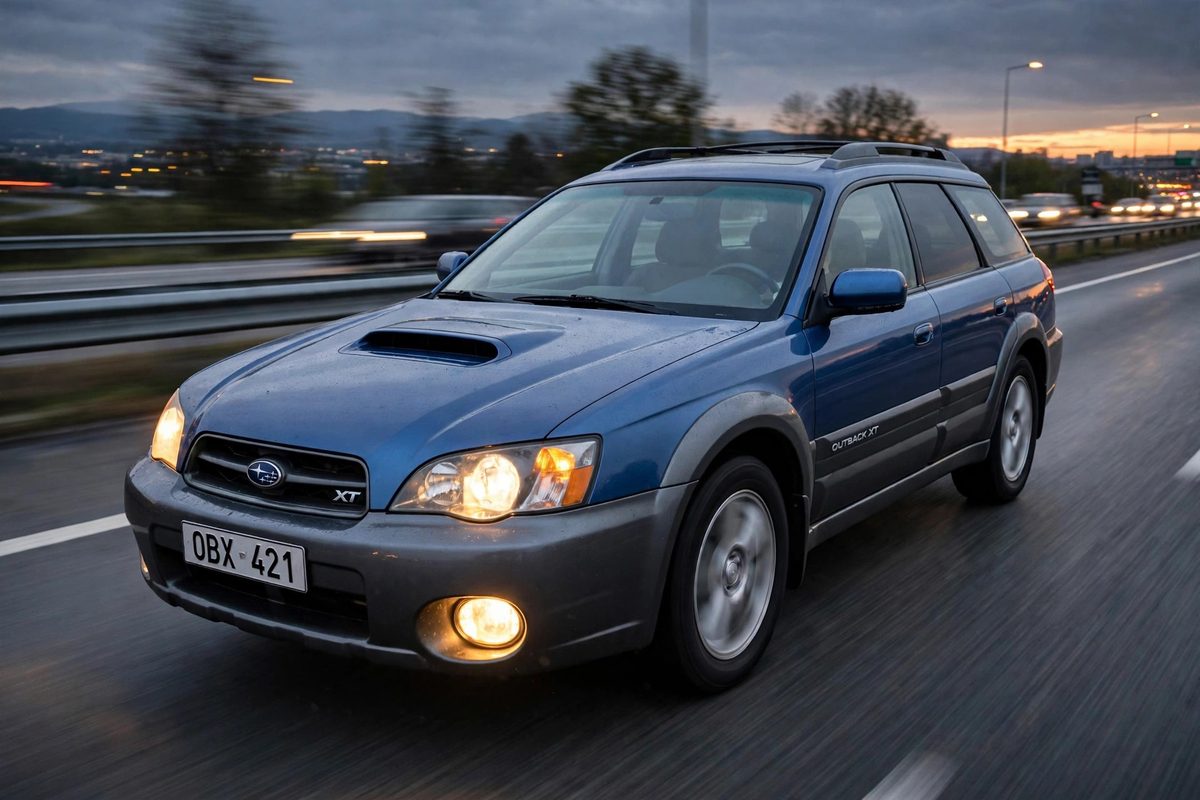
The 2.5 XT's turbo 2.5-liter makes 250 hp and 250 lb-ft; MotorWeek timed the automatic XT to 60 mph in 6.8 seconds — quick for a wagon of this era. Economy falls to 17/23 mpg, 19 combined, and MotorWeek averaged 21 mpg mixed. The 3.0-liter flat-six (EZ30R) also makes 250 horsepower, with 219 lb-ft, but delivers it smoothly through a 5-speed automatic at the same 17/23 mpg, on premium fuel per Consumer Reports. Every 2005 Outback has standard Symmetrical AWD and tows up to 2,700 pounds.
Interior, Cargo and Everyday Practicality
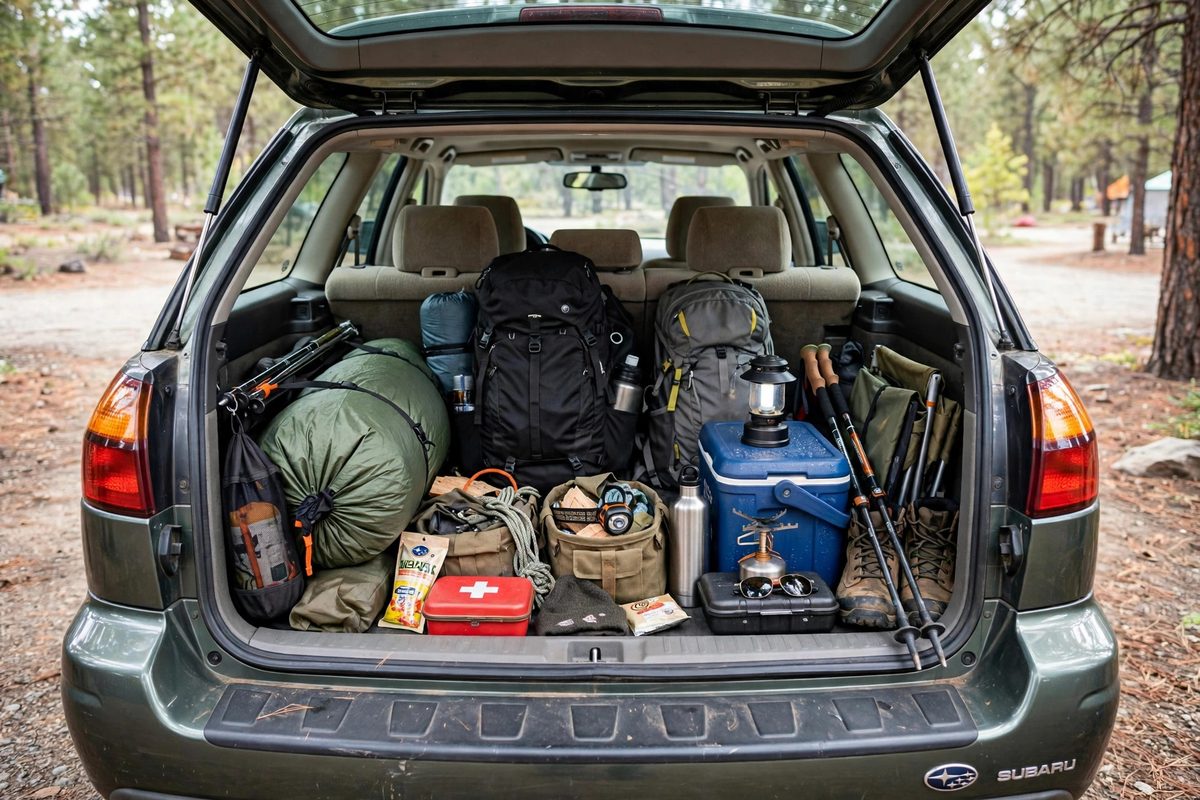
Inside, the redesign shows: Consumer Reports calls the interior rich and nicely detailed, a clear step up, with comfortable seats and easy controls. It seats five, with 97.4 cubic feet of passenger space; cargo holds 33.5 cubic feet behind the rear seats, growing to 66.2 folded — 32.1 and 61.7 with the dual-panel moonroof. Roof rails are standard, the load floor is low and nearly flat, and a trip computer with an outside-temperature gauge was new for 2005.
Equipment rises with trim. The 2.5i Limited adds leather, heated seats, and the dual-panel moonroof MotorTrend singled out; the VDC Limited tops the range with Vehicle Dynamics Control. Thin pillars and large windows give easy outward visibility, though cabin noise can annoy on the four-cylinder, and Consumer Reports notes the car can slide its tail out if you enter a corner too fast. Check the moonroof, heated seats, and trip computer — twenty-year-old electrics now.
Safety and Driver Assistance
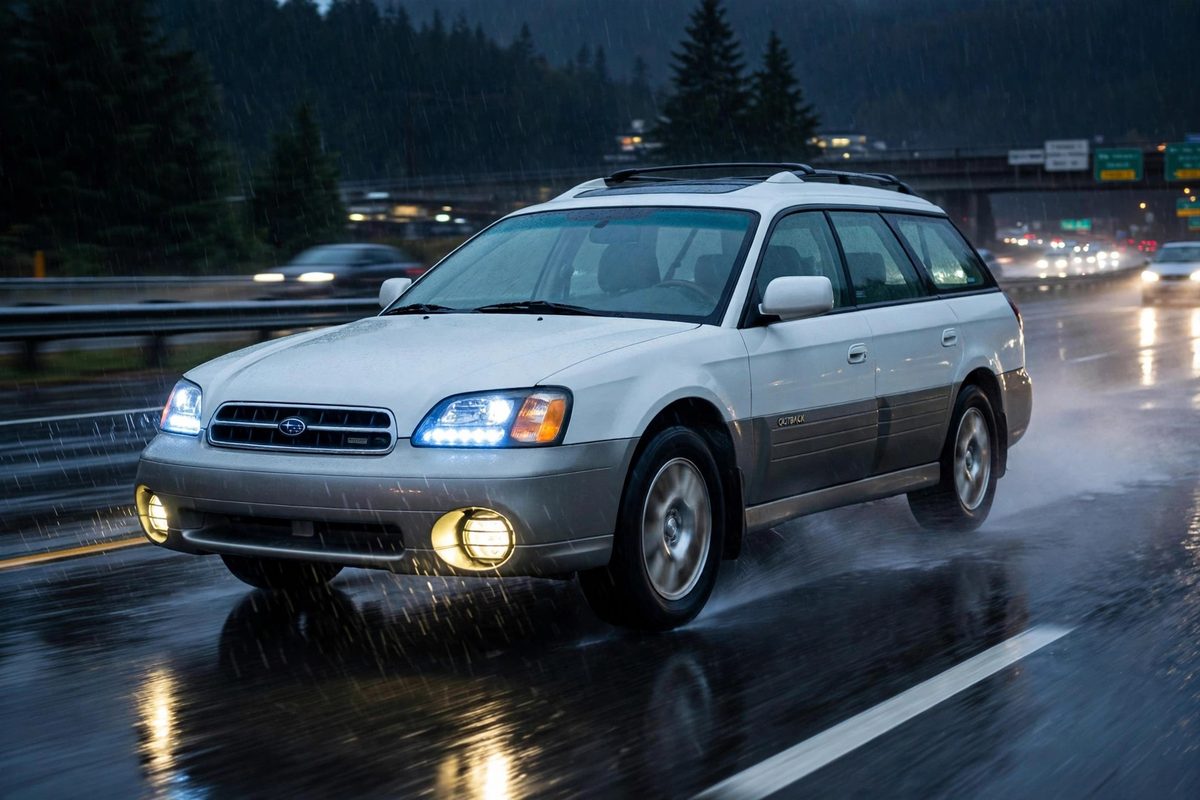
The 2005 Outback earned five stars from NHTSA in both frontal crash tests and both side-impact tests, for driver and passenger, with four stars for rollover — the only vehicle in its 2005 test round to take five stars in every crash area, per Autoblog. NHTSA never published an overall rating for this car, so there is no single headline rating. Side curtain airbags for both rows were new for 2005, with standard anti-lock brakes.
Set expectations by the era: no EyeSight, blind-spot monitoring, or automatic emergency braking — those arrived years later. Stability control was standard only on the VDC Limited, and only became standard across the range in 2009, per Consumer Reports. Edmunds lists 10 recalls, including the Takata passenger-airbag and salt-belt brake-line recalls. Run the VIN through NHTSA's recall lookup and confirm every open recall is closed before you pay.
Ownership Costs and What to Check Used
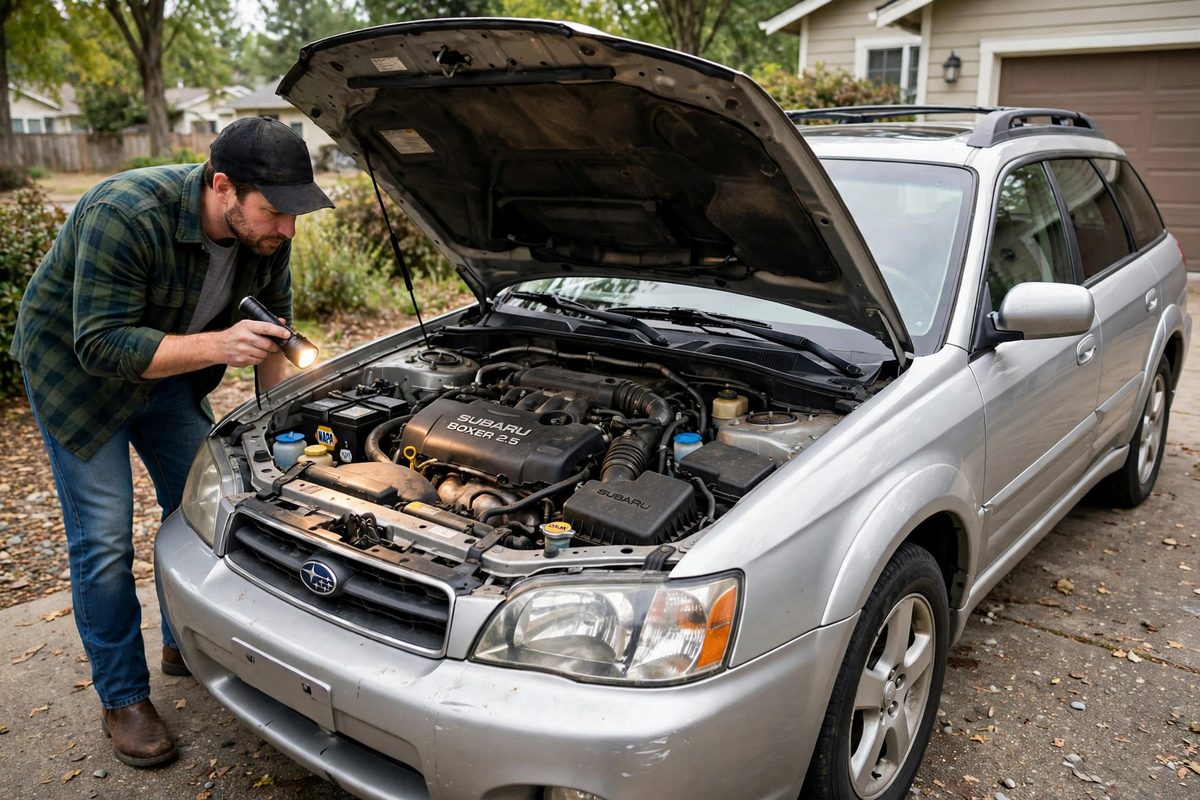
The defining issue is the base 2.5-liter's head gaskets. The factory composite gaskets typically leak externally — oil or coolant weeping down the block — at about 80,000–120,000 miles, and Edmunds owners report overheating and costly repairs when leaks are ignored. The fix is multi-layer steel gaskets, and the best 2005 you can buy is one with that job documented. The six-cylinder is largely free of the problem, and the turbo used steel gaskets from the factory, though it needs strict oil-change discipline.
The rest is age, not design. The 2.5-liter is an interference engine with a 105,000-mile timing-belt interval — a snapped belt can wreck it, so replace belt, water pump, and tensioners together if there is no record. Edmunds owners also report catalytic converters failing at $2,000–$3,000, torque-converter shudder, broken door handles, and fast-burning headlights. Look underneath for rust, especially salt-belt cars in the brake-line recall. Owners rate the 2005–2009 generation 4.3 out of 5 on KBB, with 82% recommending it.
Before you buy a used 2005 Outback, check these items
- ✓Look for oil or coolant weeping at the block, and ask for receipts for a steel head-gasket replacement.
- ✓Check the timing-belt record — the 105,000-mile interval is critical.
- ✓Watch for overheating, a sweet coolant smell, or a cold heater — head-gasket leak signs.
- ✓Test the automatic for shuddering or delay, and the turbo for smoke or lag.
- ✓Run the VIN through NHTSA's recall lookup and confirm all 10 recalls are closed.
- ✓Inspect brake lines and the underbody for corrosion, especially on salt-belt cars.
- ✓Get a pre-purchase inspection of compression, coolant, and the underbody.
Pros
- First year of the third-generation redesign: stiffer, lighter, far nicer inside.
- Standard AWD, 8.4–8.7 inches of clearance, and a 2,700-pound tow rating.
- Two 250-hp engines: a quick turbo four and a smooth, reliable flat-six.
- Five-star NHTSA frontal and side scores, with side curtain airbags.
- Genuinely cheap: KBB dealer prices from about $3,300.
Cons
- Base 2.5-liter head gaskets typically leak by 80,000–120,000 miles; repair is expensive.
- Timing belt due at 105,000 miles — a snapped belt can wreck the engine.
- Thirsty today: 20/26 mpg at best, 17/23 for turbo and six-cylinder.
- Ten recalls to verify, including airbags and brake-line corrosion.
- No modern driver aids — no EyeSight or blind-spot monitoring; stability control only on VDC.
Frequently Asked Questions
How much does a used 2005 Subaru Outback cost?▾
KBB lists typical dealer prices from about $3,300 for the 2.5i to about $5,175 for the L.L.Bean Edition, while CARFAX puts the average asking price at $6,060 and CarGurus averages about $5,284. Condition sets the price: clean, low-mileage cars cost far more, rough cars far less.
What is the MPG of the 2005 Subaru Outback?▾
The 2.5-liter is rated at 20 mpg city, 26 highway, and 22 combined. The turbo four and 3.0-liter six are both rated 17 city, 23 highway, and 19 combined. Period tests quoted 23/28 for the base engine under the pre-2008 EPA test.
Is the 2005 Subaru Outback reliable?▾
Mixed. Owners rate the 2005–2009 generation 4.3 out of 5 on KBB, 82% recommending it, but the base 2.5-liter's head gaskets typically leak by 80,000–120,000 miles. The six-cylinder is the reliability pick; any 2.5-liter with a documented steel-gasket replacement is a far safer buy.
What are the most common problems with the 2005 Outback?▾
Head-gasket leaks on the base 2.5-liter, a 105,000-mile timing belt that must not be ignored, catalytic converters failing at $2,000–$3,000, turbo wear on neglected XTs, torque-converter shudder, and salt-belt brake-line corrosion. Ten recalls apply — check the VIN on NHTSA's site.
Which 2005 Subaru Outback trim should I buy?▾
CARFAX recommends the 2.5 XT for its 250-hp turbo — the enthusiast pick if it has been cared for. The 3.0 R L.L.Bean Edition is the reliability pick, with the smooth six and no head-gasket worry. The 2.5i is the cheapest way in, but only with proof of a head-gasket repair.
The Bottom Line
Buy the 2005 Outback if you want the third-generation wagon at its cheapest, with standard AWD, real cargo space, and five-star NHTSA crash scores. The 2.5 XT is the pick for pace, the 3.0 R L.L.Bean Edition for smoothness without the head-gasket worry. The 2.5i only makes sense with proof of a steel-gasket replacement and a fresh timing belt. Check the gaskets, belt, and recalls first.
Prices and specifications reflect Kelley Blue Book, CARFAX, Edmunds, CarGurus, MotorTrend, MotorWeek, and Consumer Reports figures checked in November 2026; used prices vary with mileage, condition, and location. Confirm any car's history, recall status, and condition with an independent inspection before buying.
Continue researching the Outback
- The Honest Guide to Buying a Used Subaru Outback
- Subaru Outback Buying Guide
- Subaru Outback Common Problems
- Subaru Outback Model Years Explained
- Subaru Outback vs Competitors
- 2008 Subaru Outback: Facelifted Wagon-Only Value
- 2003 Subaru Outback: Prices, Trims, MPG and Buying Guide
- 2004 Subaru Outback: Prices, MPG, Recalls & Buying Guide
- 2017 Subaru Outback: Prices, MPG, Recalls & Buying Guide
Sources
- Kelley Blue Book: 2005 Subaru Outback Price, Value and Reviews
- Kelley Blue Book: 2005 Subaru Outback Specs and Feature Comparisons
- Edmunds: 2005 Subaru Outback Review
- CARFAX: 2005 Subaru Outback Review and Values
- MotorTrend: 2005 Subaru Legacy Outback Road Test
- MotorWeek: 2005 Subaru Outback Program #2343
- Consumer Reports: 2005 Subaru Outback Overview
- CarGurus: 2005 Subaru Outback Trims and Prices
- Cars101: 2005 Outback Research
- Autoblog: NHTSA Crash Tests Make Subaru Outback Perfect
A note on prices
Prices, trims, MPG figures and safety ratings change over time. Treat the figures here as a starting point and confirm the details with a dealer or the manufacturer's site before you buy.
Continue reading