Buying Guide · 9 min read
1999 Subaru Outback: First-Gen Finale & DOHC Buyer's Guide
The last first-generation Outback: a 165-hp DOHC wagon for about $3,000–$4,500 today. What to pay, what to check, and the head-gasket test that matters.
By Daniel Reyes ·
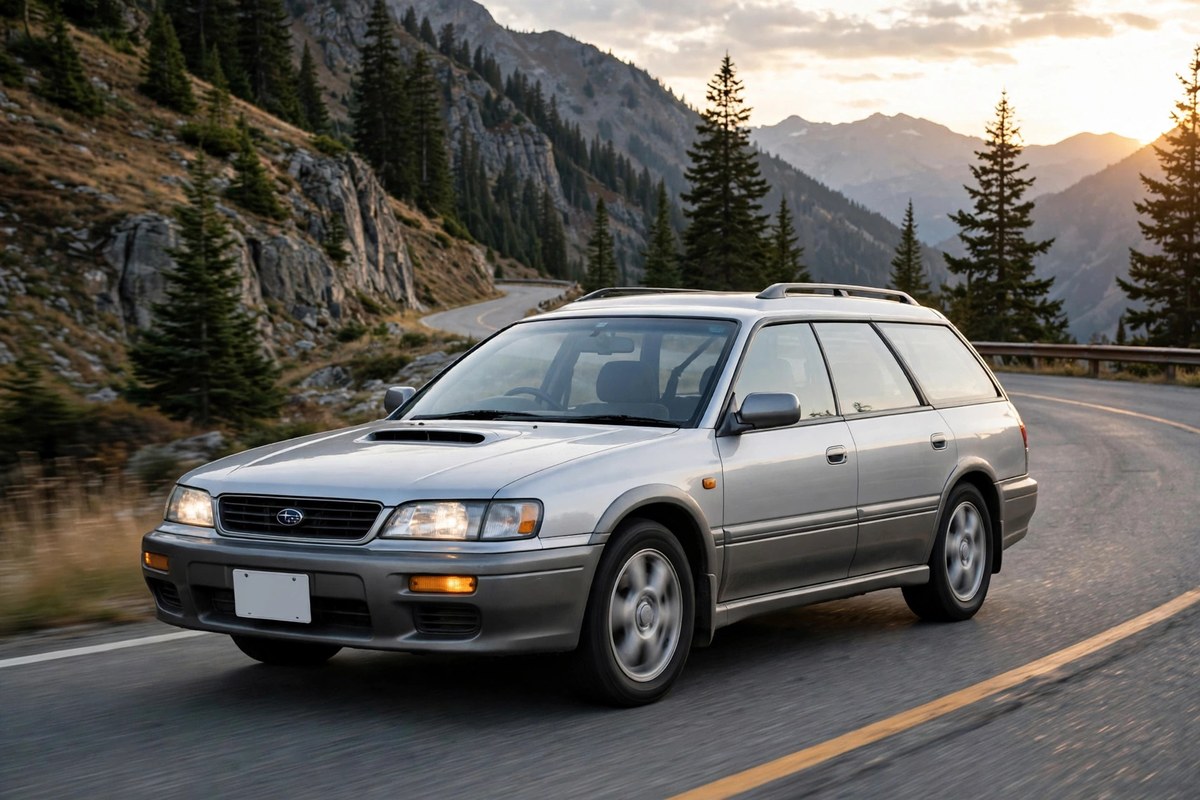
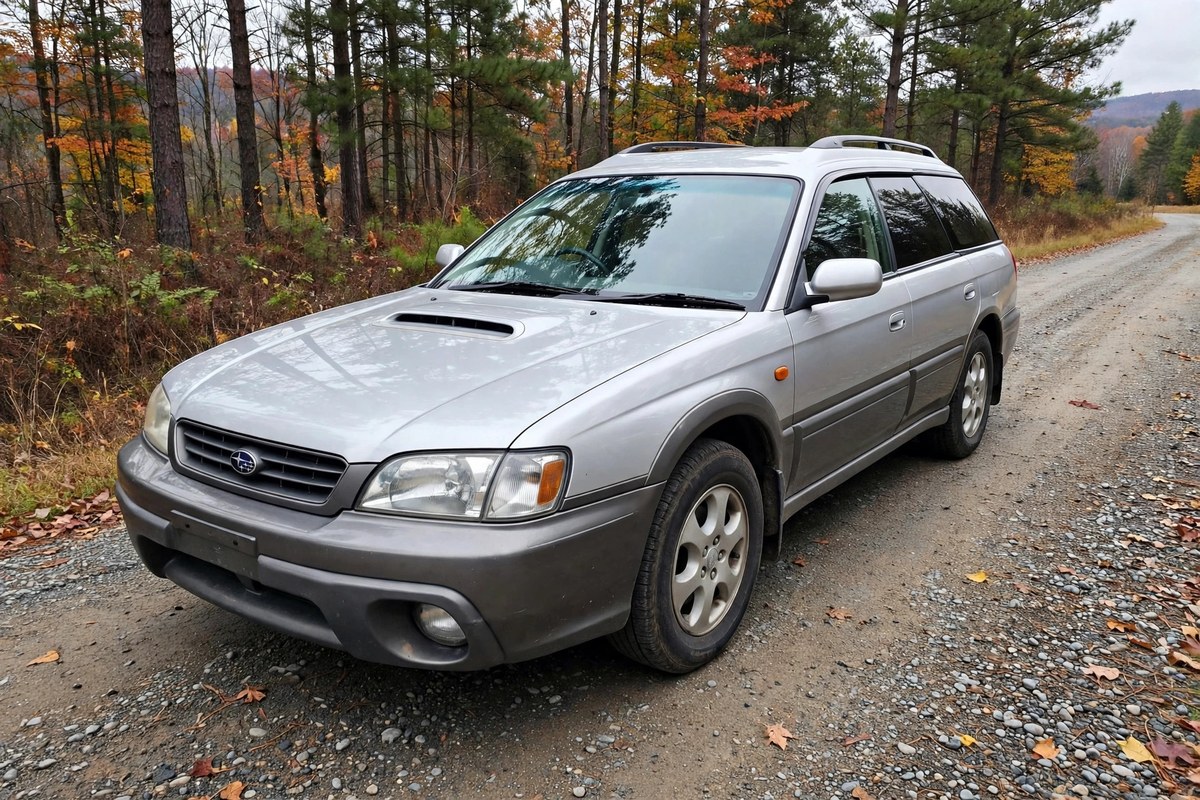
The 1999 Subaru Outback is the end of the beginning: the last year of the first-generation Outback (BG/BD, 1995–1999), still sold as the Legacy Outback, before the 2000 redesign made it a standalone model. It is also the cheapest way into a capable all-wheel-drive wagon — decent examples change hands for roughly $3,000 to $4,500 — and the riskiest, because its 2.5-litre DOHC engine carries the internal head-gasket failure that defines this era. Buy one with the right paperwork and you get a tough, roomy wagon; buy blind and the repair bill can exceed the price of the car.
1999 Subaru Outback at a Glance
| What to know | 1999 Outback |
|---|---|
| Price when new | $20,490–$27,090 incl. $495 destination |
| Current used price | About $3,000–$4,500 for decent examples |
| Engine | 2.5L DOHC flat-four (EJ25D), 165 hp / 162 lb-ft |
| Transmissions | 5-speed manual or 4-speed automatic |
| Drivetrain | Standard all-wheel drive |
| Fuel economy | 21/27 mpg (manual); 21/26 mpg (automatic) |
| Fuel tank | 15.9 gal — about 430 miles highway (manual) |
| Towing | 2,000 lb |
| Cargo | 36.5 cu ft seats up; 69.9 cu ft folded |
| Ground clearance | 7.3 in |
| The one recall | 01V216000 — front coil springs (Jun 2001) |
Why the 1999 Model Year Matters
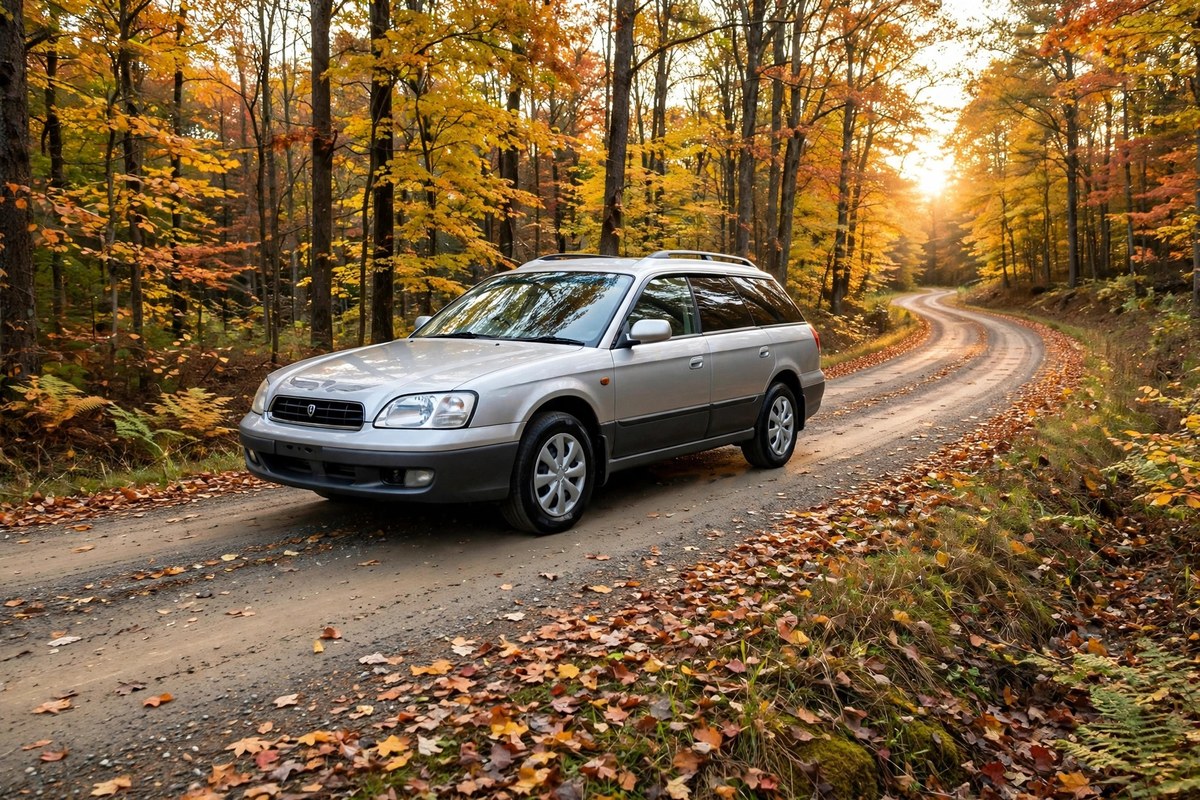
The 1999 is the fifth and final year of the first-generation Outback (BG/BD, 1995–1999), and Subaru spent it refining rather than reinventing. The changes were a smoother, quieter ride, redesigned transmissions, wide-spray windshield washers, and a new SSV wagon built for public-safety agencies. Underneath it is the same car as 1995–1998: standard all-wheel drive, a raised ride height, room for five, still wearing Legacy Outback badging.
The engine is what makes 1999 distinct. The EJ25D is a dual-overhead-cam 2.5-litre, and 1999 is its last year in the Outback — the 2000 redesign brought the single-overhead-cam EJ251, whose head gaskets fail externally, leaking oil and coolant down the block where you can see it. The 1999 fails internally instead. One trap to avoid: some European sites list a "1999" second-generation car with 156 hp and different dimensions. That is not the US car, and every figure here is the US 1999 Legacy Outback.
Prices and Trims
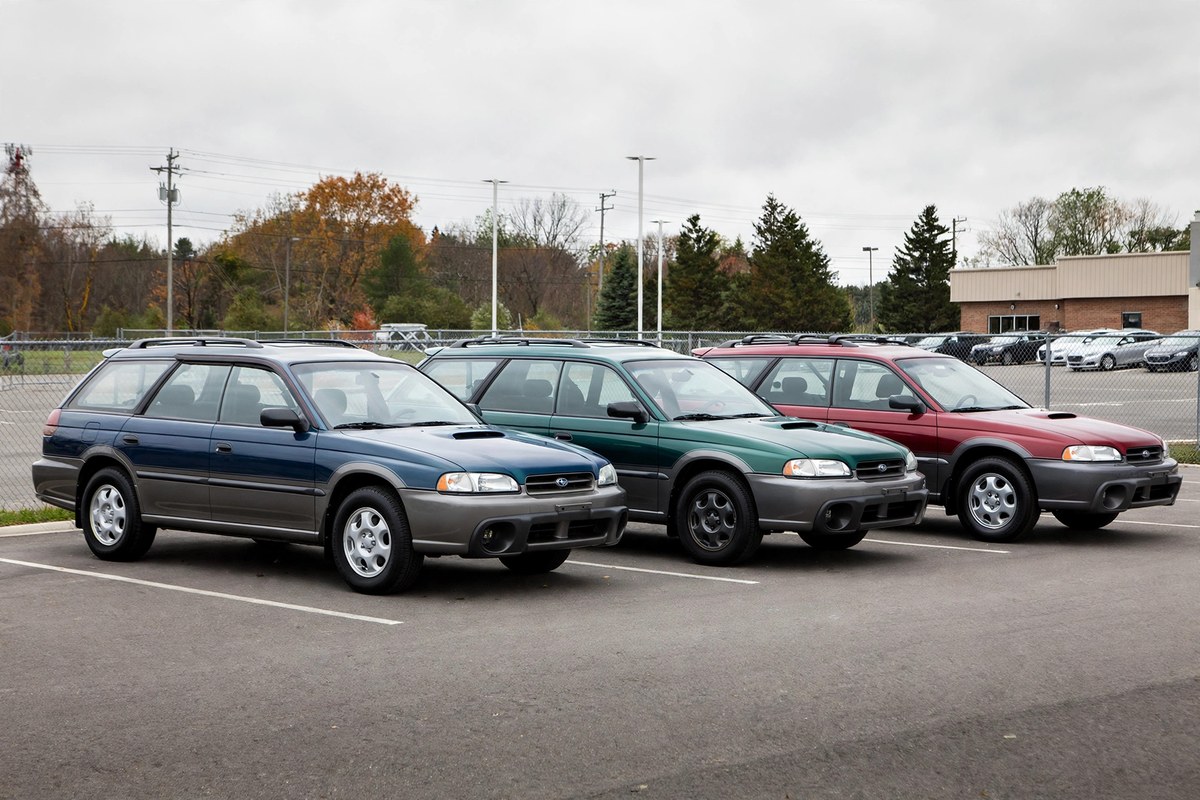
Subaru sold the 1999 Outback in seven variants, and the table shows the manufacturer's price when new, including the $495 destination charge. The wagon is the car most buyers want; the SUS sedan is the rare one.
| Trim | Gearbox | MSRP when new |
|---|---|---|
| Wagon | Manual or automatic | $22,990 / $23,790 |
| Wagon + All Weather Package | Manual or automatic | $23,390 / $24,190 |
| Limited Wagon | Manual or automatic | $25,090 / $25,890 |
| Wagon with Dual Sunroofs | Automatic only | $27,090 |
| Sedan (SUS) | Automatic only | $23,890 |
| Sedan Limited | Automatic only | $26,090 |
| SSV Wagon | Automatic only | $20,490 |
Used prices today cluster tightly. ForCar lists a median asking price of $3,250 across five live listings in November 2026, Hagerty recorded a sale at $4,250 on February 27, 2026, and Jalopnik highlighted a Craigslist example at $3,450 with 67,000 miles. Budget roughly $3,000 to $4,500 for a decent example, and pay at the top only for a car with head-gasket and timing-belt paperwork. The SUS sedan is genuinely scarce — Subaru built just 801 cloth-trim cars and 6,528 Limiteds — and the SSV wagon went to public-safety agencies only, so neither is a realistic shopping target.
Engines, Performance and Real-World MPG
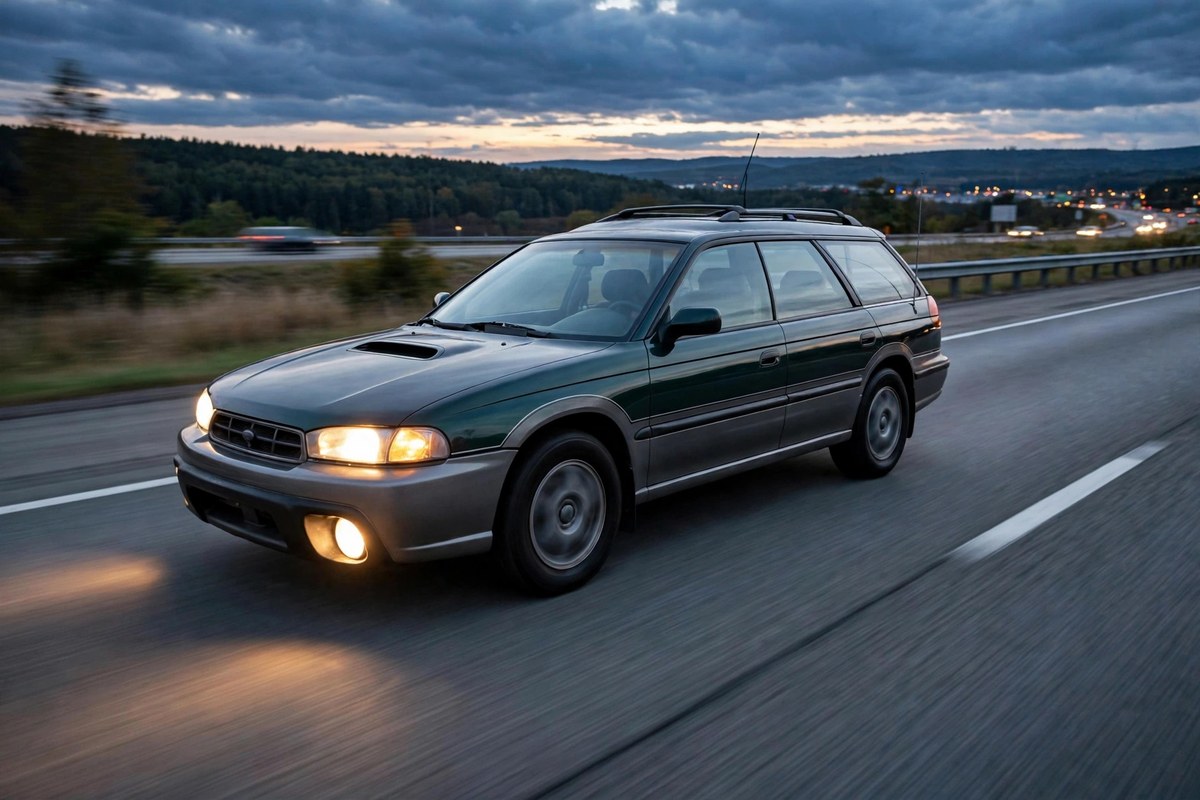
There was exactly one engine in the US 1999 Outback: the 2.5-litre DOHC flat-four (EJ25D), making 165 horsepower and 162 lb-ft of torque, paired with a 5-speed manual or a 4-speed automatic and standard all-wheel drive. No other engine was offered, so any listing that claims a different motor is either wrong or describing a non-US car. Performance is adequate rather than quick, but the flat-four is smooth and the all-wheel drive gives the wagon sure footing in rain and snow.
Fuel economy is 21 mpg city and 27 highway with the manual, or 21 city and 26 highway with the automatic. The 15.9-gallon tank gives about 430 miles of highway range with the manual and about 413 with the automatic, or roughly 334 miles around town either way. Towing is rated at 2,000 lb, enough for a small utility trailer, and the battery is rated at 490 cold-cranking amps — worth knowing on a car old enough that a tired battery is a common no-start.
| 5-speed manual | 4-speed automatic | |
|---|---|---|
| Engine | 2.5L DOHC flat-four, 165 hp | 2.5L DOHC flat-four, 165 hp |
| EPA economy | 21 / 27 mpg city/highway | 21 / 26 mpg city/highway |
| Highway range | About 430 miles | About 413 miles |
| Max towing | 2,000 lb | 2,000 lb |
Interior, Cargo and Everyday Practicality
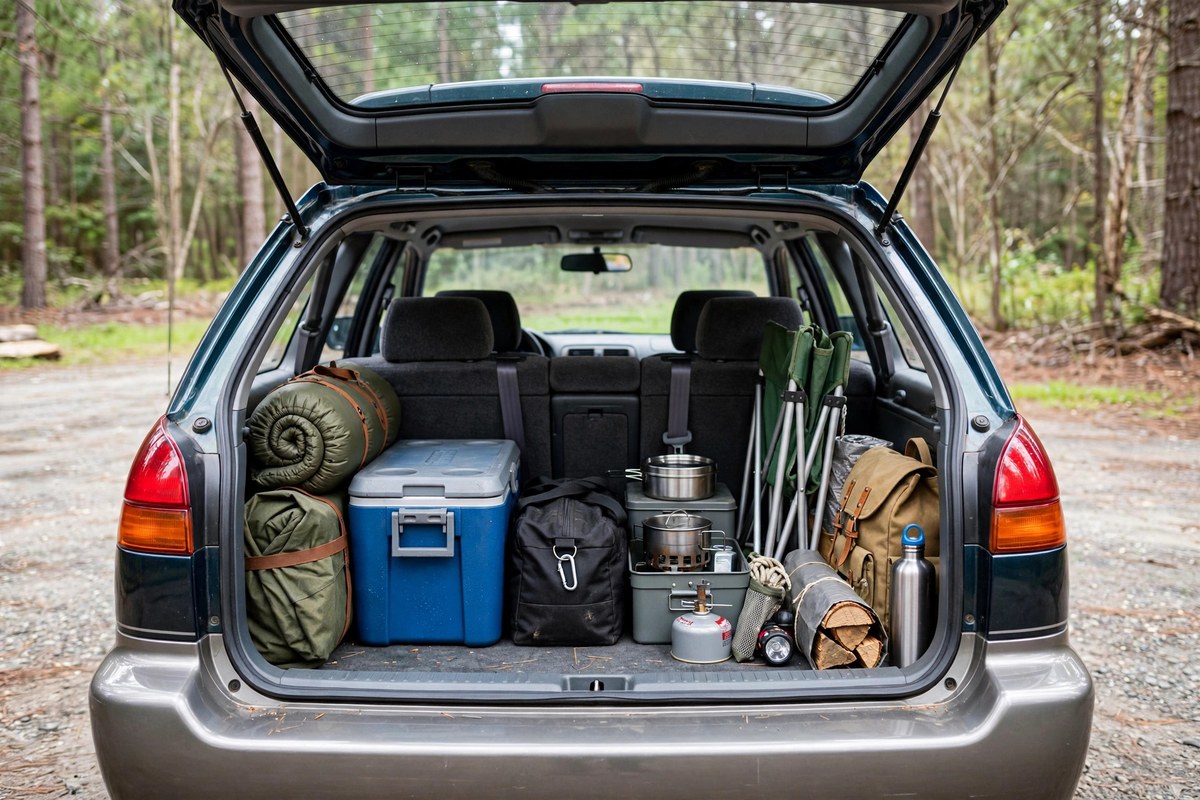
The 1999 is a mid-size wagon by the standards of its day: 184.5 inches long on a 103.5-inch wheelbase, 67.5 inches wide and 60.3 inches tall with the roof rack, with a 34.8-foot turning radius that keeps it easy to park. It seats five, and the cargo bay holds 36.5 cubic feet with the rear seats up and 69.9 with them folded — enough for a week's camping gear or a flat-pack furniture run, and a big part of why these wagons stayed in service for decades.
The 1999 refinements show up in daily use more than on the spec sheet: the smoother, quieter ride and the wide-spray washers are small improvements you notice on a wet commute. The All Weather Package is the sensible pick if you can find one — but at this age, condition and paperwork matter far more than trim. Buy the best-documented wagon you can find, and treat the rare SUS sedan as a curiosity, since its trunk gives up the wagon's cargo advantage.
Safety, Recalls and Reliability
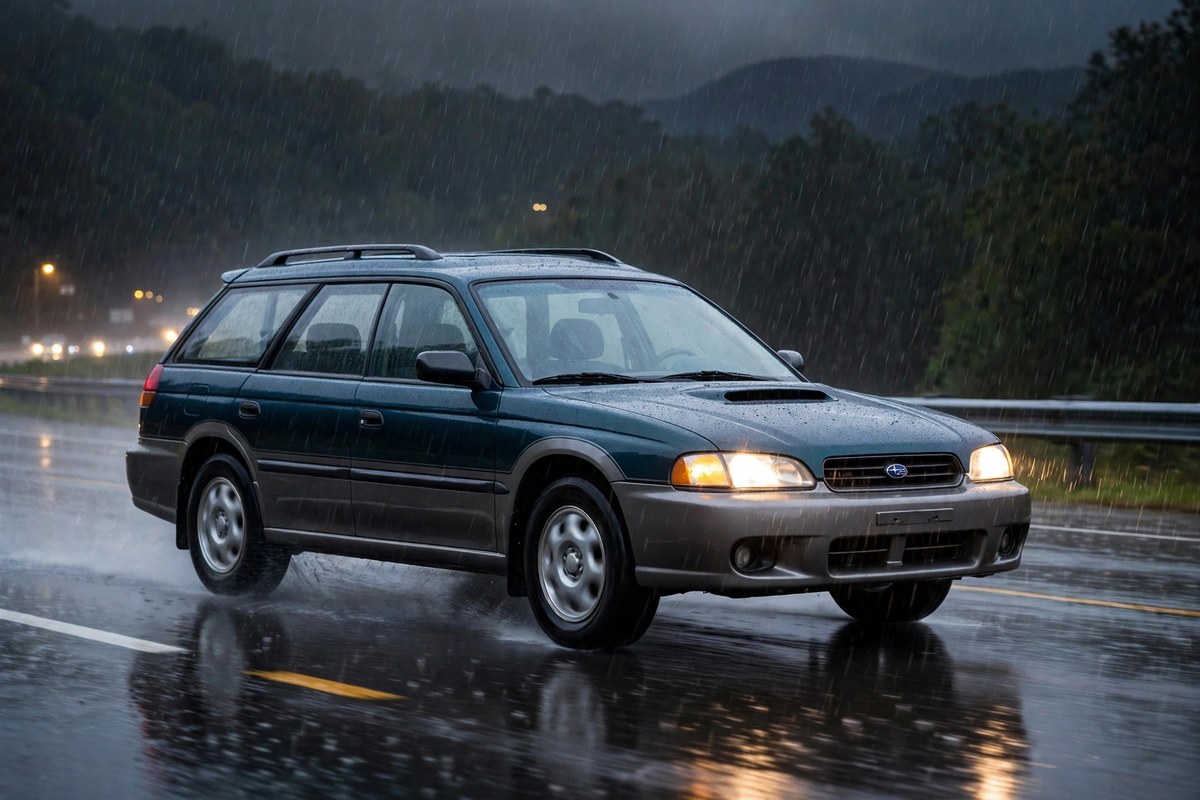
Safety equipment for 1999 includes dual depowered front airbags, fitted from September 1997 production, reinforced doors, roof and steering column, front and rear crumple zones, 5-mph bumpers, rear-seat headrests and child-proof rear door locks. No NHTSA star rating is published for this model year in the sources checked, so do not let a seller quote you one. What matters more at this age is the recall record — and here the news is good, because there is only one.
That single recall is campaign 01V216000, issued in June 2001 and covering about 180,000 vehicles. Front coil springs with poor paint can corrode in 21 salt-belt states plus Washington, DC, and a corroded spring can break and puncture a front tire. The remedy is spring guards, with free replacement of any broken spring. Check the VIN on NHTSA's recall site and confirm the campaign is closed before you pay — and inspect the springs and underbody for corrosion yourself.
| NHTSA campaign | Issue | What to check |
|---|---|---|
| 01V216000 (Jun 2001) | Front coil springs corrode in salt states; a broken spring can puncture a front tire | Confirm spring guards fitted and the recall closed; inspect springs for corrosion |
Common Problems and What to Check Used
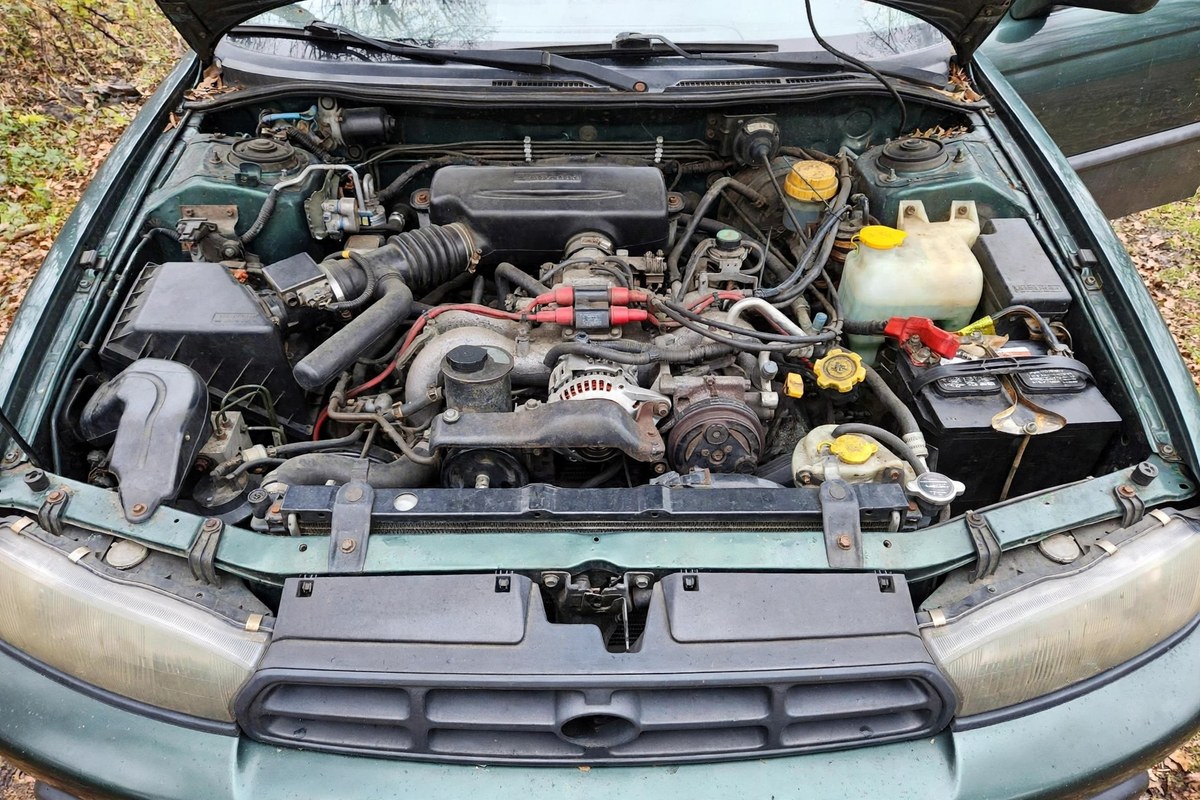
The defining issue is the EJ25D's head gaskets. Unlike the later EJ251, which leaks externally where you can see it, the Phase I engine fails internally: combustion gases and oil get into the cooling system instead of weeping down the block. Watch for oily residue in the coolant overflow bottle, an exhaust or fuel smell in the coolant, the temperature gauge running high, intermittent overheating on long trips, and — in severe cases — a cracked radiator. Failures typically arrive at 120,000 to 150,000 miles, and the repair runs $1,200 to $2,500. The fix is multi-layer steel gaskets with the heads checked and skimmed; the best 1999 you can buy is one with that job documented.
The timing belt is the second big-ticket item. The EJ25D has a timing belt, not a chain, with a Subaru replacement interval of 105,000 miles and an inspection every 30,000 — and because it is an interference engine, a snapped belt means bent valves. Replace the belt, water pump and tensioners together if there is no record. Do not count on factory help: Subaru's March 2004 coolant-conditioner campaign covered the 2000–2002 Legacy and Outback 2.5-litre cars, about 376,000 vehicles, but not the 1999. At this age, also inspect the underbody for rust and have a mechanic check compression and coolant before you commit.
Before you buy a used 1999 Outback, check these items
- ✓Check the coolant overflow bottle for oily residue and sniff the coolant for exhaust or fuel smell.
- ✓Ask for head-gasket receipts: multi-layer steel gaskets with the heads checked or skimmed, ideally before 120,000–150,000 miles.
- ✓Ask for the timing-belt record — the 105,000-mile interval is critical on this interference engine.
- ✓Check the VIN on NHTSA's site and confirm recall 01V216000 is closed.
- ✓Watch the temperature gauge on a long test drive; intermittent overheating is a warning sign.
- ✓Inspect the front coil springs and underbody for corrosion, especially on salt-state cars.
- ✓Get a pre-purchase inspection of compression, coolant and the underbody before you pay.
Frequently Asked Questions
How much does a 1999 Subaru Outback cost today?▾
About $3,000 to $4,500 for a decent example. ForCar lists a median asking price of $3,250 across five live listings in November 2026, Hagerty recorded a past sale at $4,250 in February 2026, and Jalopnik highlighted a Craigslist example at $3,450 with 67,000 miles.
What engine does the 1999 Subaru Outback have?▾
Only one: the 2.5-litre DOHC flat-four (EJ25D), making 165 horsepower and 162 lb-ft of torque, with a 5-speed manual or a 4-speed automatic and standard all-wheel drive. No other engine was offered in the US 1999 Outback.
What is the MPG of the 1999 Subaru Outback?▾
The manual is rated 21 mpg city and 27 highway; the automatic is rated 21 city and 26 highway. The 15.9-gallon tank gives about 430 miles of highway range with the manual and about 413 with the automatic.
What are the most common problems with the 1999 Outback?▾
Internal head-gasket failure on the EJ25D, typically at 120,000–150,000 miles, with a $1,200–$2,500 repair. The timing belt needs replacing at 105,000 miles, and the one recall — 01V216000 — covers front coil springs that can corrode and puncture a tire.
Is the 1999 Subaru Outback a good buy?▾
Yes, if it is documented. A 1999 with multi-layer steel head gaskets, a fresh timing belt and the spring recall closed is a tough, roomy all-wheel-drive wagon for about $3,000–$4,500. An undocumented car can cost more in repairs than the purchase price, so walk away from any example with no paperwork.
The Bottom Line
Buy the 1999 Outback if you want the last first-generation wagon for very little money: a documented car with steel head gaskets, a fresh timing belt and the spring recall closed is a tough, roomy all-wheel-drive wagon for about $3,000–$4,500. Avoid any car with no paperwork, whatever the price.
Prices and specifications reflect Cars101, ForCar, Hagerty, Jalopnik and NHTSA figures checked in November 2026; used prices vary with mileage, condition and location. Confirm history, recalls and condition with an independent inspection before buying.
Continue researching the Outback
Sources
- Cars101: 1998–1999 Subaru Outback Archive — Prices, Specs and What's New
- Olive: Subaru Head Gasket Problems — Is the Bad Rap Deserved?
- Jalopnik: Subaru Model Years with Head Gasket Problems
- Classic Listings: Subaru Outback Guide
- ForCar: Subaru Outback Prices
- StatNorth: 1999 Subaru Outback Recalls
- NHTSA: Vehicle Recalls (check by VIN)
- Jalopnik: Is $3,450 an Upfront Deal for This 1999 Subaru Outback?
A note on prices
Prices, trims, MPG figures and safety ratings change over time. Treat the figures here as a starting point and confirm the details with a dealer or the manufacturer's site before you buy.
Continue reading