Buying Guide · 9 min read
Subaru Outback Generations: Every Year Explained
All seven Subaru Outback generations from 1995 to 2026 — years, chassis codes, engines, key changes, and the best pick from each generation.
By Jordan Peel ·
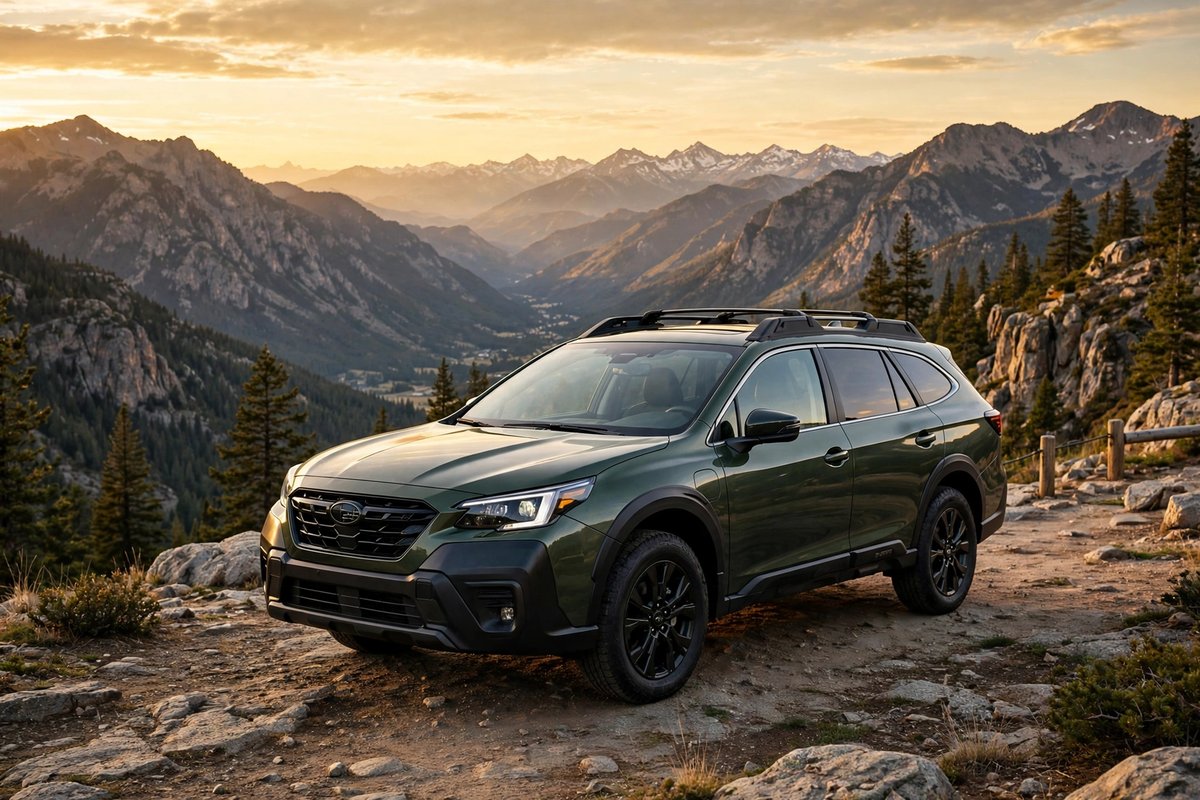
Seven generations, thirty years, one formula: standard all-wheel drive, a flat boxer engine and a wagon that carries more than it looks. The Outback started in 1995 as a raised Legacy wagon; for 2026 it is a boxier SUV-shaped crossover built in Japan. Shopping used, the generation matters more than the badge: a 2024 is one of the most reliable Outbacks ever built, a 2020 from the same generation far worse. Here is every generation.
Subaru Outback Generations at a Glance
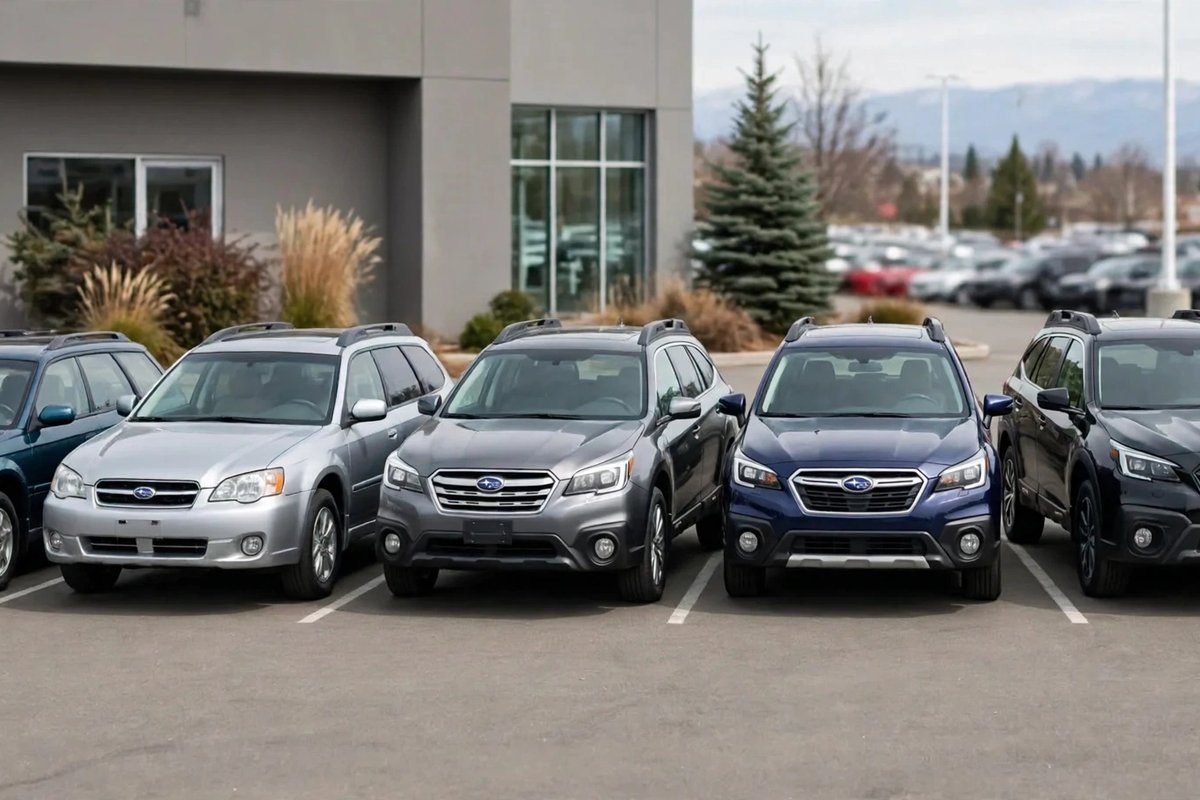
| Generation | Years | Code | Engines | What changed |
|---|---|---|---|---|
| 1st | 1995–1999 | BG | 2.2L 135 hp; 2.5L 155–165 hp | Raised Legacy wagon |
| 2nd | 2000–2004 | BH | 2.5L 165 hp; 3.0L six 212 hp | Standalone model |
| 3rd | 2005–2009 | BP | 2.5L 168 hp; 2.5 XT 250 hp; 3.0R 250 hp | Turbo XT arrives |
| 4th | 2010–2014 | BR | 2.5L 170 hp; 3.6R 256 hp | Bigger; CVT; EyeSight |
| 5th | 2015–2019 | BS | 2.5L 175 hp; 3.6R 256 hp | Quieter; EyeSight |
| 6th | 2020–2025 | BT | 2.5L 182 hp; 2.4 turbo 260 hp | Global Platform; Wilderness |
| 7th | 2026– | BU | 2.5L 180 hp; 2.4 turbo 260 hp | Full redesign |
The code is the wagon chassis code, in the fifth VIN character — G is first-generation, U seventh. Early generations also had sedans; the seventh is wagon-only.
| Generation | Best pick | Watch out |
|---|---|---|
| 1st (1995–1999) | 1998–1999 | Head gaskets; rust |
| 2nd (2000–2004) | 2003–2004 3.0 H6 | Head gaskets; rear subframe rust |
| 3rd (2005–2009) | 2008–2009 2.5i | Head gaskets; turbo wear on XT |
| 4th (2010–2014) | 2014 2.5i | Oil use; front subframe rust |
| 5th (2015–2019) | 2018 | Windshields; battery drain |
| 6th (2020–2025) | 2024 | 2020–2021 electronics |
| 7th (2026–) | 2026 (buy new) | No track record yet |
CarBuzz ranked the fifth the least reliable of the first six and the first the most reliable — against the idea that newer is always better. The picks weigh complaints, recalls and surveys together.
First and Second Generations: 1995–2004
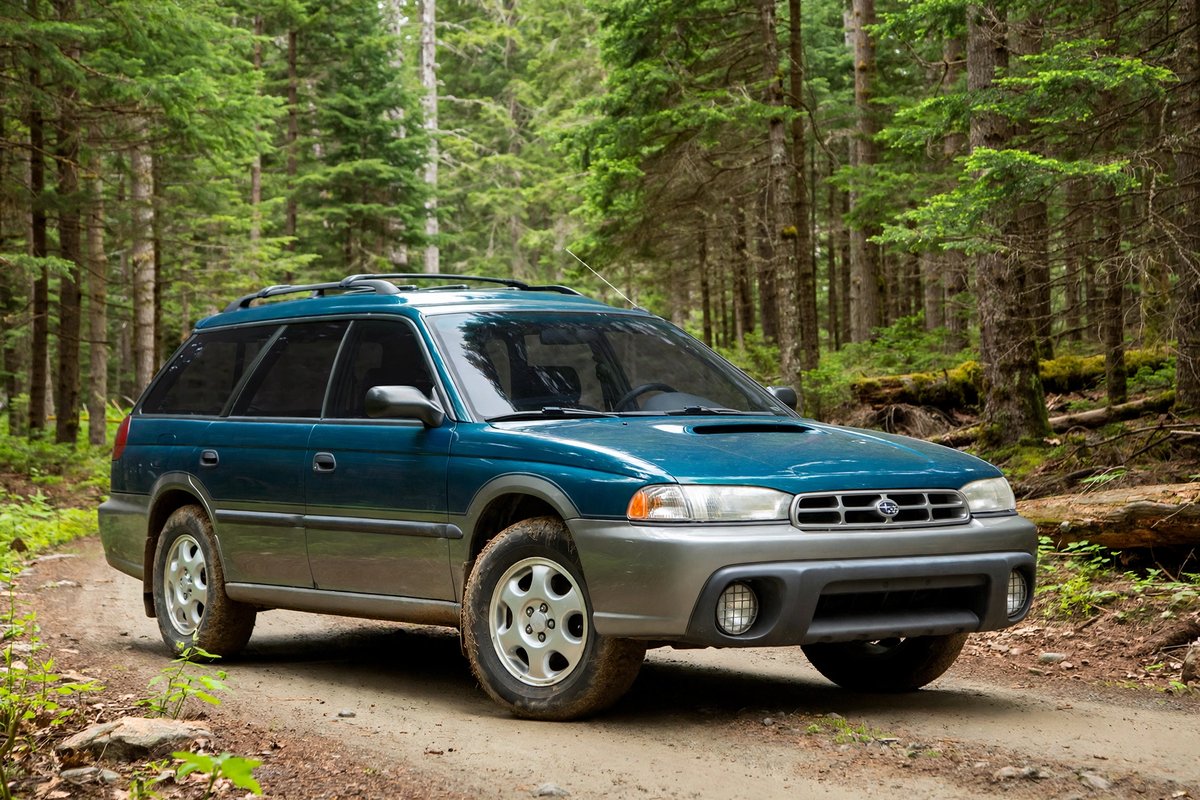
The first Outback arrived for 1995 as a Legacy wagon with raised suspension and cladding, standard all-wheel drive. The 2.2-litre made 135 hp; a 2.5-litre joined for 1996, rising from 155 to 165 hp by 1999. Clearance was about 7.5 inches, cargo about 72.5 cubic feet. The facelifted 1998–1999 cars are the pick, with the sorted 2.5-litre.
The second generation, for 2000, made the Outback a standalone model line. It grew longer and wider, gained multi-link rear suspension, and added a 3.0-litre flat-six with 212 hp for 2001. The 2.5-litre carried over at 165 hp. Best pick is a facelifted 2003–2004, ideally the six. Check for leaks and rear subframe rust — buy on inspection, not price.
Third and Fourth Generations: 2005–2014
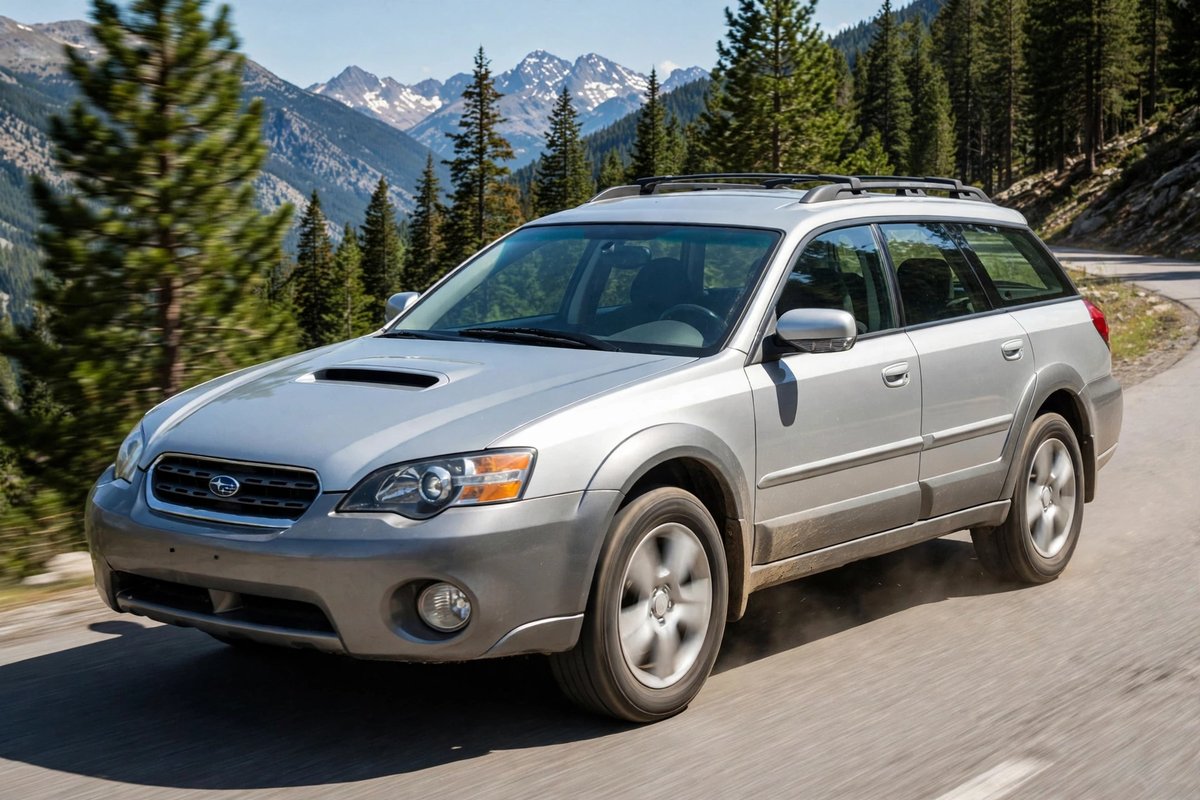
The third generation (2005–2009) was the enthusiast's Outback: the 2.5-litre made 168 hp, the 2.5 XT borrowed a turbo flat-four making 250 hp, and the 3.0R six matched it. The 2008–2009 facelift cars are the pick; watch for head gasket seepage and turbo wear on a hard-driven XT.
The fourth generation (2010–2014) grew close to midsize-SUV size, with the four-cylinder cars moving to Subaru's Lineartronic CVT. The 2.5-litre made 170 hp, the new 3.6R six 256 hp, and EyeSight debuted for 2013. The 2014 2.5i is the pick, but also the most argued-over year: the FB25 engine's piston rings can drink oil, CarBuzz calls the 2013 the worst Outback year of all, and other guides call 2013–2014 the best buys. Check the oil and service history, confirm Takata recalls are closed — the 2010 alone had 18 — and check the front subframe for rust on a salt-state car.
Fifth Generation: 2015–2019
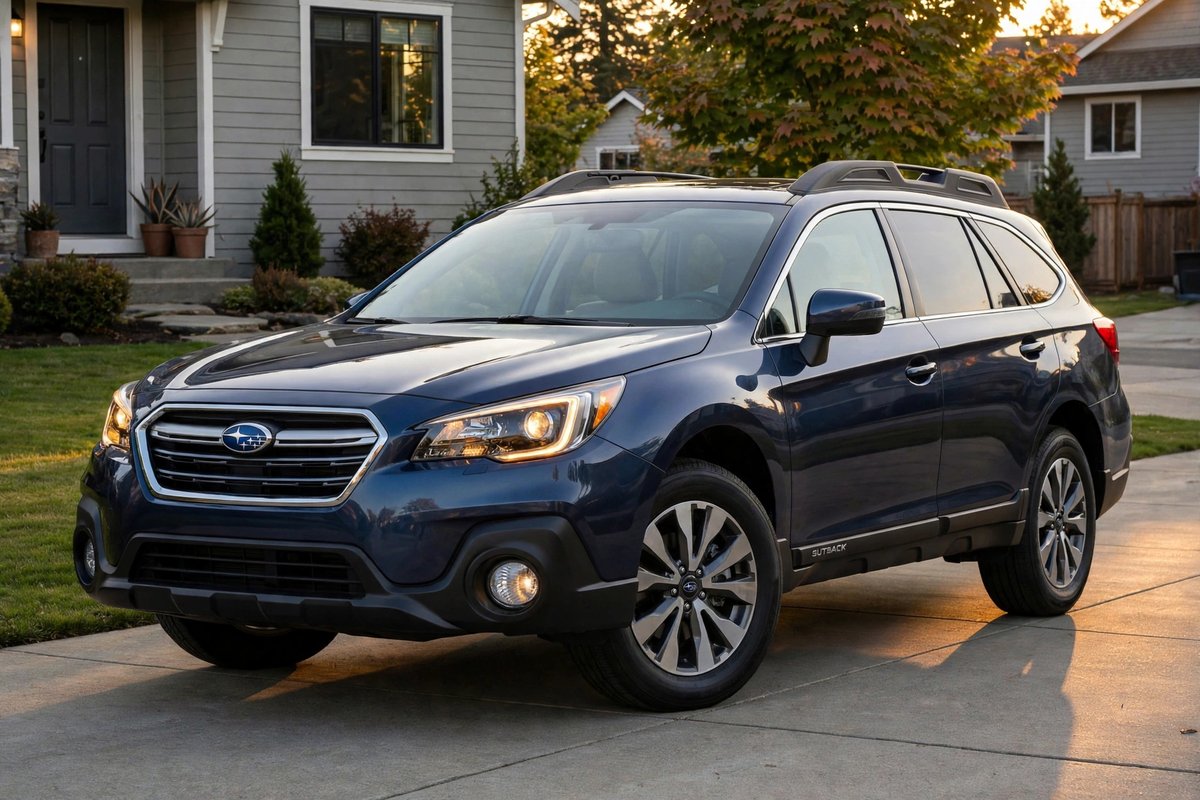
The fifth generation is where the Outback grew up: quieter, more refined, EyeSight spreading across the range. The engines carried over — a 2.5-litre with 175 hp and the 3.6R six with 256 hp, both with the CVT. Cargo grew to 73.3 cubic feet; the 2018–2019 facelift brought more safety kit.
This is the generation the sources fight over. CarBuzz ranked it the least reliable of the first six, and the data backs it: the 2019 drew over 1,000 NHTSA complaints, mostly windshields and dead batteries, and scores just 62 out of 100. Yet some guides call the 2018–2019 cars the best used Outbacks, with a sorted powertrain and standard EyeSight. Both views are partly right — the engines are fine, the glass and electrics are not. The 2018 is the safer pick, with the facelift and a smaller complaint pile.
Sixth Generation: 2020–2025
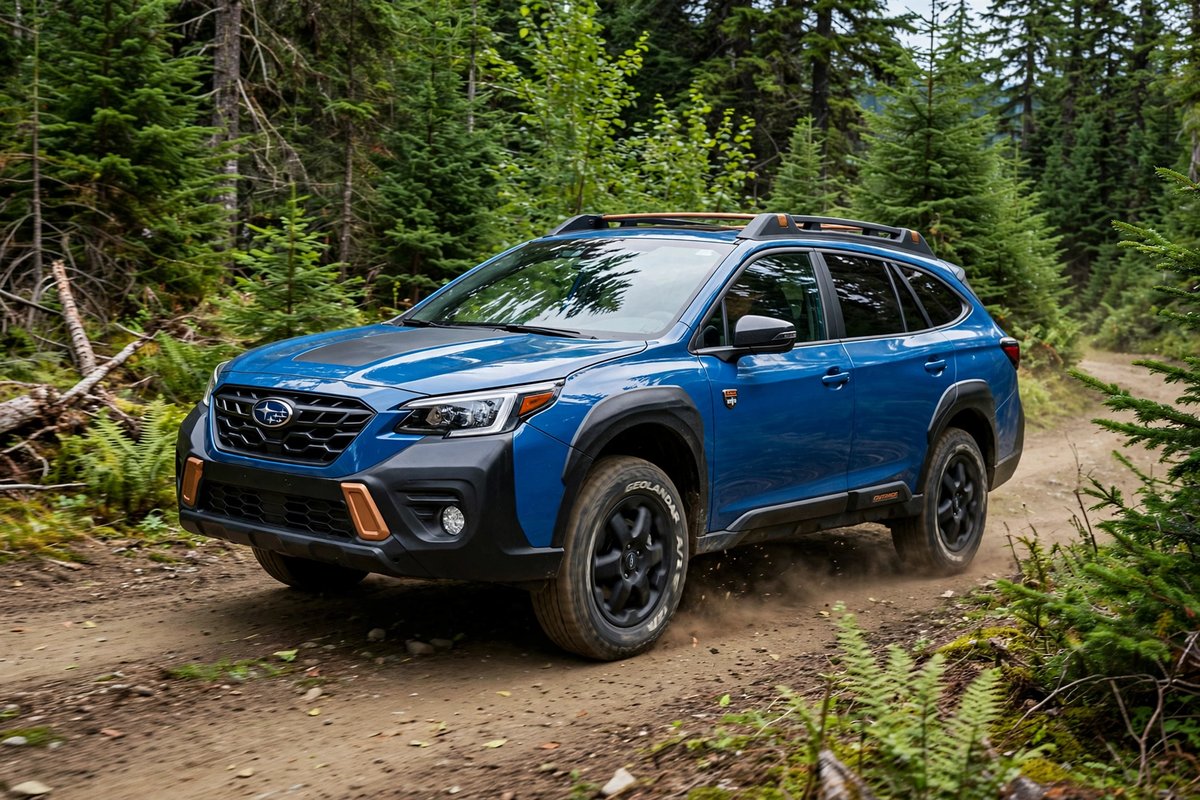
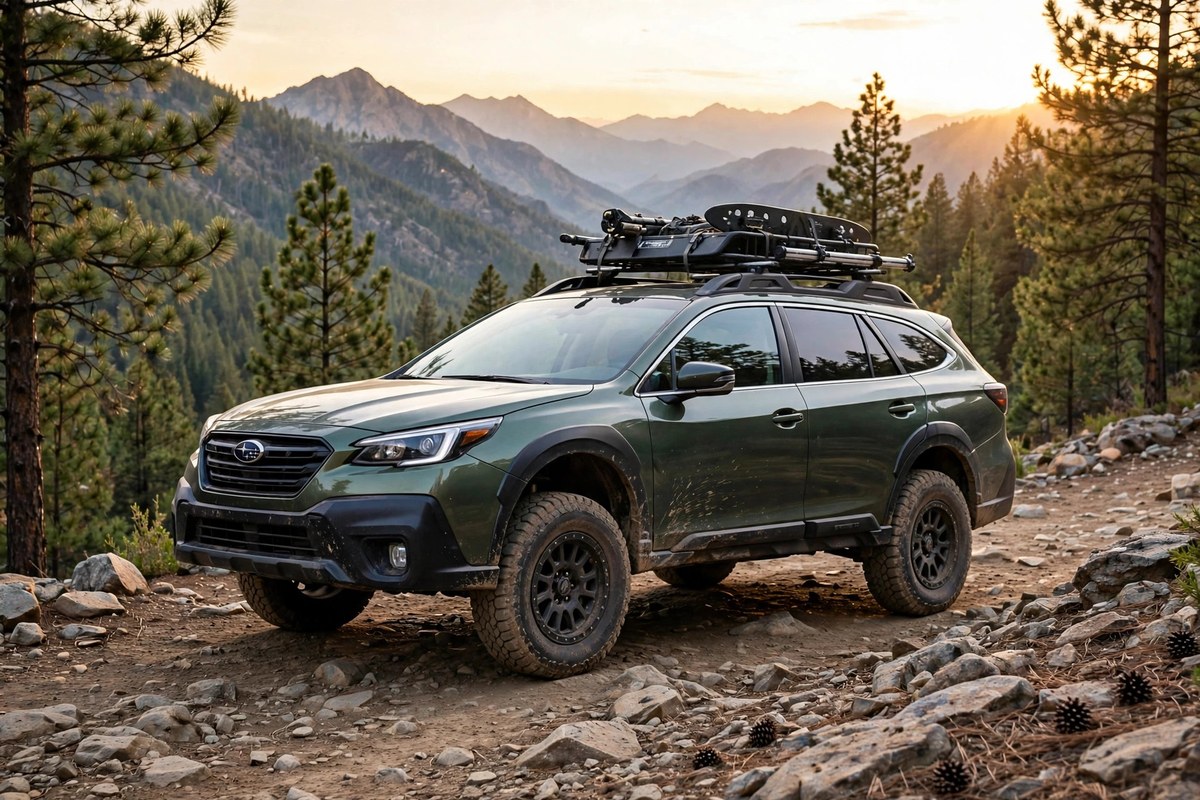
The sixth generation, launched for 2020 on the Subaru Global Platform, is the modern Outback most used buyers meet. The 2.5-litre made 182 hp, the returning 2.4-litre turbo 260 hp, and EyeSight became standard. The Wilderness arrived for 2022 with 9.5 inches of clearance and all-terrain tyres; maximum cargo was 75.7 cubic feet.
Reliability splits this generation in two. The 2020 launch year scores just 60 out of 100, with six recalls and 907 complaints — infotainment freezes, dead batteries, phantom EyeSight braking — and the 2021 and 2022 are not much better. The 2023 scores 77; the 2024 and 2025 score 80 with zero recalls. The 2020–2021 2.5-litre cars also need a thermo control valve check — Subaru extended coverage to 15 years or 150,000 miles. Buy a 2023–2025 car if you can; a 2022 Wilderness is the off-road pick — test its screen first.
Seventh Generation: 2026 and Beyond
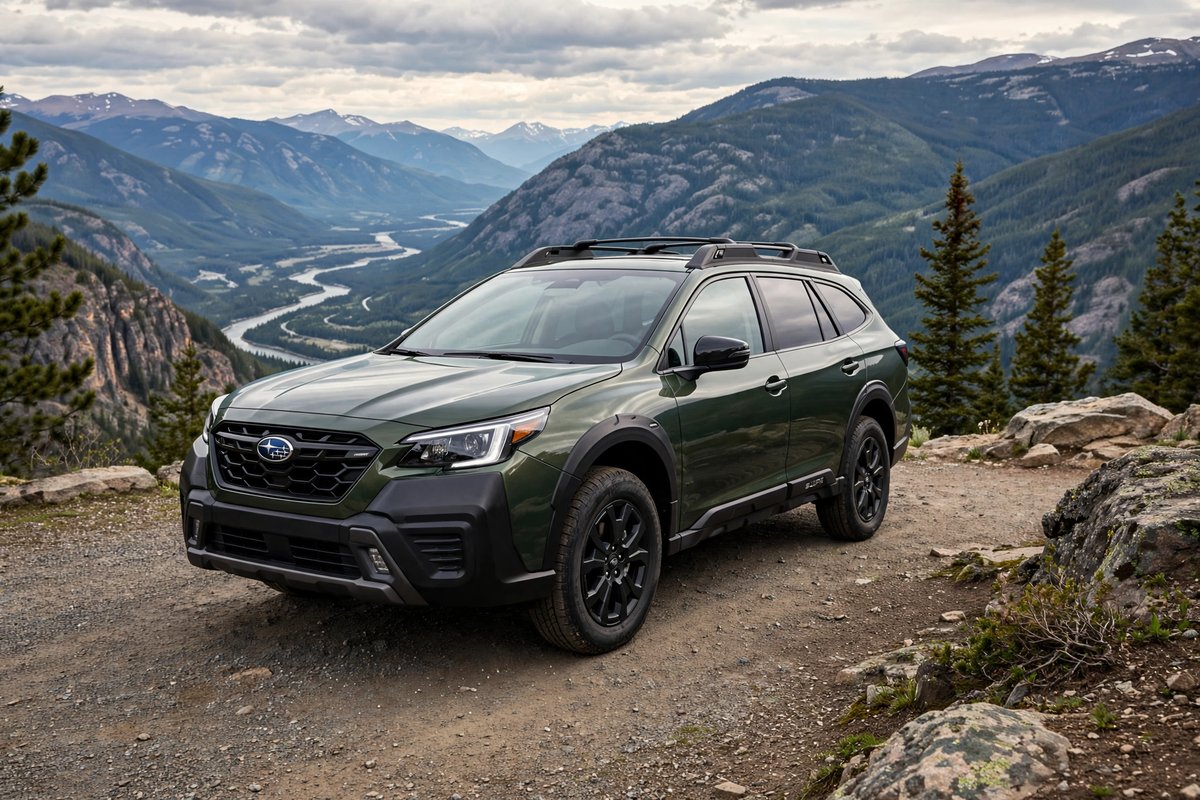
The seventh generation is a full redesign for 2026 — the biggest change in the nameplate's history. The wagon shape gave way to a boxier, SUV-like body: 191.7 inches long, 34.6 cubic feet of cargo behind the seats and 80.5 folded — the most of any Outback. The 2.5-litre makes 180 hp with EPA ratings of 25 city, 31 highway and 27 combined; the 2.4-litre turbo makes 260 hp. Clearance is 8.7 inches, or 9.5 on the Wilderness. Inside, a faster 12.1-inch touchscreen replaces the old 11.6-inch unit, climate knobs are back, and a 12.3-inch digital cluster is standard. It is built in Japan now.
There is no hybrid Outback for 2026, and none has been announced for 2027 — MotorTrend suggests one may arrive around 2028. The 2026 Premium started at $34,995 plus $1,450 destination, the Wilderness at $44,995 plus destination. For 2027, Subaru lists a Base at $32,995, Premium at $34,995 and Touring XT at $46,595, excluding $1,545 destination. The 2026 is the buy if you are buying new.
Prices and specs change
Prices, fuel economy and specifications change with model years, options and incentives. Confirm current figures with a dealer or on subaru.com.
Which Subaru Outback Generation Should You Buy?
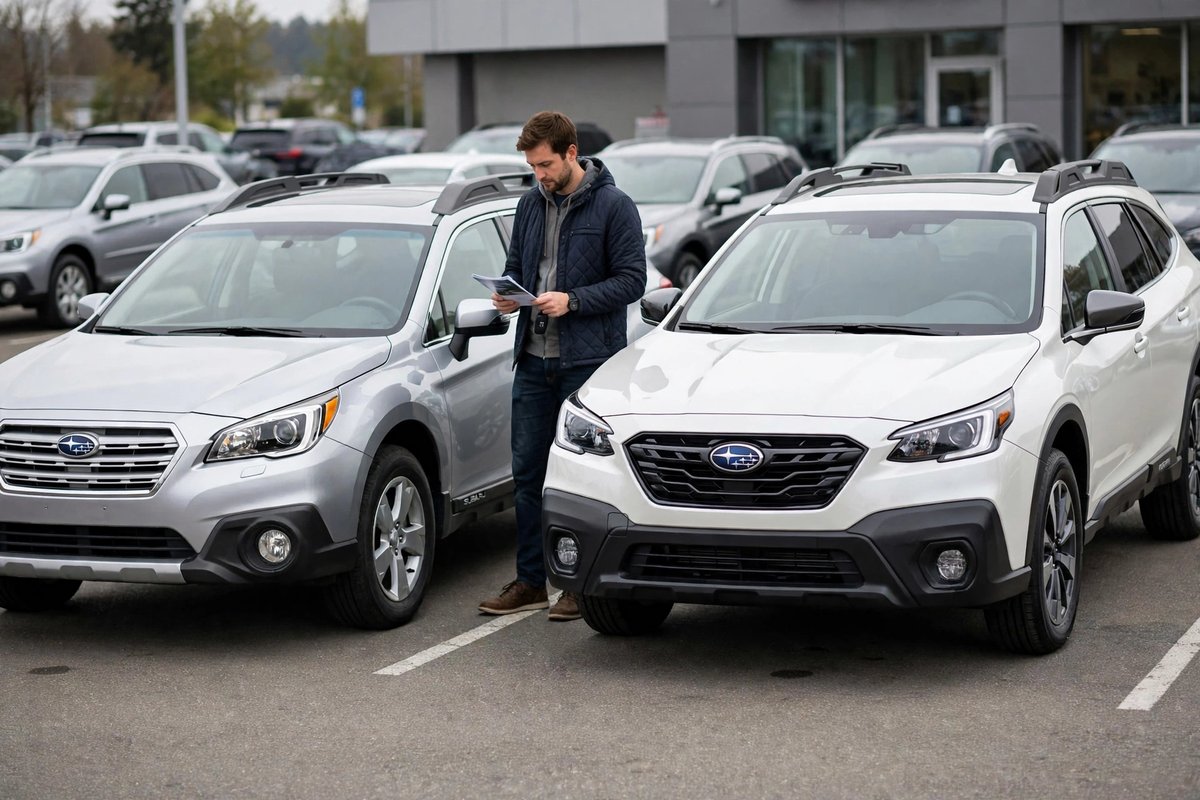
New-car buyers have one answer — the 2026 — and used buyers have three: a 2023–2025 car for the modern Outback at a discount, a 2018 for value, or a 2014 for the cheapest wagon.
| Buyer | Generation to buy | Why |
|---|---|---|
| Buying new | 7th (2026) | Newest design, full warranty |
| Best used value | 6th (2023–2025) | Modern safety, 80/100 |
| Tight budget, modern feel | 5th (2018) | Facelift, sorted engine |
| Cheapest roomy wagon | 4th (2014) | Big cabin, low price |
| Off-road weekends | 6th Wilderness (2022+) | 9.5 in clearance |
| Classic / project car | 1st–3rd (1995–2009) | Cheap, simple — inspected only |
Before you buy any used Outback, check these items
- ✓Run the VIN on NHTSA's site; confirm every recall is closed.
- ✓On a 2000–2009 2.5-litre car, look for head gasket weeping.
- ✓On a 2013–2014 car, check the oil level and service history.
- ✓On a 2010–2017 salt-state car, inspect the front subframe for rust.
- ✓On a 2015–2022 car, inspect the windshield and test the battery.
- ✓On a 2020–2022 car, test the touchscreen and EyeSight for freezes.
- ✓On a 2020–2021 2.5-litre car, confirm the thermo control valve was checked.
Frequently Asked Questions
How many Subaru Outback generations are there?▾
Seven: 1995–1999, 2000–2004, 2005–2009, 2010–2014, 2015–2019, 2020–2025, and the seventh from 2026.
What is the best Subaru Outback generation?▾
For a used buy, the sixth generation (2020–2025) — specifically the 2023–2025 cars, scoring 77 to 80 out of 100 with few or no recalls; the 2024 is the safest pick. For a new buy, the seventh (2026) is the best car, with no track record yet.
Which Subaru Outback generation should you avoid?▾
No generation is a blanket avoid, but check carefully: the early fourth generation (2010–2012) for CVT shudder and airbags, 2013–2014 for oil consumption, and 2019–2020 for windshields, batteries and electronics.
What does the chassis code mean on a Subaru Outback?▾
BG is first, BH second, BP third, BR fourth, BS fifth, BT sixth and BU seventh. The code sits in the fifth character of the VIN.
When did the Outback get EyeSight?▾
EyeSight debuted on the fourth generation for 2013, spread across the fifth, and became standard with the sixth generation in 2020. It remains standard on the 2026 car.
Is the 2026 Outback a new generation?▾
Yes. The 2026 is the seventh generation: boxier SUV-style body, 2.5-litre with 180 hp, 2.4-litre turbo with 260 hp, 34.6 cubic feet of cargo behind the seats and 80.5 folded, built in Japan — and no hybrid for 2026.
The Bottom Line
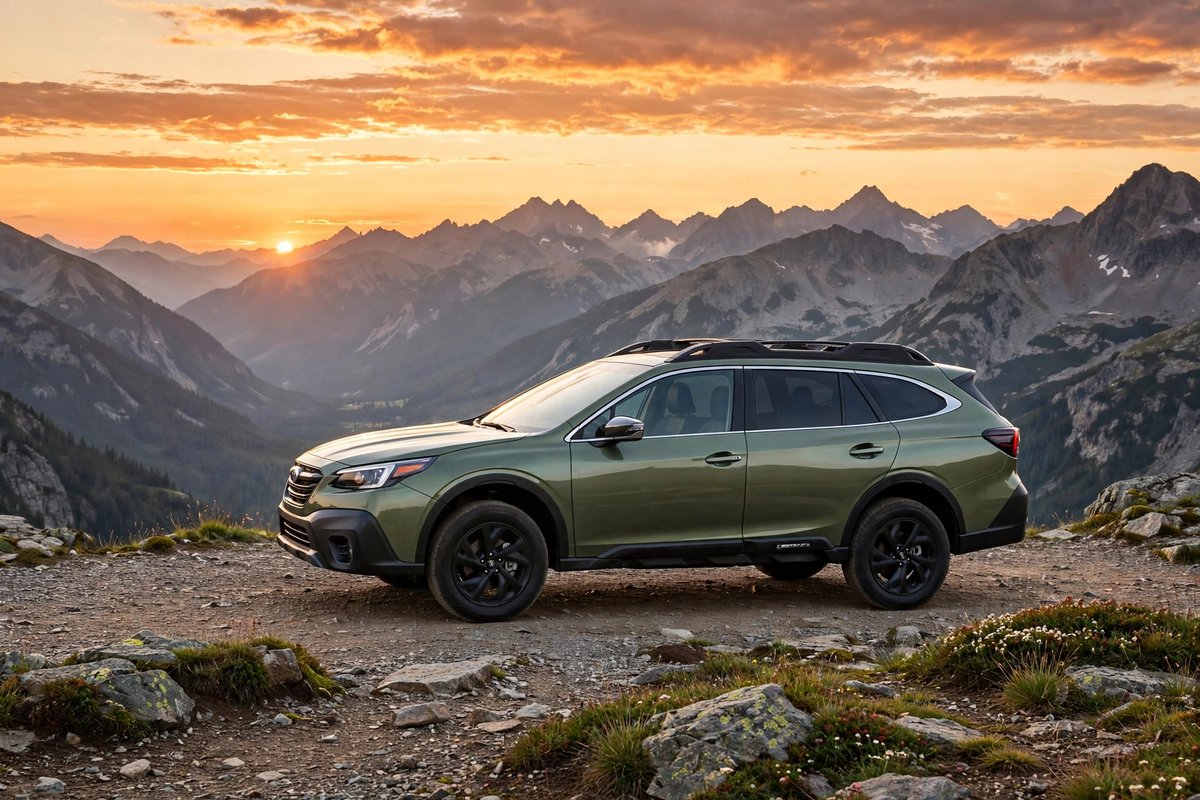
Seven generations in, the Outback is still the same idea it was in 1995: standard all-wheel drive, a boxer engine, a wagon that works harder than it looks. The generations are not equal, though. Buy the 2026 if you are buying new, a 2023–2025 car for the best used value, a 2018 if the budget is tight, and a 2014 only after checking oil and subframe. Whatever the year, run the VIN and inspect glass, battery and oil.
Years, codes and specs were checked against Subaru, CarBuzz, Wikipedia and the VIN record in November 2026. Confirm pricing and recalls with a dealer and a VIN check before buying.
Continue researching the Outback
- Subaru Outback Model Years: Every Generation Compared
- Subaru Outback Years to Avoid: Worst Years by Generation
- Subaru Outback Reliability: Scores by Year (Guide)
- Subaru Outback Buying Guide: Trims, Prices & Tips
- 2026 Subaru Outback Review: Is the Redesigned SUV Worth It?
- Subaru Outback MPG: Real MPG by Year & Trim (2026)
Sources
- CarBuzz: Subaru Outback Generations — All Model Years
- Wikipedia: Subaru Outback
- VIN Decoder Plus: Subaru Outback VIN Decoder
- Sunset Hills Subaru: The Generational Evolution of the Subaru Outback
- AutoEvolution: Subaru Outback, From Quirky Wagon to Beloved Companion
- Carvana: Subaru Outback Trims, Generations & Buyer's Guide
- Autoblog: 2026 Subaru Outback
- MotorVento: Subaru Outback Specs, Generations, Problems and Buying Guide
Continue reading