Buying Guide · 10 min read
2009 Subaru Outback: Last Gen-3, Best Sorted
Final year of the third generation, with stability control standard across the range and better reliability scores than the 2005–2008 cars.
By Marcus Reid · · Updated
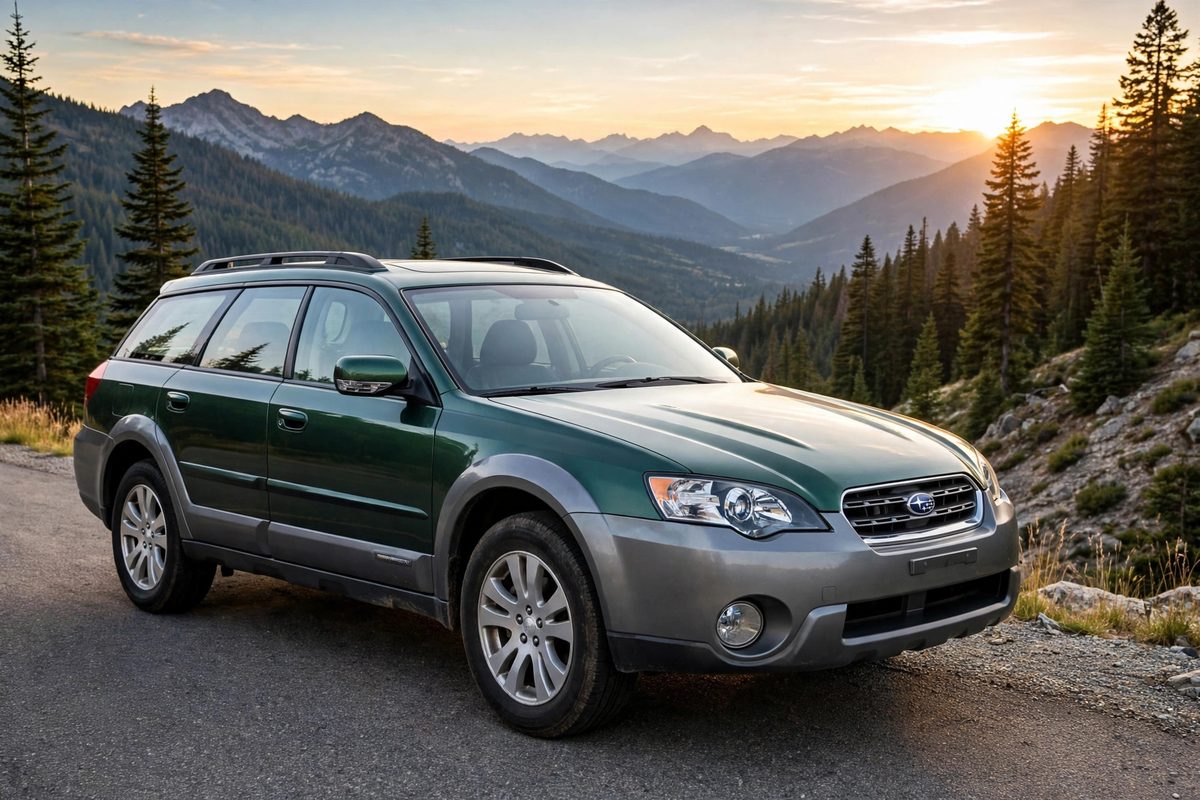
The 2009 Subaru Outback is the last year of the third-generation wagon, and the smartest pick of that generation for many used buyers. Prices when new ran from $22,295 for the base 2.5i to $34,795 for a loaded 2.5XT Limited with navigation. Today, Kelley Blue Book puts typical dealer prices between about $3,700 and $5,750, while CarGurus lists an average asking price of about $6,759. The base 2.5-liter returns 20 mpg city and 26 highway, every 2009 Outback has standard all-wheel drive, and five-star frontal and side crash ratings.
2009 Subaru Outback at a Glance
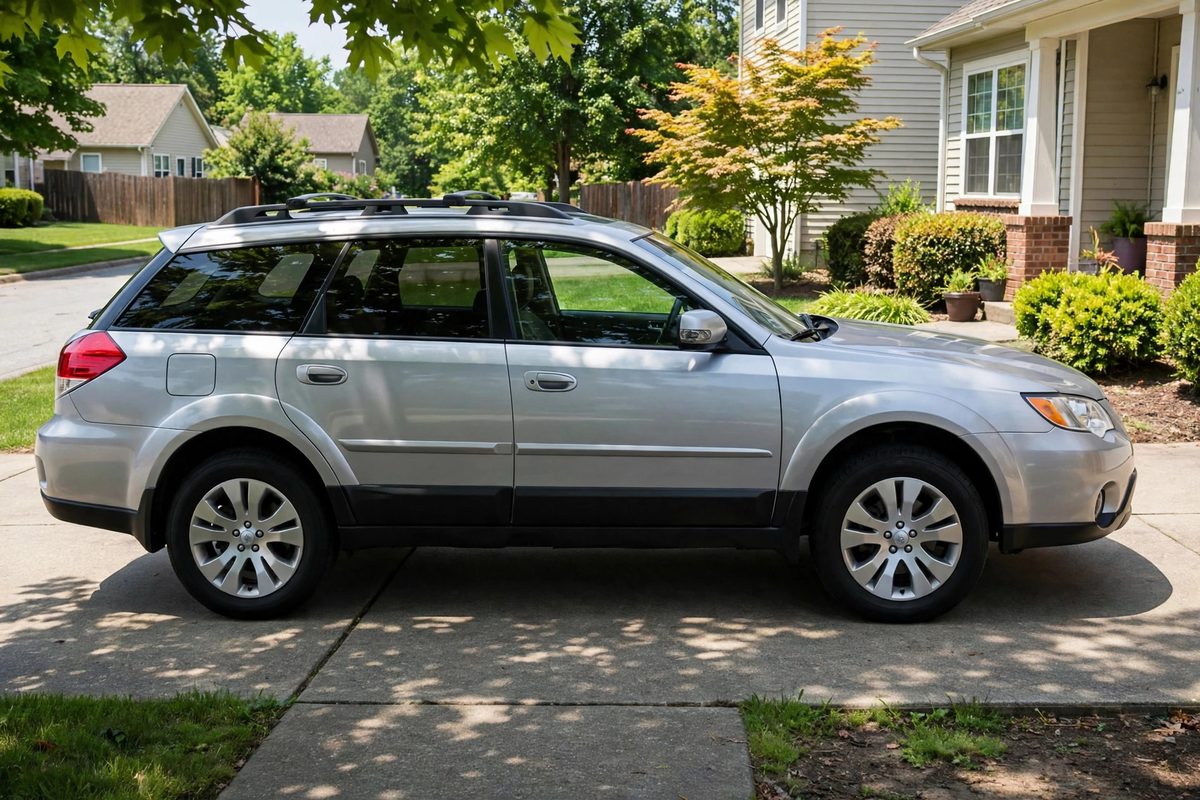
| What to know | 2009 Outback |
|---|---|
| Starting price when new | $22,295 (2.5i) to $34,795 (2.5XT Limited with navigation) |
| Current used price | About $3,700–$5,750 (KBB); $6,759 average asking price (CarGurus) |
| Engines | 2.5-liter flat-four, 170 hp; 2.5-liter turbo flat-four, 243 hp; 3.0-liter flat-six, 245 hp |
| Fuel economy | 20/26 mpg (2.5i automatic); 18/24 mpg (2.5XT); 17/24 mpg (3.0R) |
| Drivetrain | Standard Symmetrical AWD; 5-speed manual or 4-speed automatic (2.5i); 5-speed automatic (3.0R) |
| Towing | 2,700 lbs (2.5i and 2.5XT); 3,000 lbs (3.0R with trailer hitch) |
| Cargo | 33.5 cu ft behind rear seats; 66.2 cu ft folded |
| Ground clearance | 8.4 inches |
| Safety | NHTSA 5 stars frontal and side, 4 stars rollover; IIHS Good ratings |
| Ratings | 4.3/5 KBB owners; 4.3/5 Edmunds owners; Consumer Reports reliability average |
Why the 2009 Model Year Matters
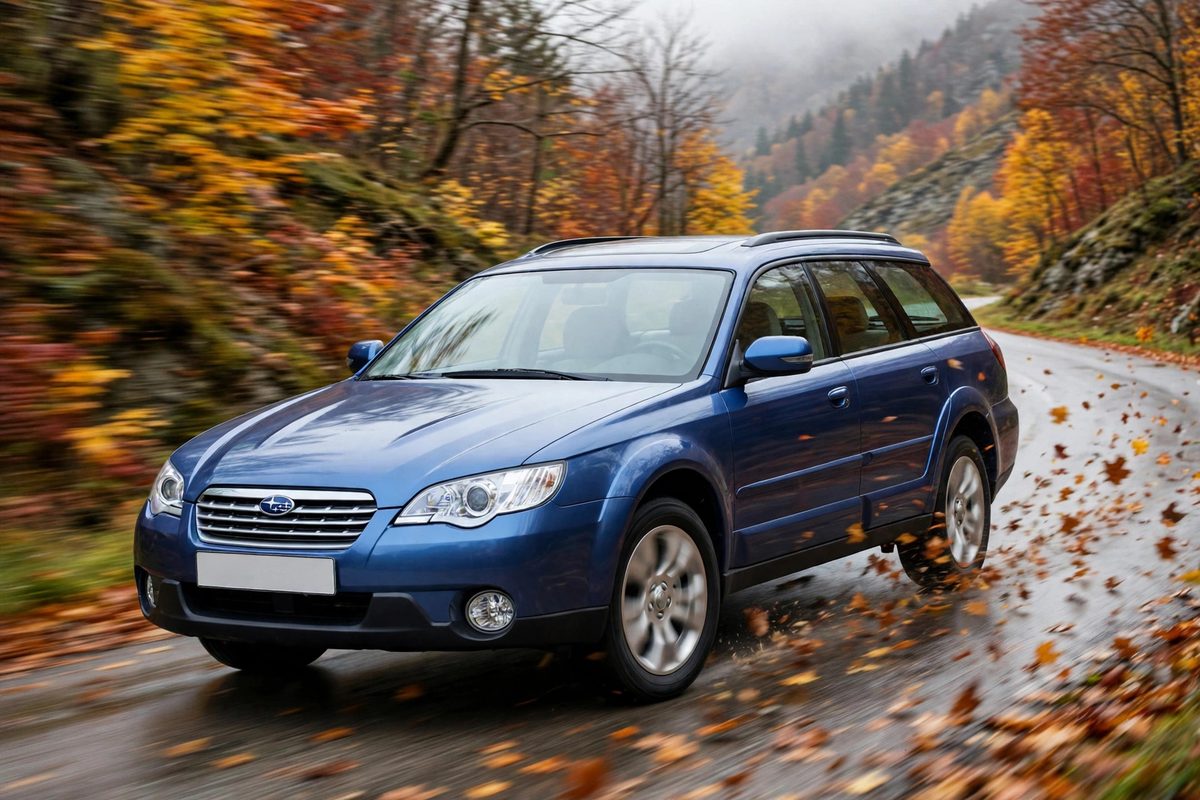
The third-generation Outback ran from 2005 to 2009, and the 2009 is the final year, carrying every running change Subaru made. Two trim changes mark the year: the L.L. Bean Edition is gone, replaced by the 3.0R Limited, and the 2.5i Premium was renamed the Special Edition. Stability control became standard across the whole lineup, and every trim except the base 2.5i gained a nine-speaker sound system.
That matters because the generation's known faults — and the fixes — are well documented by now. Consumer Reports rates the 2009's reliability as average, better than the below-average scores for the 2005–2008 cars, and several buyer guides call the 2008–2009 cars the most livable of the generation once the head gaskets are replaced. A 2009 with documented head gasket work and a fresh timing belt is a very different purchase from one without either.
Prices and Trims
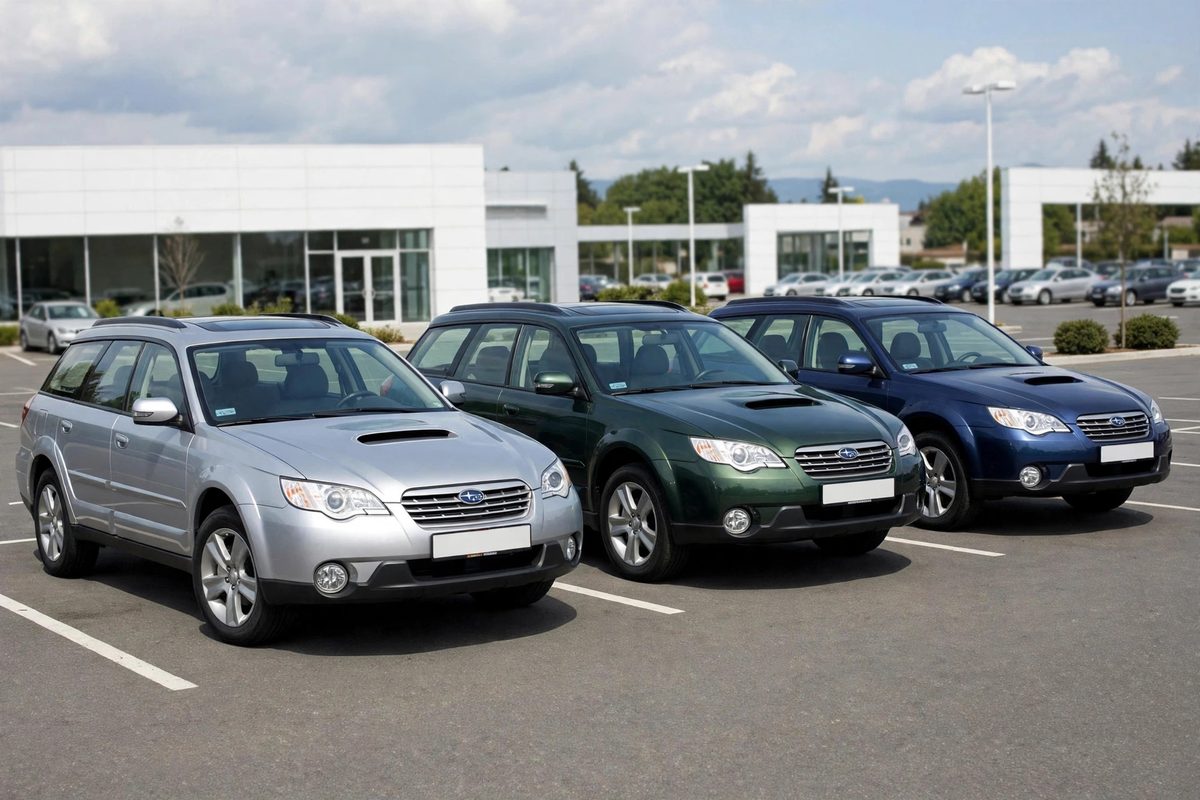
Subaru sold the 2009 Outback in five US trims, all wagons with standard all-wheel drive. The table shows each trim's starting MSRP when new, including destination as listed by Edmunds, next to Kelley Blue Book's current Fair Purchase Price. Individual cars vary with mileage and condition, so treat these as starting points, not quotes.
| Trim | Starting MSRP when new | KBB Fair Purchase Price today |
|---|---|---|
| 2.5i | $22,295 | About $4,075 |
| 2.5i Special Edition | $23,895 | Not listed separately by KBB |
| 2.5i Limited | $28,295 | About $3,700 |
| 2.5XT Limited | $31,595 | About $5,750 |
| 3.0R Limited | $32,095 | About $5,625 |
Two things stand out. First, the used market has nearly flattened the new-car price ladder: the gap between a used 2.5i and a used 2.5XT Limited is roughly $1,675, against more than $9,000 when new, so better-equipped cars are relatively good value today. Second, KBB's per-trim figures look odd — the Limited lists below the base car — which shows how much condition and mileage move prices at this age; CarGurus listings range from about $3,995 to $9,072. The 2.5i Special Edition is the value pick, adding the upgraded nine-speaker stereo, while navigation was a roughly $2,000 option that pushed the XT to $34,795 and the 3.0R to $34,095.
Engines, Performance and Real-World Driving
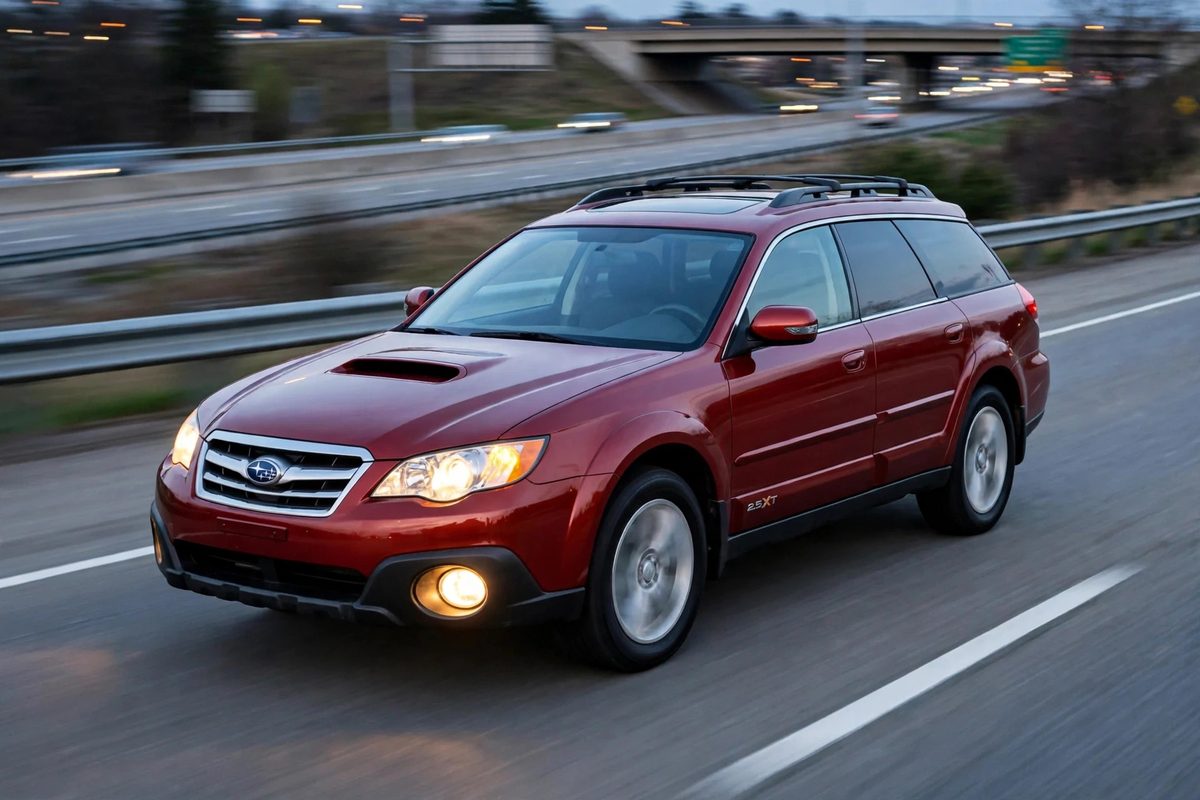
The standard 2.5-liter flat-four makes 170 horsepower and 170 lb-ft of torque, with a five-speed manual or a four-speed automatic. EPA figures are 20 mpg city and 27 highway with the manual, or 20 and 26 with the automatic, for 22 combined. It is the economy pick, but owners agree it feels underpowered when loaded, and the four-speed automatic is dated even by 2009 standards. CarGurus lists the base engine at 175 horsepower instead of 170; most sources, including Edmunds and Kelley Blue Book, say 170.
The 2.5XT Limited adds a turbocharged version of the same 2.5-liter, good for 243 horsepower and 241 lb-ft of torque, with a five-speed manual or a five-speed automatic and Subaru's SI-Drive system. It is the quick car of the range, but it needs premium fuel and strict oil changes — turbo failures from oil contamination and clogged banjo-bolt screens are documented on this engine. The 3.0R Limited takes a different route: a smooth 3.0-liter flat-six with 245 horsepower and 215 lb-ft, a five-speed automatic only, 17/24 mpg, and the strongest towing at 3,000 pounds with a trailer hitch.
Interior, Cargo and Everyday Practicality
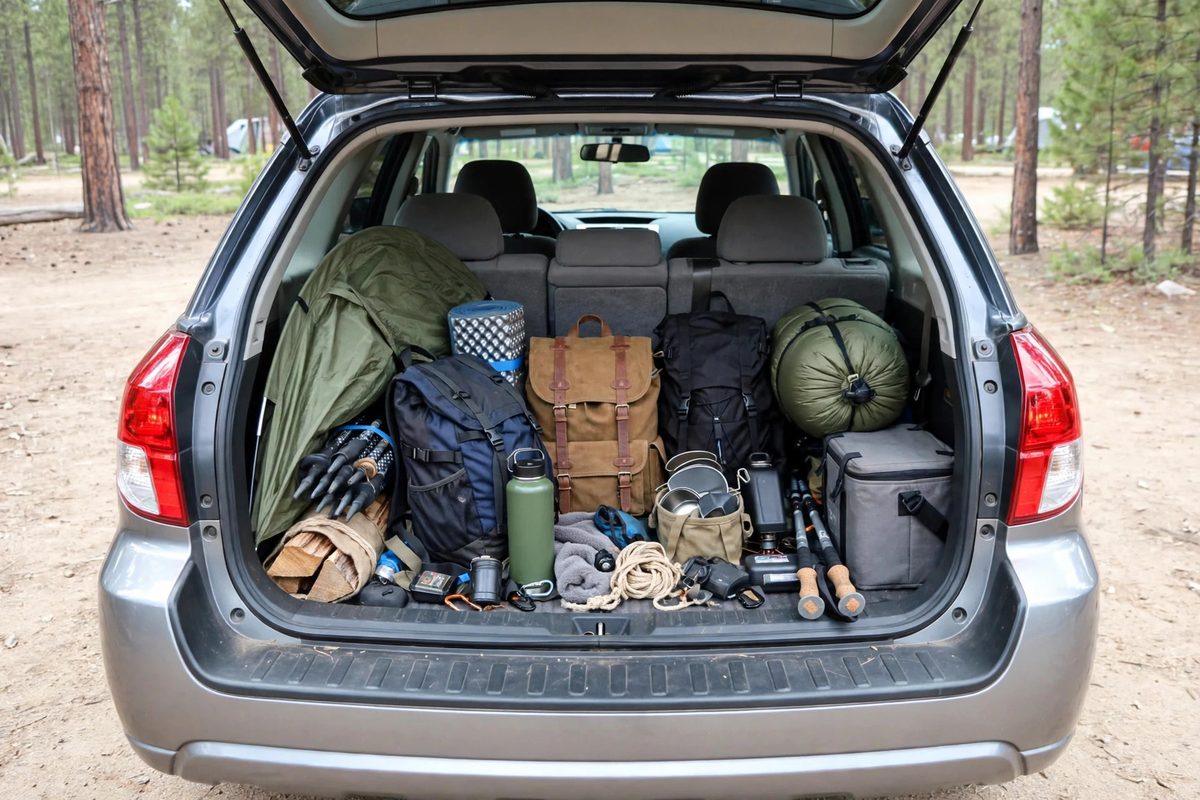
Inside, the 2009 Outback seats five in a comfortable cabin with about 97.4 cubic feet of passenger space. Cargo room is a class strength at 33.5 cubic feet behind the rear seats and 66.2 with the seats folded, with a low, nearly flat load floor and standard roof rails. Edmunds notes the back seat is rather tight, and there is no third-row seat — this is a wagon, not a three-row SUV.
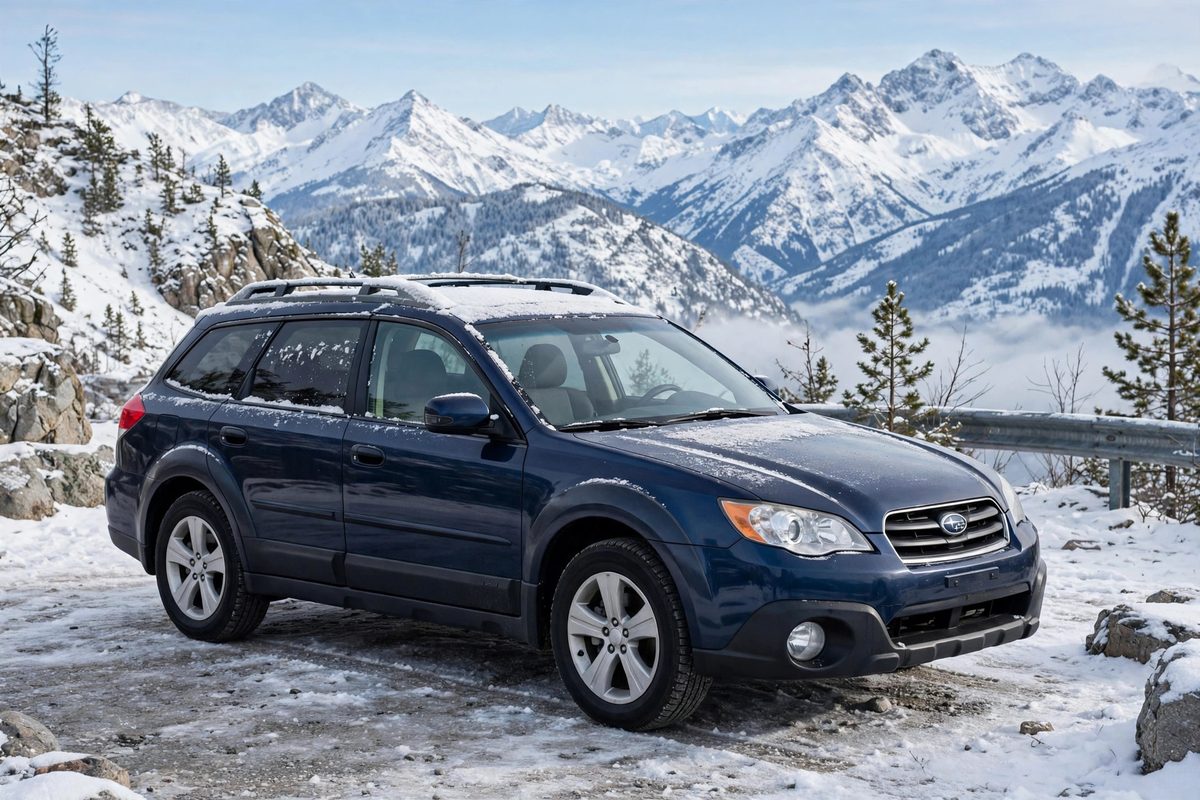
The base 2.5i is plainly equipped; other trims get the upgraded nine-speaker stereo, Limited models add leather, and navigation was optional. With 8.4 inches of clearance and standard AWD, it handles snow and dirt roads that stop ordinary wagons, while still driving like the Legacy wagon it is based on.
Safety and Driver Assistance
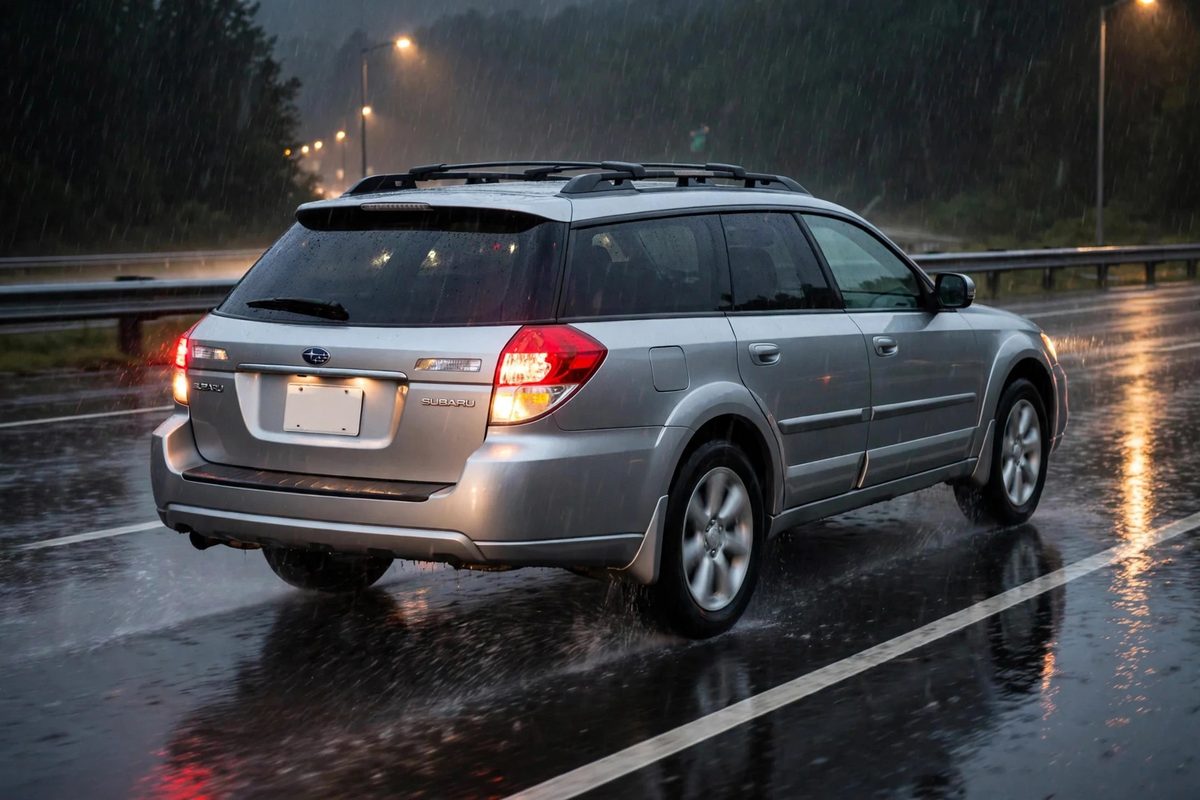
The 2009 Outback earned five stars from NHTSA in frontal- and side-impact crash tests, with four stars for rollover, and Good ratings from the IIHS. Stability control is standard across the lineup, along with antilock brakes, front-seat side airbags, full-length side curtains and anti-whiplash head restraints. There is no EyeSight or camera-based driver assistance — that arrived on later generations — so safety here is about the structure and stability control, not sensors.
At 17 years old, confirm every recall is closed before you buy: run the VIN through NHTSA's recall lookup and ask the seller for proof. Also check that no airbag warning light is lit and the stability control light behaves normally; both are expensive to chase at this age.
Ownership Costs and What to Check Used
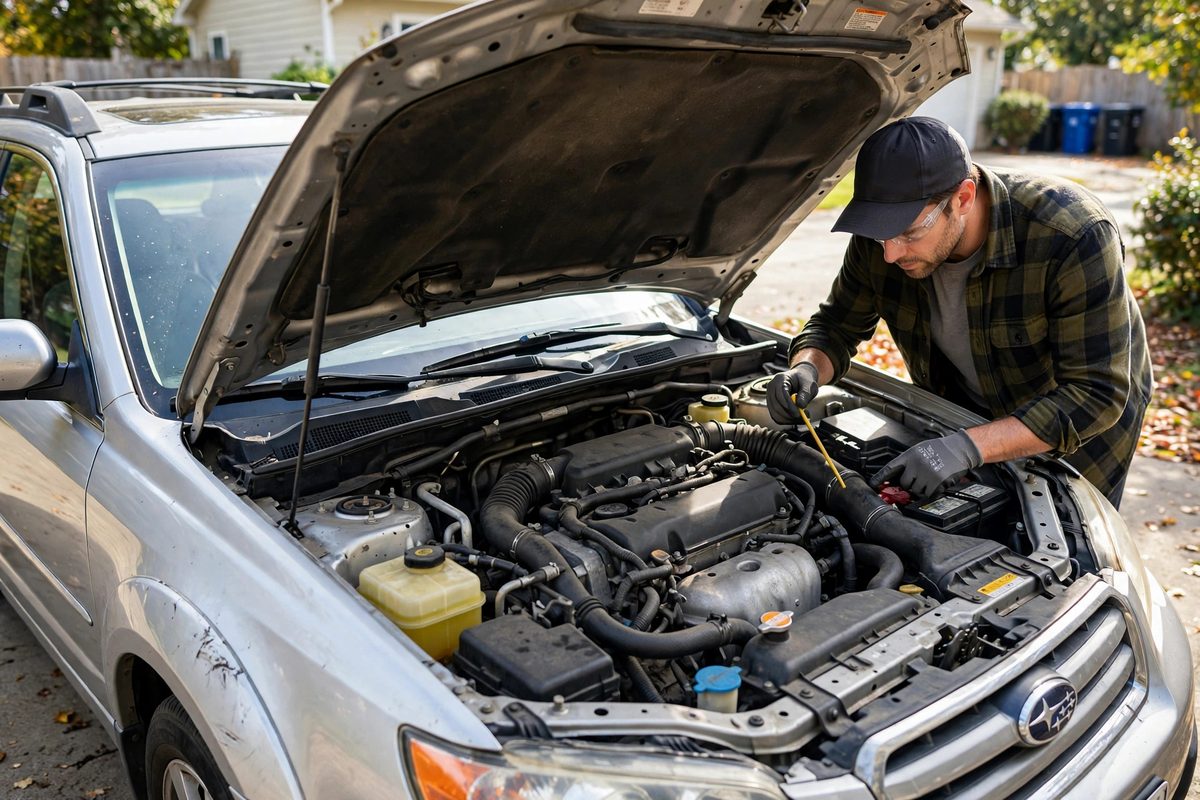
KBB owners rate the 2009 Outback 4.3 out of 5 across 419 reviews, Edmunds owners give the same 4.3 out of 5, and Consumer Reports rates its reliability as average. The defining issue is the naturally aspirated 2.5-liter's head gaskets: the factory composite gaskets leak externally, weeping oil and coolant from the cylinder heads, typically between 90,000 and 130,000 miles. Owners report repair bills of roughly $2,500 to $3,000, and a new engine runs about $4,500. The turbo XT uses stronger multi-layer steel gaskets and largely avoids this failure, and the 3.0-liter six is the most durable engine in the range.
Budget for the timing belt, due every 105,000 miles — a full job with water pump, tensioners and seals is the sensible way to do it. Owners also report rear suspension handling complaints on icy or rough roads with a full load, subframe rust in salty climates, and catalytic converter failures that owners say cost around $3,500 at an independent shop. At this age, condition and maintenance history matter more than trim, and a pre-purchase inspection on a lift is money well spent.
Before you buy a used 2009 Outback, check these items
- ✓Ask for receipts proving the head gaskets were replaced — ideally with multi-layer steel gaskets — and check for oil or coolant weeping at the cylinder heads.
- ✓Check the timing belt history; it is due every 105,000 miles, and a skipped belt can destroy this interference engine.
- ✓Look underneath for subframe rust and corroded brake lines, especially on cars from snowy regions.
- ✓On XT cars, ask about oil-change intervals and premium fuel use, and listen for turbo noise under boost.
- ✓Check the coolant level and look for oil film in it — both point to head gasket trouble.
- ✓Run the VIN through NHTSA's recall lookup and confirm every recall is closed.
- ✓Test-drive loaded on a rough road and listen for suspension clunks.
Pros
- Last year of the third generation, with every running change included.
- Standard AWD and 8.4 inches of clearance for snow and dirt roads.
- Big wagon cargo space: 33.5 cubic feet behind the seats, 66.2 folded.
- Five-star NHTSA frontal and side crash ratings, with stability control standard.
- The 3.0R six is the most durable engine in the range.
Cons
- Base 2.5-liter head gaskets commonly leak at 90,000–130,000 miles; repairs run about $2,500–$3,000.
- Base engine feels underpowered loaded, and the four-speed automatic is dated.
- Turbo XT needs premium fuel and strict oil changes; neglect can kill the turbo.
- Rear suspension complaints on icy roads with a full load; subframe rust is a known issue.
- No modern driver assistance — no EyeSight or blind-spot monitoring.
Frequently Asked Questions
How much does a used 2009 Subaru Outback cost?▾
Kelley Blue Book puts Fair Purchase Prices between about $3,700 and $5,750 at dealerships, while CarGurus lists an average asking price of about $6,759, with listings from roughly $3,995 to $9,072. Condition and mileage move the price more than trim at this age.
What is the MPG of the 2009 Subaru Outback?▾
The 2.5-liter is rated 20 mpg city and 26 highway with the automatic, or 27 highway with the manual, for 22 combined. The 2.5XT turbo is rated 18/24 mpg and the 3.0R six 17/24 mpg, both 20 combined. Expect real-world figures a little below the highway rating.
Is the 2009 Subaru Outback reliable?▾
Owners rate it 4.3 out of 5 on both KBB and Edmunds, and Consumer Reports rates its reliability as average — better than the 2005–2008 cars. The main risk is the base 2.5-liter's head gaskets, which commonly leak between 90,000 and 130,000 miles. Buy one with the gaskets replaced, a documented timing belt service, and a pre-purchase inspection.
Which 2009 Outback engine should I buy?▾
The 3.0-liter six is the safest bet: smooth, strong and largely free of head gasket trouble, though it uses the most fuel at 17/24 mpg. The turbo XT is the fun choice but needs premium fuel and careful maintenance. The base 2.5-liter is cheapest to buy and run, but only with proof the head gaskets were replaced.
How much can the 2009 Outback tow?▾
Up to 2,700 pounds with the 2.5-liter and the turbo, and 3,000 pounds with the 3.0R when a trailer hitch is fitted. The 2.5-liter handles a small utility trailer, but regular towers should choose the 3.0R or the XT for the extra torque.
The Bottom Line
Buy the 2009 Outback if you want the most sorted third-generation wagon at a used price, with standard all-wheel drive, 8.4 inches of clearance and top crash-test scores. The 3.0R Limited is the pick for the durable six-cylinder; the 2.5i Special Edition is the value buy among the four-cylinder cars. Whatever you choose, verify head gaskets, timing belt and recall history first.
Prices and specifications reflect Kelley Blue Book, Edmunds, CARFAX, CarGurus and IIHS figures checked in November 2026; used prices vary with mileage, condition and location. Confirm any car's history, recall status and condition with an independent inspection before buying.
Continue researching the Outback
Sources
- Kelley Blue Book: 2009 Subaru Outback Price, Value and Reviews
- Edmunds: 2009 Subaru Outback Review and Ratings
- CARFAX: 2009 Subaru Outback Review and Values
- CarGurus: 2009 Subaru Outback Trims and Prices
- IIHS: 2009 Subaru Outback Ratings
- Samarin's: Subaru Outback 2005–2009 Problems, Pros and Cons
- CarBuzz: 2009 Subaru Outback Pricing, Photos and Specs
- What Breaks: Subaru Outback BP (2005–2009) Problems and Buying Guide
A note on prices
Prices, trims, MPG figures and safety ratings change over time. Treat the figures here as a starting point and confirm the details with a dealer or the manufacturer's site before you buy.
Continue reading