Buying Guide · 8 min read
Subaru Outback Sport: The Impreza Wagon Explained
The Outback Sport was never an Outback trim: an Impreza wagon with two-tone paint and a raised ride, sold 1995–2011. Generations, engines, specs, used prices.
By Daniel Reyes ·
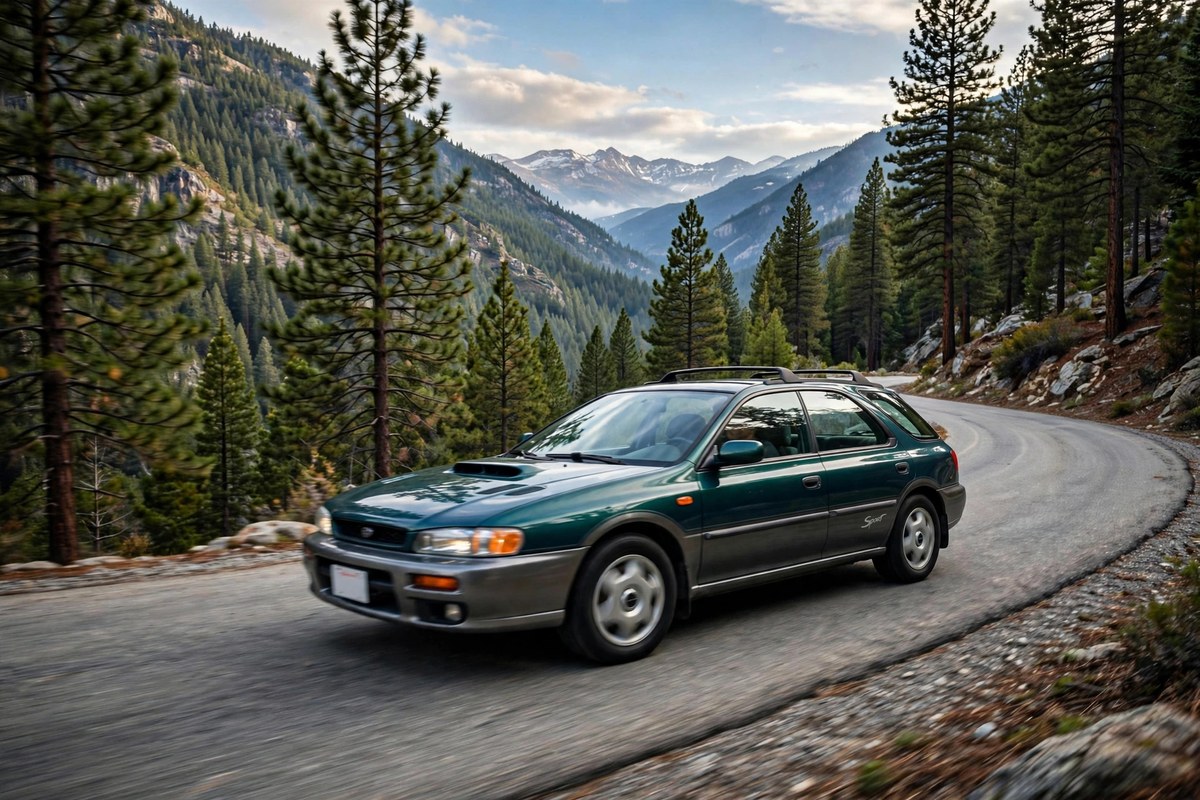
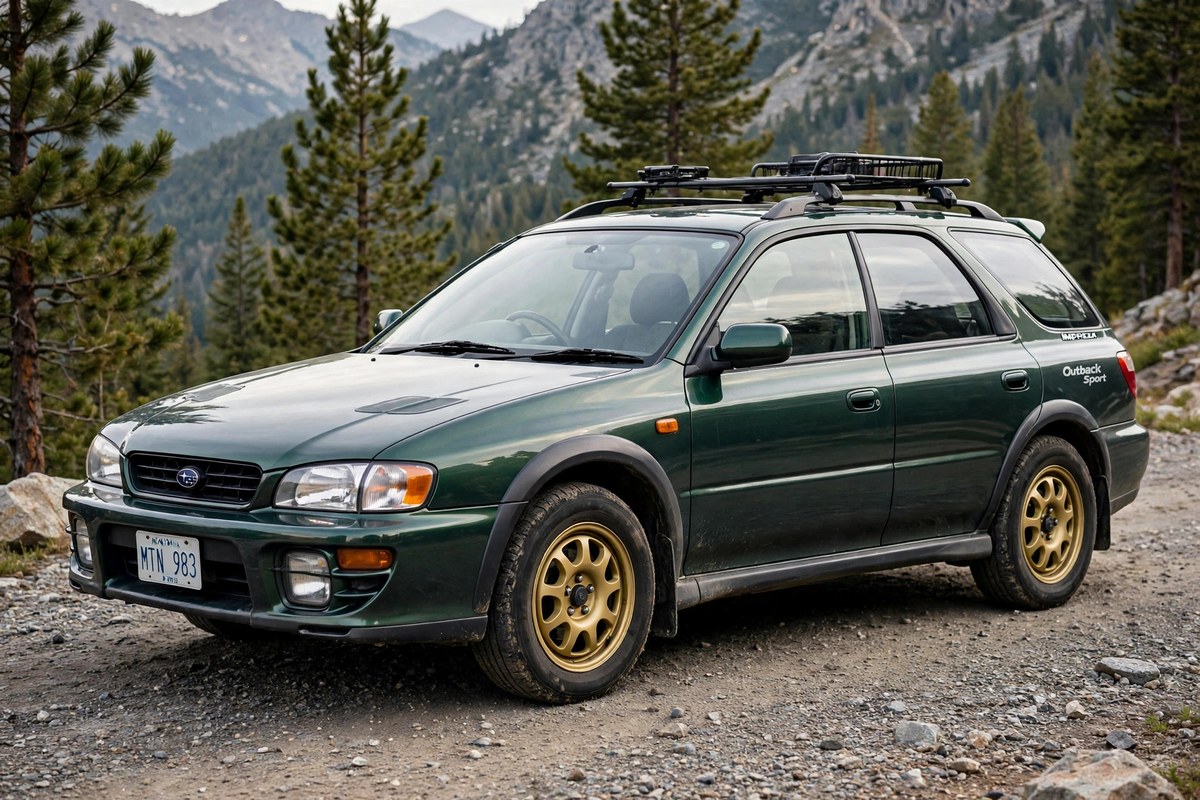
The Subaru Outback Sport was never a trim of the Subaru Outback. It was an Impreza wagon dressed with the Outback formula: two-tone paint, a raised ride, roof rails and tough trim, sold in North America only from 1995 to 2011. It was smaller and cheaper than the Legacy-based Outback, aimed at younger buyers, and ran through three Impreza generations before the XV Crosstrek replaced it.
Subaru Outback Sport at a Glance
| What to know | Outback Sport |
|---|---|
| Sold | 1995–2011 model years, North America only |
| Based on | Subaru Impreza wagon / hatchback |
| Generations | Three: 1995–2001, 2002–2007, 2008–2011 |
| Engines | 2.2L flat-four, then 2.5L flat-four |
| Drive | Symmetrical All-Wheel Drive, standard |
| Succeeded by | XV Crosstrek (2013) |
Subaru applied the Outback recipe to the smaller Impreza almost as soon as the Legacy Outback appeared for 1995. The formula was simple: take the ordinary Impreza wagon, add two-tone paint, raise the suspension a little, fit roof rails and tougher trim, and sell it as a mini-Outback. The mechanics were unchanged from the Impreza underneath, which is the key fact for buyers today: parts, engines and most problems are Impreza parts, engines and problems. Subaru never published separate production numbers.
Outback Sport vs Outback: Clearing Up the Name
| Outback Sport | Outback (Legacy-based) | |
|---|---|---|
| Based on | Impreza | Legacy |
| Size | Compact wagon / hatch | Midsize wagon / SUV |
| Ground clearance | About 6.3–6.5 in | 8.7 in (modern cars) |
| Engines | 2.2L / 2.5L flat-four | 2.5L flat-four, 3.6L / 2.4L turbo |
| Years | 1995–2011 | 1995–present |
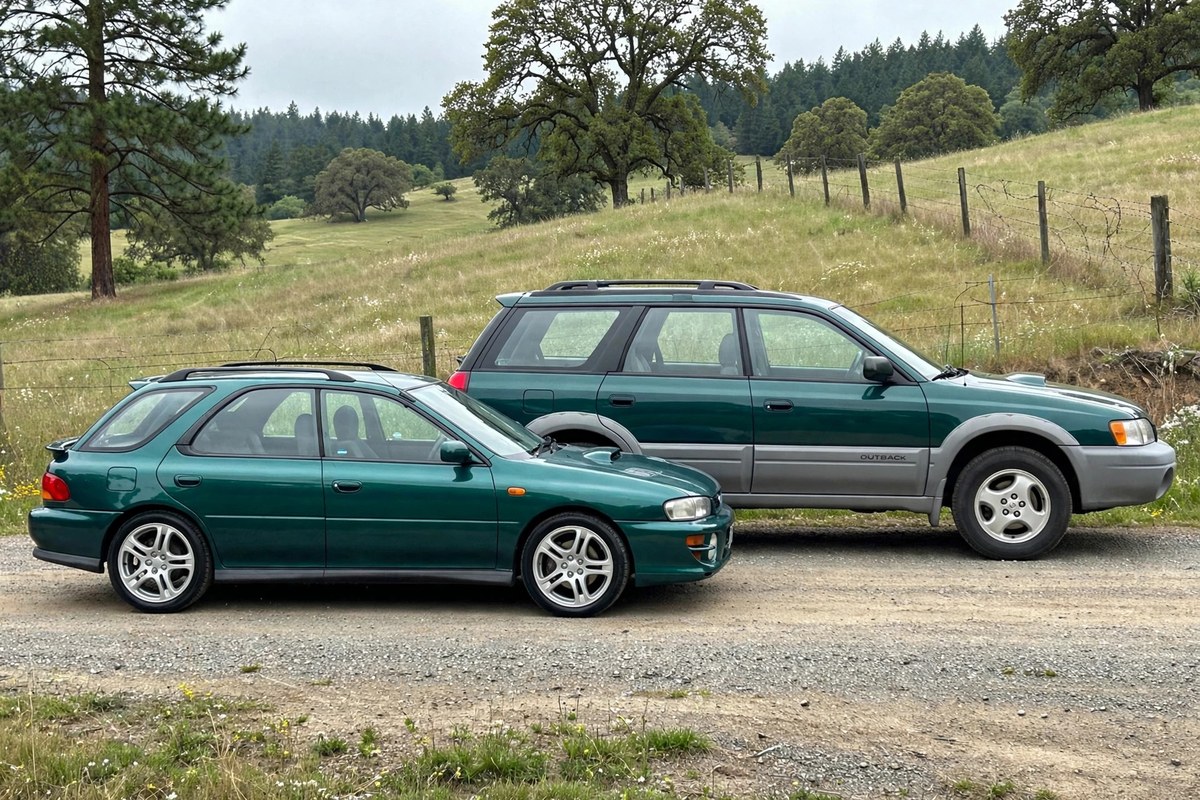
The confusion is understandable: Subaru used the Outback name for two different cars at once. The Outback itself is the Legacy-derived wagon, sold since 1995 and still in production. The Outback Sport is the Impreza-derived one, always the smaller, cheaper car. It also had less clearance than the name suggests: 6.3 inches at launch, 6.4–6.5 inches from 1997 with larger tyres, against 8.7 inches on a modern Outback. It was an appearance and equipment package on an Impreza, not a separate model line like the WRX.
First Generation (1995–2001): The Original Outback Sport
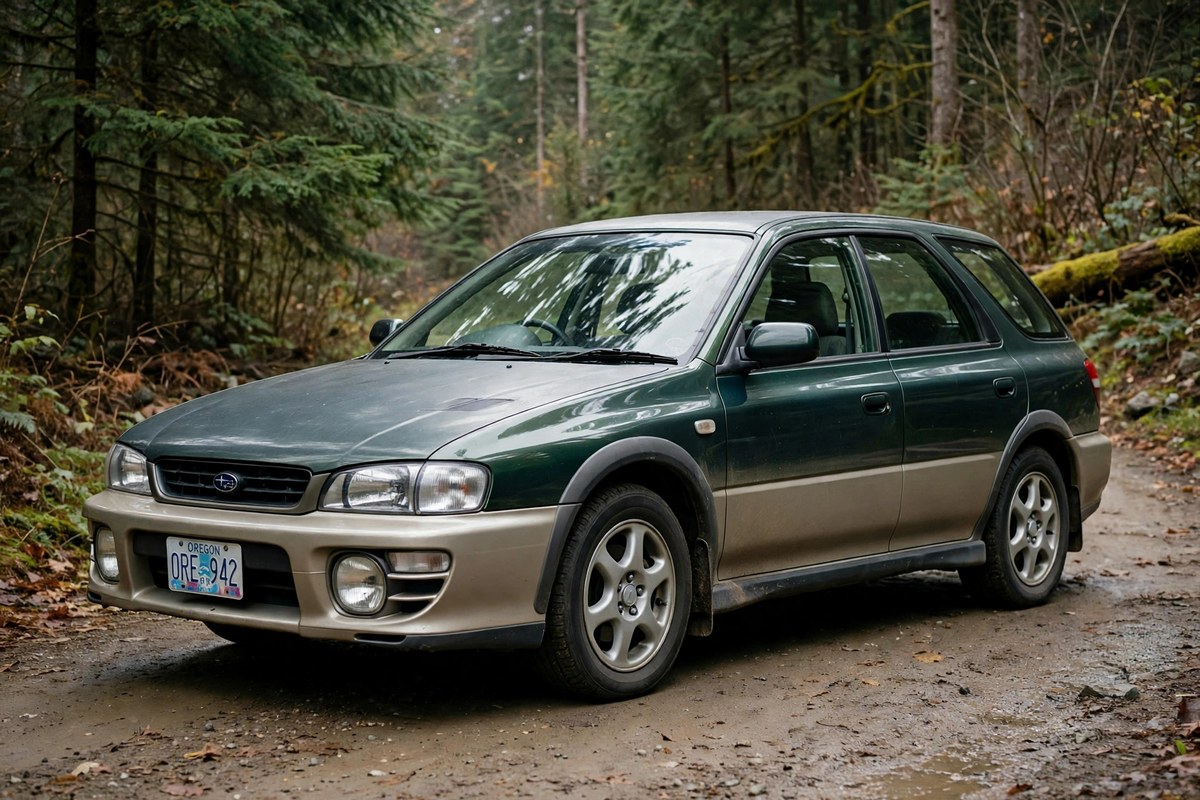
The first Outback Sport arrived for 1995, based on the Impreza L wagon with the Active Safety Group: standard all-wheel drive and anti-lock brakes on all four wheels. The earliest cars are the plainest, with a flat bonnet, modest trim and either the 1.8-litre EJ18 or the 2.2-litre EJ22 flat-four. The 2.2 is the engine to look for: 135 hp in early form, rising to 142 hp with 149 lb-ft in the Phase II engine of 2000–2001, rated 22/29 mpg with a manual gearbox. The name became a standalone badge for 1997, when larger tyres lifted clearance to 6.4–6.5 inches. The EJ22's head gaskets rarely give trouble, making 2.2 survivors the reliability pick.
Second Generation (2002–2007): The Bugeye to Hawkeye Years
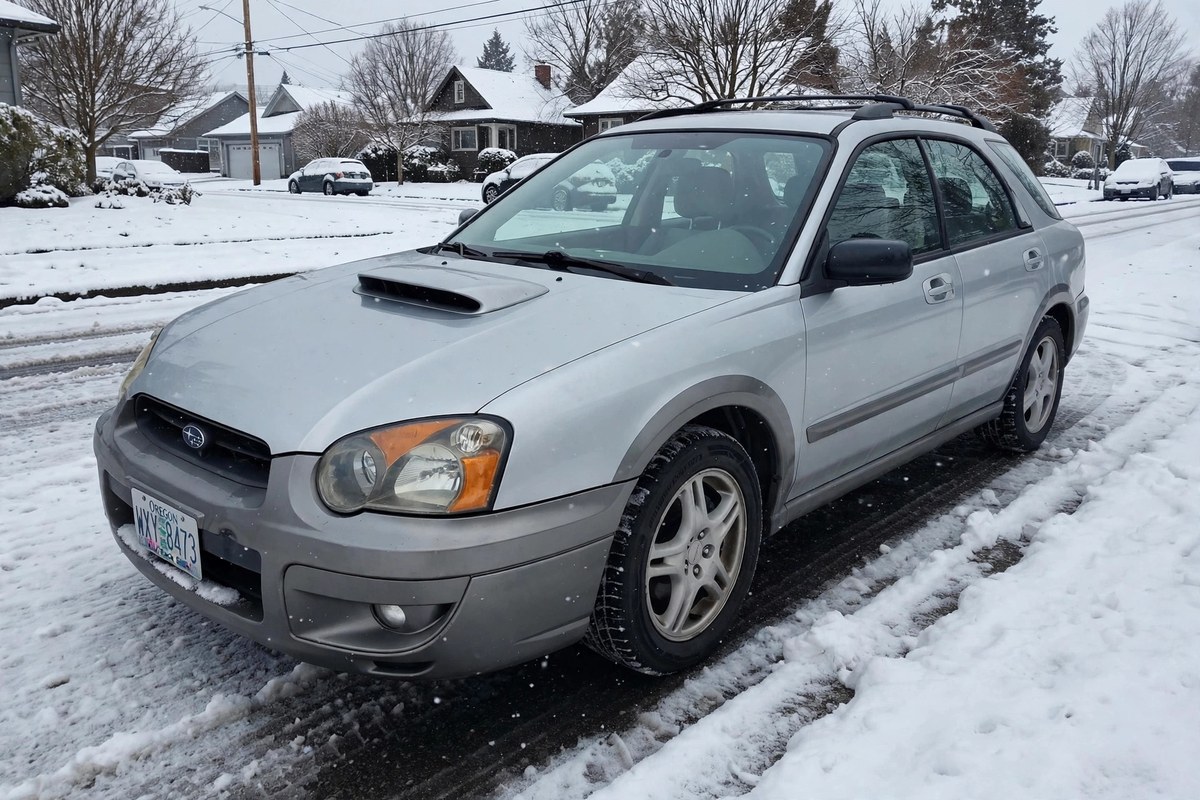
The second generation arrived for 2002 on the new Impreza platform, with a stiffer, heavier and safer shell and the 2.5-litre EJ25 as the only engine. Output was 165 hp from the EJ251 in 2002–2005, then 173 hp from the EJ253 with i-AVLS variable valve lift in 2006–2007. Enthusiasts know these cars by their headlights: bugeye for 2002–2003, blobeye for 2004–2005 and hawkeye for the 2006–2007 facelift. The later cars also got a bonnet scoop, but it is decorative on the non-turbo Outback Sport, worth knowing before a seller prices it as a performance feature.
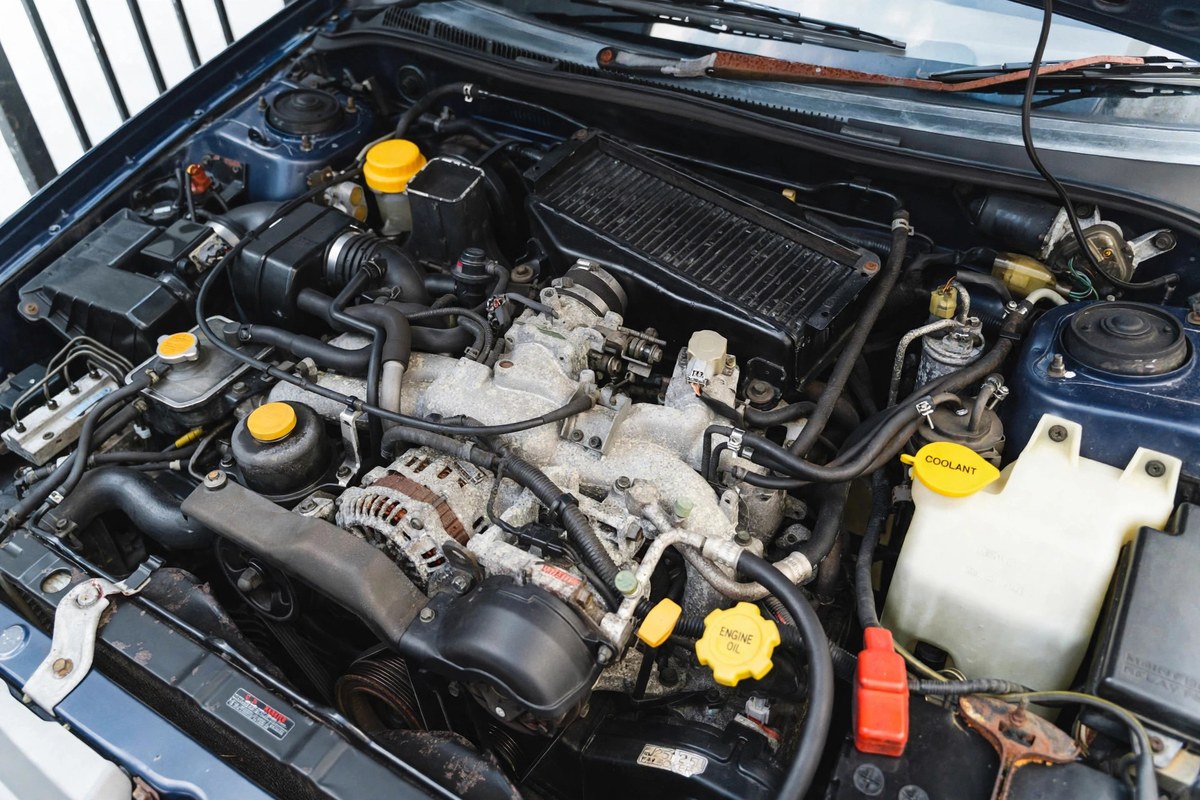
The trade-off for the bigger engine is the EJ25's head gasket record. The single-cam EJ25 leaks externally rather than failing internally like the earlier twin-cam EJ25D, but it still needs watching past 100,000 miles, and a car with no head gasket work by 150,000 miles should be budgeted as if the job is coming. Expect real-world economy around 20 mpg combined, noticeably thirstier than the 2.2 cars. The 2006–2007 hawkeye cars are the pick of this generation: the most refined interior and the stronger EJ253.
Third Generation (2008–2011): The Last Outback Sport
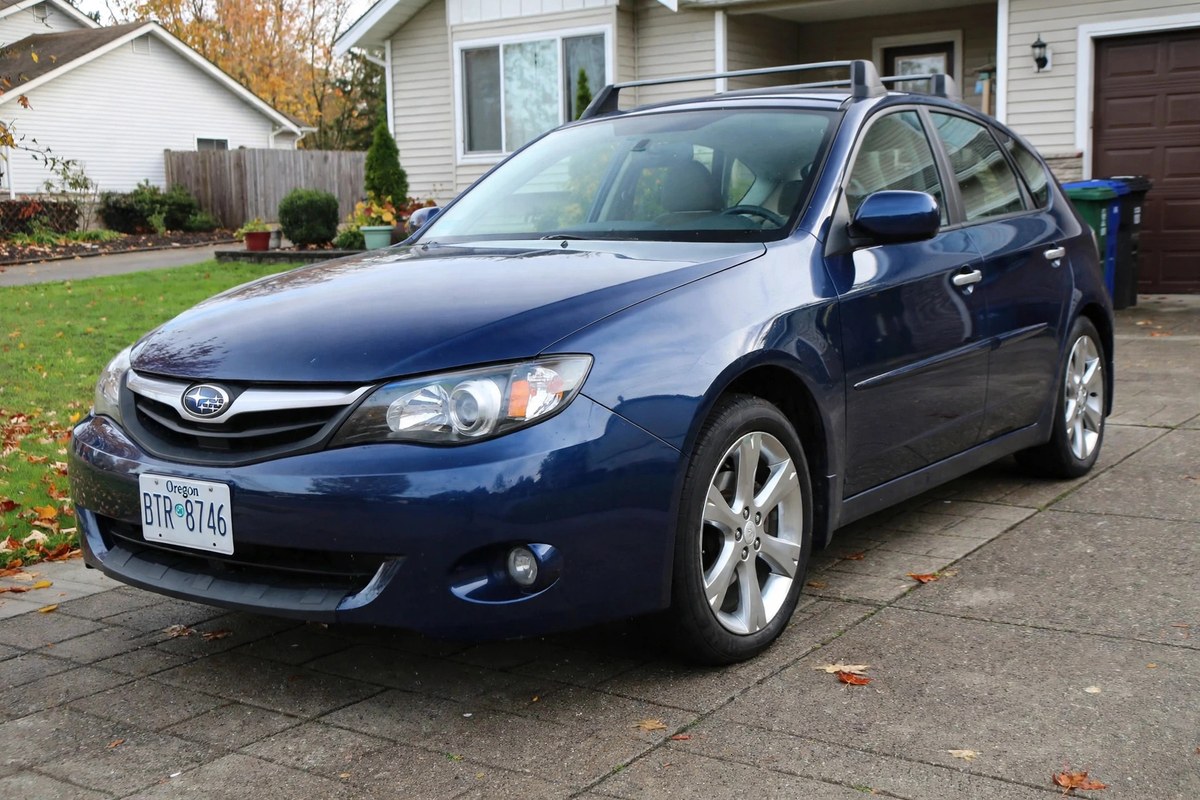
The third generation arrived for 2008, and it changed the body shape: the wagon was gone, replaced by a five-door hatchback on the new narrow-body Impreza platform. The engine stayed the 2.5-litre EJ253, now rated 170 hp, with a five-speed manual or four-speed automatic and standard all-wheel drive. The same EJ25 head gasket and oil consumption questions apply. Subaru ended the name after 2011 and relaunched the idea as the XV Crosstrek for 2013, raised higher and sold as a crossover. If you want the newest Outback Sport, this is it, but the 2006–2007 wagon is the better car for most buyers.
Engines, MPG and Specs by Generation
| Generation | Years | Engine | Power | MPG (city/hwy) |
|---|---|---|---|---|
| First (GF wagon) | 1995–2001 | 2.2L EJ22 | 135–142 hp | 22/29 (2001, manual) |
| Second (GG wagon) | 2002–2005 | 2.5L EJ251 | 165 hp | About 20 combined* |
| Second (GG wagon) | 2006–2007 | 2.5L EJ253 | 173 hp | About 20 combined* |
| Third (GH hatch) | 2008–2011 | 2.5L EJ253 | 170 hp | About 20 combined* |
Every Outback Sport used a naturally aspirated flat-four with standard all-wheel drive, a five-speed manual or a four-speed automatic, and regular unleaded fuel. The 2.2-litre cars are the most economical, at 22/29 mpg for the 2001 manual, while the 2.5-litre cars return around 20 mpg combined in real-world driving. The asterisk marks real-world figures, not EPA ratings. Clearance stayed near 6.3–6.5 inches throughout, and the tank held 15.9 gallons. None was ever turbocharged: any seller claiming a factory-turbo Outback Sport is describing a modified car or a WRX.
Used Outback Sport Prices in 2026
| Car | Typical price, Nov 2026 |
|---|---|
| 2006 Outback Sport (KBB fair purchase) | $2,200 |
| 2006 Outback Sport (private party) | $1,550–$2,050 |
| 2007 Outback Sport wagon (KBB) | $3,750 |
| 2005 non-turbo, average condition | $3,000–$5,500 |
| 2005, under 120k miles | $4,000–$5,000 |
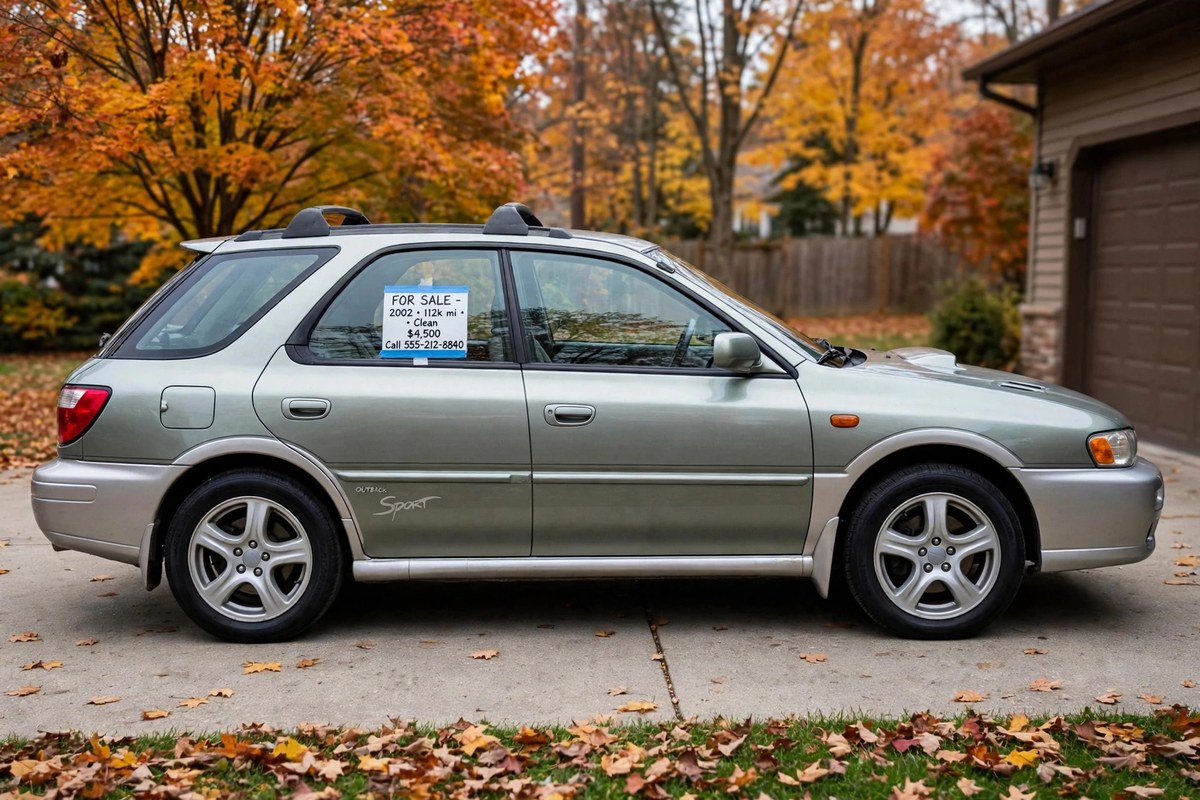
Outback Sports are cheap now because they were cheap cars often run as disposable winter beaters. Kelley Blue Book puts a 2006 Outback Sport Special Edition at a $2,200 Fair Purchase Price, with private-party values of $1,550–$2,050 and trade-in of $725–$1,050. A 2007 wagon is listed at $3,750. In the wider market, 2005 non-turbo Imprezas in average condition sit at $3,000–$5,500, with clean cars under 120,000 miles at $4,000–$5,000 and well-kept wagons asking $5,000–$8,000. Buy on condition, not on year: a sorted 2001 2.2 car is worth more than a neglected 2007.
What to Check Before You Buy a Used Outback Sport
Outback Sport pre-purchase checks
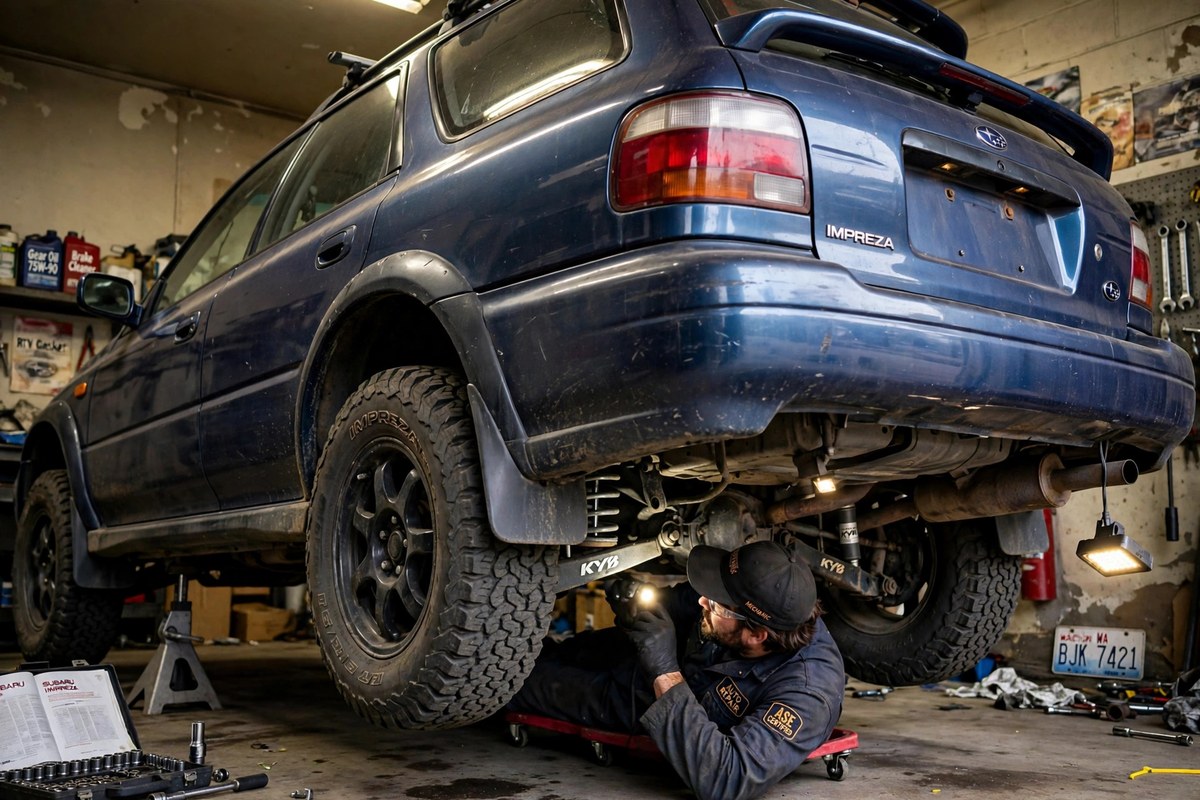
- ✓Head gaskets (EJ25 cars): look for oil or coolant weeping at the head-to-block joint, and ask for receipts. Failure typically comes at 100,000–150,000 miles; budget $1,500–$2,500.
- ✓Timing belt: the EJ engines are interference designs, so a snapped belt destroys the motor. Confirm a replacement by 100,000–120,000 miles, with the water pump and tensioners done too.
- ✓Oil consumption: burning more than 1 quart per 1,500 miles is a red flag, as are white smoke or coolant loss.
- ✓Rust: check the rear subframe, sills, rear arches and suspension mounts, especially on salt-belt cars.
- ✓Tyres: all four must match in brand, model and tread depth. Mismatched tyres damage the all-wheel-drive system.
- ✓Paperwork: service records matter more than mileage. A car with gasket and belt receipts is worth a premium.
The inspection matters more than the generation. The EJ22 cars are the safest bet mechanically, the 2006–2007 hawkeye wagons are the best all-rounders, and the 2008–2011 hatchbacks are the newest but no more reliable. Whatever you buy, get an independent inspection: at $2,000–$5,000, a $150 inspection is the cheapest money in the deal. Walk away from any car with overheating history, milky oil, a slipping automatic or mismatched tyres.
Frequently Asked Questions
Is the Subaru Outback Sport the same as the Subaru Outback?▾
No. The Outback Sport was an Impreza-based compact wagon sold from 1995 to 2011, while the Outback is a larger Legacy-based wagon sold since 1995 and still in production. The Sport was smaller, cheaper and aimed at younger buyers.
What engine does an Outback Sport have?▾
The 1995–2001 cars used the 2.2-litre EJ22 flat-four with 135–142 hp, and the 2002–2011 cars used the 2.5-litre EJ25 with 165–173 hp. No Outback Sport was ever turbocharged from the factory.
How much is a used Subaru Outback Sport worth in 2026?▾
Most sell for $2,000–$5,000. Kelley Blue Book lists a 2006 Outback Sport at a $2,200 Fair Purchase Price and a 2007 wagon at $3,750, while well-kept wagons ask $5,000–$8,000. Condition matters more than model year.
What goes wrong with the Outback Sport?▾
The EJ25 engine's head gaskets typically need attention at 100,000–150,000 miles, with repairs of $1,500–$2,500. Also check the timing belt by 100,000–120,000 miles, oil consumption, salt-belt rust and mismatched tyres.
What replaced the Subaru Outback Sport?▾
The XV Crosstrek replaced it for 2013, renamed Crosstrek for 2016. It is the same idea, an Impreza-based car with a raised ride and rugged trim, but sold as a taller crossover.
The Bottom Line
The Outback Sport is the Outback idea at Impreza scale: a tough-looking, all-wheel-drive wagon that was cheap when new and is cheaper now. The smart buy is a 2000–2001 car with the 2.2-litre engine, or a 2006–2007 hawkeye wagon with the 173 hp EJ253, provided the head gaskets and timing belt are documented. Pay $2,000–$5,000 for a good one, and get an inspection first. Bought right, it is one of the cheapest ways into a capable, snow-proof Subaru.
Related Guides
Sources
- Wikipedia: Subaru Outback
- Classic Listings: Impreza Outback Sport Buyer's Guide
- Classic Listings: Subaru Impreza Buyer's Guide
- AutoEvolution: Subaru Outback, From Quirky Wagon to Beloved Companion
- Kelley Blue Book: 2006 Impreza Outback Sport Values
- Kelley Blue Book: 2007 Impreza Prices
- Cars101: 2001 Impreza Outback Sport Specs
- TrueDelta: Subaru Impreza / Outback Sport MPG
A note on prices
Prices, trims, MPG figures and safety ratings change over time. Treat the figures here as a starting point and confirm the details with a dealer or the manufacturer's site before you buy.
Continue reading