Cost & Ownership · 9 min read
Subaru Outback Battery: Size, Cost & Replacement Guide
Most Outbacks take a Group 25 battery; 2020 and newer take a Group 47. Expect $140–$240 for the part, $180–$300 fitted, and a 3–5 year life.
By Raza ·
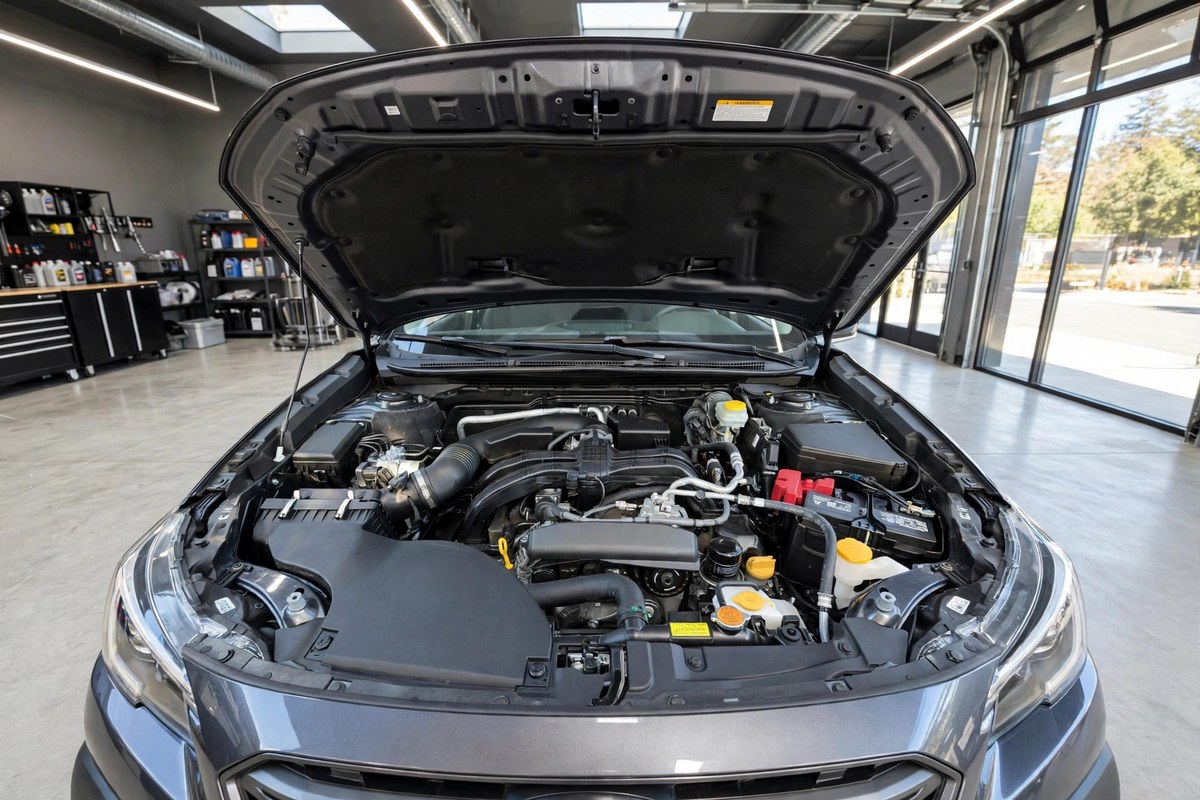
Most Subaru Outbacks use a Group 25 battery — but if yours is a 2020 or newer, it takes a Group 47 instead, and getting that wrong is the single most common battery mistake Outback owners make. The battery sits under the hood in the engine bay on every generation, and a replacement part costs roughly $140 to $240, or about $180 to $300 fitted at a shop. Most Outback batteries last three to five years, though the 2016–2019 cars have a well-documented drain problem that can kill a battery much sooner. This guide covers the right group size and CCA for every model year, what a replacement should cost, the warning signs of a dying battery, and how to swap one yourself in about 20 minutes.
Subaru Outback Battery at a Glance
| What to know | Outback battery |
|---|---|
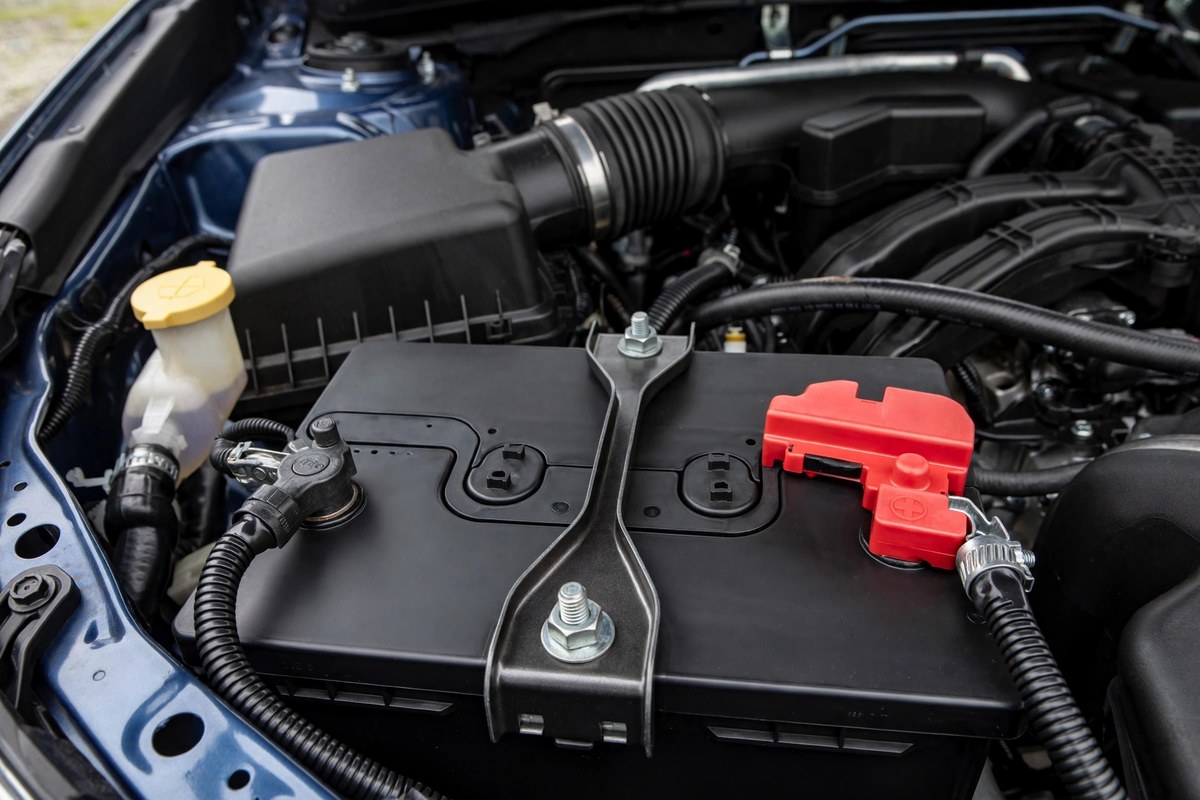
| Battery location | Under the hood, in the engine bay (every generation) |
| Group size (2010–2019) | Group 25, 550–720 CCA |
| Group size (2020–present) | Group 47 (H5/LN2), 650–680 CCA |
| Older Outbacks | Group 25 or 35 — check the tray |
| Battery part cost | $140–$240 |
| Fitted cost at a shop | Roughly $180–$300 total |
| Typical lifespan | 3–5 years |
| Factory type (2020+) | EFB; AGM is the popular upgrade |
One warning before you shop: the sources we checked disagree slightly on cold-cranking amps for the Group 25 cars — one catalog lists 550–720 CCA, the other 550–600 CCA. Treat those as ranges, match or beat the CCA printed on your current battery, and confirm the group size against the tray or your VIN before you buy.
Battery Size by Model Year
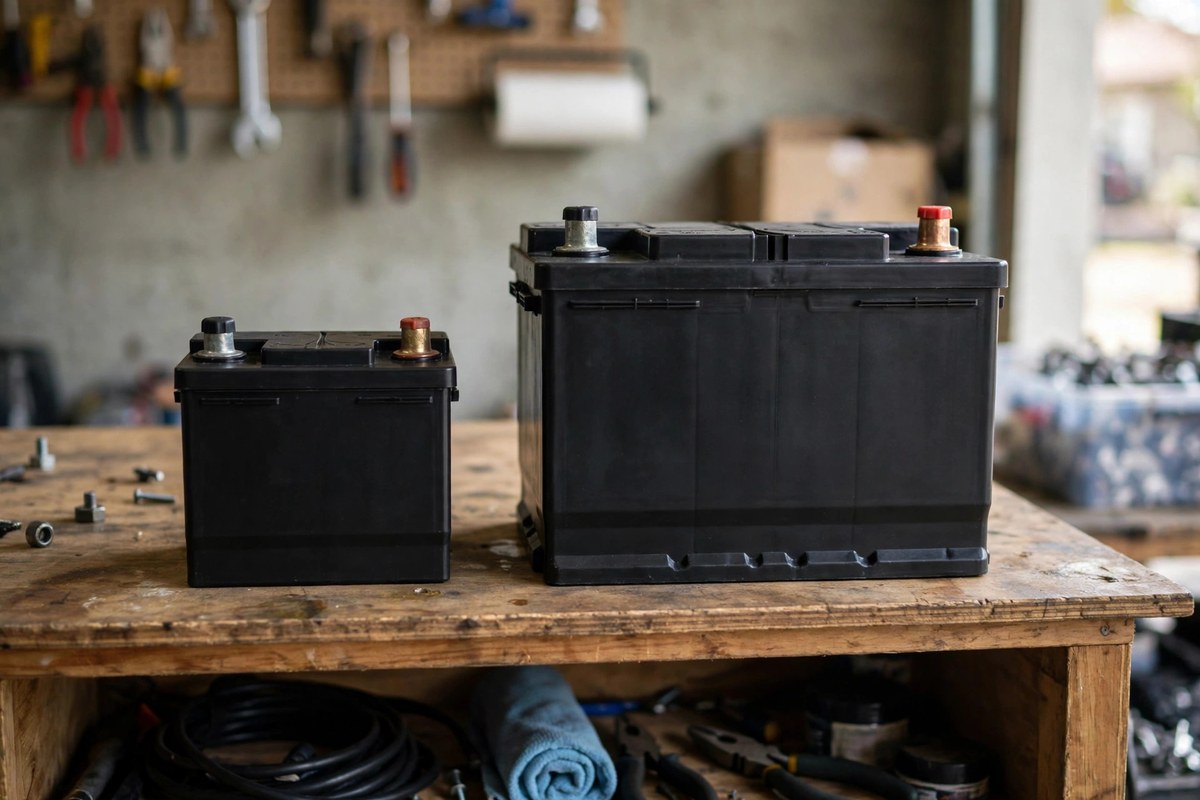
Group size is the battery's physical footprint and terminal layout. If it does not match the tray, it does not fit, whatever the label promises. The Outback changed group sizes with the 2020 redesign, so the year split below is the first thing to check. Within each group, buy at least the factory CCA — more is fine, less is not.
| Model years | Group size | CCA | Notes |
|---|---|---|---|
| 1995–2009 | Group 25 or 35 | Check the tray | Older cars vary — confirm by tray or VIN |
| 2010–2014 | Group 25 | 550–720 CCA | Standard fit for the fourth generation |
| 2015–2019 | Group 25 | 550–720 CCA | Drain-prone years — see the section below |
| 2020–present | Group 47 (H5/LN2) | 650–680 CCA | Factory EFB; AGM is the popular upgrade |
For a sense of how far batteries have come, the 1999 Outback's factory battery was rated at just 490 CCA. A modern Group 25 replacement delivers far more cranking power than the original ever did, which is one reason a fresh battery can make an older Outback feel like a different car on a cold morning.
How Much Does a Subaru Outback Battery Cost?
The battery itself costs $140 to $240 for most Outbacks, and a shop will typically charge roughly $180 to $300 all in, including fitting. Shelf prices tell the same story: at O'Reilly in October–November 2026, batteries for 2010–2019 Outbacks ran $214.99 to $234.99, while 2020-and-newer cars ran $234.99 to $264.99. The newer Group 47 cars cost more because the factory EFB and AGM batteries are simply more expensive units.
| What you pay for | Typical cost |
|---|---|
| Battery part (most Outbacks) | $140–$240 |
| Fitted at a shop, total | Roughly $180–$300 |
| 2010–2019, O'Reilly shelf price | $214.99–$234.99 |
| 2020+, O'Reilly shelf price | $234.99–$264.99 |
| AGM upgrade (start-stop cars) | $180–$350 |
Prices vary by retailer, region and brand, and the cheapest battery is rarely the best value on a car that drains batteries. If your Outback is a 2016–2019 model, spending a little more on a higher-CCA or AGM battery is usually money well spent — and fitting it yourself, which takes about 20 minutes, saves the labour charge entirely.
Signs Your Outback Battery Is Dying
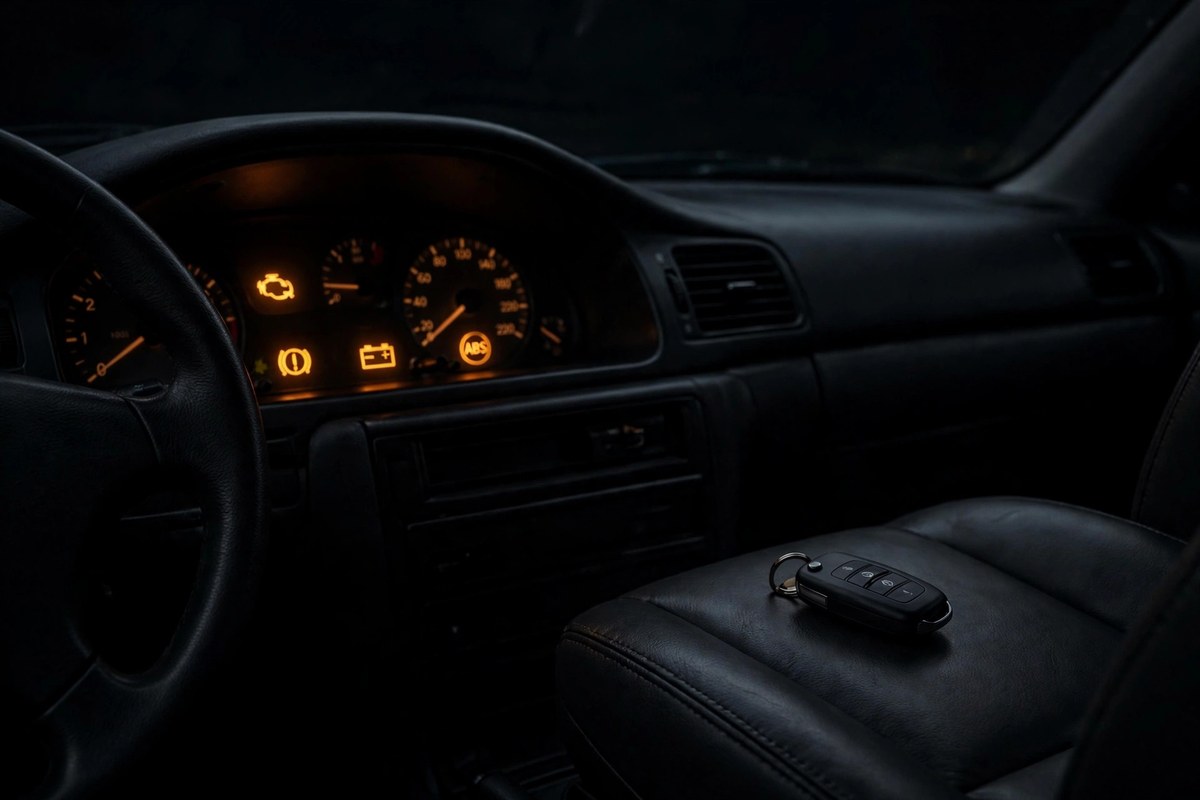
A dying battery rarely fails without warning — it usually complains for weeks first. The classic sign is a slow, laboured crank that gets worse in cold weather, when the engine needs the most power and the battery can deliver the least. You may also hear a rapid clicking when you turn the key, or nothing at all, while the dashboard lights up and then fades.
Watch for dim headlights, dashboard warning lights, and the stop-start system refusing to engage — the car disables it when the battery is too weak to restart reliably. Electrical glitches are another tell: the infotainment screen resetting itself, windows moving slowly, or the locks acting up. And age alone is a warning: if the battery is four or more years old, or the car has needed a jump start recently, have it load-tested before winter rather than after a no-start morning.
The Outback Battery-Drain Problem
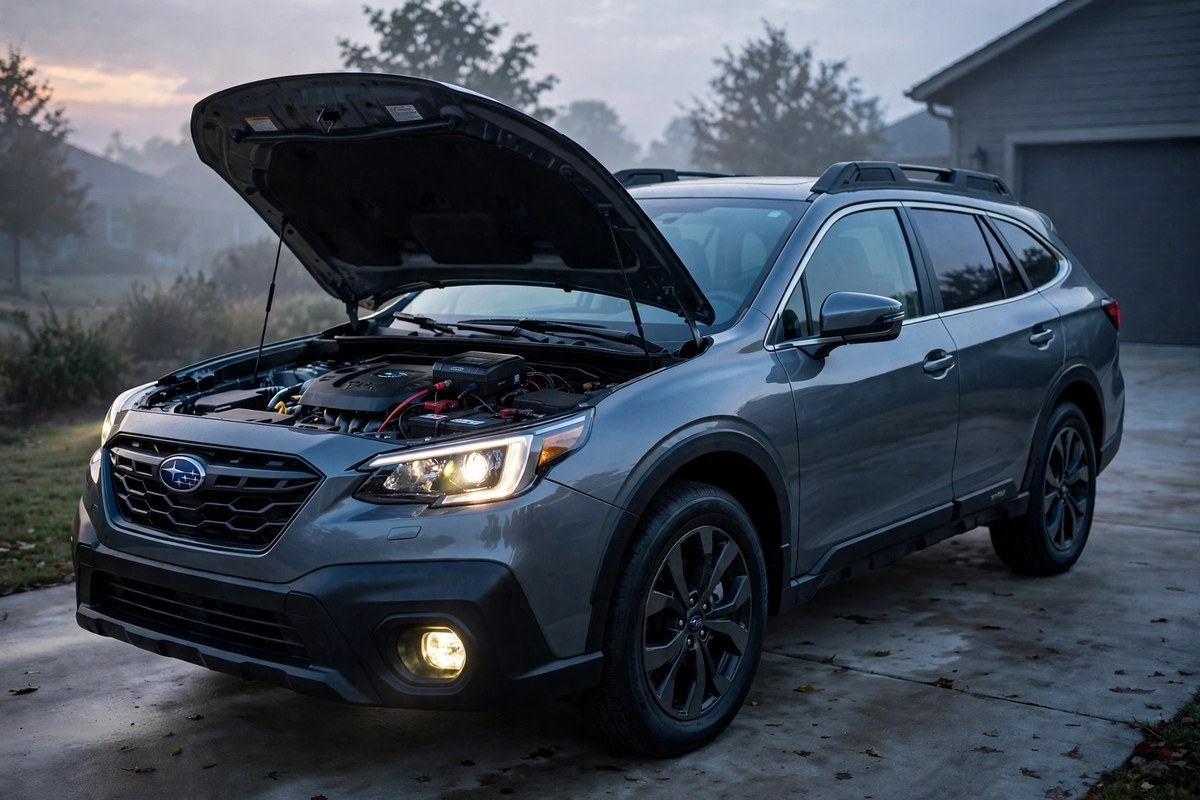
The Outback has a genuine, well-documented battery-drain problem — and the numbers are striking. NHTSA holds 9,799 complaints for 1995–2026 Outbacks, and in 1,369 of them (14.0%) the driver says the battery died, drained, needed a jump or had to be replaced. That is about 8.6 times the usual share across vehicles. The worst years are 2017, with 330 battery complaints out of 921 total; 2019, with 277 out of 1,036; and 2016, with 233 out of 645.
The detail inside those complaints is just as telling. Of the 1,369 battery complaints, 517 mention a jump start, 620 mention a replaced battery, and 139 owners report going through more than one battery. Owners often trace the drain to parasitic draw and charging logic that never fully recharges the battery on short trips. Note that NHTSA lists no recall on these model years for the 12-volt battery, so this is a problem to manage rather than one a dealer will fix for free — a parasitic-draw test at a good independent shop is the right first step.
| Model year | Battery complaints | Share of all complaints |
|---|---|---|
| 2017 | 330 | of 921 |
| 2019 | 277 | of 1,036 |
| 2016 | 233 | of 645 |
How to Replace the Battery Yourself
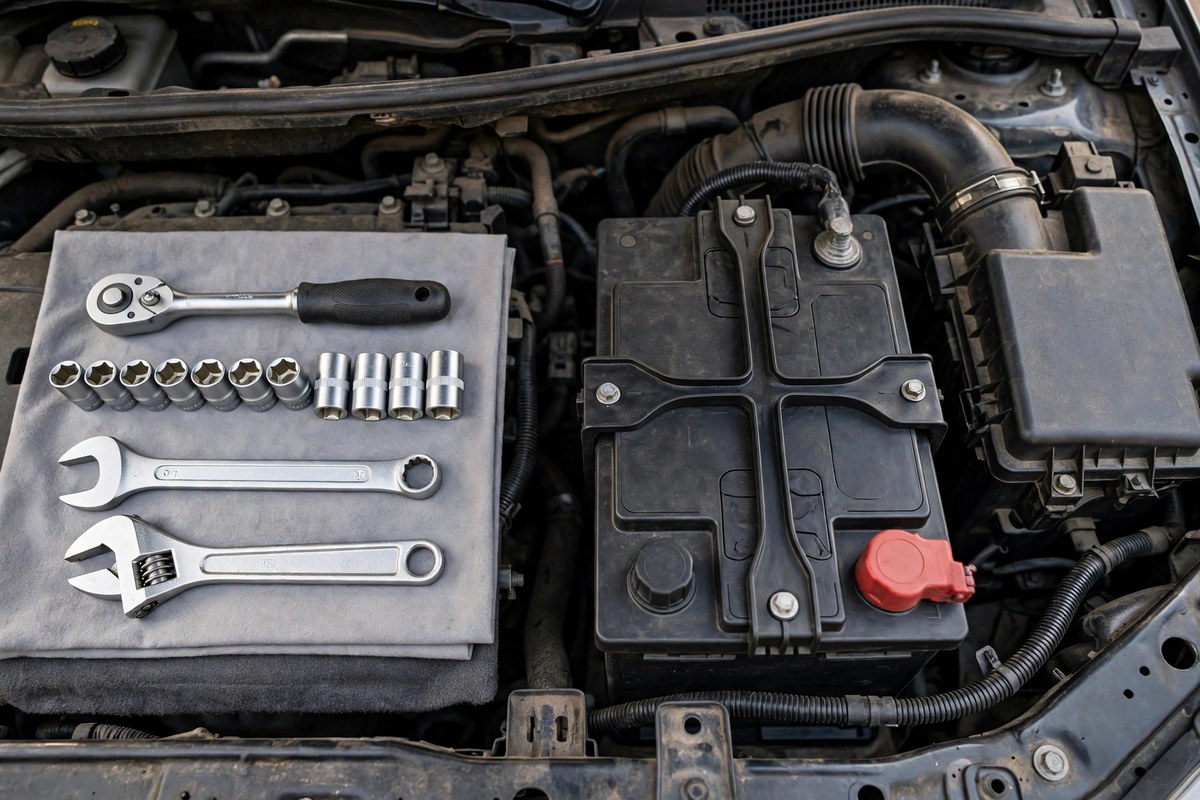
Replacing an Outback battery is one of the easiest jobs on the car: it sits in plain view under the hood, and you need only a basic socket set. The one rule that matters is the terminal order — negative off first, positive on first — because getting it backwards risks a short. Work with the car off and the keys out of the ignition.
Replace your Outback battery in this order
- ✓Switch the car off, remove the keys, and open the hood.
- ✓Disconnect the negative (black) terminal first, then the positive (red).
- ✓Remove the hold-down bracket holding the battery in the tray.
- ✓Lift the old battery straight out — it is heavy, so use both hands.
- ✓Set the new battery in the same orientation, terminals on the same sides.
- ✓Reconnect the positive terminal first, then the negative, and tighten both snugly.
- ✓Clean any corrosion from the terminals, refit the hold-down, and start the car.
Expect the radio presets and clock to reset, and on 2020-and-newer cars the stop-start system may take a drive or two to behave normally again. If the car still cranks slowly with a brand-new battery, the problem is not the battery — have the alternator and the charging system tested.
AGM vs EFB vs Flooded: Which Battery Type?
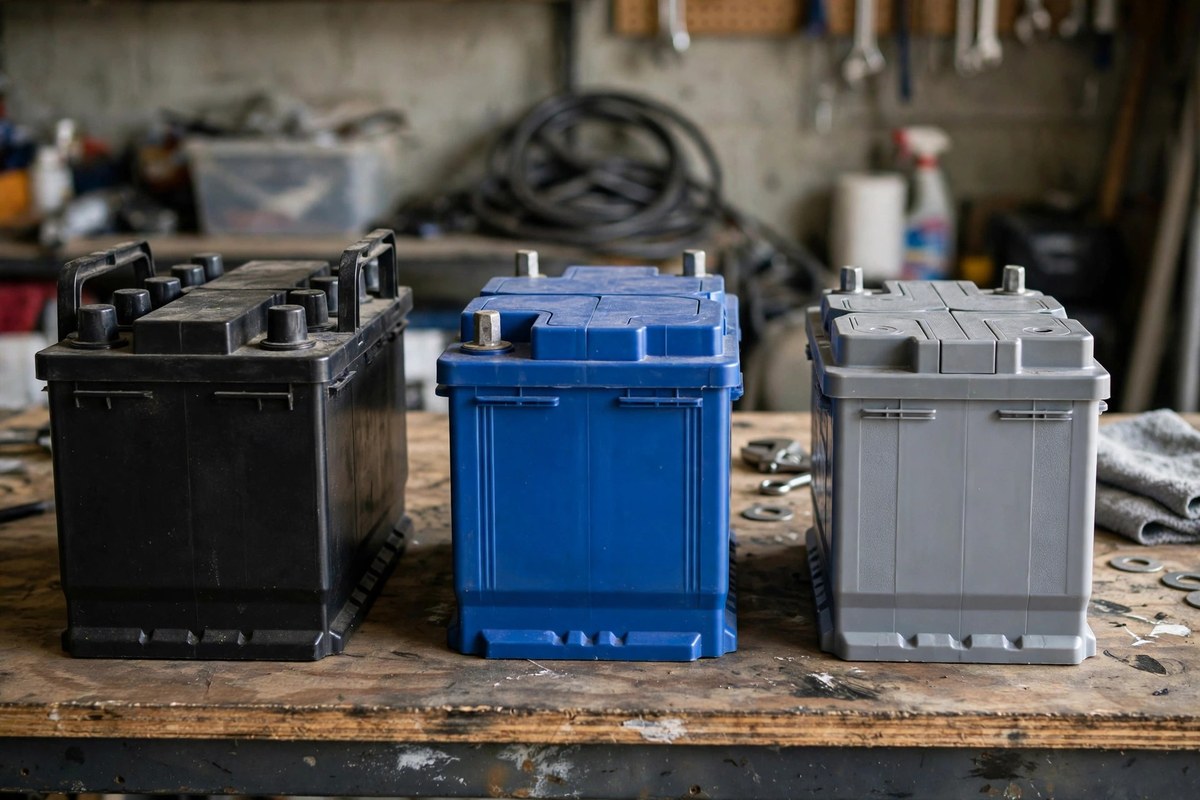
Not all 12-volt batteries are built the same, and on a start-stop Outback the type matters as much as the size. A basic flooded lead-acid battery is the cheapest option and fine for older Outbacks without start-stop. EFB — enhanced flooded battery — is the factory fit on 2020-and-newer cars, built to survive the constant stop-start cycling. AGM is sealed, more durable, and handles deep cycling and vibration better than either, which is why it is the popular upgrade on drain-prone cars.
| Battery type | Best for | Trade-off |
|---|---|---|
| Flooded / lead-acid | Older Outbacks without start-stop | Cheapest; shortest life under deep cycling |
| EFB | 2020+ Outbacks (factory fit) | Built for start-stop; do not downgrade from EFB |
| AGM | Start-stop cars, cold climates, short trips | Sealed and durable; $180–$350 typical |
The rule is simple: never downgrade a start-stop car to a basic flooded battery. The charging system is calibrated for EFB or AGM, and a flooded battery will die early under that duty cycle. Whatever type you buy, match or exceed the factory CCA printed on your old battery.
Frequently Asked Questions
What size battery does a Subaru Outback take?▾
Most Outbacks from 2010 to 2019 take a Group 25 battery at 550–720 CCA, while 2020-and-newer cars take a Group 47 (H5/LN2) at 650–680 CCA. Older Outbacks use Group 25 or 35. Always confirm the group size against the battery tray or your VIN before buying, since the two sources we checked quote slightly different CCA ranges.
How much does it cost to replace a Subaru Outback battery?▾
The part costs $140–$240 for most Outbacks, and a shop will typically charge roughly $180–$300 all in. O'Reilly shelf prices in October–November 2026 were $214.99–$234.99 for 2010–2019 cars and $234.99–$264.99 for 2020-and-newer cars. An AGM upgrade for a start-stop car runs $180–$350.
How long does an Outback battery last?▾
Most Outback batteries last three to five years. Short trips, cold winters and the drain issue on 2016–2019 cars can shorten that, while a higher-CCA or AGM battery and regular longer drives can stretch it. If your battery is four or more years old, have it load-tested before winter.
Why does my Outback battery keep dying?▾
The 2016–2019 Outbacks in particular suffer from parasitic draw and charging logic that never fully recharges the battery on short trips. NHTSA data shows battery complaints in 14.0% of all Outback complaints — about 8.6 times the usual share — with 139 owners reporting more than one battery. There is no recall for the 12-volt battery, so ask a shop for a parasitic-draw test.
Can I replace the Outback battery myself?▾
Yes. It sits in plain view under the hood, and the swap takes about 20 minutes with a basic socket set. Disconnect the negative terminal first and reconnect the positive first, keep the new battery in the same orientation, and clean the terminals before refitting the hold-down. Expect radio presets and the clock to reset.
The Bottom Line
Buy a Group 25 battery for a 2010–2019 Outback and a Group 47 for a 2020 or newer one, match or beat the factory CCA, and budget $140–$240 for the part or about $180–$300 fitted. If you own a 2016–2019 car, spend the extra on an AGM battery and get a parasitic-draw test — the drain problem is real, and a cheap battery will only die faster.
Continue researching the Outback
Sources
A note on prices
Battery prices, group sizes and specifications change over time. Treat the figures here as a starting point and confirm the fit against your battery tray or VIN — and the price with the retailer — before you buy.
Continue reading