Field Notes · 8 min read
Subaru Outback Ground Clearance: 8.7 Inches (2026)
The 2026 Outback rides 8.7 inches off the ground — 9.5 on the Wilderness. Every generation, how clearance is measured, and what it means in snow and off-road.
By Elena Marsh ·
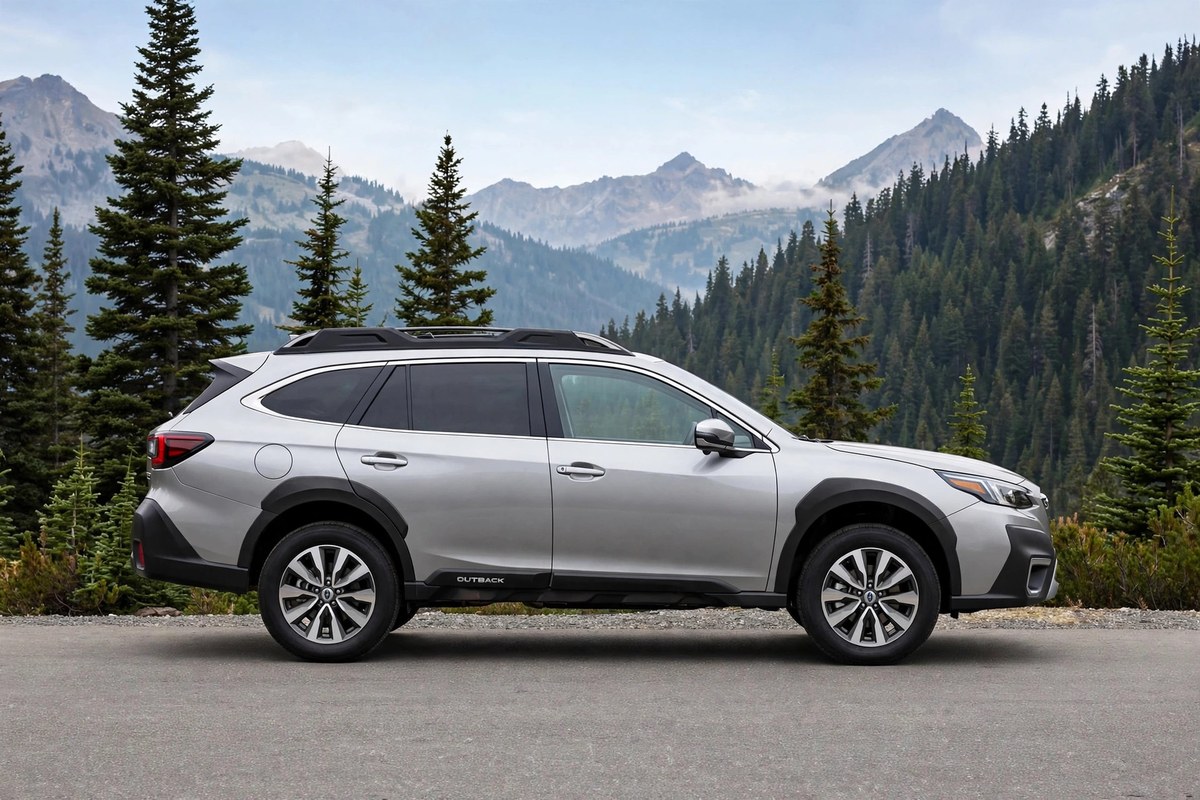
The Subaru Outback has 8.7 inches of ground clearance. Every 2026 Outback rides that high, from the base trim to the Touring XT, and the Wilderness stands taller still at 9.5 inches. That figure has not changed since the 2015 model year, and it is one of the highest numbers of any mainstream crossover you can buy. This guide covers the clearance of every Outback generation, how the number is measured, what it means in snow and on trails, and how the Outback compares with its rivals.
Ground clearance is the distance between the lowest point under the car and the ground. It decides whether the Outback scrapes its belly on a rutted track, high-centers in deep snow, or clears a rock on a forest road. It is only one part of off-road ability, though: approach, breakover and departure angles, tires and the X-Mode traction system matter just as much. Every figure in this guide comes from Subaru, Kelley Blue Book, J.D. Power or the manufacturers themselves, checked in November 2026.
Subaru Outback Ground Clearance at a Glance
| 2026 trim | Ground clearance | What is different |
|---|---|---|
| Base | 8.7 in | — |
| Premium | 8.7 in | — |
| Limited | 8.7 in | — |
| Limited XT | 8.7 in | — |
| Touring | 8.7 in | — |
| Touring XT | 8.7 in | — |
| Wilderness | 9.5 in | Raised suspension, all-terrain tires, dual-function X-Mode |
Every 2026 Outback except the Wilderness shares the same 8.7 inches of clearance, so trim choice does not change how high the car sits. The Wilderness is the only exception: its raised suspension adds 0.8 inches, and it pairs that with Yokohama Geolandar all-terrain tires on 17-inch wheels, reshaped bumpers and dual-function X-Mode. It is also the most expensive Outback. The range starts at $36,445 including destination, and the Wilderness lists at $46,445, according to Kelley Blue Book.
Ground Clearance by Generation
| Generation | Years | Ground clearance |
|---|---|---|
| 1st | 1995-1999 | 7.3 in |
| 2nd | 2000-2004 | 7.9 in |
| 3rd | 2005-2009 | 8.4 in (8.7 on some XT) |
| 4th | 2010-2014 | 8.7 in |
| 5th | 2015-2019 | 8.7 in |
| 6th | 2020-2025 | 8.7 in (9.5 Wilderness) |
| 7th | 2026- | 8.7 in (9.5 Wilderness) |
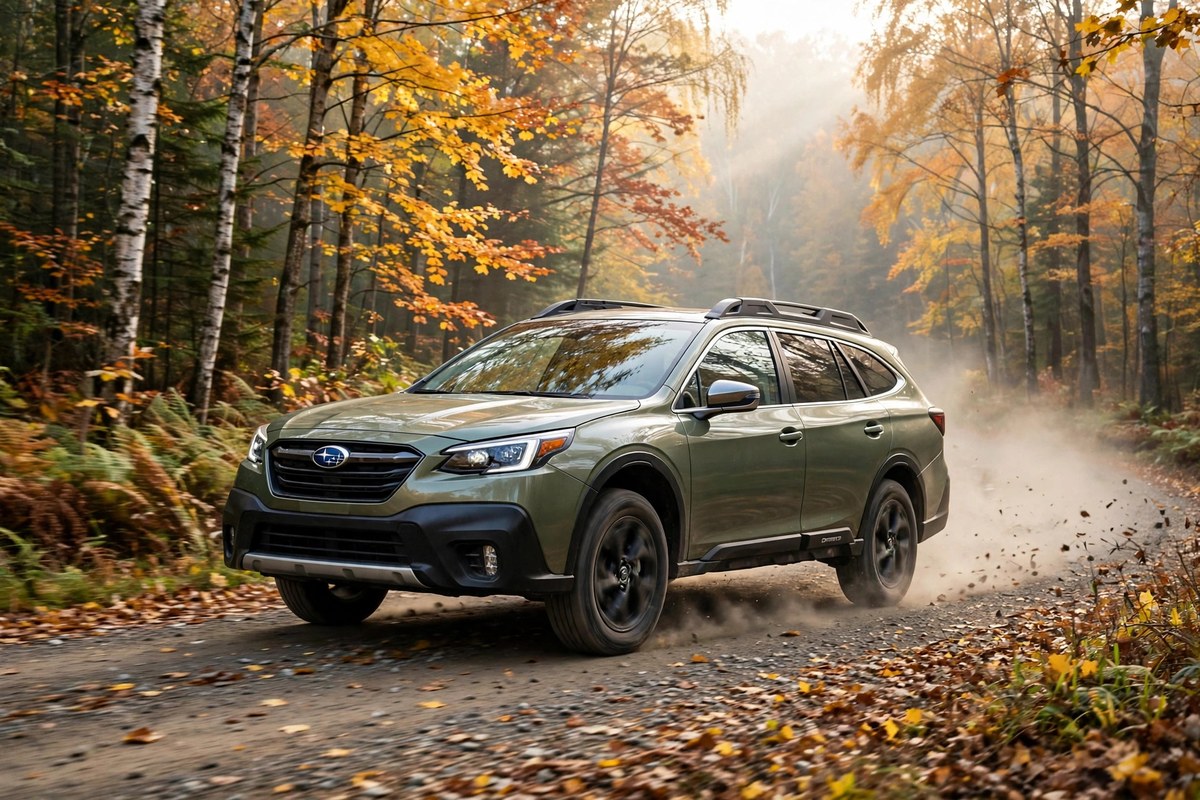
The story is one of a steady climb followed by a long plateau. The original 1995 Outback stood 7.3 inches off the ground, already 1.2 inches higher than the Legacy wagon it was based on. The second generation added 0.6 inches, the third another 0.5, and the fourth generation reached 8.7 inches in 2010. Subaru has held that number ever since, across three generations and sixteen model years. The only change since 2010 has been the Wilderness, which arrived in 2022 and lifted the ceiling to 9.5 inches.
The Wilderness: 9.5 Inches Explained
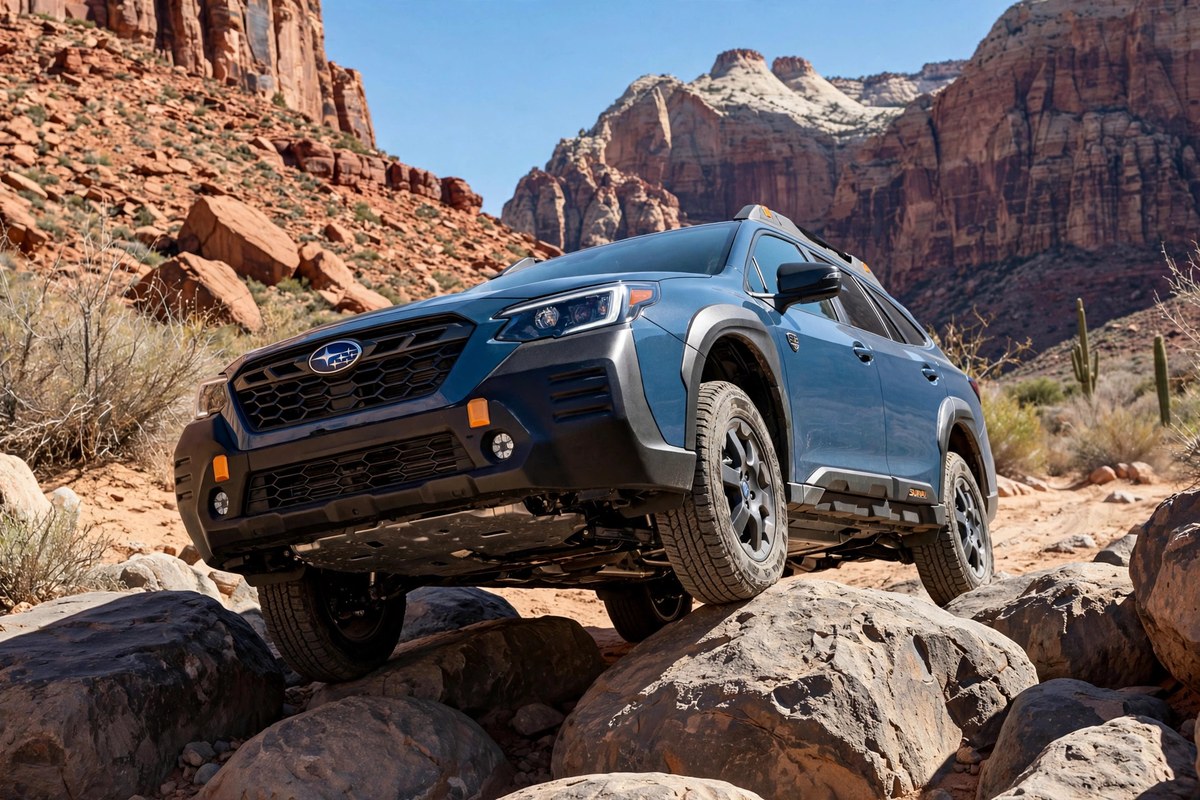
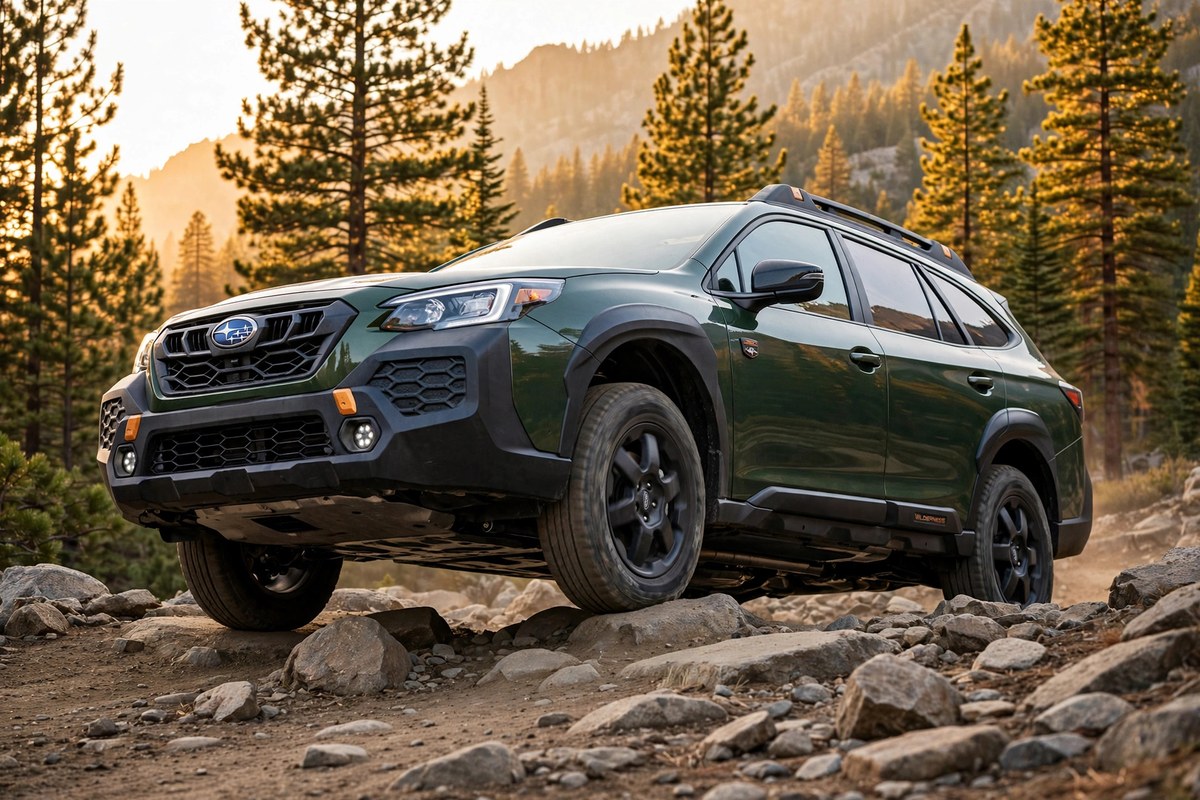
The Wilderness is not just a lifted Outback. Subaru raised the suspension by 0.8 inches, fitted Yokohama Geolandar all-terrain tires, reshaped the front and rear bumpers and added dual-function X-Mode with Snow/Dirt and Deep Snow/Mud modes. The result is the most capable Outback ever built: 9.5 inches of clearance, a 20-degree approach angle, 21.2 degrees of breakover and 22.5 degrees of departure, against 18, 19.4 and 21.4 degrees on the standard car.
That extra 0.8 inches matters more than it sounds. On a rutted forest road, the lowest point of the car is the difference between clearing a rock and dragging over it, and the Wilderness also gains taller sidewalls that absorb impacts the standard car's wheels would pass straight through. The trade-off is price and fuel economy: the Wilderness uses the 260-horsepower turbo engine and lists at $46,445, and its all-terrain tires are louder on the highway than the standard car's road tires.
What Ground Clearance Actually Measures
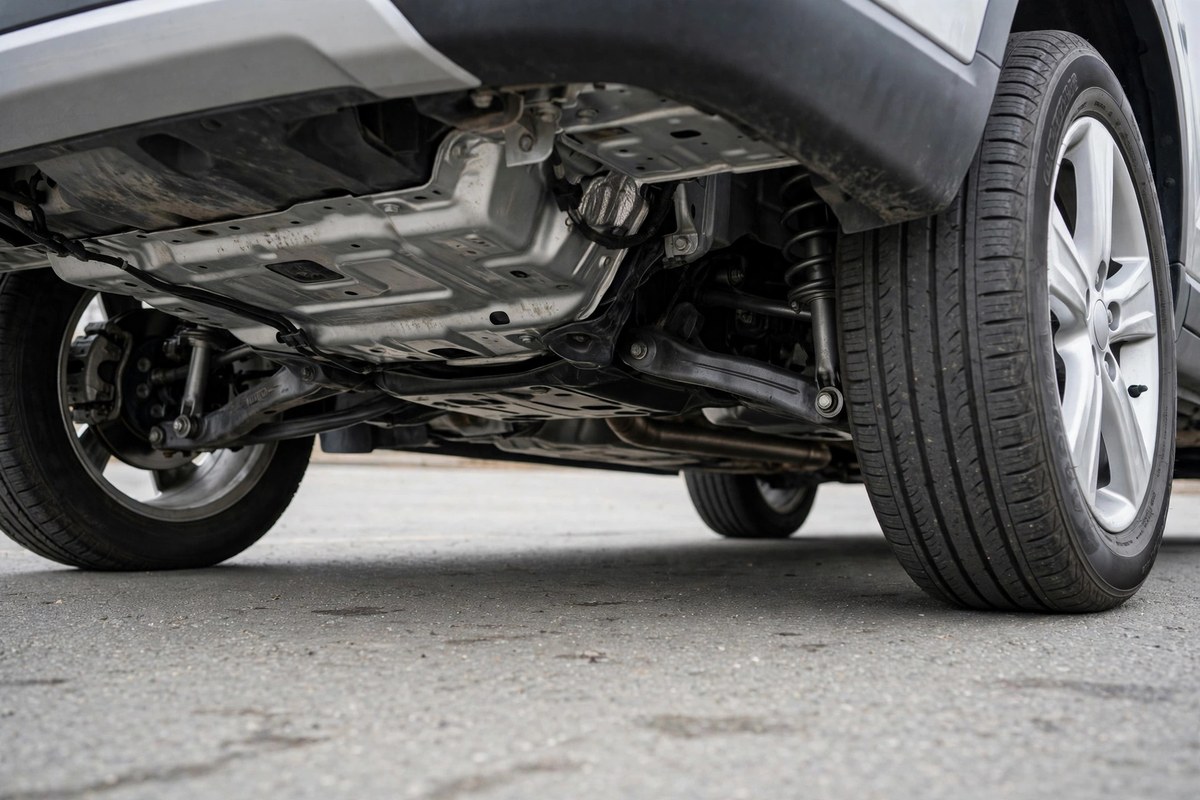
Ground clearance is the distance from the lowest point underneath the car to flat, level ground, measured with the car unloaded. On the Outback the lowest point is usually the rear differential or the exhaust, not the bumpers, which is why the bumpers can look higher than the number suggests. Two cars with the same clearance can behave very differently off-road, because the number says nothing about where the low points sit or how long the wheelbase is.
Load changes the number too. Fill the Outback with five people and a full cargo bay and the suspension compresses, so the real clearance on a loaded camping trip is a little less than the 8.7 inches in the brochure. The same applies in reverse: the figure is a minimum, measured at the lowest point, so most of the underbody actually sits higher. Skid plates, which the Wilderness carries up front, protect the parts that do hang lowest.
Ground Clearance in Snow and Off-Road
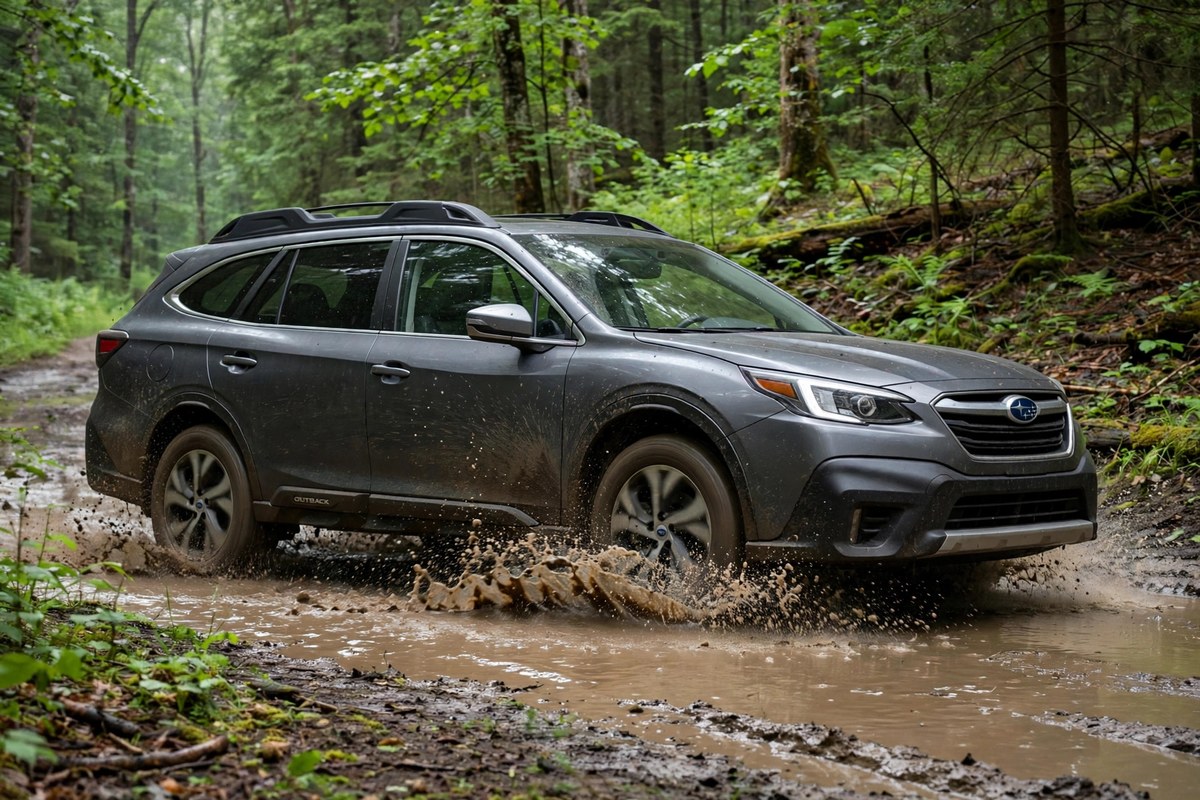
In snow, 8.7 inches is enough for almost any plowed road and for most unplowed ones. The Outback will push through snow up to roughly its own clearance before the belly starts to drag, and standard all-wheel drive plus X-Mode keep it moving when a two-wheel-drive car would spin. Once snow gets deeper than about nine inches, any car without a lift risks high-centering, where the belly rests on the snow and the tires lose grip. That is the point where the Wilderness's extra 0.8 inches and its Deep Snow/Mud mode earn their keep.
| 2026 Outback | Approach | Breakover | Departure |
|---|---|---|---|
| Standard trims | 18.0° | 19.4° | 21.4° |
| Wilderness | 20.0° | 21.2° | 22.5° |
Off-road, clearance works together with three angles. The approach angle decides how steep a slope the front bumper can climb without scraping, the departure angle does the same at the rear, and the breakover angle decides whether the belly clears a crest. The standard Outback's 18-degree approach and 21.4-degree departure angles handle forest roads, rutted tracks and rocky trails, but they are the reason the Outback is a soft-roader rather than a rock crawler. Lift kits are the usual next step: a 2-inch kit raises a 2020-2023 Outback to about 10.7 inches of clearance, according to Ironman 4x4, though it changes the suspension geometry and can affect the warranty, so it is worth checking with a dealer first.
Outback vs Rivals: Clearance Compared
| SUV (2026) | Ground clearance |
|---|---|
| Subaru Outback | 8.7 in (9.5 Wilderness) |
| Toyota RAV4 | Up to 8.6 in |
| Mazda CX-50 | 8.6 in |
| Honda Passport | 8.3 in |
| Honda CR-V | 8.2 in |
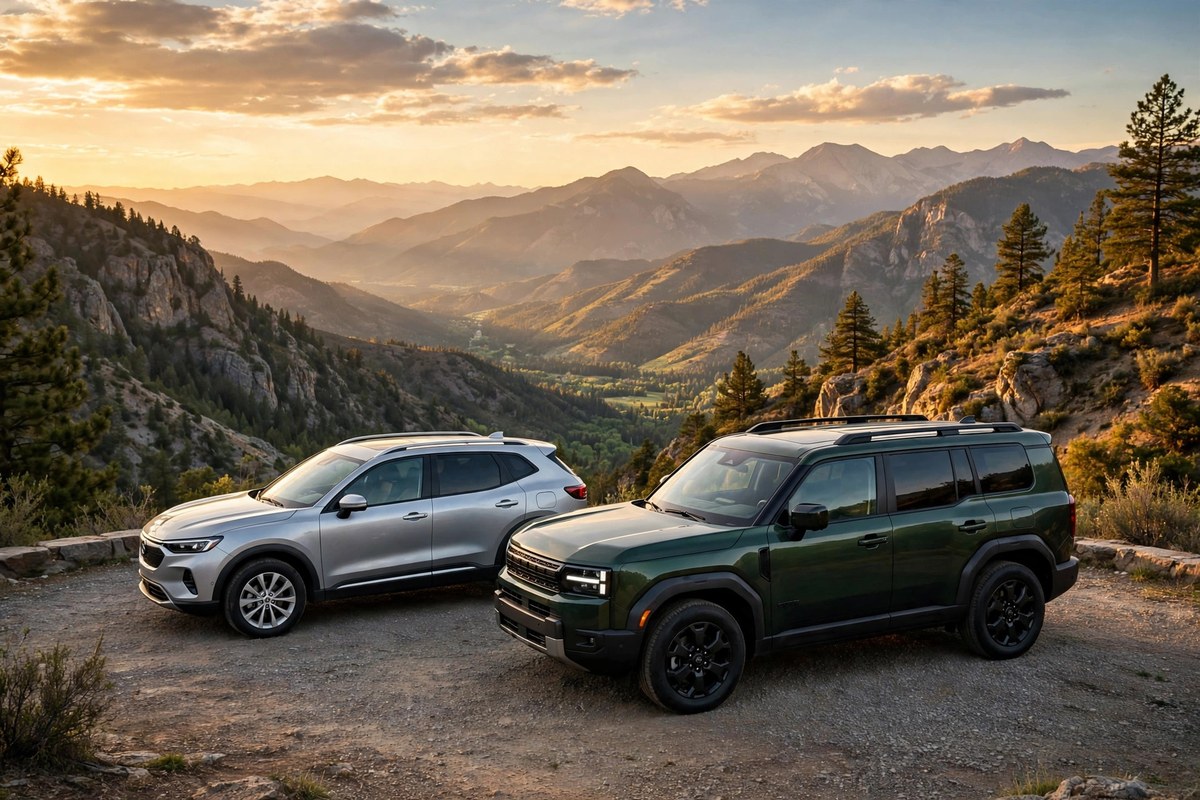
The Outback leads its class. The Toyota RAV4 tops out at 8.6 inches and the Mazda CX-50 at 8.6, the Honda Passport at 8.3 and the Honda CR-V at 8.2, so the standard Outback sits higher than all four, and the Wilderness beats them by nearly an inch. Inside Subaru's own range the picture is simpler: the Forester and the Crosstrek both ride at 8.7 inches on standard trims and 9.3 on their Wilderness versions, so clearance alone does not separate the three — size, cargo space and price do.
Clearance is not the whole comparison, though. The RAV4 and CR-V return better fuel economy in most trims, and the Passport's TrailSport version adds its own off-road hardware. But for a buyer whose priority is the tallest standard ride height in the class, with the option of 9.5 inches, the Outback is the default answer.
Frequently Asked Questions
What is the ground clearance of a Subaru Outback?▾
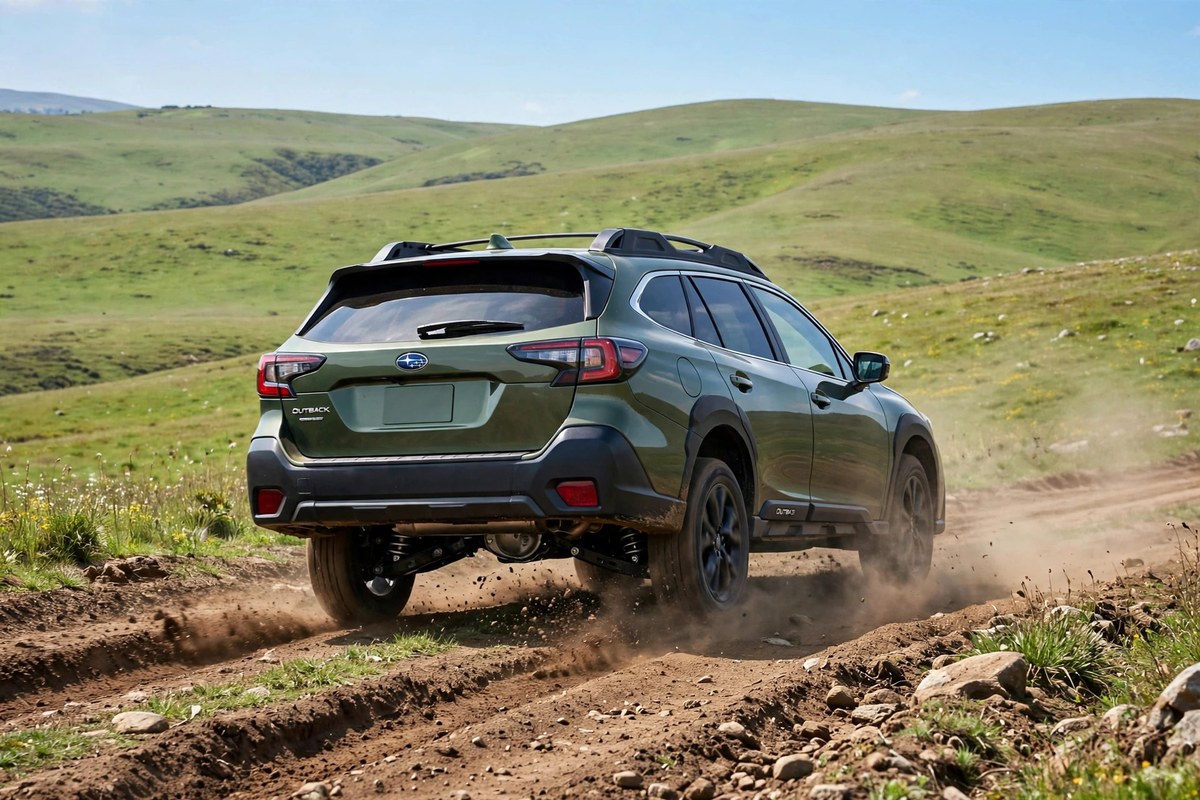
The 2026 Subaru Outback has 8.7 inches of ground clearance on every trim except the Wilderness, which has 9.5 inches. That figure has been the same since the 2015 model year.
Is 8.7 inches of ground clearance good?▾
Yes. It is the highest standard clearance among mainstream midsize crossovers, beating the Toyota RAV4 at 8.6 inches, the Mazda CX-50 at 8.6 and the Honda CR-V at 8.2. It is enough for forest roads, rutted tracks and deep snow, though it is not rock-crawler territory.
Which Outback has the most ground clearance?▾
The Outback Wilderness, at 9.5 inches. It has been the tallest Outback since the trim arrived in 2022, and the 2026 Wilderness keeps the same figure with improved approach, breakover and departure angles.
Does the Outback Wilderness sit higher than the Forester Wilderness?▾
Yes. The Outback Wilderness rides at 9.5 inches, while the Forester Wilderness and the Crosstrek Wilderness both ride at 9.3 inches. Standard trims of all three ride at 8.7 inches.
Can you increase the ground clearance of an Outback?▾
Yes, with an aftermarket lift kit. A 2-inch suspension lift raises a 2020-2023 Outback to about 10.7 inches of clearance, according to Ironman 4x4, and also lets you fit larger tires. Check with a dealer first, because a lift can affect the warranty and the suspension geometry.
The Bottom Line
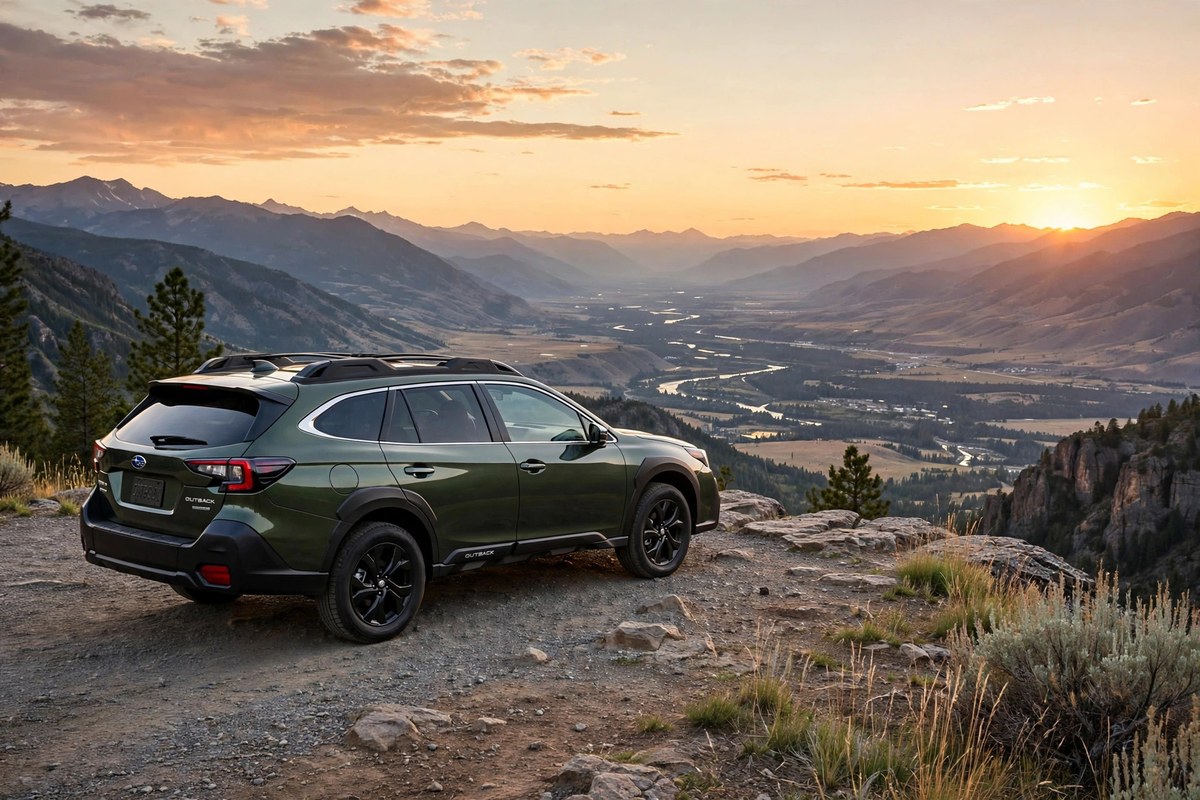
The Outback's ground clearance is one of the least-changed numbers in the car world: 8.7 inches since 2010, and 9.5 on the Wilderness since 2022. It is the tallest standard ride height in its class, it has survived three generations unchanged because it works, and the Wilderness remains the only way to get more without modifying the car. For snow, forest roads and rutted tracks, it is enough; for serious rock crawling, it is a starting point, not the destination.
All figures here are the manufacturers' published numbers, cross-checked against Kelley Blue Book and J.D. Power in November 2026. Individual cars vary slightly with load and tire wear, so measure your own car before tackling a trail you are unsure about.
Continue researching the Outback
Sources
- Subaru: 2026 Outback Brochure (Dimensions)
- Kelley Blue Book: 2026 Subaru Outback Specs
- GearJunkie: 2026 Subaru Outback Review
- J.D. Power: 2026 Subaru Outback Review (Angles)
- Kelley Blue Book: 2026 Outback vs Honda Passport
- HotCars: Every Generation of the Subaru Outback
- Peterson Auto: Crosstrek vs Forester vs Outback
- Ironman 4x4: 2-inch Lift Kit for 2020-2023 Outback
A note on prices
Prices change with model year, trim and equipment. The figures here are Kelley Blue Book's November 2026 listings — $36,445 for the base 2026 Outback and $46,445 for the Wilderness — and the price you pay may differ. Confirm with a Subaru dealer.
Continue reading