Review · 8 min read
Inside the New Outback: A Cabin That Finally Grew Up
A designer's first-impressions take on the 2026 Outback cabin — what actually changed under your hands, beyond the spec sheet.
By Elena Marsh · · Updated
For years the Outback's interior was the thing you tolerated to enjoy everything else. The 2026 cabin closes that gap almost completely — and this is a designer's read on why, focused on the details a spec sheet won't tell you.
Looking for the Full Spec Rundown?
This piece is a first-impressions design critique, not a feature-by-feature guide. For the complete breakdown of materials, seating figures, infotainment specs, and trim-by-trim differences, see our full 2026 Outback interior guide linked at the bottom of this piece.
The Dashboard Finally Makes Sense
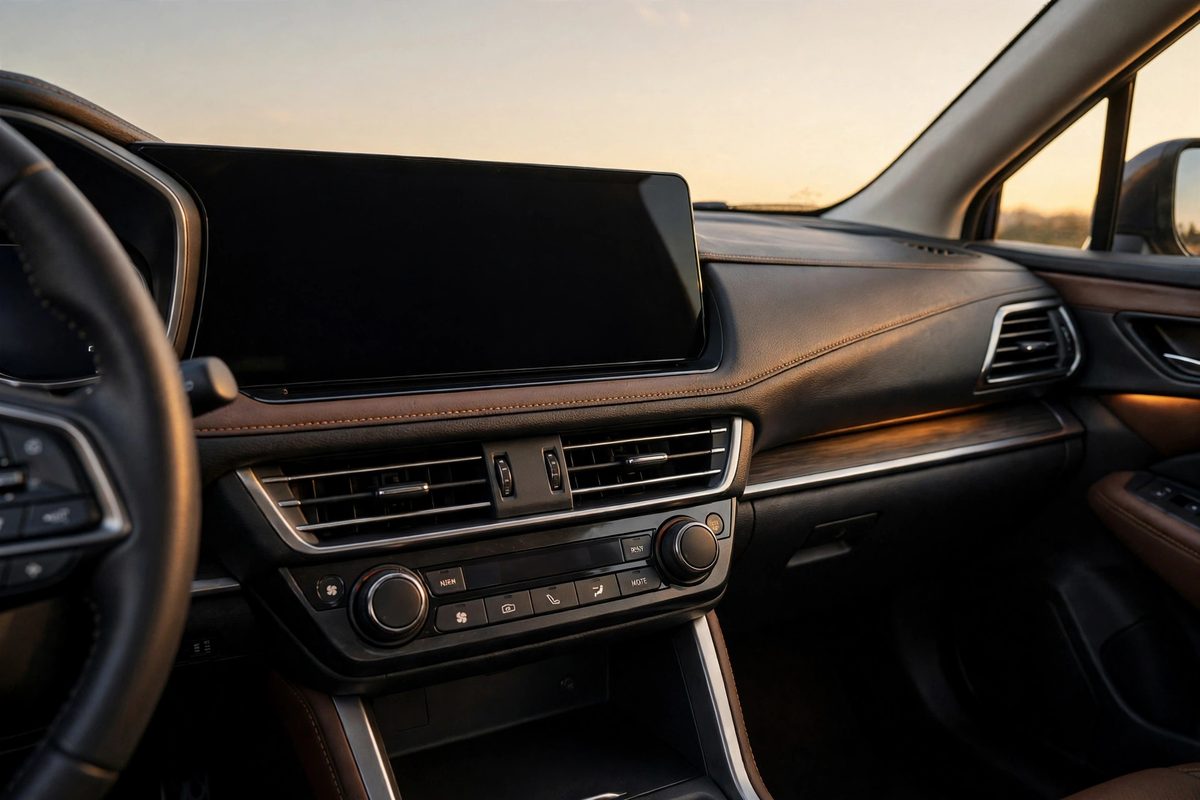
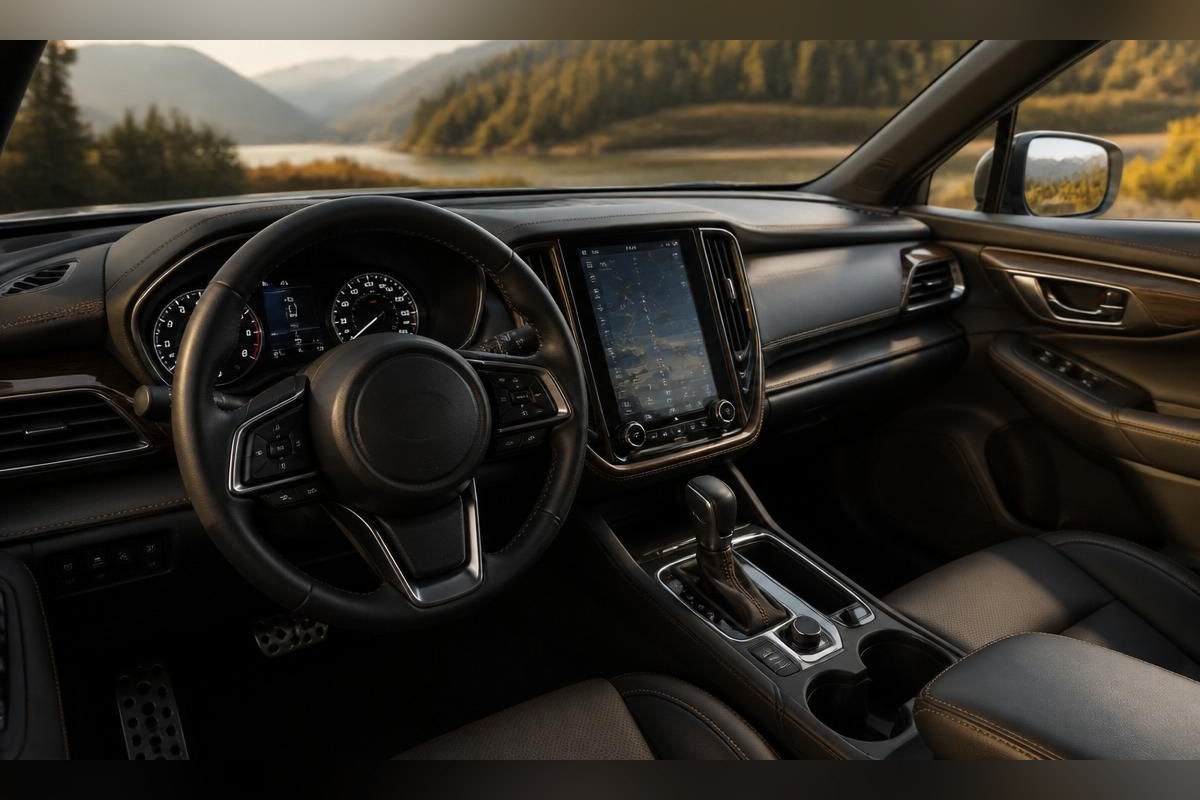
The dashboard is lower and horizontal, with real materials where your hands actually land. The touchscreen has been pared back and paired with physical knobs — a small return to sanity that other manufacturers should study. It's a quiet admission that the previous generation leaned too hard on a screen for tasks that never needed one.
The Quiet Headline: Sound
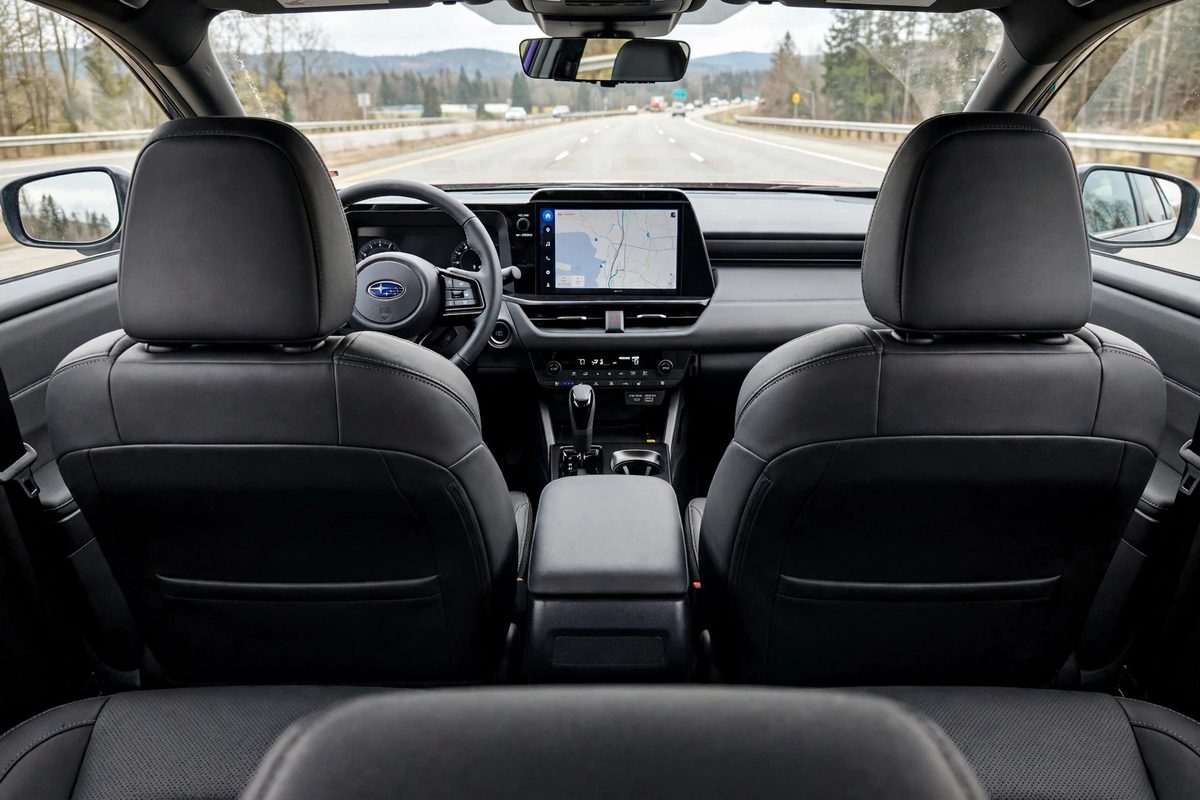
Cabin quiet is the detail nobody photographs but everyone notices. Subaru clearly invested in sound deadening for this generation — road and wind noise at highway speed are noticeably lower than the outgoing car, the kind of change you register in your shoulders after a three-hour drive rather than in the first five minutes behind the wheel.
What Still Isn't Perfect
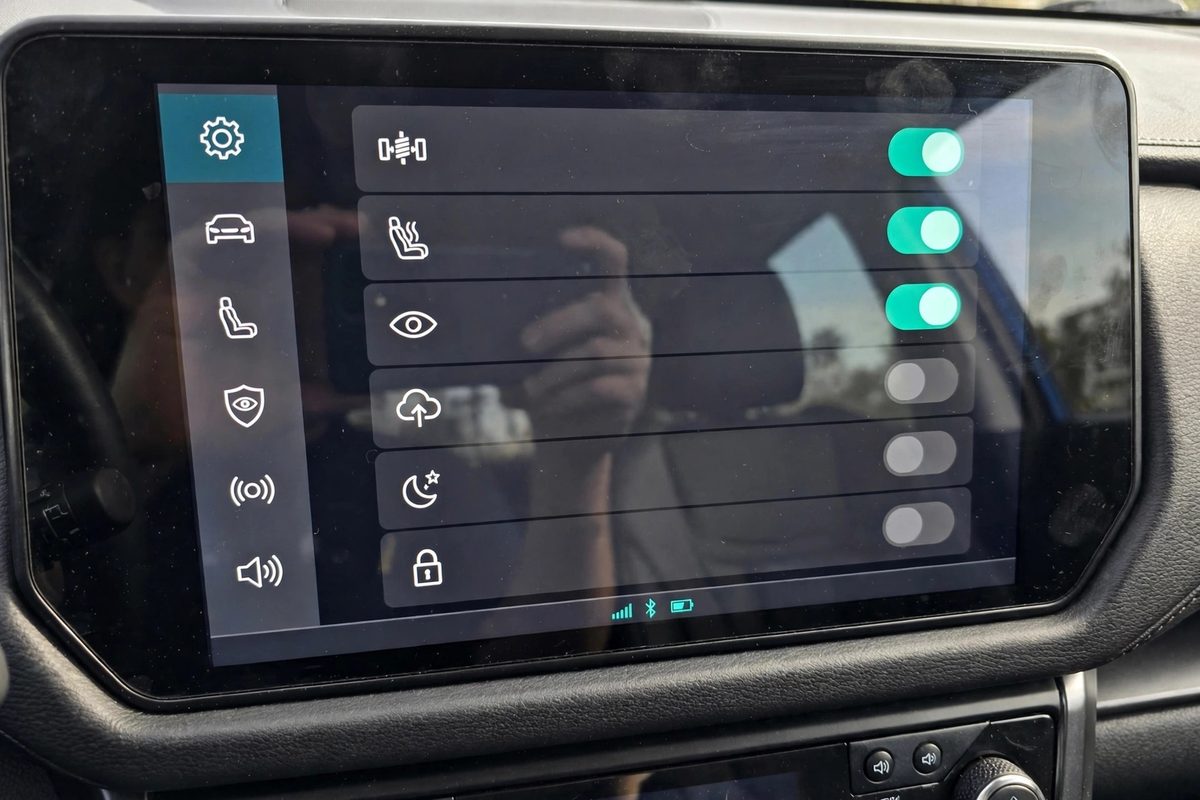
Not every change lands. The touchscreen, while less central than before, still handles a few functions that would be faster as physical controls — a pattern common across the segment, not unique to Subaru. And the price of all this material and acoustic upgrade is a starting MSRP meaningfully higher than the car it replaces, which is worth weighing against how much of the improvement you'll actually notice in daily use.
The Screen, the Knobs and the Middle Ground
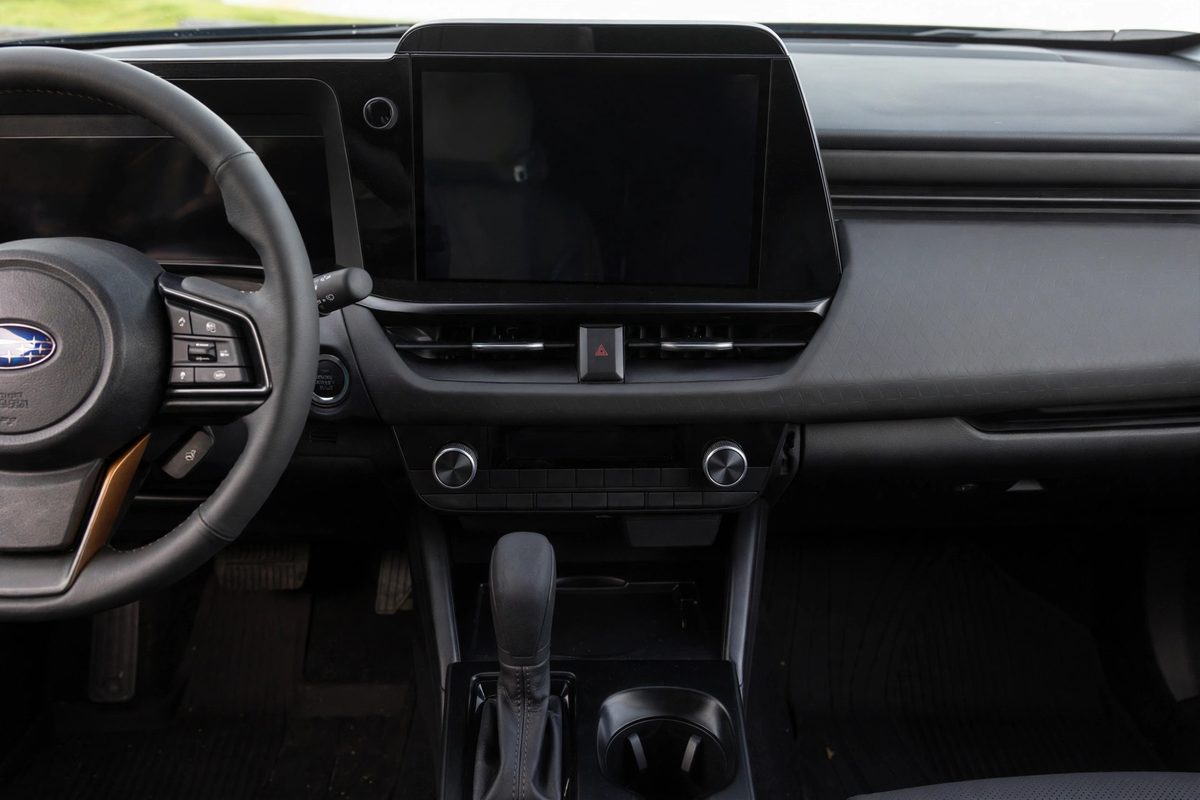
The headline number is 12.1 inches: the new standard touchscreen, paired with a 12.3-inch digital instrument cluster, both running a Google-based operating system with wireless Apple CarPlay and Android Auto. But the more important change is what sits around the screen. Physical climate controls are back, with real knobs for temperature and fan speed, and a proper volume knob for the audio. The screen is faster than the old 11.6-inch unit, and — crucially — it no longer has to do jobs it was never good at.
This is the setup that won the 2026 Outback a place on the Wards 10 Best Interiors & UX list, and it is easy to see why. The two screens sit on one horizontal plane, the upper dash is low and uncluttered, and the functions you reach for while driving are the ones with buttons. The screen still handles navigation and the deeper settings, which is where a touchscreen belongs.
The details around the screens matter too. USB-C ports front and rear keep everyone's devices charged without a tangle of adapters, and the wireless charging pad — standard on the Wilderness and upper trims — actually holds a phone in place over rough pavement. The 12.3-inch cluster is configurable, so the driver can keep navigation front and center or strip it back to speed and fuel, and the volume knob is exactly where your hand expects it to be. It is a cabin designed by people who seem to have driven the car, not just rendered it.
Seats and Space: The Numbers That Matter
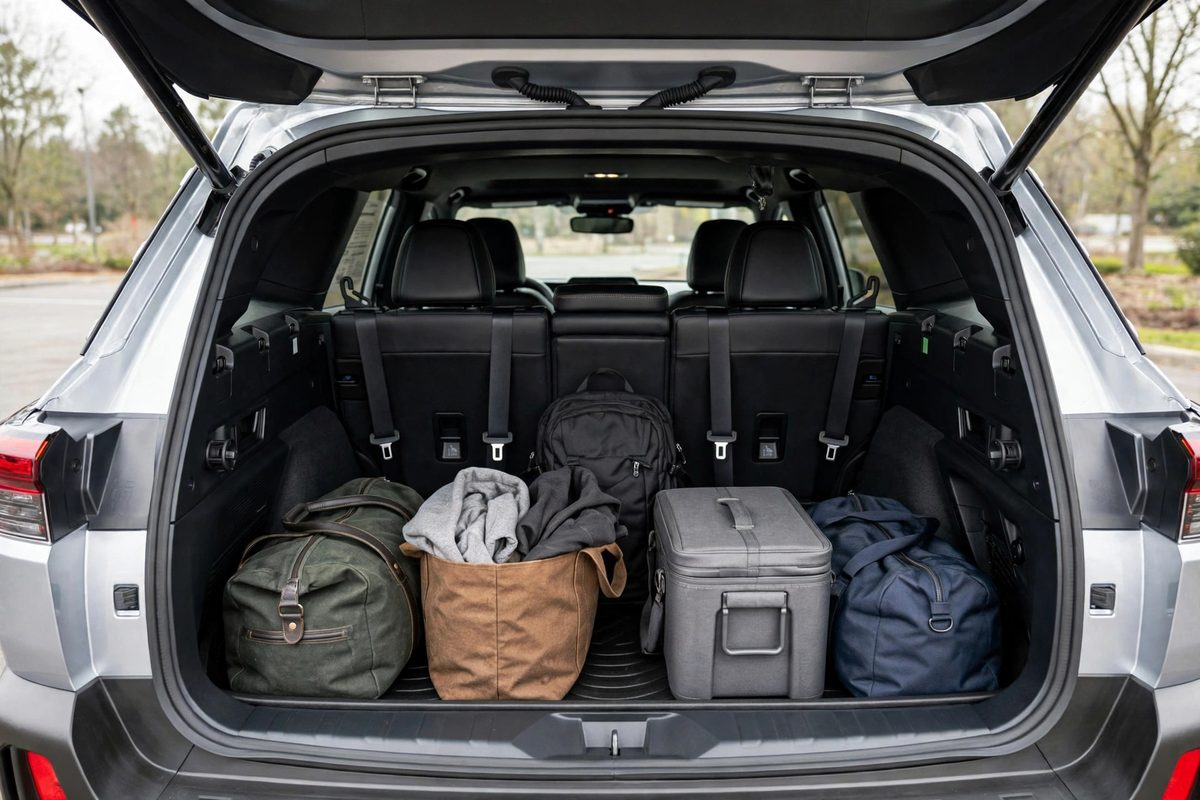
The boxier 2026 body pays off in numbers: 34.6 cubic feet of cargo behind the rear seats — two more than the outgoing car — and 80.5 with them folded. The load floor is 43.3 inches wide, and the cargo area is two inches taller than before. Passenger volume reaches 112.3 cubic feet, the most of any Outback yet, helped by a roofline two inches taller than the car it replaces.
The seats deserve as much attention as the space. StarTex water-repellent upholstery is standard from the Premium trim up, with a 10-way power driver's seat, and heated front seats are standard across the range. The driving position is upright and commanding without feeling perched, and the rear seat finally has the legroom to match the cargo figures — adults fit back there for hours, not just across town.
The rear seat folds in a 60/40 split, and the load floor stays flat with the seats down — no step, no lip to drag gear over. The rear doors open wide enough for a child seat without a wrestling match, and the tall roofline means adults sit upright in the back instead of slouching under the headliner. It is a family car that does not make the family in the back feel like an afterthought.
Materials: Where Subaru Spent the Money
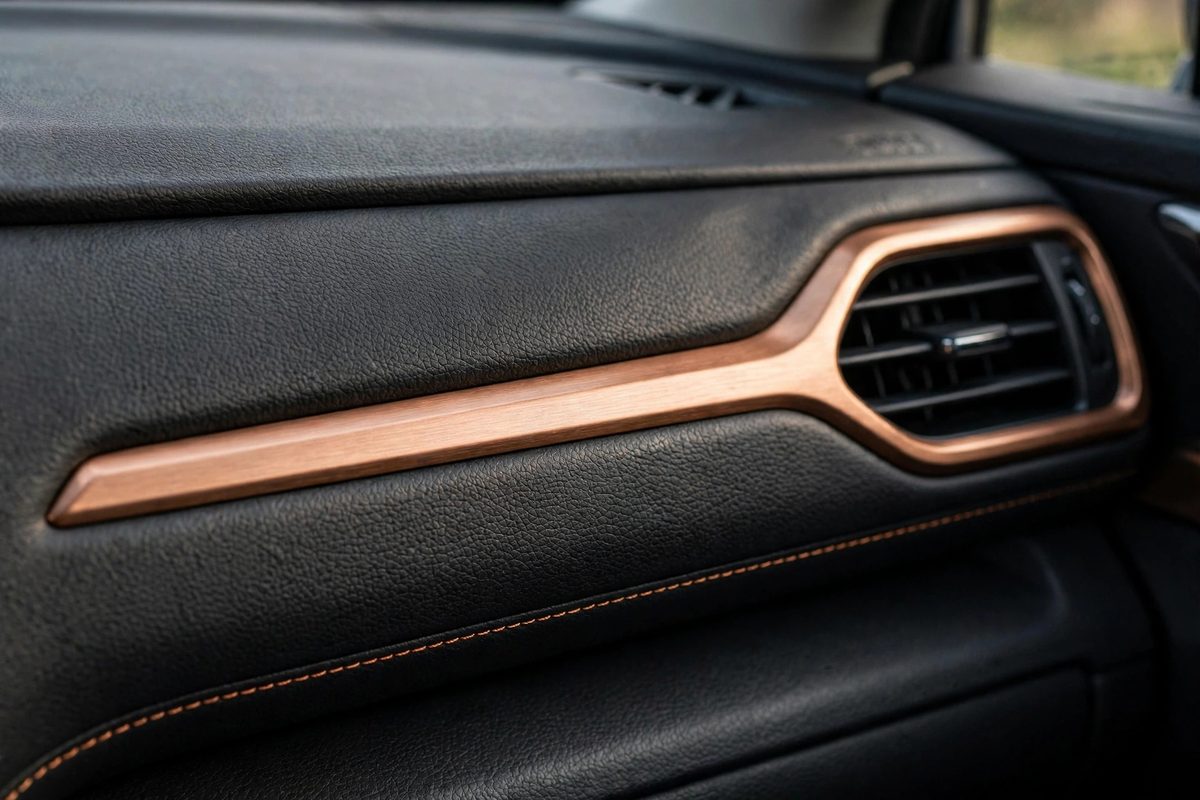
Run your hand across the dashboard and the upgrade is obvious: soft-touch materials where your hands actually land, tighter panel gaps, and trim that looks chosen rather than specified. The Wilderness gets its own treatment — anodized copper accents inside and out, StarTex with copper stitching — while upper trims offer Nappa leather and a Harman Kardon audio system that fills the bigger cabin properly.
The quiet is part of the material story too. Subaru added sound deadening throughout the cabin, and the difference shows up at highway speed, where wind and road noise are noticeably lower than the outgoing car. It is the kind of improvement that does not photograph, and the kind you notice most on the third hour of a long drive.
The Harman Kardon system, standard on the Wilderness and upper trims, is tuned for the bigger cabin rather than just louder, and it shows at highway speed, where the extra sound deadening lets the music stay clean without cranking the volume. The acoustic payoff is not just about music: phone calls stay clear, rear-seat conversations do not require shouting, and the whole cabin feels a class above the price.
The seats themselves deserve a closer look at the top of the range. The standard 10-way power driver's seat covers most buyers, but the $4,090 option package on the Wilderness swaps the StarTex for Nappa leather with copper stitching, adds ventilated front seats, and upgrades the driver to a 12-way power seat with more adjustment for long days. Heated rear seats are standard on the Wilderness, so the back seat gets the same treatment as the front. The trade-off is honest: Nappa feels richer, but it gives up some of StarTex's wipe-clean practicality — worth weighing if the cabin will see muddy boots and wet dogs as often as it sees dinner reservations.
The Cabin After 500 Miles
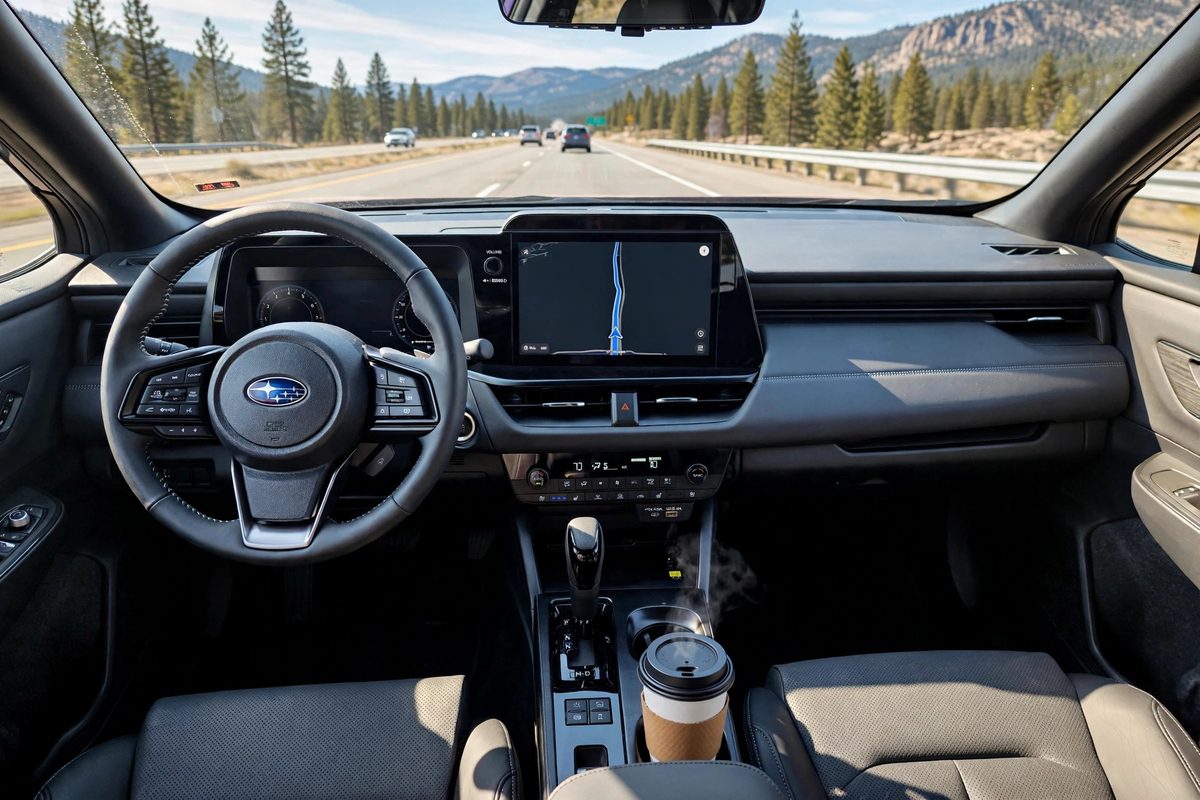
Five hundred miles in, the cabin's priorities become clear. The seats stay comfortable, the controls stay findable without looking, and the quiet lets you arrive less tired than you left. The touchscreen stays out of the way for the things that matter and handles navigation without a fuss. The wireless charger actually holds a phone in place over rough pavement, which is a smaller thing than it sounds until you have chased a sliding phone across a center console.
The complaints, after 500 miles, are small ones. The screen still owns a few functions that would be faster as buttons. The storage cubbies are fine rather than generous. And the price of all of this — the materials, the screens, the quiet — is a starting MSRP meaningfully higher than the car it replaces. But for the first time in years, the Outback's cabin is not the compromise you accept for the drivetrain underneath it. It is a reason to buy the car.
Even with those caveats, this is the first Outback cabin in years that doesn't feel like a compromise buyers make to get the drivetrain they want underneath it.
Is the 2026 Outback interior a major change from previous generations?▾
Yes — the dashboard, touchscreen layout, and sound insulation are all meaningfully different from the outgoing car, not just a trim refresh.
Did Subaru bring back physical buttons in the 2026 Outback?▾
Yes. Physical climate controls and several other functions returned as real buttons and knobs, reducing reliance on the touchscreen for everyday tasks.
How much cargo space does the 2026 Outback have?▾
34.6 cubic feet behind the rear seats, expanding to 80.5 cubic feet with the rear seats folded — up from 32.6 and 75.6 cubic feet in the outgoing model, and one of the biggest practical gains in the redesign.
Is the 2026 Outback's back seat roomy enough for adults?▾
Yes. Rear passengers get 39.5 inches of legroom and 40.5 inches of headroom, and upper trims add heated rear outboard seats.
Does the 2026 Subaru Outback have wireless Apple CarPlay and Android Auto?▾
Yes — wireless Apple CarPlay and wireless Android Auto are standard on every 2026 Outback trim, running on the new 12.1-inch touchscreen with a Google-based operating system. The screen pairs with a standard 12.3-inch configurable digital instrument cluster, so navigation can sit in front of the driver while phone apps run on the centre display. No cable is needed to connect your phone.
Does the 2026 Subaru Outback have heated seats?▾
Yes — heated front seats are standard across the whole 2026 Outback range, including the entry Premium trim. Upper trims add heated rear outboard seats and a heated steering wheel, and Touring models also get heated and ventilated front seats. The water-repellent StarTex upholstery standard from Premium up is the practical pairing for winter gear and wet dogs.
The Back Seat, the Dogs and the Small Details
The front seats and dashboard get most of the attention in this cabin, but the back seat is where the redesign pays off for families. Rear passengers get 39.5 inches of legroom and 40.5 inches of headroom, enough for taller adults, and upper trims add heated rear outboard seats. The details are the kind a spec sheet never lists: soft trim inside the door pockets so nothing clatters over rough roads, and a cargo tray above the glove box for a phone, sunglasses and wallet. The cargo area keeps the theme going, with dog illustrations moulded into the trim to gauge the space by dog size, and a multi-use cargo cover that doubles as a hammock for loose items or a pet gate.
The cabin's technology is doing quiet work too, beyond the two screens. The DriverFocus system uses a camera to monitor driver attention and fatigue and issues alerts when it detects distraction, and the EyeSight suite behind it uses three forward-facing cameras and radar for pre-collision braking, adaptive cruise control with lane centring and automatic emergency steering. Touring and Touring XT trims add Highway Hands-Free Assist — hands-free steering on designated highways up to 85 mph — plus a surround-view monitor. None of this changes how the cabin looks, which is why a design critique can miss it — but on a three-hour drive, the systems watching the road and driver are as much a part of its comfort as the seats.
Related guides
Sources
- Kelley Blue Book — Let's Take a Look Inside the 2026 Subaru Outback
- MotorTrend — Better in Every Way: We Drive the New 2026 Subaru Outback (cabin improvements)
- MotorTrend — 2026 Subaru Outback First Look (interior design brief)
- Edmunds — 2026 Subaru Outback: Driven, Tested, Rated
- Subaru — 2026 Subaru Outback Features & Technology
- GearJunkie — 2026 Subaru Outback Wilderness Review (interior & cargo)
- WardsAuto — Subaru Outback cabin details
- TestMiles — 2026 Subaru Outback review
Continue reading